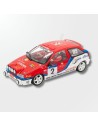
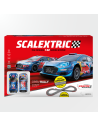
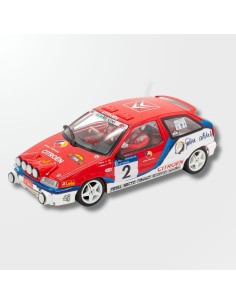
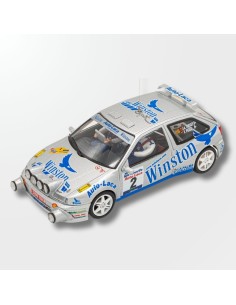
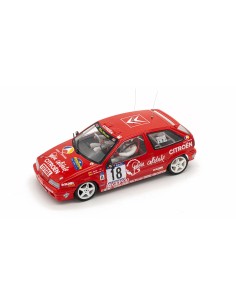
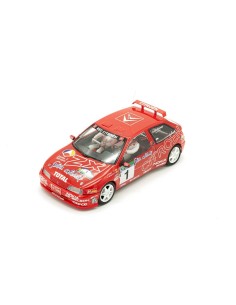
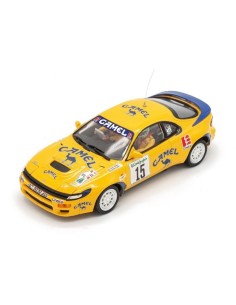
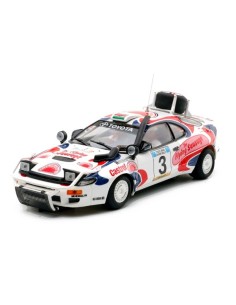
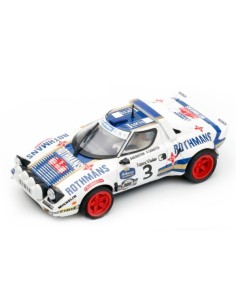
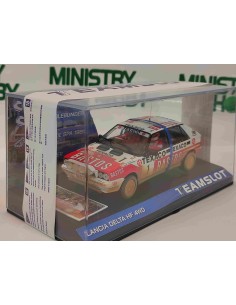
There are slot categories that captivate due to speed, technology, and modern circuits. And then there is this one. Classic rallies have something that goes beyond pure performance: they have history, dirt dust, the smell of burnt gasoline, and the roar of engines that marked an era. Talking about classic rally is talking about the golden years of competition, when cars were mechanical beasts at their limits and drivers were true heroes. Reproducing that on track —or simply on a display case— is an experience that very few enthusiasts can resist.
Classic rally models in scale attract a very specific profile of enthusiast: those who remember seeing those cars as children on television or in some special on dirt, those who grew up with posters of Röhrl, Blomqvist, or Sainz on the wall, and also the new collector who discovers these machines through the world of modeling. The demand for these cars has continued to grow in recent years, and the supply from specialized brands accompanies that trend with increasingly impressive levels of detail and historical fidelity.
In this category, you will find slot cars that represent the decades of the 70s, 80s, and early 90s: Group B in all its madness, the Group 4 that preceded it, African rallies, WRC classics, and those cars that today are absolute icons of motorsport. From the Lancia Stratos to the Ford Sierra Cosworth, passing through the Audi Quattro, Lancia Delta, or Peugeot 205 T16, there are machines for all tastes and all budgets.
If you are looking for a model to drive, to collect, or for both, you are in the right place. Here we tell you everything you need to know to make the right choice.
What are classic rallies in slot and why are they so appealing
The term classic rally groups together competition vehicles from rallies that took place mainly between the 60s and early 90s. It is a broad category that encompasses everything from the first rear-wheel-drive prototypes to the monsters of Group B, considered by many to be the most extreme competition cars in the history of motorsport.
In the world of slot and diecast, reproducing these models is not just an exercise in nostalgia. It is a statement of values: historical fidelity, respect for detail, knowledge of the sport. Manufacturers that work with these licenses tend to be the most demanding in the market, because their audience —collectors and seasoned enthusiasts— detects any error in the decoration or proportions of the car.
Brands like Avant Slot, Slot.it, Scalextric, or Scaleauto have dedicated a significant part of their catalogues to reproducing these vehicles with a level of detail that goes far beyond simple paintwork. We are talking about bodies with carbon fibre textures, liveries with precisely applied decals, and chassis adjusted so that the model behaves on track in a way consistent with its weight and scale.
Moreover, many of these cars have added value as collectible objects regardless of their use on track. The reproduction of the Lancia Delta HF Integrale with the Martini Racing decoration or the Peugeot 205 T16 with the official team colours are pieces that make sense in a display case or on the track with the same intensity.
How to correctly choose a classic rally model
Before buying, it is advisable to ask yourself three questions: What do I want it for —to drive, to collect, or both? What track system do I have or plan to have? What scale fits best with my space and current models?
Main use: track or display case
If the goal is to drive it in competition or in regular sessions, the choice of chassis and motorization system is as important as the livery. Models prepared for competition usually have stiffer chassis, guides with better grip, better contact braids, and more aggressive compound tyres. If the model is primarily going to live in a display case, you can prioritise visual finish without worrying too much about the technical configuration.
Track system
This is a point that generates many doubts. Not all cars are compatible with all track systems. The universal track —used by Scalextric and Ninco— and the sport track —from Scaleauto and Slot.it— have different measurements, and using a car from one system on the track of another can cause guide, contact, or stability issues. Before buying, check what system your circuit uses and what guide the model you are interested in has. If you have doubts, Ministry of Hobby can guide you without any problem.
Scale
The vast majority of classic rally models in slot are produced in 1/32 scale, which is the industry standard and the most widespread in competition and hobby circuits. There are also versions in 1/24 for those looking for more size and detail, although that scale requires more space both on track and in storage.
Brand and range
Not all ranges within the same brand have the same level of finish or the same price. There are entry-level models aimed at the beginner enthusiast, and high-end references designed for the collector or competitive driver. Reading the product technical sheet carefully —body materials, motor type, chassis configuration— helps to know exactly what you are buying.
Types and main differences within classic rallies
The world of classic rally is vast, and within it, there are well-defined subcategories that are worth knowing to guide your search.
Group 4 (70s - early 80s)
Group 4 cars are the direct precursors of Group B. Rear-wheel drive in most cases, bodies based on production models with modifications controlled by regulations. The Lancia Stratos, Porsche 911 SC, or Fiat 131 Abarth are iconic representatives of this period. In the world of slot, they are highly valued models for their characteristic aesthetics and classic European rally decorations.
Group B (1982-1986)
Undoubtedly, the most mythologised era of rally motorsport. Group B cars were prototypes disguised as production vehicles, with virtually no limits on power or aerodynamics. The Audi Quattro Sport S1, Lancia Delta S4, Peugeot 205 T16, Ford RS200, or MG Metro 6R4 are names that still send shivers down the spine of those who know them. In slot, Group B models are among the most sought after and also receive the most attention from manufacturers in terms of detail and fidelity.
Group A (1987-1993)
After the ban on Group B, Group A brought cars closer to production but no less exciting. The Lancia Delta HF Integrale dominated for years, and the Ford Sierra RS Cosworth and Toyota Celica GT-Four completed a very rich period. These models are especially popular among those who discovered rallying on television in the late 80s.
Long-distance rallies and raid
Some manufacturers also venture into models from the major regularity and raid events of the classic era, with representations of cars prepared for extreme terrains. A more niche category but with very loyal followers.
Technical aspects we need to know
Buying a classic rally model thinking only about the decoration without considering the technical aspects can lead to unpleasant surprises, especially if the car is going to run on track.
Body: injected plastic or resin
The majority of industrially produced models use high-quality injected plastic bodies. Avant Slot is one of the few brands that produces industrially models with resin bodies, allowing for a superior level of detail in lines, textures, and finishes. Resin models tend to be more expensive and are aimed at collectors and demanding drivers.
Motorization and chassis configuration
In classic rally cars, we mainly find two motor configurations:
- Sidewinder: the motor is placed parallel to the rear axle, transversely. This is the most common arrangement in 1/32 scale cars and offers a good balance between ease of maintenance and performance.
- Anglewinder: the motor is positioned at an angle to the rear axle. This allows for a lower centre of gravity for the assembly and is usually associated with models more oriented towards competition.
The inline configuration —longitudinal motor, perpendicular to the rear axle— also appears in some models, especially those seeking the highest possible performance by lowering the centre of gravity as much as possible.
Guide, braids, and tyres
Three elements that determine track behaviour. The guide must fit well in your circuit's rail; the braids must make good contact with the rails to ensure stable electrical supply; and the original tyres may be sufficient for recreational use, although many drivers replace them with more adhesive compounds if they seek performance.
Practical tips for use, maintenance, and preparation
Whether the model is going to run regularly or spend long periods in a display case, there are a series of basic care practices that make a difference.
- Lubrication: apply a small amount of specific slot lubricant to the axles and gears before the first runs and periodically. Excess lubricant attracts dirt and can harm performance.
- Cleaning braids: braids accumulate rust and dirt that deteriorate electrical contact. Clean them regularly with a dry cloth or specific cleaner. Replace them when you notice a loss of power or intermittent issues.
- Tyres: in models that do not run, the tyres can deform due to prolonged weight in the same position. If you are going to store the car for a long time, lift it slightly or place it on a stand.
- Preservation of decoration: direct sunlight deteriorates colours over time. If the model is in a display case, avoid direct exposure or use display cases with UV filters.
- Initial running-in: new models benefit from a progressive running-in at moderate speed during the first minutes of use. This settles the gears and improves long-term performance.
Common mistakes we should avoid
The experience of many enthusiasts —and our own team— has left a list of common mistakes that are worth knowing before spending money or damaging a valuable model.
- Buying without verifying compatibility with the circuit: the most common mistake. A car designed for sport track does not perform well or fit correctly on a universal track, and vice versa. Always check compatibility before buying, especially if mixing models from brands like Scalextric, Scaleauto, Ninco, or Carrera.
- Confusing liveries from different seasons or versions: many iconic models —like the Delta or the Quattro— had several versions over the years with different decorations. If you are a purist about history, check carefully what version and year the model represents before buying it.
- Running too fast from the start: new models need a progressive running-in. Forcing maximum speed from the first meters can damage the gears and shorten the motor's lifespan.
- Over-lubricating: more lubricant is not always better. Excess lubricant attracts dust and dirt, clogs gears, and can stain the track or tyres, reducing grip.
- Storing models without protection: dust, moisture, and direct light are the great enemies of any collectible miniature. Use appropriate covers or display cases.
- Not checking the condition of the braids before running: braids in poor condition can cause everything from power loss to erratic behaviour on track. A quick check before each session avoids many disappointments.
Recommendations for beginners and advanced users
If you are starting
The most important thing at the beginning is not to complicate things too much. Choose a model from a recognized brand —Scalextric or Slot.it are good starting points— in the standard 1/32 scale, ensure it is compatible with your track system, and focus on enjoying the hobby before thinking about modifications. Group A cars are especially recommended for beginners: they tend to be more manageable on track than the exuberant models of Group B, have good decorations, and are well represented in the current catalogue.
If you already have experience
The advanced enthusiast can look for high-end resin models —Avant Slot has some of the best finishes on the market in classic rally—, explore combinations of chassis and motor to optimize performance, or simply complete a thematic collection: all cars from a specific season, all vehicles from a historic team, or the world champions from each year of Group B.
It is also worth exploring models from brands like NSR or Scaleauto if the goal is competition, as their range of spare parts and preparation options is very extensive and well documented by the community.
Comparative table: eras of classic rally in slot
| Era |
Period |
Iconic models |
User profile |
| Group 4 |
70s - 1982 |
Lancia Stratos, Fiat 131 Abarth, Porsche 911 |
Historical collector, lover of the classic era |
| Group B |
1982 - 1986 |
Audi Quattro S1, Lancia Delta S4, Peugeot 205 T16, Ford RS200 |
Collector and demanding driver, enthusiast of extreme rally history |
| Group A |
1987 - 1993 |
Lancia Delta HF Integrale, Ford Sierra Cosworth, Toyota Celica GT-Four |
Enthusiast with TV memories from the 80s-90s, recreational driver |
| Raid / Long distance |
80s - 90s |
Models prepared for extreme terrains |
Niche collector, lover of endurance events |
Frequently asked questions about Classic Rallies
Are classic rally slot cars compatible with any circuit?
Not necessarily. It depends on the rail system of your circuit and the type of guide of the model. Always check if the car is designed for universal rail (Scalextric, Ninco) or sport rail (Scaleauto, Slot.it) before buying it.
What is the difference between a Group B model and a Group A model?
Historically, Group B was practically a prototype without power restrictions, while Group A required homologation based on a minimum production of street cars. In terms of slot, Group B models usually have a more extreme aesthetic and sometimes more aggressive aerodynamics reproduced in the bodywork.
Can I use a classic rally car in official competition?
It depends on the regulations of each championship. Many slot series allow classic rally cars in specific or open categories. Check the rules of the championship you want to participate in.
What scale is the most common in classic rally?
1/32 scale is the dominant one in the slot market. There are versions in 1/24 for those looking for more size and detail, but they are less common in the classic rally catalogue.
Are resin models better than plastic ones?
Resin allows for greater precision in details and a superior visual finish, but it does not necessarily imply better performance on track. For a collector, resin is clearly preferable; for a driver who is going to run a lot, high-quality injected plastic is perfectly valid and more resistant to impacts.
Which brands have the best classic rally catalogue?
Avant Slot stands out particularly in iconic models from this era, with high-quality resin finishes. Slot.it and Scalextric also have very interesting references. The offer varies depending on the specific model you are looking for.
How much does a classic rally slot car cost on average?
Prices vary depending on the brand, materials, and range. An injected plastic model can range between 30 and 60 euros, while high-end resin models can exceed 80-100 euros. In the product sheet of each item at Ministry of Hobby, you have the updated price.
Is it necessary to make modifications to the standard car for it to run well?
For recreational use, most standard models work perfectly without modifications. If the destination is competition, it is common to improve tyres, braids, and in some cases the guide, but that depends on the regulations and the level of demand of each driver.
How do I properly preserve the original decoration of a collectible model?
Avoid exposure to direct sunlight, keep the model away from moisture, and clean dust with a soft cloth without abrasive products. Display cases with closures are the best protection for models that are not going to run.
Are spare parts for these cars easy to find?
It depends on the brand. Slot.it, Avant Slot, NSR, and Scaleauto have well-stocked spare parts catalogues with good availability. For other brands, it may be more difficult to find specific parts. At Ministry of Hobby, we maintain stock of spare parts from the main brands in the sector.
Which liveries are the most valued by classic rally collectors?
The decorations of official teams in their years of greatest success are usually the most sought after: Martini Racing on the Lancia Delta, Castrol colours on the Ford, Audi Sport team liveries on the Quattro. Limited editions with special or numbered decorations have special value in the collectible market.