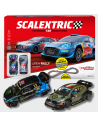
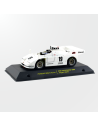
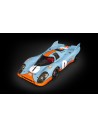
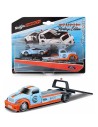
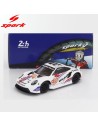
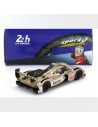
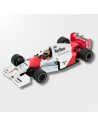
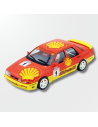
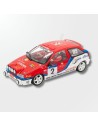
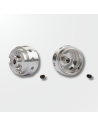
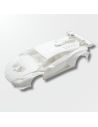
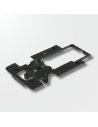
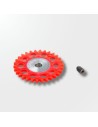
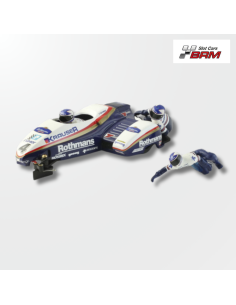
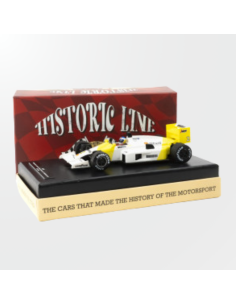
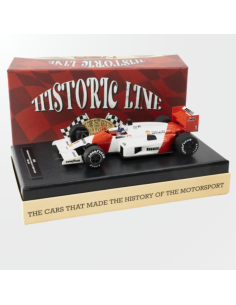
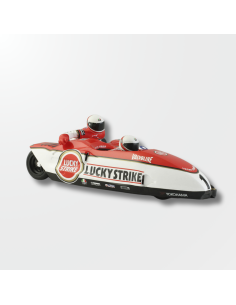
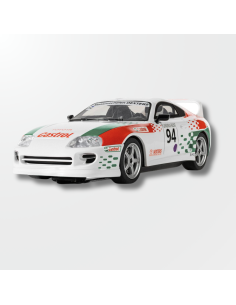
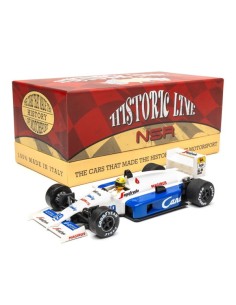
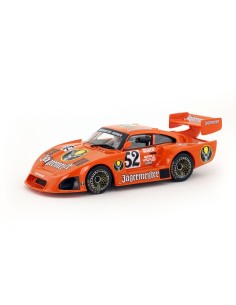
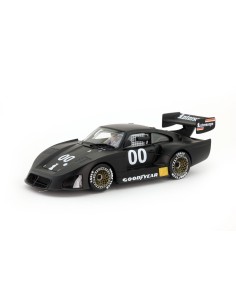
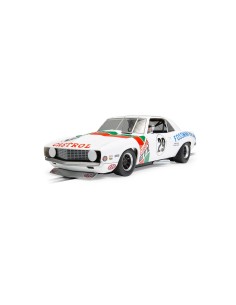
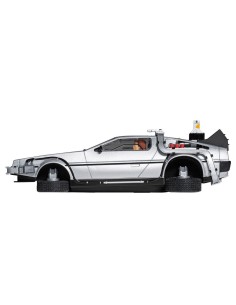
There are slot cars that are bought to race, and there are cars that are purchased because they are unique pieces. In this section, both worlds coexist: resin body models with a level of detail that injection plastic hardly reaches, and editions designed for collectors who value exclusivity as much as performance on the track. It may not be the most accessible section of the catalogue, but it is the one that usually triggers that moment of "I need this" as soon as you see the detailed photos.
Resin as a material allows manufacturers to reproduce complex geometries, fine reliefs, and surfaces that would be unfeasible or very costly in a conventional injection mould. Therefore, when a brand opts for this process, the result is usually a model that is visually at another level: body panels with more defined lines, more intricate interior details, and an overall coherence that brings the miniature closer to sculpture. It is not magic; it is a combination of artisanal and industrial processes.
At Ministry of Hobby, we have long been convinced that this segment deserves its own space. The enthusiast who arrives here knows what they are looking for: not just a beautiful car, but a model with history, with identity, with something to tell. Whether you are a driver looking for a competitive car with a luxurious presentation, or a pure collector who will never take the model to the track, you will find options designed for you here.
What are resin cars in the slot world and why are they so valuable
Resin is a polyurethane material that is poured into silicone or aluminium moulds and hardens to form highly faithful and lightweight pieces. In the context of 1/32 and 1/24 scale slot racing, its use as a body material allows for more detailed reproductions than those obtained by injection moulding thermoplastic, which requires more generous release angles and tends to soften edges.
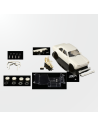
The result is a body that, to the touch and sight, has a different presence: flatter surfaces, sharper transitions between panels, and the possibility of incorporating very fine three-dimensional details without the added cost of complex injection tooling. Some brands go further and combine resin bodies with photo-etched components (very fine metal stamped) for grilles, mirrors, or wings, further elevating the level of detail.
From a collector's perspective, resin also offers an advantage: production runs are usually shorter. Producing in resin is more artisanal and less scalable than mass injection, which makes many of these models limited editions with intrinsic added value. A resin model from ten years ago in good condition can be worth significantly more today than its original price.
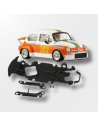
Avant Slot is one of the few brands that produces resin bodies on an industrial scale within the slot world, with models that combine competitiveness on the track with first-rate visual presentation. Their series of historic competition cars are a good example of what can be achieved when the technical level of the chassis aligns with the sculptural quality of the body.
How to choose correctly in this category
Before clicking "add to cart," it is advisable to clarify a few things that make the difference between a satisfactory purchase and a disappointment.
Are you going to race it or display it?
Not all resin cars are designed with the same purpose. Some are pure competition cars with exceptional presentation: engineering plastic or fibre chassis, quality electronics, specific compound tyres. Others are more oriented towards display: more elaborate finishes, perhaps with hand-painted parts, but with more basic mechanics. Identify what use you are going to give it before focusing on the price.
Compatibility with your track
This point is critical and often overlooked. Slot cars use different rail systems. The universal rail is used by brands like Scalextric or Ninco. The sport rail is used by Scaleauto or Slot.it. Both measurements are different and are not directly interchangeable without adaptations. Before buying, confirm that the guide and the braid spacing of the model you are interested in are compatible with your circuit. You can resolve any doubts in the product sheet and with our customer service team.
Scale
Most of these models are 1/32, the dominant scale in competitive slot racing. However, there are collection models in 1/43 or 1/24 that are not designed to race but to display. Check the scale before assuming compatibility with your track.
Condition and packaging
In limited editions and collection models, the condition of the packaging can significantly affect resale value. If you are a collector who cares for your investment, pay attention to this detail.
Main types and differences within the category
Not everything you will find here is exactly the same. It is advisable to distinguish the major groups to better orient yourself.
Competition resin cars
These are models with resin bodies mounted on competitive chassis. The resin provides visual detail; the mechanics are designed to perform on the track. They usually come with quality motors, lightweight wheels, and specific compound tyres. They are the ideal option if you want to shine both on the circuit and in the display case.
Exhibition or pure collection resin cars
Models where the priority is the visual finish. They may include hand-painted decoration, high-resolution decals, intricate interior details, or photo-etched components. The mechanics are secondary or non-existent. They are designed for display, shelving, or presentation boxes.
Limited and special editions
Many manufacturers produce numbered editions, exclusive versions of historic liveries, or commemorative models in very short runs. The collector's value here is high. Some of these models sell out quickly and are not restocked.
Related diecast collection models
Although diecast (pressure-cast metal) is a different category from slot, in the universe of competition miniature collectors, the two worlds overlap. Scales 1/43, 1/18, or 1/64 with museum quality finishes also have their space in this section for collectors who do not distinguish boundaries between disciplines.
Technical aspects we should know
Understanding some technical concepts helps to make more informed decisions and to get the most out of these models.
The resin body and its handling
Resin is more fragile upon impact than injection plastic. A sudden fall or an accident on the track can cause micro-cracks or breaks that in conventional plastic would be recoverable dents. One must be aware of this if the model is to be raced regularly. It is not a "delicate" material in the sense that it cannot withstand use, but it does require more care against direct impacts.
Painting and finishes on resin
Resin accepts paint very well, both in airbrush and brush applications. If at any point you want to touch up or customise a model, brands like Vallejo, Tamiya, or Kaleido offer specific paints for miniatures with excellent results on this material. It is important to lightly sand the surface and apply a primer coat before painting to ensure adhesion.
Braids and guides
In models intended for racing, the braids (the contacts that collect current from the rail) and the guide are wear components that should be checked periodically. Some competition resin models come with high-conductivity braids that improve electrical response; this is a technical detail to check in the product sheet.
Weight and balance
Resin is usually denser than injection plastic, which can slightly increase the total weight of the car. In competition, this influences cornering behaviour. Many preparers add strategic ballast to cars with resin bodies to compensate for or take advantage of that extra mass.
Practical tips for use, maintenance, and preservation
Whether you race the model or display it, there are a series of good practices that extend the life and maintain the value of the car.
- Storage: store the models in their original boxes or in closed display cases. Dust and direct UV light degrade finishes and decals over time.
- Cleaning: use a soft brush or compressed air to remove dust. Avoid abrasive products or strong solvents on the painted body.
- Handling: pick up the models by the base or chassis, not by protruding parts (wings, mirrors, antennas). These are the most vulnerable points in resin.
- Racing: if you are going to race it, check the condition of the braids and guide before each session. A worn guide ruins the driving experience and can damage the track.
- Lubrication: gears and axles should be lubricated with specific slot products. Excess lubricant can stain the resin body; apply it precisely.
- Repairs: for small breaks in resin, cyanoacrylate (super glue) applied carefully and reinforced with bicarbonate works well. For finishes, touch up with compatible acrylic paint.
Common mistakes to avoid
Over time and with experience in the sector, we have seen some mistakes that are completely avoidable with a little information.
Buying without verifying rail compatibility
We have mentioned it before, but it bears repeating: mixing a car designed for sport rail (Scaleauto, Slot.it) with a universal rail track (Scalextric, Ninco) —or vice versa— can cause driving problems or even damage. Always confirm before buying.
Racing a collection model without prior preparation
Some collection models are not factory-adjusted for competition. If you put it on the track without checking the guide, braids, and chassis adjustment, the experience can be frustrating. Spend a few minutes tuning it before the first session.
Ignoring the condition of the resin when buying second-hand
In the second-hand market, resin bodies can have micro-cracks not visible in photos. If you buy a used model, ask for well-lit photos from various angles, especially in the areas of the rear wing, skirts, and mirrors.
Storing models without protection
Leaving a resin model exposed to direct sunlight or in a humid environment can cause discolouration or material fragility. Proper preservation is part of the hobby for any serious collector.
Underestimating the value of a limited edition
Many enthusiasts let limited editions pass by waiting for a discount that never comes. In this segment, when it sells out, it sells out. If something truly interests you, do not leave it for tomorrow.
Recommendations for beginners and advanced users
If you are new to the world of resins and collecting
The best entry point is a model from a well-established brand like Avant Slot, which combines construction quality with verified track performance. Do not start with the most exclusive and expensive edition; first, familiarise yourself with handling resin bodies, learn how to clean and preserve them, and then increase your investment level wisely.
If your interest is pure collecting and you do not have a track, start by defining what type of models you want to collect: a competition category (GT, Le Mans, F1)?, a team?, a period? Having a common thread makes the collection more coherent and satisfying, and also more valuable in the long term.
If you already have experience
For the advanced driver, competition resin cars offer the possibility of customising weight distribution by taking advantage of the material's density. Experiment with ballast and motor position to find the balance that best suits your driving style and the type of circuit where you compete.
For the advanced collector, pay attention to numbered series and models of limited artisanal production. Keeping track of manufacturers' new releases —and pre-sales in specialised stores like Ministry of Hobby— is the best way to not miss out on the most coveted pieces.
| Feature |
Competition Resin |
Collection Resin |
Diecast Collection |
| Main Material |
Resin + plastic/fibre chassis |
Painted/decorated resin |
Diecast metal (zinc/aluminium) |
| Track Use |
Yes, prepared for racing |
Not recommended / secondary |
No |
| Detail Level |
High |
Very high / artisanal |
High – very high depending on range |
| Production Run |
Limited / moderate |
Very limited |
Variable (short in high range) |
| Collector's Value |
Medium-high |
High |
High in scales 1/18 and 1/43 |
| Fragility to Impacts |
Medium (resin) |
High (decorative pieces) |
Low-medium (metal) |
Frequently asked questions about resins and collecting
Are resin cars more fragile than plastic ones?
In the face of direct impacts, yes. Resin does not absorb the shock like injection plastic, which tends to bend before breaking. However, under normal use and preservation conditions, it is a very stable and durable material.
Can I race a resin car on any track?
It depends on the rail system for which it is prepared. Always check if the model uses a guide and braids for universal rail (Scalextric, Ninco) or sport rail (Scaleauto, Slot.it) before putting it on the track.
Which brands manufacture resin cars for slot?
Avant Slot is one of the clearest references in industrial production of resin bodies for slot. There are also more artisanal manufacturers with very short runs and higher prices.
Can a resin body be painted or repainted?
Yes, resin accepts acrylic paint very well. It is recommended to lightly sand the surface and apply primer before painting. Brands like Vallejo, Tamiya, or Kaleido are solid options for this type of work.
Do resin cars have investment value?
Well-preserved limited editions, especially with original packaging, can appreciate over time. It is not a universal rule, but in the specialised second-hand market, short-run resin models tend to sell for more than their launch price.
How do I know if a model is for collection or competition?
The product description usually indicates this. Competition cars include chassis, motor, tyre, and rail system compatibility data. Collection cars emphasise finish, visual details, and edition numbering.
What is the difference between a diecast car and a resin one?
Diecast is made from pressure-cast metal (usually zinc or aluminium alloys), giving it more weight and impact resistance. Resin is lighter and allows for greater fidelity in body details. Both have their place in collecting, but with different usage profiles.
Is any preparation necessary before racing a new resin car?
Yes. It is advisable to check the guide adjustment, the condition of the braids, and the lubrication of gears before the first session. Some models require a gentle initial run-in for the tyres and motor to reach their optimal performance point.
How do I properly preserve a collection of resin models?
Keep them away from direct sunlight and humid environments. Use closed display cases or the original boxes. Clean periodically with a soft brush or compressed air. Avoid handling the models by the most delicate protruding parts.
Are resin models available in scales other than 1/32?
Yes. Although 1/32 is the dominant scale in slot, there are resin and diecast models in 1/43, 1/24, and 1/18, mainly oriented towards static collecting. Each scale has its community and its own criteria for detail.
Can I find replacement resin bodies if I break one?
Some manufacturers offer replacement bodies separately, but this is not universal. Before buying a model to race regularly, it is advisable to check if the manufacturer has a body replacement policy.
What tools do I need to assemble or adjust a competition resin car?
Basic adjustments require precision screwdrivers, small-format Allen wrenches, and, for lubrication, fine applicators. If you are going to touch up paint, you will need primer, acrylic paint, and quality brushes or an airbrush for more elaborate work.