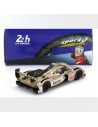
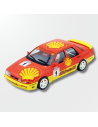
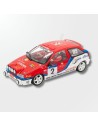
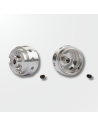
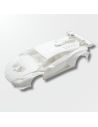
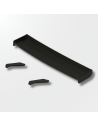
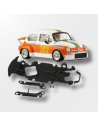
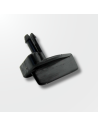
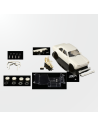
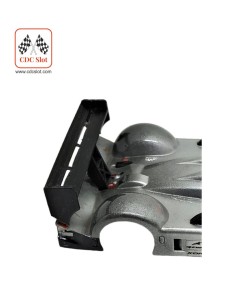
A hit on the track, a high-speed accident, or simply the passage of time can leave a body shell in poor condition. When that happens, any enthusiast's first reaction is to look for the exact part that will restore the car to its original appearance, and that is not always straightforward. Body parts for slot cars range from front and rear spoilers to rear-view mirrors, headlight covers, engine covers, diffusers, canopies, and any other element that forms part of the vehicle's exterior. They are small parts, often fragile, and that is why they disappear or break more frequently than we would like.
At Ministry of Hobby, we know there are two types of people looking for these parts: the driver who competes and needs their car to be in optimal condition as soon as possible, and the collector or restorer who wants to return a model to the state it was in when it left the factory. Both need exactly the same thing: the correct, original part, and it needs to arrive quickly. That is why we have worked to have spare parts from the most representative brands in the hobby in our catalogue, with updated references and real stock.
What differentiates a good search for spare parts from a bad experience is the detail. An NSR body shell is not interchangeable with a Slot.it one, even though both are 1/32, just as an Avant Slot spoiler does not fit Scaleauto, even though they share scale and look similar. Specificity is essential, which is why we dedicate time to keeping the data sheets well documented so you can identify the part before adding it to your cart.
If you have doubts about which part corresponds to your model, our team has been working with these references for years and can help you identify it. Finding the exact part can be the difference between restoring a car and having it sitting indefinitely in a drawer.
What are body parts and why are they so important
The body shell of a slot car is not just aesthetic, although it may seem so at first glance. Of course, the visual aspect is important, especially in collector cars or replicas of real vehicles, but some body parts also have an aerodynamic or structural function that influences the car's behaviour on the track.
The rear spoiler, for example, is not just there for looks. In some competition models, it is designed to generate aerodynamic downforce at high speeds, improving stability in corners. A broken or poorly positioned spoiler can slightly change the car's balance, something that may hardly be noticeable at the casual hobby level but can make a difference in timed racing.
Rear-view mirrors, antennas, headlight covers, or rear diffusers, on the other hand, are mostly purely aesthetic parts. But for a collector looking to keep their models pristine, or for someone wanting to restore a vintage car, finding that specific part can mean the difference between a complete model and one that is "almost good."
From the driver's perspective, a damaged body shell can also pose a practical problem: loose parts that rub against the track, fragments that fall onto the lane and cause interference with the guide, or imbalances due to asymmetrical elements after an impact. Keeping the body shell in good condition is not just a matter of pride; it is part of the basic maintenance of any car.
How to correctly choose body parts
The most important criterion when looking for a body part is exact compatibility with the model. There is no "universal" body part: each manufacturer designs theirs with specific geometries, anchoring points, and dimensions. Before searching, note:
- The brand of the car: NSR, Slot.it, Avant Slot, Scaleauto, Scalextric… each has its own fastening system.
- The exact model: an NSR Ferrari 488 GT3 and a Scaleauto Ferrari 488 GT3 do not share body parts even though they represent the same real car.
- The reference of the car: some manufacturers have released several versions of the same model with slight differences. The numerical reference that appears on the box or on the website is your best ally.
- The specific part you need: front spoiler, rear spoiler, left mirror, right mirror, canopy, engine cover, diffuser, etc. The more precise you are, the easier it will be to find it.
If you have the car in front of you, it is advisable to visually compare the photos of the part before purchasing. Most brands name their spare parts using the same nomenclature they use in their car manuals, which makes searching easier.
In the case of complete replacement body shells (which also exist in some brands), consider whether they come painted or in virgin plastic. Unpainted body shells are ideal for those who want to customise them with an airbrush or acrylic paint, while painted ones allow for direct replacement without additional work.
Main types and differences
Within body parts, we find well-defined categories according to their function and the type of car they belong to:
Spoilers and wings
These are the most requested parts because they are the most vulnerable in impacts. The rear spoiler, especially on GT and Le Mans cars, is usually a prominent piece that protrudes and is easily damaged. There are rigid versions and more flexible versions depending on the material used by each manufacturer.
Rear-view mirrors
Small parts of high aesthetic value. In modern competition models, they may be moulded to the body shell, but in many classic or resin models, they are independent parts that are glued or fitted. They are among the most likely to be lost when disassembling or in accidents.
Canopies and windshields
Transparent canopies are delicate parts that can scratch or break. Some brands offer them as independent spare parts. A windshield in good condition makes a significant difference in the final appearance of a collector car.
Engine covers and hoods
In cars with central or rear engines, the engine cover is a distinct part that in some models is removable to showcase the engine detail. They can break at the fastening systems if forced.
Diffusers and underbody parts
More common in modern competition cars, rear diffusers are part of the aerodynamic package. In some racing regulations, it is specified that they must be in good condition for the car to be homologated on track.
Complete body shells
Some brands, especially NSR and Slot.it, offer complete body shells as spare parts or as independent products. These may come painted in a specific livery or unpainted for customization. Avant Slot, as one of the few brands that works with resins at an industrial level, also has body shell options in this material for its models.
Technical aspects we should know
Beyond aesthetics, there are some technical aspects to keep in mind when working with body parts:
Most common materials
Most body shells in the current slot market are made of polycarbonate or ABS. Polycarbonate is more flexible and impact-resistant, making it ideal for competition. ABS is stiffer and allows for more precise paint finishes, so it is more common in collector-oriented models.
Resins are a third option, mainly used in high-end or limited edition cars. They are heavier, allow for a higher level of detail, and are worked differently in both painting and repair.
Fastening systems
Body shells are attached to the chassis in different ways depending on the manufacturer: side clips, screws, pressure systems in the guide… Understanding how to disassemble and assemble the body shell without forcing the anchoring points is essential to avoid creating new breaks during maintenance.
Weight and centre of gravity
In competition cars, the weight of the body shell and its distribution influence dynamic behaviour. Replacing an ABS body shell with a lighter polycarbonate one can affect the car's balance. This is not critical at a casual level, but it is something to consider if competing in timed categories.
Practical maintenance and restoration tips
Keeping body shells in good condition does not require large investments, but it does require some judgement and the right products:
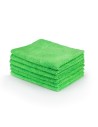
- Regular cleaning: dust and dirt accumulated on the body shell can be disguised, but in the long run, they affect the appearance. A slightly damp microfiber cloth is sufficient for most materials.
- Do not use aggressive solvents directly on the painted body shell: they can attack the paint or plastic. If you need to remove a stain, use water with mild soap or specific modelling products.
- Check the clip points after each session: fastening systems tend to fatigue with repeated use. If you notice that the body shell has more play than usual, check them before they break.
- Storage without pressure: if you store cars stacked or in tight spaces, ensure that protruding parts (spoilers, mirrors) are not subjected to continuous pressure, as plastic can deform.
- Appropriate glue: if you need to glue a small part like a mirror, use cyanoacrylate in minimal amounts. Excess can stain the body shell or create white marks on transparent areas.
Common mistakes to avoid
In the search and replacement of body parts, there are mistakes that are repeated over and over, especially among those who are new to the hobby:
Buying without verifying exact compatibility
This is the most common mistake. "It's a rear GT spoiler" is not sufficient information. Each model has its specific geometry. Always check the car's reference and that of the part before purchasing.
Trying to repair with inappropriate materials
Using silicone, adhesive tape, or general-purpose glues to repair body parts almost always ends worse than starting over. If the part is broken, look for the original spare part or use the specific adhesives recommended for each material.
Forcing disassembly
If the body shell does not come off on the first attempt, do not force it. Each manufacturer has its own system, and if you do not know the mechanism, it is easy to break a clip or deform an anchoring point. Look for the manual or a specific video of the model before applying force.
Ignoring weight when replacing with different materials
Replacing an ABS body shell with a resin one, or vice versa, can change the car's behaviour more than expected. If you compete, keep this variable in mind.
Losing small parts when disassembling
Mirrors, antennas, and small parts are masters at disappearing. Always work on a clear surface and have a container to place the parts you are removing.
Recommendations for beginners and advanced users
If you are a beginner
Start by learning to correctly disassemble and assemble your car's body shell without breaking anything. Once you master that process, replacing a damaged part becomes routine. Look for your model's manual, which usually includes a breakdown with references for all components, including body parts available as spares.
For cleaning and maintaining body shells, you do not need anything special: a soft cloth, water, and patience are sufficient for day-to-day care. If you need to repair a small break, gel cyanoacrylate is your ally.
If you are an advanced user
You probably already know that the body shell influences performance more than it seems, especially in cars configured for competition. Adjusting the height of the body shell, ensuring it does not rub against the track surface in corners, or choosing between a lighter version and a more robust one are decisions that affect results.
If you work with unpainted body shells for customization, the surface preparation process is key: fine sanding, appropriate primer for the material (polycarbonate requires specific primer), and acrylic paints such as those from Vallejo, Kaleido, or Tamiya for a professional and controlled finish. Using an airbrush allows for results that are not achievable with a brush or spray.
| Material |
Common Use |
Impact Resistance |
Ease of Painting |
Relative Weight |
| ABS |
Collection and series models |
Medium |
High |
Medium |
| Polycarbonate |
Competition and intensive use |
High |
Medium (requires preparation) |
Low |
| Resin |
High-end, limited edition |
Low (fragile) |
High (superior detail) |
High |
Frequently asked questions about body parts
Are body parts interchangeable between brands?
In general, no. Each manufacturer designs their body shells and spare parts with their own geometries and fastening systems. A part from NSR is not compatible with a Slot.it car even if both are 1/32 and represent similar cars.
Can I find spare parts for discontinued cars?
It depends on the brand and how long it has been discontinued. Some brands keep spare part stock for years. For very old models, the second-hand market or enthusiast communities are usually the best option.
Are unpainted body shells suitable for any type of paint?
It depends on the material. ABS ones accept acrylic paints well with slight preparation. Polycarbonate ones require specific primer. Resin ones also accept acrylics but it is advisable to lightly sand the surface before priming.
Does a broken spoiler affect track performance?
In casual use, it is hardly noticeable. In timed competition, a damaged or asymmetrical spoiler can affect stability at high speeds, especially in cars with advanced aerodynamic configurations.
How do I know which spare reference I need?
The safest way is to consult the official breakdown from the manufacturer, which is usually available on their website or included in the car's box. If you do not have it, the reference of the complete model and the exact name of the part are usually sufficient to locate the correct spare.
Can resin body shells be repaired if they break?
Yes, but they require more care than ABS or polycarbonate. Gel cyanoacrylate works well for clean joints. If the break is complex, some modellers use fine polyester putty to reconstruct the shape before repainting.
Can I install a competition body shell on a standard car?
If the body shell is from the same manufacturer and the same chassis, yes, as long as the anchoring points are compatible. Some brands market alternative body shells for their own chassis specifically for this type of customization.
What glue is most recommended for small body parts?
Gel cyanoacrylate, applied in very small amounts, is the most controlled and effective option for small parts like mirrors or antennas. Avoid liquid cyanoacrylate in transparent areas as it can generate white stains from the fumes.
Can factory-painted body shells be repainted?
Yes, although it is advisable to remove the original paint before applying the new one, especially if a clean finish is desired. Fine sanding, priming, and acrylic paints such as those from Vallejo or Tamiya are the most commonly used materials for this work.
How often should I check the condition of the body shell?
In frequently used cars, a quick visual check at the end of each session is sufficient to detect early cracks or loose parts before the problem worsens. In collector cars, a periodic check every few months and proper storage are sufficient.