If you have ever felt that your slot car loses connection in corners, that the electrical contact fails on the longest straights, or that the car simply does not deliver the power it should, almost certainly the problem lies in the guide or the wiring. These are two of the smallest components of the vehicle and, at the same time, two of the most influential on actual track performance. A worn or poorly adjusted guide causes loss of grip and poor guidance in the slot; an insufficiently sized wire or a cold joint limits the current available to the motor and causes the car to perform below its capabilities.
In this category, you will find replacement guides and wires designed for the vast majority of slot cars on the market in scales 1/32 and 1/24, for both home track use and federated competition. If you are preparing a car for the next race or simply want to restore the original response of a collector's model that you haven't run in a while, you are in the right place.
We work with references from brands such as NSR, Slot.it, Avant Slot, and Scaleauto, which are the ones that truly take the spare parts catalogue seriously. Every product we list has passed through our own filter: if we wouldn’t use it in a competition car or in a workshop setup, we don’t include it.
What are guides and wires and why are they so important
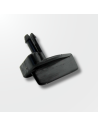
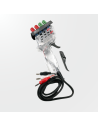
The guide —also called a skid or rudder depending on the jargon you use— is the plastic piece that fits into the track slot and keeps the car on its path. It has integrated braids that rub against the copper rails of the circuit and collect the electrical current that powers the motor. Therefore, the guide simultaneously performs two critical functions: mechanically guiding the car and transferring electrical energy.
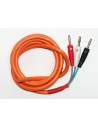
The wire, on the other hand, connects those braids to the motor. Its cross-section determines how much current it can carry without generating heat or voltage drops. In a well-prepared competition car, an inadequately sized wire can cause a loss of several km/h in top speed without the driver knowing exactly why.
Both components suffer physical wear with use. The braids erode from friction against the rails, the guides wear down from lateral contact with the slot, and the wires can suffer wire breaks due to accumulated vibrations. Replacing them in time is one of the most cost-effective maintenance tasks you can perform.
How to correctly choose the guide and wire
Compatibility with the track system
The first piece of information you need to know is the track system you will be running on. The universal slot, used by Scalextric and Ninco, has a different slot width and rail spacing than the sport slot, used by Scaleauto and Slot.it. Using a guide designed for sport slot on a Scalextric circuit may seem to work, but excessive or insufficient lateral play will affect driving and electrical contact.
If you mix tracks from different manufacturers —something common in clubs and competitions— make sure to inform yourself well before choosing the guide. Brands like Scalextric, Scaleauto, Ninco, or Carrera have their own specifications and are not always interchangeable without modification.
Length of the pin
The pin is the part of the guide that penetrates the slot. A longer pin offers greater stability in corners and less risk of derailment, but it may rub against the bottom of certain tracks or hinder passage through joints. A short pin reduces the risk of snagging but also decreases safety in fast corners. For competition, the usual trend is to use the longest pin allowed by the regulations.
Wire cross-section
The wire cross-section is measured in square millimetres or AWG (American Wire Gauge). For slot cars in scale 1/32, a cross-section between 0.5 mm² and 1 mm² is usually sufficient for home use. In competition, where the available current is higher and any loss is minimised, sections of 1 mm² or higher are preferred, with high-purity copper wires and maximum flexibility to avoid breakage due to fatigue.
Material and finish of the braids
The braids that come factory-fitted on many cars are adequate for home use, but in competition, they are replaced with braids that have a larger contact surface or are made from materials with lower electrical resistance. You will find standard braids and competition braids in the category; the price difference is small, and the impact on performance can be significant.
Main types and differences
Guides by profile
- Standard guide: the one that comes with the car as standard. Suitable for home use and for those not seeking special optimisation.
- Competition guide: made from harder plastic, with optimised geometry to reduce lateral friction and improve steering response. They usually come with higher quality braids as standard.
- Magnetic or wide head guide: designed to maximise the effect of adhesion magnets on the rails. Very popular in categories where magnetic downforce is allowed.
Guides by rail compatibility
- For universal slot (Scalextric, Ninco): pin adapted to the width and depth of the slot of these systems.
- For sport slot (Scaleauto, Slot.it): narrower profile, more precise fit in the sport slot.
Cables by use
- Standard cable: polyethylene or PVC, basic cross-section. Suitable for maintenance replacements in recreational use cars.
- Silicone cable: greater flexibility, better vibration resistance, recommended for competition setups. Takes up slightly more space due to the thicker insulation.
- High-purity stranded copper cable: minimal electrical resistance, maximum power transfer. The usual choice in prepared competition cars.
Technical aspects we should know
Electrical resistance and power loss
The current that reaches the motor passes through the track rails, the braids, the wire, and the connections. At each of these points, there can be a small loss due to electrical resistance. Individually, each loss seems insignificant, but the sum of all can translate into a real speed difference. That’s why, in serious setups, every link is worked on: clean braids, good section wires, cold-free soldering, and firm connections.
The guide pivot
The guide is not a rigid piece: it rotates on a pivot that allows it to follow the slot in corners while the car maintains its trajectory. If the pivot is worn or has too much play, the guide "floats," and the electrical contact becomes intermittent. If it is too tight, the guide cannot rotate freely, and the car pulls outward in corners. The correct play in the pivot is one of those small details that makes the difference between a car that runs well and one that always seems on the edge.
Guide position relative to the chassis
In many competition chassis, it is possible to adjust the longitudinal position of the guide: further forward or further back relative to the front axle. This adjustment changes the behaviour in corners. A more forward guide provides more stability but reduces steering response; a more rearward position increases agility but can make the car more twitchy. There is no universal position: it depends on the circuit, driving style, and the motor mounted.
Practical tips for use, maintenance, and preparation
- Clean the braids regularly. Graphite dust and debris from the track accumulate on the braids and increase electrical resistance. A clean cloth or a cotton swab with isopropyl alcohol is enough to keep them in good condition.
- Check the pivot before each competition session. A worn pivot is one of the most common causes of contact failures and erratic behaviour on track.
- Solder, do not use pressure connectors. In competition, soldered connections offer much lower electrical resistance than pressure connectors or simple twisted wires. Learn to solder correctly: it is a skill you will benefit from in every setup.
- Use the minimum necessary wire length. Every centimetre of wire adds additional resistance. Measure the run between the guide and the motor carefully and cut the wire to fit, leaving only the necessary margin for the guide to rotate without tension.
- Protect the wire from abrasion. In cars with little interior space, the wire may rub against the chassis or the rear wheels. Use heat-shrink tubing or wire protectors to prevent the insulation from deteriorating.
Common mistakes to avoid
Assuming all guides are universal
They are not. A guide designed for sport slot can be physically mounted on a car designed for universal slot, but the track adjustment will not be correct. Always check the track system and car model before purchasing.
Ignoring braid wear
Worn braids are perhaps the number one cause of unnoticed performance loss. If your car has lost punch for no apparent reason, start by checking the braids before blaming the motor.
Using wire that is too thin
The wire that comes factory-fitted on some mid-range cars is sufficient for home use, but on a competition track with higher voltage or in setups with high-consumption motors, it can be a bottleneck. Upgrading to a thicker wire is one of the cheapest and most effective improvements you can make.
Making solder joints with a dirty soldering iron tip or at the wrong temperature
A cold solder joint —dull, grainy appearance— has much higher electrical resistance than a proper solder joint —shiny, fluid appearance—. Clean the soldering iron tip before each use and work at the appropriate temperature for the solder you are using.
Not respecting the tolerances of the regulations
In federated competition, the regulations usually specify maximum lengths for pins, widths for guides, and in some cases, the type of braid allowed. Preparing the car with a guide that is out of regulation can lead to disqualification. Always check the regulations for your category before choosing.
Recommendations for beginners and advanced users
If you are starting out
It is likely that your starter car already has a functional factory guide. The first step is not to change it but to learn to maintain it: clean the braids, check that the guide rotates freely on the pivot, and ensure that the wire is not pinched. When you notice that the car starts to lose electrical response or that the guide has too much play, it is time to make your first replacement. Choose a guide compatible with your track system and a good quality standard wire; you don’t need to go for the most expensive reference for a first change.
If you already have experience
At this level, the guide and wire are part of the overall preparation of the car. You will work with competition guides, adjust the pivot position, choose the pin length according to the circuit layout, and pay attention to the wire's cross-section and material. Brands like NSR, Slot.it, Avant Slot, and Scaleauto offer a catalogue of guides and preparation accessories that allow you to adjust each parameter precisely. The difference between a well-wired car and one that is not is particularly noticeable on circuits where the power supply operates at the limit or in long-duration races where heat accumulated in a poor-quality wire can cause failures.
| Type of guide |
Compatible system |
Recommended use |
Main advantage |
| Standard |
Universal / sport slot |
Domestic, beginner |
Economical, easy replacement |
| Competition |
Universal / sport slot |
Club, federated |
Greater hardness, better contact |
| Wide head / magnetic |
Universal slot |
Categories with magnetic downforce |
Maximises magnet effect |
Frequently asked questions about guides and wires
Can I use any guide on my slot car?
No. You need the guide to be compatible with the track system (universal or sport slot) and for the pivot housing in the car chassis to be the correct diameter. Always check both details before purchasing.
How often should I change the braids?
It depends on use. In intensive competition sessions, it may be necessary to check them every few hours of running. In casual home use, they can last many sessions. The important thing is to inspect them visually: when the contact material is very worn or the surface appears uneven, it is time to replace them.
What wire cross-section is most suitable for competition?
For most categories in 1/32, a wire of 0.75 mm² to 1 mm² of high-purity copper is a balanced choice. In higher power categories or with high-current sources, it may be justified to increase to 1.5 mm².
Is it better to solder the wire or use connectors?
For competition, always soldering. Pressure connectors add electrical resistance and can loosen due to vibrations. A well-executed solder joint is the most reliable connection with the least power loss.
Does the guide influence cornering behaviour?
Yes, directly. The length of the pin, the play in the pivot, and the longitudinal position of the guide affect how the car navigates corners and its overall stability.
Can I adapt a sport slot guide to a Scalextric circuit?
Physically it may fit, but the lateral adjustment will not be optimal and the electrical contact may be irregular. It is most advisable to use the appropriate guide for each track system.
What is a cold solder joint and how do I avoid it?
A cold solder joint occurs when the solder has not melted properly and solidifies with a dull or grainy appearance. To avoid it, heat the piece well before applying the solder (not the other way around), use quality solder, and keep the soldering iron tip clean and tinned.
Are NSR and Slot.it guides interchangeable?
It depends on the specific model and the diameter of the chassis pivot. Some are directly interchangeable; others require an adapter. Always check the product sheet or ask us if you have doubts about compatibility.
What pin length is best for beginners?
For beginners, the standard pin that comes factory-fitted or a medium-length pin is the most balanced option: enough grip without the risks of snagging that a very long pin can cause on tracks with irregular joints.
Is silicone wire better than PVC?
Silicone wire is more flexible and better withstands fatigue from vibrations, making it more suitable for competition setups where the car undergoes more mechanical stress. For home use, the difference is less relevant.
How do I know if my car's guide is worn?
Clear signs: the car comes off the slot more frequently than normal, the electrical contact is intermittent, or there is excessive lateral play visible when moving the guide by hand. If you see any of these symptoms, it is time to check and possibly replace.
Can I install the guide myself or do I need to go to a workshop?
Replacing the guide and wire is one of the most accessible operations in slot maintenance. With a screwdriver, a basic soldering iron, and a little practice, any enthusiast can do it at home. If you have never soldered before, practice first on a scrap piece of wire.