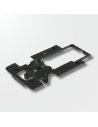
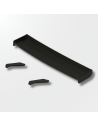
When preparing a slot car for competition, we tend to focus on motors, tyres, or crown gears, but there is one variable that many enthusiasts underestimate: the unsprung weight. Everything above the chassis —body, windows, interior— adds inertia and raises the centre of gravity. This is where the lexan interior comes into play. This seemingly discreet piece can make a real difference in braking, lateral response, and overall cornering behaviour.
Polycarbonate or lexan is a high-strength thermoplastic that, at very thin thicknesses, offers surprising rigidity with minimal weight. In the world of competitive slot racing —and also in high-level preparations for amateur use— replacing the original resin or ABS plastic interior with one made of lexan is one of the most cost-effective modifications in terms of grams saved per euro invested. And the grams, in a scale car, are much more noticeable than one might imagine.
In this category, you will find complete interiors, side windows, front and rear windscreens, and other interior body parts made of lexan, compatible with various brands and models. If you are looking to take your preparation to the next level without touching the electronics or the powertrain, this is the perfect starting point.
What is a lexan interior and why does it matter in preparation
Lexan —the commercial name for polycarbonate from the SABIC company, widely adopted as a generic term in the hobby— is a material that combines three highly valued properties in competition: lightness, transparency, and impact resistance. In the context of slot racing, it is used to manufacture parts that in standard cars are moulded in ABS plastic or resin, which are considerably heavier materials.
A standard ABS interior can weigh between 3 and 8 grams depending on the model. Its lexan equivalent usually weighs less than 2 grams, sometimes even less. That difference may seem insignificant, but it is important to consider that this mass is located high up in the car, far from the ground. In vehicle physics —at any scale— excessive weight negatively affects cornering stability, increases the likelihood of rollover, and increases rotational inertia. Eliminating or reducing it directly improves grip, response, and predictability of behaviour.
In regulated competition, many categories establish a minimum weight for the entire assembly. Using a lexan interior allows for more controlled weight adjustments, adding ballast exactly where it is most beneficial —generally under the chassis— instead of loading it in detrimental areas. This is a strategy that experienced preparers know well.
Beyond pure performance, the lexan interior also has practical advantages: it better withstands minor impacts without breaking, can be trimmed and adapted with relative ease, and in some cases accepts paint or ink similarly to ABS, although it requires proper surface preparation.
How to correctly choose a lexan interior
The first variable is compatibility with the model. Lexan interiors are usually manufactured specifically for particular bodies: they are not universal parts. Before purchasing, check that the manufacturer specifies which body reference the interior is designed for, as tolerances are tight and a poorly fitting piece can vibrate, move, or even interfere with the wiring or guide.
The thickness of the material is another key factor. Lexan interiors for slot cars are typically produced in thicknesses ranging from 0.125 mm to 0.5 mm. Thinner thickness means less weight, but also less rigidity. For high-level competition, thinner thicknesses are usually preferred, accepting some fragility. For regular use or less demanding championships, an intermediate thickness offers a reasonable balance between lightness and durability.
It is also important to consider whether the interior comes preformed or flat. Preformed interiors already have the three-dimensional shape of the cockpit and fit directly. Flat ones require prior thermoforming or can simply be adjusted cold if they are thin enough, but they require more manual work. For beginners, preformed interiors are the simplest option.
Finally, think about whether you are going to paint it or leave it transparent. Untreated lexan is transparent and can be left that way to simulate windows or, with specific polycarbonate paints (like those applied from the inside in RC modelling), achieve very durable colour finishes. If you are looking for realism or simply want to customise the cockpit's appearance, find out which paints are compatible before purchasing.
Main types and differences
Although the generic term is "lexan interior," within this category there are pieces with quite distinct functions and characteristics:
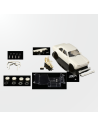
- Complete cockpit: Reproduces the interior of the car —dashboard, seats, steering wheel— in a single piece of polycarbonate. Replaces the original interior and may or may not include the floor of the cockpit. It is the piece with the greatest impact on the total weight of the upper area.
- Side windows and windscreens: Independent windows, generally thinner than the cockpit. They are used when the original body has the windows integrated into a heavy plastic frame, or when only that part is to be replaced. Their weight is very low, but when all the windows of a car are added up, the savings can be significant.
- Interior body panels: Some preparations replace parts of the body interior —such as the inner hood or wheel arches— with lexan pieces when the regulations allow it. This is a less common but very effective practice in categories without strict minimum weight.
- Complete sets: Some manufacturers offer kits that include a cockpit and windows for a specific model. They are the most practical option if a complete transformation is desired in a single purchase.
Technical aspects we should know
Working with lexan has its particularities. Unlike ABS, polycarbonate is more elastic and less fragile against impacts, but it can scratch more easily and reacts differently to conventional adhesives and paints.
Cutting and fitting: Thin lexan cuts well with modelling scissors or a fresh blade cutter. For thicker materials, it is advisable to use a fine-toothed jigsaw or a dremel with the appropriate disc. Always deburr the edges to prevent a sharp edge from damaging the body or fingers.
Adhesion: Cyanoacrylate adhesives (super glue) work with lexan, although the bond is not always as strong as with ABS. For more demanding fixations, it is recommended to use specific polycarbonate adhesive or high-tack double-sided tape, widely used in slot preparation. Avoid aggressive solvent-based adhesives, which can attack the material and leave it opaque or brittle.
Painting: If you want to paint the interior, it is ideal to use paints formulated for polycarbonate, preferably applied from the inside of the piece to protect the finish. Standard acrylic paints (Vallejo, Tamiya, Ammo) can adhere with proper priming, although the result will be less durable than with specific paints.
Temperature: Lexan softens with heat, which can be useful for small shape adjustments, but it also means that it should not be exposed to intense heat sources or left near halogen lights for long periods.
Practical installation and maintenance tips
Installing a lexan interior is a straightforward process if done carefully. Here are the most useful steps and recommendations:
- Check the fit before gluing: Place the interior in the body without adhesive and check that it fits correctly, does not rub against any chassis components, and does not raise the body from its original position.
- Weigh before and after: If you have a precision scale (essential for serious preparation), weigh the body with the original interior and with the lexan one. This way, you will know the actual savings and can plan the ballast.
- Do not force the fit: Lexan is flexible but can bend if fixed under tension. If the piece does not fit naturally, it is better to trim it slightly than to force it.
- Cleaning: To clean lexan, use a slightly damp microfiber cloth. Avoid abrasive products or those with high concentrations of isopropyl alcohol, which can attack the material over time.
- Periodic inspection: In cars that suffer many impacts or frequent disassemblies, it is advisable to check that the interior has not developed micro-cracks or has partially detached, which could affect the car's balance.
Common mistakes to avoid
Most problems with lexan interiors arise from not considering the differences of this material compared to ABS or resin. Here are the most common mistakes:
- Buying without verifying compatibility: As mentioned, these are model-specific parts. An interior that does not fit well can vibrate and become a source of noise or imbalance, or may not work at all.
- Using incompatible adhesives: Some solvents attack polycarbonate and leave it opaque or brittle. Always check that the adhesive is suitable for lexan.
- Ignoring the category regulations: In organized championships, there may be restrictions on what interior modifications are allowed. Before preparing the car for competition, consult the current regulations.
- Not compensating with ballast: Lightening the upper part of the car without taking advantage of that margin to place ballast under the chassis is wasting part of the benefit. The goal is not just to reduce total weight, but to distribute it better.
- Scratching the surface with abrasive cloths: Lexan scratches easily. If the interior has transparent parts that you want to keep clear, always handle it carefully and clean only with soft materials.
Recommendations for beginners and advanced users
If you are just starting
The simplest option is to look for a preformed lexan interior, specific to your model, and replace it directly with the original without additional modifications. You do not need special tools or advanced knowledge. The weight benefit is immediate, and installation takes just a few minutes. If you have doubts about compatibility, consult before buying: at Ministry of Hobby, we can guide you.
For experienced users
The possibilities expand considerably. You can combine the lexan interior with a precise ballast process, choosing the exact point to place the ballast to optimise mass distribution according to the circuit or category. You can also work on the windows separately, painting them with polycarbonate paints to achieve custom finishes, or even thermoform flat lexan pieces to adapt them to resin bodies that do not have interiors made from this material. This is a common technique among preparers who work with bodies from Avant Slot or other brands that offer advanced customisation options.
| Type of piece |
Typical weight (ABS) |
Typical weight (lexan) |
Estimated savings |
Installation difficulty |
| Complete cockpit |
4-8 g |
1-2 g |
3-6 g |
Low (preformed) |
| Side windows |
1-2 g |
0.3-0.6 g |
0.5-1.5 g |
Very low |
| Complete set |
6-10 g |
1.5-3 g |
4-7 g |
Low-Medium |
Note: weights are indicative and vary by model and manufacturer. Always check them in the specific product sheet.
Frequently asked questions about lexan interiors
Is the lexan interior compatible with any body?
No. Each interior is designed for a specific model. Always check the reference before buying.
Can I paint lexan with regular acrylic paints?
With proper priming, it is possible, but the finish will be more durable if you use paints specifically formulated for polycarbonate, applied from the inside of the piece.
Is lexan more fragile than ABS?
On the contrary: polycarbonate has greater impact resistance than ABS. However, it scratches more easily on the surface and can develop micro-cracks if bent repeatedly.
How much weight can I really save?
It depends on the model and manufacturer, but generally, you can expect savings of between 3 and 7 grams for the cockpit plus windows assembly. In 1/32 scale cars, that is very significant.
Do I need special tools to install a lexan interior?
For preformed ones, no. A good compatible adhesive and patience are enough. If you need to trim or adjust, a fresh blade cutter or modelling scissors are sufficient for thin thicknesses.
Does lexan hold up well under intensive championship conditions?
Yes, as long as it is well secured. It is a material widely used in competition precisely for its combination of lightness and strength.
Can I use the same lexan interior on different chassis?
If the body is the same, yes. The interior is attached to the body, not the chassis, so as long as you use the same body, you can reuse it.
What adhesive do you recommend for securing the lexan interior to the body?
Low-viscosity cyanoacrylate works well. For more delicate or removable fixations, high-tack double-sided tape is a very practical alternative that does not damage the material.
Does transparent lexan yellow over time?
Polycarbonate can slightly yellow with prolonged exposure to UV light. For slot interiors, which are not directly exposed to sunlight, aging is practically insignificant.
Is it worth replacing the interior if I only use the car at home occasionally?
For recreational use without competitive demands, the benefit is less but still exists. If you simply want to improve your car's behaviour without large investments, it is one of the most affordable modifications you can make.
Does the lexan interior affect the sound of the car?
Some users notice a slight reduction in internal resonances, as lexan dampens slightly more than rigid ABS. It is not a dramatic effect, but it can be noticeable in cars with very resonant bodies.
Can I thermoform a flat lexan piece myself?
Yes, with a heat gun and some practice. Polycarbonate softens at relatively low temperatures and allows for adaptation to curved shapes. It is a common technique among advanced preparers who work with custom bodies.