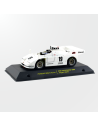
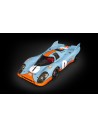
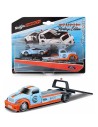
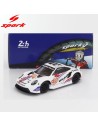
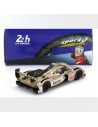
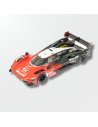
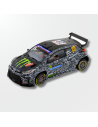
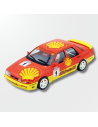
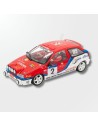
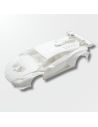
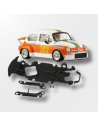
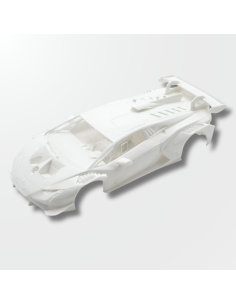
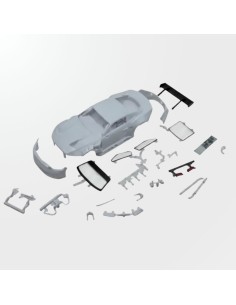
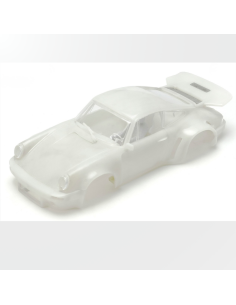
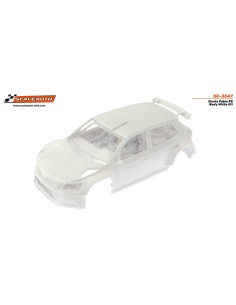
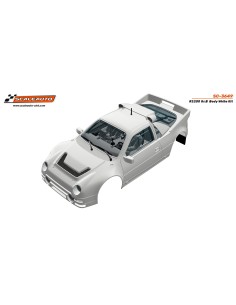
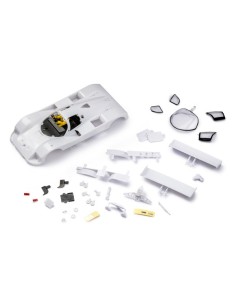
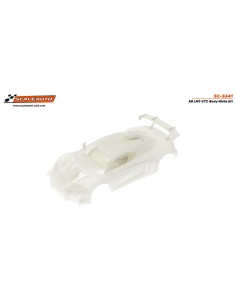
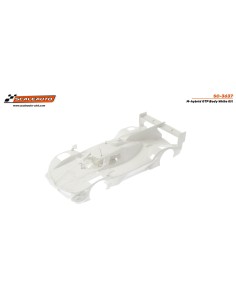
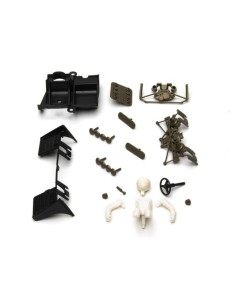
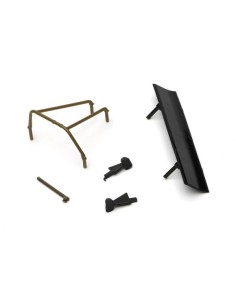
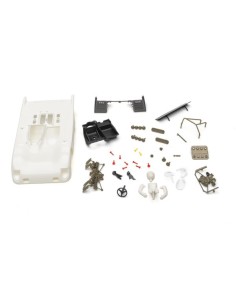
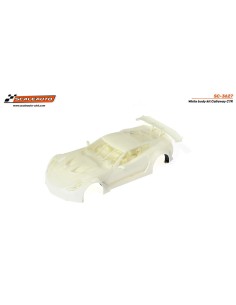
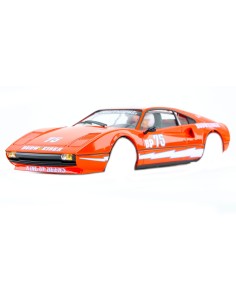
The body is both the first thing you see and what defines the identity of a car. It doesn't matter if you are building a competition slot car, constructing a static model, or preparing a figure for a diorama: choosing the right body makes the difference between a project you are proud of and one that ends up in a drawer. In this category, you will find slot car bodies in scales 1/32 and 1/24, bodies for models of different ranges, and options designed for both the beginner hobbyist and the experienced preparer or modeler.
Before you rush to buy, it is worth understanding what types exist, what materials they are made of, and what factors affect compatibility with your chassis or your painting project. Not all bodies are the same, and not all serve the same purpose. We will explain this in detail below.
What is a body and why does it matter so much
In the world of slot racing, the body is the piece that is mounted on the chassis and reproduces, at scale, the shape of a real car. But its function goes far beyond aesthetics: it influences the aerodynamics of the model, its total weight, and how it interacts with the chassis during driving. A body that is too heavy raises the centre of gravity; a poorly fixed one generates vibrations that translate into instability in corners.
In static modeling, the body is the central element of the model: its finish, panel lines, engraving details, and the quality of the mould determine the level of realism that can be achieved with paint and weathering techniques. In dioramas and figures, vehicles with well-detailed bodies add verisimilitude to the scene.
In all cases, the body is the canvas on which the modeler or slot enthusiast pours their creativity: from an official livery to a completely original decoration to create their own team. That is why the choice is not trivial.
How to correctly choose the body
There are several criteria you should be clear about before buying:
- Scale: the body must correspond to the scale of your chassis or your project. In slot racing, the most common scales are 1/32 and 1/24. In static models, the range is broader: 1/24, 1/32, 1/43, 1/18… Mixing scales creates proportion and assembly problems.
- Compatibility with the chassis: in slot racing, not all bodies fit all chassis. Always check that the manufacturer indicates compatibility with your base (NSR, Slot.it, Scaleauto, Avant Slot…) or that the body includes the necessary mounts.
- Material: polycarbonate, ABS, and resin have different properties regarding weight, rigidity, finish, and ease of painting. We will explain this in detail later.
- Mould detail level: for pure competition, this matters less; for collection or display, the engraving of lines, mirrors, and window details make a difference.
- Intended use: racing track, display case, diorama? The final destination affects everything else.
If you have doubts about the compatibility of a specific body with your chassis, do not improvise: consult the manufacturer's specifications or ask us directly.
Main types and differences
The bodies available on the market can be classified by material, scale, and use. Let's look at the most relevant:
By material
- Polycarbonate (Lexan): very light and flexible, it is the king material in competition slot racing. It absorbs impacts without breaking, making it ideal for tracks where scrapes are common. It is painted from the inside with specific Lexan paints, which protects the finish from external hits. Brands like NSR and Slot.it offer polycarbonate bodies for their competition models.
- ABS: rigid plastic, heavier than polycarbonate but with better detail definition in the mould. It is painted from the outside with prior priming. Very common in mid-range cars and in assembly models.
- Resin: a material that allows for exceptional detail levels, with very fine panel lines and complex shapes that are difficult to reproduce in injected plastic. Avant Slot is one of the few brands that produces resin bodies at an industrial scale with high-quality finishes. It requires careful preparation before painting: fine sanding, appropriate priming, and patience.
By scale
- 1/32: the dominant scale in slot racing and also very popular in car models. Good balance between size, detail, and space needed.
- 1/24: larger size, more visible detail, but takes up more space on the track and in the display case. Common in high competition slot racing and in muscle car and American models.
- Other scales (1/43, 1/18…): more typical of the static model and diecast collecting world.
By use
- Competition bodies: lightweight, unvarnished, ready to paint and assemble in the shortest time possible. Performance takes precedence over aesthetic detail.
- Collection or display bodies: higher level of detail in the mould, more elaborate finishes, designed to shine in a display case or in a diorama.
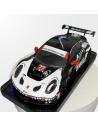
- Pre-painted bodies: come with factory-applied decoration, generally official licenses. A convenient option for those who do not want to get into the painting process.
Technical aspects we should know
Beyond material and scale, there are several technical aspects that are worth mastering before working with a body:
Weight and distribution
In competition slot racing, every tenth of a gram counts. A polycarbonate body can weigh between 5 and 12 grams depending on the model, while a resin one can exceed 20 grams. This extra weight raises the centre of gravity and can negatively affect cornering behaviour if not compensated by the position of other components. In static models, weight has no functional implications, but it can affect stability on a stand or base.
Attachment to the chassis
Attachment systems vary by manufacturer. The most common in slot racing are side clips, screws, and mounting posts. Before buying a loose body, check that your chassis has compatible attachment points or that you can adapt them. Some resin bodies require manual adaptation work.
Preparation for painting
Each material requires its protocol:
- Polycarbonate is always painted from the inside. Specific Lexan paints are used (Kaleido and Tamiya offer references for this purpose). It does not require priming, but does need prior cleaning with isopropyl alcohol.
- ABS is painted from the outside. It requires priming (acrylic or two-component) to ensure adhesion. Vallejo, Tamiya, and Ammo offer compatible primers and acrylic paints.
- Resin is porous and may have residues of release agent. Before priming, the piece must be washed with soap and water, sanded with fine sandpaper (400-600), and a specific primer for resin applied. The finish can be exceptional if the surface is well prepared.
Windows and glazing
Some bodies include the glazing piece; others do not. If you are going to display the car, well-fitted and painted glazing (with tint for windows or translucent paints) adds an important level of realism to the scene.
Practical tips for use, maintenance, and customization
Whether you use the body on the track or for collection, these tips will save you time and disappointments:
- Clean before painting: residues of release agent, grease, or dust ruin adhesion. A bath in warm water with a few drops of dish soap and a complete air drying are sufficient.
- Do not skip priming on ABS and resin: no matter how good the paint looks on the first pass, without priming it will peel off over time or at the first scrape.
- Work in thin layers: whether with an airbrush or spray, it is better to apply several thin layers than one thick one. This avoids drips and achieves a more uniform finish.
- Protect the finished work with varnish: a quality satin or glossy varnish (Vallejo, Tamiya, or Ammo have excellent options) protects the paint and unifies the finish. On polycarbonate painted from the inside, exterior varnish is not necessary but can add shine.
- Store unassembled bodies in anti-static bags: dust easily adheres to plastic. If you are going to store an unpainted body for a long time, a plastic bag with a closure keeps dust at bay.
- Repair cracks with fine cyanoacrylate: impacts on the track can generate micro-cracks. A few drops of low-viscosity cyanoacrylate, well cured and sanded afterwards, leave the body as good as new.
Common mistakes we should avoid
Over the years, the workshop of any enthusiast accumulates the same mistakes. Here are the most common so you don't repeat them:
- Buying without verifying compatibility: a beautiful body that does not fit your chassis is wasted money. Always check the specifications before paying.
- Painting polycarbonate from the outside: the paint does not adhere properly and chips off after a short time. Polycarbonate is always painted from the inside.
- Applying model paints on resin without priming: resin is absorbent and porous. Without priming, the result is uneven and the colour does not cover well.
- Mixing incompatible paints: using an acrylic base and then an enamel varnish without an intermediate layer can cause chemical reactions that wrinkle the paint. Always work within the same family (acrylic over acrylic) or use separation layers.
- Forcing the fit of the body to the chassis: if it does not fit well, you need to identify the problem (a post, a rib, a different tolerance) and resolve it carefully. Forcing can break the mounts or deform the body.
- Ignoring weight when choosing for competition: on the track, a body heavier than necessary can penalise performance. Always choose the lightest option compatible with your goals.
Recommendations for beginners and advanced users
If you are starting now
The smartest thing is to start with a pre-painted ABS body or one made of polycarbonate from a well-established brand like NSR or Scalextric, which is already ready to assemble. This way, you get familiar with assembly and adjustment before diving into painting projects. When you want to take the leap into customization, start with model sprays on ABS: the result is quick, the learning curve is low, and the margin for error is wide.
For experienced users
If you are already comfortable with the airbrush and know your chassis behaviour well, Avant Slot's resin bodies open up a world of possibilities. The level of detail in the mould allows for advanced painting techniques such as shading, preshading, chipping, or weathering. For competition, high-quality polycarbonate combined with specific Lexan paints from Kaleido or Tamiya allows for spectacular finishes without sacrificing an ounce of weight.
In both cases, investing in good brushes, a dual-action airbrush, and quality paints —Vallejo, Tamiya, Ammo— makes the difference between an amateur result and a professional one.
| Material |
Weight |
Detail level |
How to paint |
Ideal for |
| Polycarbonate |
Very light |
Medium |
From the inside, Lexan paints |
Slot competition |
| ABS |
Medium |
High |
From the outside, with primer |
Collection, general use |
| Resin |
Variable (usually heavier) |
Very high |
From the outside, special resin primer |
Display, advanced modeling |
Frequently asked questions about bodies
Can I paint a polycarbonate body with normal acrylic paint?
It is not recommended. Standard acrylic paints do not adhere well to polycarbonate and peel off easily. Use specific Lexan paints (Kaleido, Tamiya PS…) and always apply them from the inside of the body.
Are all 1/32 bodies compatible with each other in slot racing?
Not necessarily. The scale indicates size, but the attachment points and the shape of the chassis vary by manufacturer. Always verify the specific compatibility between body and chassis before purchasing.
Do I need primer to paint ABS?
Yes. Without primer, the paint does not adhere properly and can chip off at the first impact or over time. A quality acrylic primer (Vallejo, Tamiya, or Ammo) is sufficient.
How much does a resin body weigh compared to a polycarbonate one?
It depends on the model and manufacturer, but generally, a resin body can weigh between two and four times more than its polycarbonate equivalent. For slot competition, this difference is significant and can affect cornering behaviour.
Can I use decals on a polycarbonate body?
Yes, although it requires care. Decals are applied over the already cured paint. On polycarbonate painted from the inside, the decals go on the outside over the clear surface or over a layer of white base paint also applied from the inside. Always seal with compatible varnish to fix them.
What is the difference between a competition body and a collection body?
Competition bodies prioritise minimum weight and impact resistance: they are usually made of polycarbonate, without superfluous details, and ready to paint and assemble quickly. Collection bodies prioritise the level of detail in the mould, engravings, and fidelity to the real car, so they are usually made of ABS or resin.
Can I repair a broken body?
In most cases, yes. For ABS and resin, fine cyanoacrylate works very well on cracks and clean breaks. Polycarbonate is more complicated to bond securely; in that case, some breaks can be fixed with Kapton tape from the inside as reinforcement.
Do Avant Slot resin bodies fit standard chassis?
Avant Slot designs its bodies for its own chassis, although many are adaptable to other chassis of similar dimensions with minor adjustments. Always check the product sheet or ask us if you have doubts about compatibility.
What varnish is best to protect a painted body?
It depends on the finish you are looking for. For a high-level glossy finish, acrylic varnishes from Vallejo or Tamiya are a safe bet. For satin or matte finishes, Ammo offers very controllable options. Always apply in thin layers and at the appropriate room temperature.
Can I create my own custom livery?
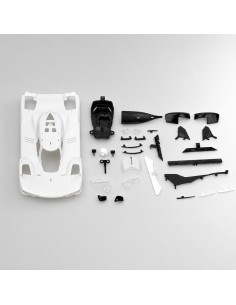
Absolutely. In fact, that is one of the great satisfactions of the hobby. You can design the decoration in vector editing software, print your own decals with decal paper, or cut masking vinyl. The white body —whether polycarbonate, ABS, or resin— is your starting point.
Is there a difference between bodies for universal track and sport track?
The body itself does not depend on the track system, but on the chassis it is mounted on. What varies is the guide, tyres, and chassis. The body is the same regardless of whether your circuit is universal track (Scalextric, Ninco) or sport track (Scaleauto, Slot.it).
What paints give the best results on resin?
For resin, acrylic paints from Vallejo, Tamiya, and Ammo offer excellent results both with a brush and with an airbrush. The key is in the prior preparation: cleaning, fine sanding, and appropriate priming. With that base, any of these brands responds very well.