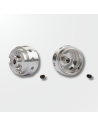
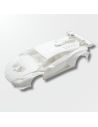
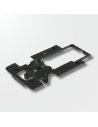
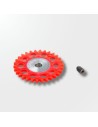
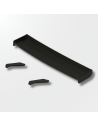
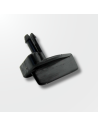
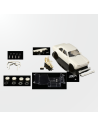
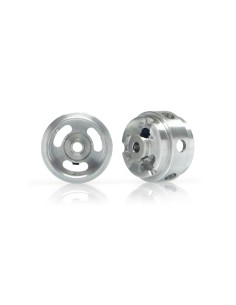
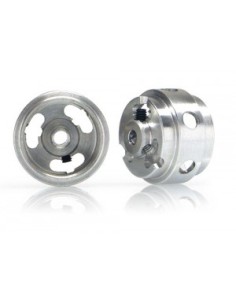
When we talk about materials that have transformed performance in the world of slot and competition modelling, magnesium takes a leading role. It is not just any material: its extraordinary weight-to-rigidity ratio has made it the preferred choice for tuners and drivers seeking every tenth of a second. In races where grams make the difference, opting for components made from magnesium ceases to be a whim and becomes a first-rate technical decision.
In the world of slot at 1/32 and 1/24 scale, improperly distributed mass ruins the behaviour of any car, no matter how good its motor or braids are. This is where magnesium comes in strongly: wheels, chassis, mounts, and other components made from this material allow for a reduction in the total weight of the model and, above all, the unsprung weight, improving dynamic response in corners and traction during acceleration. The most demanding enthusiasts know this well; those starting in the preparation of competition cars often quickly discover it as one of the first significant qualitative leaps.
But magnesium is not just for slot. In static modelling, the manufacture of detail parts in this material has gained ground precisely because it allows for the faithful replication of structural elements of real vehicles that, at scale, must be both thin and strong. Anyone working with models of competition cars, planes, or motorcycles knows that certain metal details provide a realism that plastic, no matter how well painted, cannot match.
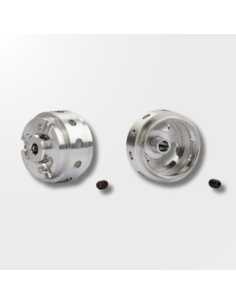
In this section, we gather magnesium wheels, structural components, and accessories made from this material, designed for both active competition and the preparation of collection and display models. If you already know what you're looking for, you'll find reference brands such as NSR, Slot.it, Scaleauto, and Avant Slot. If you're still exploring what magnesium can do for your car or project, keep reading.
What is magnesium and why is it important in slot and modelling
Magnesium is a lightweight metal with an atomic number of 12, with an approximate density of 1.74 g/cm³. To put it into perspective: it is one-third lighter than aluminium and almost five times lighter than steel. However, it maintains sufficient rigidity and mechanical strength to withstand the stresses generated by a slot car during full acceleration or braking.
In the real automotive industry, magnesium has been used for decades in competition parts: Formula 1 wheels, gearboxes, engine blocks, and chassis structures in high-level categories have incorporated magnesium alloys precisely for this reason. The transfer of this philosophy to the world of slot and competition miniatures is no coincidence: the most committed enthusiasts seek to replicate, at scale, the same advantages that competition engineers seek in real cars.
In the context of slot, the most common magnesium components are wheels. A magnesium wheel compared to a plastic or even aluminium one represents a reduction in rolling and unsprung mass that directly translates into less rotational inertia. This means that the car accelerates and brakes more effectively, and the response in corners improves noticeably. It is not theory: any driver who has compared a standard setup with magnesium wheels on the same car and circuit confirms it instantly in lap times.
How to correctly choose magnesium components
Before rushing to buy any magnesium component, it is advisable to ask some basic questions that will prevent mistakes and unnecessary expenses.
Compatibility with the track system and the car
Not all magnesium components are universal. Wheels, for example, come with specific axle diameters (generally 2.38 mm or 3 mm in the 1/32 world) and must be compatible with the axle your car uses. Always check the inner diameter and width before purchasing. Similarly, if your car is set up for sport track (Scaleauto, Slot.it) or universal track (Scalextric, Ninco), the overall dimensions of the set may vary.
Intended use: competition or collection
For active competition, magnesium makes perfect sense: every gram counts and the performance return is real. For collection or display, the advantage is more aesthetic and fidelity to detail, although it is also appreciated in models with moving wheels or in dioramas with prepared cars.
Brands and manufacturing quality
Not everything sold as "magnesium" has the same alloy or finish. Established brands in the sector —NSR, Slot.it, Scaleauto— manufacture their magnesium wheels with very tight tolerances, ensuring that the balancing is correct and that there are no eccentricities that introduce vibrations at high speed. Avoid pieces of dubious origin without clear technical specifications.
Combination with tyres
The magnesium wheel must be combined with the appropriate tyre in terms of outer diameter, width, and hardness. A magnesium wheel with a poorly fitted tyre can worsen the behaviour instead of improving it. Always check the manufacturer's recommendations or consult with the community before mounting.
Main types and differences
Within the magnesium components available for slot and modelling, we can distinguish several categories:
Magnesium wheels for slot 1/32
These are the most demanded product. They are available in different outer diameters (to adjust the car's height), widths (front/rear), and designs (spoke, disc, closed). Brands like NSR and Slot.it offer a wide range that allows for setup customization based on the circuit and driving style.
Magnesium wheels for slot 1/24
In 1/24 scale, the cars are significantly larger and heavier, making weight savings in the wheels even more impactful. Options are more limited than in 1/32, but there are specific references for this scale in competition brands.
Structural and detail parts in magnesium
Beyond wheels, some manufacturers offer partial chassis, mounts, or motor supports in magnesium or magnesium-aluminium alloys. Their use is mainly reserved for high-level preparations where the minimum possible weight in the assembly is sought.
Detail parts for static modelling
In the realm of models and dioramas, photo-etched or cast parts in lightweight alloys that include magnesium provide a level of detail and realism that plastic cannot replicate. They are especially valued in competition automotive and aviation models.
Technical aspects we should know
Magnesium has physical and chemical characteristics that are important to know before handling and using it in our models.
Density and rigidity
As mentioned, the density of magnesium (~1.74 g/cm³) is significantly lower than that of aluminium (~2.70 g/cm³) and much lower than that of steel (~7.85 g/cm³). However, its modulus of elasticity is lower than that of aluminium, meaning it is somewhat more flexible. In properly designed thin parts, this is not a problem; on the contrary, it can absorb small vibrations better.
Surface oxidation
Magnesium is reactive and can oxidise relatively easily in the presence of moisture. Quality parts have a surface treatment (anodised, lacquered, or coated) that protects them. It is important not to scratch or damage this protective layer during assembly.
Machining and tolerances
High-quality magnesium wheels are machined with numerical control (CNC) to ensure dimensional precision. This ensures that the central hole is perfectly centred relative to the outer profile of the wheel, which is critical to avoid rotational imbalances that manifest as vibrations at high speed.
Weight in real numbers
A rear magnesium wheel in 1/32 can weigh between 0.3 and 0.6 grams depending on the design. Compared to an equivalent plastic wheel (0.8-1.2 g) or aluminium (0.9-1.4 g), the savings per wheel may seem small, but multiplied by four wheels and considering we are talking about rotating mass, the dynamic effect is much greater than what the difference in static weight suggests.
Practical tips for use, maintenance, and preparation
- Always mount carefully: magnesium is softer than steel. When inserting the axle, apply even pressure and use the appropriate tool. Forcing at an angle can deform the axle housing and ruin the wheel.
- Do not use aggressive adhesives on the surface: some cyanoacrylates and solvents can attack the surface treatments of magnesium. If you need to secure the tyre, use the adhesives recommended by the wheel manufacturer.
- Check the balancing before mounting on the car: even the best wheels can have minimal variations. If you have access to a slot wheel balancer, use it to verify that there are no eccentricities.
- Store parts in a dry place: moisture can promote surface corrosion, especially if the protective coating is damaged. Store uninstalled wheels in airtight bags or in the original packaging.
- Combine with quality tyres: a magnesium wheel with an unbalanced or poor-quality tyre will not yield the expected results. The improvement in the assembly is only noticeable when all elements work well together.
- Clean with a dry or slightly damp cloth: avoid strong solvents. To remove tyre glue residue, use specific slot removers sparingly.
Common mistakes to avoid
Buying without checking axle compatibility
The most common mistake. Magnesium wheels come with specific inner axle diameters. Buying a wheel with a 3 mm hole for a car with a 2.38 mm axle (or vice versa) means that the wheel will not fit without modifications. Always check the specifications before adding to the cart.
Expecting miracles from wheels without adjusting the rest of the setup
Magnesium wheels improve performance, but they do not compensate for an inadequate motor, worn braids, a poorly adjusted guide, or incorrect weight distribution. They are an improvement within an overall setup, not a standalone magic solution.
Applying too much force when mounting the tyre
When stretching the tyre over the magnesium wheel, excessive pressure can mark or deform the outer edge of the wheel, creating irregularities that translate into vibrations. Use the appropriate mounting tools and take your time.
Ignoring the surface treatment
Scratching or damaging the finish of the magnesium wheel is not just an aesthetic issue: it compromises protection against oxidation. If the part suffers a strong impact that damages the coating, apply a compatible anti-corrosion protector or consider replacing it.
Mixing wheels from different manufacturers on the same axle
Dimensional tolerances vary between manufacturers. Mounting an NSR wheel on the right axle and a Slot.it on the left can create differences in outer diameter that affect cornering behaviour. In competition, always use the same manufacturer and reference on each axle.
Recommendations for beginners and advanced users
If you are starting in preparation
The most advisable approach is to start with a car that already performs well with its original configuration and make the switch to magnesium wheels as a specific and well-identified improvement. This way, you can compare lap times before and after, and truly understand the impact of the change. Choose a proven reference from NSR or Slot.it, check compatibility with your car (model, scale, axle diameter), and do not make other simultaneous changes. This way, the improvement —or lack thereof— will be directly attributable to the wheels.
If you have doubts about which reference to choose, consult us or check the community forums: there is a wealth of accumulated experience regarding proven combinations.
If you already have experience in preparation
For advanced users, magnesium is part of the usual toolkit. The next level involves working on the exact combination of wheel diameter, width, tyre hardness, and car height for each type of circuit. The differences between closed wheels (more mass, more inertia, greater stability) and spoke wheels (less mass, livelier response) are relevant in competition and should be well understood.
In high-level preparations for organised competition, it is also advisable to review the category regulations: some championships limit the materials or brands of wheels allowed. Before investing, ensure that the part is legal in the category you are racing in.
| Wheel Material |
Approx. Density (g/cm³) |
Typical Rear Wheel Weight 1/32 |
Main Advantage |
Recommended Use |
| Plastic (nylon/ABS) |
1.0 – 1.2 |
0.8 – 1.2 g |
Economical, flexible |
General use, beginners |
| Aluminium |
2.70 |
0.9 – 1.4 g |
Rigidity, dimensional precision |
Medium-high competition |
| Magnesium |
1.74 |
0.3 – 0.6 g |
Minimum weight, good rigidity |
High-level competition |
Frequently asked questions about magnesium in slot and modelling
Are magnesium wheels fragile?
Not particularly, within normal slot use. They are softer than aluminium, so care should be taken when mounting and dismounting tyres, but under normal racing conditions, they are perfectly durable.
How much weight is really saved with magnesium wheels compared to plastic ones?
It depends on the specific reference, but it is common to save between 0.4 and 0.8 grams per wheel. With four wheels, we are talking about up to 3 grams less of rolling mass, which in a slot car weighing 60-80 grams is a very significant percentage, especially since it concerns moving mass.
Are NSR magnesium wheels compatible with Slot.it cars?
They can be, as long as the axle diameter and wheel width are compatible. It is not automatic: always check the specifications of both manufacturers before combining parts.
Does magnesium oxidise easily?
Magnesium is reactive and can oxidise in the presence of moisture, but quality wheels have surface treatments that protect them. Store them in a dry place and do not damage the exterior finish.
Can I use magnesium wheels on a standard Scalextric car?
Yes, as long as the axle diameter is compatible. Standard Scalextric cars usually have 2.38 mm axles, so look for magnesium wheels with that inner diameter. The result will improve the overall behaviour of the car.
Are magnesium wheels allowed in official competition?
It depends on the regulations of each championship. Many slot categories allow them, but some homologated categories may restrict materials or brands. Always check the regulations before preparing your car for competition.
What is the difference between a spoke magnesium wheel and a closed one?
The spoke wheel has less mass (lighter) and offers a livelier and more agile response. The closed wheel has slightly more rotating mass, which can provide greater stability on fast and long circuits. The choice depends on the type of track and driving style.
Do I need to balance magnesium wheels before using them?
Quality wheels from reputable manufacturers already come with very tight tolerances, but in high-level competition preparations, checking the balance with a specific tool is always a good idea. A small eccentricity can generate vibrations at high speed.
What adhesive should I use to secure the tyre on a magnesium wheel?
Use specific slot adhesives (low-viscosity cyanoacrylate in small amounts, or double-sided adhesives designed for tyres). Avoid adhesives that contain aggressive solvents that could attack the surface treatment of the wheel.
Does magnesium have applications in static modelling, not just in slot?
Yes. In static models and dioramas, detail parts in lightweight metal alloys provide realism and strength. They are especially valued in competition vehicle models where the original components are made of magnesium or aluminium.
Is the additional cost worth it compared to aluminium wheels?
For active competition where maximum performance is sought, yes. For recreational use or informal racing, aluminium wheels offer a very good quality-price ratio. The decision depends on the level of demand and the available budget.
Can I paint magnesium wheels for modelling?
Yes, but it requires proper preparation. First, apply a specific primer for non-ferrous metals before using any acrylic (Vallejo, Tamiya) or enamel paint. Without primer, the paint will not adhere properly and will easily peel off.