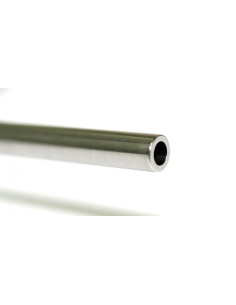
When it comes to tuning a slot car, attention often falls on the motor, tyres, or electronics, but the rear axle —and its design— has a direct and measurable influence on track behaviour. Hollow axles are one of those components that may seem like a minor detail at first glance, but any driver with some experience knows they make a real difference. Reducing mass at the unsprung points of the car —that is, everything not damped by the chassis— improves dynamic response during speed transitions, both in acceleration and braking. The result is a more agile car, easier to control, and with greater responsiveness to controller corrections. If you are preparing a car for competition or simply want to maximise the performance of your current setup, hollow axles are one of the first modifications you should consider.
What are hollow axles and why do they matter in slot racing
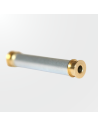
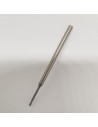
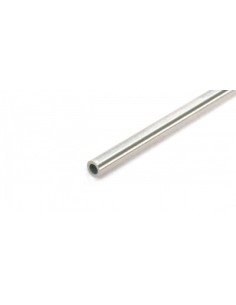
A hollow axle is essentially a rear —or front, depending on the case— axle machined with a hollow channel along its length. This internal hollowing removes material where it is not strictly necessary for rigidity or torque transmission, thus achieving a significant weight reduction without compromising the structural strength of the component.
In a slot car, the rear axle is part of the unsprung mass: everything that is in contact with the track and that the chassis cannot isolate from impacts and vibrations. The greater that mass, the more inertia the system accumulates with each speed change, and the more work the motor —and the driver— has to do to modify that state. By reducing the mass of the axle, the assembly reacts quicker, resulting in shorter braking distances, cleaner acceleration, and greater sensitivity to controller corrections.
In competition, where times are measured in hundredths and consistency is key, this type of improvement becomes essential rather than optional, becoming part of the usual setup. Brands like NSR, Slot.it, or Scaleauto incorporate hollow axles into their competition ranges precisely because the most demanding drivers request them.
How to correctly choose a hollow axle
Not all hollow axles are interchangeable, and choosing the wrong one can cause more problems than solutions. Before purchasing, it is important to clarify several factors:
- Axle diameter: The most common diameters in 1/32 are 3 mm and 2.38 mm (3/32"). It is essential that the axle is compatible with the wheel hubs, wheels, and bearings of your car. Mixing different diameters creates play, vibrations, and premature wear.
- Length: Each car model has a defined distance between the mounting points. An axle that is too short or too long will not fit correctly or will leave the wheels poorly centred on the tyres.
- Material: Hollow axles are usually made from stainless steel or treated steel. Stainless steel offers a good balance between strength, weight, and durability; treated steel may be slightly stiffer but also more susceptible to corrosion if not properly maintained.
- Compatibility with the track system: Although the axle itself does not depend on the track system (universal rail or sport rail), you must ensure that the transmission assembly —crown gear, pinion, motor— is consistent with the type of setup you have (sidewinder, inline, or anglewinder).
- Car brand: NSR, Slot.it, Avant Slot, or Scaleauto have their own ranges of axles; always check the technical specifications of your model before placing an order.
Main types and differences
Within hollow axles for slot racing, you will find variations that respond to different technical needs:
- Standard hollow axle: Internal channel along the entire axle. This is the most common and versatile version. Suitable for both street setups and amateur competition.
- Ultralight hollow axle: Greater internal hollowing or thinner walls. Offers maximum weight reduction but requires more care in assembly to avoid flexing. Reserved for advanced competition where regulations allow.
- Hollow axle with keyway or flat: Incorporates a milled flat or a keyway to secure the wheels or crown gear without the need for a pressure screw or with greater precision. Very practical in competition, where the repeatability of the assembly is critical.
- Aluminium hollow axle: Less common, but present in some 1/24 setups or specific categories. Lighter than steel, but with lower torsional strength; its use is conditioned by regulations and the torque level of the motor.
In 1/32, hollow steel axles are the most widespread option and the one you will find in the catalogues of most leading brands. In 1/24, the range of materials is broader, and the choice depends more on the regulations of the category.
Technical aspects we need to know
Correctly installing a hollow axle is not limited to simply inserting it into the mounts. There are several technical aspects that are worth mastering to make the most of it:
- Bearing: Hollow axles are commonly combined with ball bearings, which eliminate the friction of plastic bushings. The inner diameter of the bearing must match exactly with that of the axle. A play of tenths of a millimetre already generates vibration and loss of performance.
- Wheel centring: Being lighter, the hollow axle is more sensitive to lateral imbalances. Ensure that the wheels are centred and securely fixed; any eccentricity is amplified at high revolutions.
- Tightening torque: If you use Allen pressure screws to secure wheels or crown gear, do not overtighten: the internal hollowing reduces the load-bearing section, and excessive tightening can deform the axle or cause cracks in lighter materials.
- Transmission alignment: The crown gear and pinion must work with the minimum possible play and be properly aligned. A hollow axle transmitting torque with misalignment suffers more than a solid axle, as it has less material to dissipate bending stresses.
- Cleaning: The internal channel can accumulate dirt or lubricant residue. Although this is usually not a serious problem, in competition it is advisable to periodically check for accumulations that may alter the balance of the axle.
Practical tips for use, maintenance, and preparation
Once the hollow axle is installed, maintenance is straightforward but should not be neglected:
- Lubricate the bearings judiciously: Use specific lubricant for slot bearings, in minimal quantity. Excess lubricant attracts dust and can end up being counterproductive.
- Check the axle after each demanding session: In competition, check for pressure marks in the area of contact with the securing screws. A marked axle loses concentricity and should be replaced.
- Store the axles protected: Steel, although durable, can rust if stored in humid environments. A plastic cover or a compartmentalised box is sufficient.
- Combine it with balanced tyres: The advantage of reducing unsprung mass is maximised when the rest of the assembly is also optimised. Well-glued and turned tyres, along with a well-mounted hollow axle, are a very effective combination.
- Check concentricity before mounting: Roll the axle on a flat surface and check for visible curvature. A bent axle, no matter how minimal the defect, will generate vibration at high revolutions.
Common mistakes to avoid
Experience in the workshop shows that some mistakes are frequently repeated, even among drivers with some experience:
- Mixing diameters: Mounting 3 mm wheels on a 2.38 mm axle (or vice versa) with homemade adapters is a solution that never works well in the long term. Always buy the correct set from the start.
- Ignoring axle length: An axle longer than necessary causes the wheels to be too far apart; a shorter one may not fit well in the mount. Both situations generate erratic behaviour on track.
- Overtightening Allen screws: As mentioned before, but worth repeating: the internal hollowing reduces the local robustness of the axle at the pressure point. Tighten just enough to prevent the wheel from spinning freely.
- Not checking transmission alignment: Changing the axle without checking the crown-pinion alignment is wasting part of the benefit of the improvement. Spend five minutes on this step.
- Buying based on price without checking compatibility: There are very cheap axles that do not meet adequate tolerances. In such a sensitive component as the axle, dimensional precision is non-negotiable.
Recommendations for beginners and advanced users
If you are just starting
If you have just taken your first steps in preparing slot cars, hollow axles are an accessible upgrade with a noticeable impact from the first use. We recommend starting with a standard stainless steel axle, of the diameter specified by your car's manufacturer (check the technical specifications or ask us), and combining it with ball bearings if you are still using bushings. The change in the car's response is immediate and will give you a good reference for further tuning.
There is no need to go for the lightest axle in the catalogue all at once. Start with the standard option, learn to mount it correctly, and observe how the car responds before taking the next step.
If you already have experience
For advanced drivers or preparers with a higher level of demand, the choice of hollow axle is integrated into a global strategy for reducing unsprung mass. Combining an ultralight axle with aluminium or magnesium wheels, precision bearings, and custom-turned tyres is a common preparation in high-performance categories.
At this level, it is worth keeping a record of the axles used, the sessions run, and the condition of the component after each race. Preventive replacement before the axle shows visible wear is a common practice among the most competitive drivers.
| Type of axle |
Material |
Weight reduction |
Recommended use |
Level |
| Standard hollow axle |
Stainless steel |
Medium |
General preparation, amateur competition |
Beginner / Intermediate |
| Ultralight hollow axle |
Treated steel / alloy |
High |
Advanced competition |
Advanced |
| Hollow axle with keyway |
Stainless steel |
Medium |
Competition with frequent configuration changes |
Intermediate / Advanced |
| Aluminium hollow axle |
Aluminium |
Very high |
Specific 1/24 categories, permissive regulations |
Advanced |
Frequently asked questions about hollow axles for slot racing
How much weight is saved with a hollow axle compared to a solid one?
It depends on the material, diameter, and length, but in a 3 mm steel axle for 1/32, the savings are usually between 0.3 and 0.8 grams. In a car weighing between 60 and 80 grams, that difference in unsprung mass has a real and measurable impact on dynamic response.
Are hollow axles compatible with any slot car?
Not universally. Each car has a specific axle diameter and length. Always check the technical specifications of the model or write to us; we will help you identify the correct axle.
Do I need to change the bearings when installing a hollow axle?
It is not mandatory, but it is highly recommended. If your car still uses plastic bushings, taking the opportunity to switch to ball bearings when changing the axle multiplies the benefits in terms of friction and overall performance.
Can I use a hollow axle in official competition?
In most categories, yes, but it depends on the specific regulations. Some championships limit materials or diameters. Check the rules of your category before preparing the car.
Is the hollow axle more fragile than the solid one?
With correct installation and within the usual usage limits, no. The difference in strength is minimal for the loads a slot axle endures. The risk arises if a pressure screw is overtightened or if the axle suffers a strong lateral impact.
What length of axle do I need for my car?
The length depends on the specific model. The most reliable method is to measure the original axle or consult the manufacturer's catalogue. Some NSR, Slot.it, or Scaleauto models have the length specified in the spare parts sheet.
Can I use the same hollow axle on the front and rear axles?
In some cars, it is technically possible if the diameter matches, but not always. The front axle is usually shorter and, in many models, does not transmit torque, so the benefit is less even though it exists. Always check the measurements.
How often should I replace the hollow axle?
In competitive use, it is advisable to check the axle after each race and replace it if pressure marks, deformation, or concentricity issues appear. In more recreational use, it can last entire seasons without problems if the installation is correct.
Does the type of motorisation (sidewinder, inline, anglewinder) influence the choice of axle?
It influences the configuration of the transmission, not directly the axle itself. However, in anglewinder or inline setups, the axle may be subjected to different stresses, which in advanced competition may tilt the choice towards stiffer materials.
Is it difficult to install a hollow axle for the first time?
Not particularly. With basic tools —the correct size Allen key, a clean workbench, and some patience— it is a task within reach of any enthusiast. If it is your first time, take the time to verify the alignment before considering the car ready.