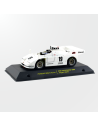
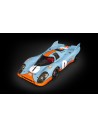
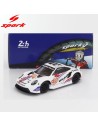
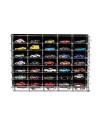
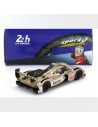
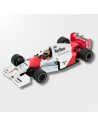
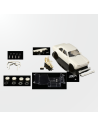
There are categories in motorsport that captivate from the very first lap, and Formula 1 has been the absolute reference for wheel-to-wheel competition for decades. Its cars are the fastest, the most technologically advanced, and the most photographed in the automotive world, and that fascination translates, with the same intensity, to the world of slot racing and collecting. Here you won't find filler: this section is designed for the enthusiast who wants to make the right choice, whether to race seriously, to proudly display, or to prepare a single-seater that leaves rivals staring at the rear lights.
The miniature reproduction of Formula 1 single-seaters is one of the most demanding segments of the hobby. Manufacturers compete with each other in fidelity to official colours, chassis quality, and the performance of each component. A slot F1 car has a very different geometry compared to a GT or a touring sedan: it is flatter, lighter, with a very particular mass distribution and, above all, with aerodynamic demands that manufacturers try to reproduce even at scale. All of this influences how it drives, which tyres suit it best, and how to prepare it to get the most out of it.
Whether you have been behind a controller for years or have just discovered that Formula 1 cars also race on track, this page will provide you with all the keys to ensure your choice is the right one. We will discuss the different types of available single-seaters, specific F1 tyres, the technical aspects that make a difference on track, and the most common mistakes to avoid. The goal is for you to leave here knowing exactly what you need.
What is Formula 1 in the world of slot and why is it a special category
Formula 1 is the pinnacle of motorsport competition, and its translation to slot racing is not a simple aesthetic exercise: it is a category with its own identity, with differentiated preparation rules and a very specific user profile. F1 single-seaters at scale are, by definition, the cars with the highest potential performance within competitive slot racing, but they also demand the most in terms of setup and maintenance.
Unlike GTs or touring cars, a slot F1 has an extremely low centre of gravity, which gives it outstanding cornering stability but also makes it very sensitive to any irregularities on the track. The absence of a closed body on the sides means that the aerodynamic behaviour —even at scale— is different, and the driver must adapt their driving style to take advantage of the inherent rigidity of the open chassis.
From a collecting perspective, Formula 1 single-seaters are pieces of special sentimental value: they represent decades of motorsport history, iconic liveries, legendary drivers, and seasons that have marked generations. A McLaren MP4/4, a Williams FW14B, or a Ferrari F2004 at scale are much more than toys: they are museum pieces that many enthusiasts display with as much pride as those they race on their track.
The leading brands in this segment —such as NSR, Slot.it, Avant Slot, or Scalextric— have developed specific lines for F1, with chassis adapted to the geometry of the single-seaters and low-profile tyres designed to maximise performance in the tight corners that characterise many slot tracks.
How to correctly choose a Formula 1 car or component
The first criterion for choice is always the use you are going to give it: racing in a championship, running at home, collecting, or a combination of all? Depending on the answer, the priorities change significantly.
If the goal is competition, the most important thing is to start with a rigid and well-balanced chassis, with motors homologated according to the regulations of the championship you are going to enter. NSR and Slot.it single-seaters are the most common in regulated competition categories because they offer a level of adjustment —via guide height, braid tension, tyre hardness, and motor configuration— that the most demanding competitors need to optimise every tenth.
If you are looking for a car to run and enjoy at home, the equation changes: the detail of the decoration and the robustness of the set take precedence over fine tuning. In that case, a proposal from Scalextric with official licensing can be a perfect entry point, with good presentation and balanced behaviour straight out of the box.
For the pure collector, the fidelity of the livery, the quality of the finishes, and the historical relevance of the car are the decisive factors. Here, the availability of limited editions and the representation of specific drivers and seasons also come into play.
A key aspect that we must not overlook is the compatibility of track systems. Slot F1 cars are designed for specific systems: some run on universal track (compatible with Scalextric and Ninco), others on sport track (Scaleauto, Slot.it). Always check what type of track the model you are interested in is compatible with before purchasing, as mixing systems without being informed can lead to driving issues or even damage the car.
Main types and differences in miniature F1
Within the category of Formula 1 in slot and collecting, it is advisable to distinguish several groups according to purpose and level of finish:
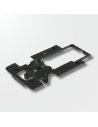
- Regulated competition F1: Cars prepared or easily preparable for specific championships. Chassis made of engineering plastic or magnesium, interchangeable motors, variable compound tyres. NSR and Slot.it dominate this space.
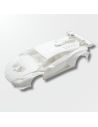
- Officially licensed team F1: Reproductions licensed from real teams (Ferrari, McLaren, Red Bull…), with official liveries and driver numbering. Ideal for collectors and enthusiasts who prioritise aesthetic fidelity.
- Historical F1: Single-seaters from past eras, from the 60s to the 90s, reproduced with a level of detail that directly appeals to the memory of the veteran enthusiast. Avant Slot has done an excellent job in this segment with some very well-crafted historical references.
- Resin F1: Editions of extremely high detail and limited runs, primarily intended for static collection. Avant Slot is one of the few brands that produces industrially resin cars with this level of finish.
In terms of scale, most slot F1 cars are produced in 1/32, which is the standard of the hobby and allows for broad compatibility with the most common tracks. There are also references in 1/24, with a higher level of detail but requiring larger tracks and a higher investment.
Technical aspects we need to know
The geometry of a slot F1 presents specific technical challenges that any user must understand before starting to prepare or simply adjust their car.
Motorisation
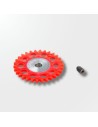
Slot F1 single-seaters typically use inline configurations (longitudinal motor, in line with the rear axle) or anglewinder (motor at an angle to the rear axle), which favour a low centre of gravity, essential in such a flat car. The sidewinder configuration (transverse motor, parallel to the rear axle) is less common in F1, although it exists in some references. Knowing the type of motorisation is key to selecting compatible crowns, pinions, and accessories.
Tyres
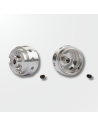
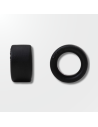
Slot F1 tyres are low-profile and of reduced diameter, adapted to the geometry of the single-seater. The compound (hardness) directly influences grip: softer tyres offer more traction but wear out faster; harder ones last longer but require higher working temperatures. For competition, choosing the correct compound according to the type of track is as important as in real motorsport.
Guide and braids
The guide must be adjusted in depth to ensure optimal contact with the track. In an F1, where the ground clearance under the chassis is minimal, this adjustment is critical. The braids (the electrical contact between the car and the track) must be kept clean and under the right tension to avoid power cuts that ruin a fast lap.
Mass balance
Since F1 cars have very little total mass, any small imbalance has a disproportionate effect on behaviour. Adding ballast in specific positions can radically transform how the car handles corners and elevation changes.
Practical tips for use, maintenance, and preparation
- Clean the track before each session. Accumulated dirt on the electrical rails is the number one enemy of consistency. A clean track means stable current and predictable driving.
- Regularly check the braids. In an F1, they undergo significant stress during braking. If you notice intermittent short circuits, the first point to check is always the braids.
- Lubricate judiciously. The motor and drivetrain appreciate light lubrication, but excess lubricant on the tyres can destroy grip. Use specific slot lubricants and apply only where necessary.
- Motor break-in. New motors need a break-in period at low power before being pushed to the max. Skipping this step can significantly shorten the motor's lifespan.
- Check the guide height. In an F1, a guide that rubs against the bottom of the slot generates extra friction and loss of speed. Adjust the depth according to the type of track you will be racing on.
- Store tyres properly. Competition tyres should be kept away from direct light and heat. Soft compounds are particularly sensitive to temperature degradation.
Common mistakes we should avoid
Many enthusiasts, especially when starting with F1, fall into the same mistakes. Knowing them in advance saves frustration and money:
- Buying without checking system compatibility. Not all F1 cars work on all tracks. A car designed for sport track will not perform well on a universal track circuit without the necessary adaptations. Always check before purchasing.
- Ignoring the tyre compound. Using the wrong tyre on a technical track can turn the fastest car into the slowest on the grid. The compound is not a minor detail.
- Over-tightening the chassis screws. A poorly tightened or overly rigid F1 chassis loses flexibility, resulting in loss of contact with the track on uneven surfaces. The correct adjustment is firm, not brutally tight.
- Not breaking in the motor before competing. A motor that hasn't been broken in has a higher chance of premature failure in competition. Five minutes of break-in at low power makes a difference.
- Neglecting mass balance. Adding ballast without criteria can worsen behaviour instead of improving it. Ballast should be placed logically, testing and measuring the real effect on track.
- Confusing motorisation configurations. Sidewinder, inline, and anglewinder are not interchangeable or equivalent: each responds differently and requires different transmission accessories.
Recommendations for beginners and advanced users
If you are starting out
The smartest move is to start with an F1 car from a well-established brand that offers a good balance between price and performance, without requiring too many adjustments from the get-go. Officially licensed Scalextric references are an accessible entry point: good presentation, balanced behaviour, and easily found spare parts. As you gain confidence, you can start exploring preparation: changing tyres, adjusting the guide, small modifications to the ballast.
It is also important that before purchasing, you inform yourself about the type of track you have or are going to acquire, to avoid incompatibilities from the start.
If you already have experience
At this level, the leading brands for competition are NSR and Slot.it, which offer the greatest adjustment capability and the best raw performance. The choice of motor, tyre compound, and drivetrain configuration are the variables where championships are won or lost. If you participate in regulated competition, check your championship's regulations before modifying any components: not all setups are allowed in all categories.
For advanced collectors, the focus is on limited editions, well-documented historical liveries, and the quality of resin finishes. Avant Slot is a reference to follow in this segment.
| User Profile |
Recommended Brand |
Main Use |
Track System |
| Beginner / Casual Collector |
Scalextric |
Running at home, collection |
Universal track |
| Intermediate Enthusiast |
Slot.it, Avant Slot |
Running + introduction to competition |
Sport / universal track |
| Advanced Competitor |
NSR, Slot.it |
Regulated competition |
Sport track |
| Historical / Resin Collector |
Avant Slot |
Static collection / display |
N/A or universal |
Frequently Asked Questions about Formula 1 in slot and collecting
Are slot F1 cars harder to drive than GTs?
In general, yes. The open geometry and low centre of gravity make them very stable in corners, but also more sensitive to track irregularities and driving errors. For those coming from closed-body cars, it may require a period of adaptation.
Can I use a Scalextric F1 on a Scaleauto track?
Track systems are not always interchangeable. Scalextric uses universal track and Scaleauto uses sport track, with different widths and geometries. Before mixing systems, make sure to check the compatibility of the specific model you have.
What is the difference between an inline F1 and an anglewinder?
In the inline configuration, the motor is in line with the rear axle (longitudinal), which lowers the centre of gravity. In the anglewinder, the motor is angled relative to the rear axle, seeking a balance between compactness and performance. Both are common in F1, and each requires its own crown and pinion.
How often should I change the tyres on a competition F1?
It depends on the compound and the intensity of use. Soft competition tyres may need replacement after a few intense sessions. A clear sign is the loss of grip or the appearance of visible deformations in the profile.
Do historical F1 cars perform the same as modern ones?
Not necessarily. Historical F1 cars are often optimised for aesthetic fidelity, not pure performance. If your goal is to compete, opt for a model specifically designed for that; if you seek to collect or enjoy a classic livery, historical models are a magnificent option.
What scale is best to start with F1 in slot?
1/32 is the standard of the hobby: more accessible in price, greater variety of models, and compatible with most home tracks. 1/24 offers more detail and performance but requires more space and budget.
Can I race an F1 in a slot championship without modifications?
It depends on the championship regulations. Many F1 championships allow cars in box configuration, while others require or permit certain preparations. Always check the regulations before signing up.
What lubricant should I use on a slot F1?
Always use specific slot lubricants, applied judiciously: a few drops on the axle bearings and transmission are sufficient. Never apply lubricant on the tyres or braids.
Is it worth investing in a resin F1 for collecting?
If you value extreme detail and limited runs, absolutely yes. Resin F1 cars from Avant Slot, for example, reach a level of finish that injection-moulded plastics cannot match, and their collector's value tends to hold or increase over time.
How do I know if the braids on my F1 are in good condition?
The clearest symptom of worn or poorly tensioned braids is intermittent power cuts, especially in corners. If the car runs well on the straight but loses power in the corner, check the braids: clean them and ensure they make uniform contact with the track rails.
Can I use any 1/32 tyre on my F1?
No. F1 cars use specific profile and diameter tyres, different from those of a GT or a touring car. Always check the manufacturer's specifications for your car before purchasing replacement tyres.
What motor is most recommended for a competition F1?
It depends on the championship regulations and the type of track. In general, NSR and Slot.it motors are the most valued in competition for their performance, reliability, and availability of spare parts. Check your championship regulations to see which motors are homologated.