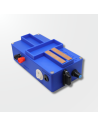
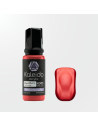
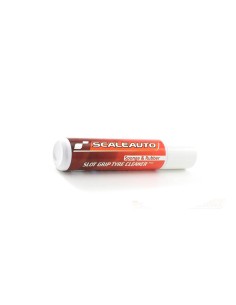
When we have been in the slot world for a while, we come to an infallible conclusion: the tyre is the only point of contact between the car and the track, and its condition affects everything. The electronics, the motor, the chassis… all of that loses meaning if the rubber does not grip as it should. This is where tyre additives come into play, one of those products that generate debate, curiosity, and sometimes quite a bit of confusion among enthusiasts of all levels.
A tyre additive is a chemical solution —usually in liquid form— that is applied to the surface of silicone or rubber tyres with the aim of modifying their physical properties: increasing grip, softening the compound, prolonging the lifespan of the rubber, or recovering its grip when it has started to deteriorate. In competition, they are almost as strategic as the car's setup itself; in the leisure sector, they can make the difference between enjoying a smooth session or ending up frustrated watching the car slide out at every corner.
At Ministry of Hobby, we have been supporting enthusiasts for years, from the first Scalextric to the driver competing in regional championships with NSR or Slot.it cars finely tuned. This accumulated experience has allowed us to select the tyre additives that really work, those that offer consistent and repeatable results, and those that adapt to different types of rubber and usage. You will not find untested products or unknown laboratory formulas here: everything we have in our catalogue is well-known to us.
If you are looking to improve your car's grip, recover tyres that have lost adhesion over time, or simply understand what type of additive you need according to your situation, you are in the right place. Below we explain everything you need to know before making a choice.
What tyre additives are and why they matter so much
The tyres of slot cars —especially silicone ones, which are the most common in competition— have a peculiar characteristic: their grip varies greatly depending on their state of preservation, temperature, accumulated dirt, and the time elapsed since their manufacture. A new tyre from a reference brand like NSR or Scaleauto can offer excellent grip during the first sessions and then gradually lose performance.
Additives act on the tyre compound to counteract that deterioration or to take the grip beyond what the manufacturer has calibrated as standard. Depending on the formula, they can:
- Soften the compound and make it stickier, increasing the effective contact surface.
- Rejuvenate tyres hardened by time or heat.
- Create a thin layer of adhesion that improves initial bite without permanently altering the compound.
- Protect the rubber against premature wear when applied in controlled doses.
In the realm of competition, the use of additives is subject to the regulations of each championship. There are formats that allow them freely, others that limit the authorised products, and some that prohibit them altogether. Before applying any product to a competition car, it is advisable to read the regulations carefully.
How to correctly choose a tyre additive
There is no universal additive that works equally well on all tyres, on all tracks, and for all driving styles. Choosing wisely depends on several factors that should be analysed before purchasing:
Type of tyre
The composition of the tyre directly affects the reaction to the additive. Silicone tyres —the most widespread in slot racing— respond differently than natural rubber or polyurethane tyres. Some additives are specifically formulated for silicone; others are more versatile. Always apply an additive compatible with your type of rubber.
Purpose of use
Are you looking for immediate grip for a specific session? Or do you prefer a more gradual treatment that cares for the tyre in the long term? Competition additives prioritise immediate performance; maintenance additives aim to prolong lifespan and offer more stable results over time.
Type of track
The surface of the track influences grip. A clean wood or plastic track requires a different grip point than a braid or polyester track. On very dirty tracks or those with a lot of accumulated dust, the additive can pick up dirt quickly and become counterproductive if not cleaned well before application.
Level of experience
For a beginner driver, too much grip can result in car behaviour that is difficult to manage: more traction also means more abrupt reactions if the throttle is pressed too hard. Advanced users will know how to better manage that extra adhesion and integrate it into their driving style.
Main types and differences
In the market for tyre additives for slot racing, we find several well-defined categories:
Grip additives
These are the most well-known and widely used in competition. They are applied directly to the surface of the tyre —sometimes with a cloth, other times by spinning the tyre against the applicator— and act quickly. Their effect can last from a few minutes to several laps depending on the concentration and type of compound. They are the usual resource when that extra bite is needed before an important heat.
Maintenance and rejuvenation additives
Their main function is to restore life to tyres that have hardened. Over time —and especially with heat— silicone loses elasticity and reduces its effective contact surface. These products penetrate the compound and progressively soften it, extending the tyre's lifespan and recovering a level of grip close to the original.
Pre-treatment cleaners
Although they are not additives in the strict sense, they are essential for any subsequent treatment to work well. A tyre with dust, oil, or grease residue does not absorb the additive properly. Cleaning before application is almost as important as the additive itself.
Combined treatments
Some products combine cleaning action and grip enhancement in a single formula. They are practical for everyday use, although in competition it is usually preferred to separate both phases for greater control over the result.
Technical aspects we should know
To make real use of tyre additives, it is advisable to understand some basic technical concepts:
The concept of "sweat"
Many grip additives work through a process of superficial softening of the compound: the tyre "sweats" a thin layer of material that increases the coefficient of friction with the track. This process has an optimal acting time; leaving the additive on for longer than recommended does not always improve the result and can even overly soften the tyre, making it more prone to uneven wear.
Temperature as a variable
Ambient temperature and track temperature affect both the tyre's behaviour and the effectiveness of the additive. In cold environments, silicone hardens and the additive may take longer to act; in warm environments, the effect may be quicker but also shorter.
Compatibility with the rail system
Although the additive does not interact directly with the rail, an excess of product can stain the track and affect the handling of all cars running on it. On shared tracks —clubs, championships— the use of very aggressive additives can generate conflicts. Always use the right amount and remove the excess before putting the car on the track.
Interaction with other lubricants
If the car has lubricant residue on the rear axle or transmission, any dripping can contaminate the tyre and completely nullify the effect of the additive. Keeping the tyre area clean of oils is essential.
Practical tips for use and application
The application technique makes a huge difference in the final result. Here are the tips that work best for us:
- Clean first: before applying any additive, wipe a clean, dry cloth —or a specific cleaner— over the surface of the tyre. Remove dust, track residue, and any contaminants.
- Apply in controlled amounts: more is not better. A few drops or a light pass are usually sufficient. Excess product does not improve grip and can dirty the track.
- Respect the acting time: each product indicates a waiting time before putting the car on the track. Respect it: it is the time during which the compound is acting on the rubber.
- Test in controlled conditions: before an important competition, test the additive in a training session to understand how your car reacts and how long the effect lasts.
- Record the results: more advanced drivers keep a record of what additive they used, in what quantity, at what temperature, and how long the effects lasted. This information is gold for repeating —or improving— results.
- Store products correctly: most additives require storage at room temperature, away from direct light and with the cap tightly closed. A poorly stored product can lose effectiveness or become damaged.
Common mistakes we should avoid
Over the years, we see the same mistakes repeated, especially among those approaching tyre additives for the first time:
Applying without cleaning first
This is the most common mistake. A dirty tyre does not absorb the additive well; the product mixes with the dust and the result is worse than if nothing had been applied.
Using the wrong additive for the type of rubber
Not all additives work the same on all compounds. A product formulated for silicone may have no effect —or even damage— a polyurethane tyre.
Putting the car on the track without respecting the waiting time
If the additive has not had time to act, the result will be mediocre. Worse still: excess liquid can stain the rail and harm the other drivers.
Expecting the additive to compensate for mechanical problems
An additive does not fix a poorly mounted tyre, out of centre, or with the wrong rim. If the car vibrates or slips for mechanical reasons, those problems must be resolved first.
Mixing products without knowing their compatibility
Applying one additive on top of another without cleaning between applications can lead to unexpected reactions. If you change products, clean thoroughly before the new application.
Recommendations for beginners and advanced users
If you are starting out
Our advice is to start with a general-purpose grip additive, well-rated by the community, and focus on learning to apply it correctly rather than looking for the most aggressive product on the market. An excess of grip in the hands of an inexperienced driver can make the car harder to control, not faster. Practice with small doses, observe how the car responds, and adjust progressively.
We also recommend that, before using any additive on a shared club track, you consult the regulations or ask the organisers. There are championships with very specific rules regarding this.
If you already have experience
At this level, additives become part of the setup. Advanced drivers experiment with combinations of products, application times, and doses according to the day's conditions. It is common to always carry a cleaner, a quick grip additive, and a maintenance product in the toolkit. The key is repeatability: finding a protocol that works and applying it consistently in each session.
If you work with cars like NSR, Slot.it, Avant Slot, or Scaleauto in competition configuration, the choice of additive should go hand in hand with the rest of the setup: tyre hardness, rim profile, motor power, and type of rail (universal or sport). Everything is related.
Frequently asked questions about tyre additives
Are tyre additives allowed in all championships?
No. Each championship has its own regulations, and some prohibit or limit the use of additives. Always check the regulations before using them in official competition.
How long does the effect of a grip additive last?
It depends on the product and the conditions, but generally, the most intense effect lasts between a few laps and a full heat. Some products have a longer duration but with a somewhat more moderate level of grip.
Can I use additives on polyurethane tyres?
Some products are compatible, but many are specifically formulated for silicone. Always check the product sheet before applying it to a type of rubber different from the one recommended.
Does the additive damage the track?
If applied excessively and the car is put on the track without removing the excess, it can stain and leave residues. By applying the correct amount and respecting the times, the impact on the track is minimal.
How often should I apply the additive?
There is no fixed rule. It depends on the type of use, the condition of the tyre, and the product. In competition, it can be applied before each session; in recreational use, when you notice that grip has decreased.
Is it useful to apply additive to a very worn tyre?
An additive can recover grip on a tyre hardened by time, but it cannot regenerate one that has lost its contact profile due to physical wear. If the tyre is worn out, the most sensible thing is to replace it.
Should I apply the additive with the car assembled or disassembled?
For greater control, it is advisable to apply it with the tyre disassembled or, at least, with the car lifted and the tyre spinning by hand. This ensures an even distribution and avoids contaminating areas that should not be treated.
Does the additive permanently change the hardness of the tyre?
Regular use additives do not permanently modify the compound; their effect is temporary. More aggressive and prolonged treatments can soften the tyre more durably, but under normal usage conditions, the effect fades with laps.
Can I use real car tyre additives on slot cars?
It is not recommended. The compounds and scales are completely different. Slot additives are formulated for miniature tyres with very specific physical properties; automotive products may be incompatible or directly harmful.
Is there a difference between applying the additive with a cloth or with a brush?
Yes. The cloth usually provides a more uniform and controlled layer; the brush allows better access to tyres mounted on the car. The important thing is that the distribution is homogeneous and the amount is moderate.
What should I do if the additive stains the track?
Clean the affected area with a dry cloth or with the specific cleaner recommended for your type of track. On plastic tracks, avoid products that may attack the material.
Are additives also useful for diecast or model car tyres?
No. Tyre additives for slot are designed for functional rubbers that roll on track. Diecast miniatures and static models do not have functional tyres that require this type of treatment.