Maintaining a slot car, a static model, or any piece of modelling in perfect condition is not a matter of luck: it is about using the right products at the right time. The enhancer cleaner is one of those products that, once you incorporate it into your workshop routine, you cannot understand how you worked without it. We are not just talking about cleaning visible dirt: we are talking about preparing surfaces, recovering grip, removing residues of oil, grease, or silicone that accumulate with use and, silently, degrade the performance of your material.
In the world of slot racing, for example, the accumulation of dirt on the track is one of the most common enemies of performance. A track that appears clean at first glance may have a thin layer of dust, oxidised lubricant, or tyre residues that reduce electrical conductivity and cause cars to respond poorly, lose speed irregularly, or fail to run altogether. A good enhancer cleaner acts on that layer, restores conductivity, and, in many cases, also improves tyre grip by homogenising the surface of the track.
But the use of these products goes far beyond slot racing. In static modelling, in the preparation of figures or in working with dioramas, cleaning surfaces before applying paint, primer, or any finishing product is a critical step that many enthusiasts underestimate. A surface with residues of grease, handling, or release agents ruins the adhesion of any paint, no matter how good it is. The enhancer cleaner solves that problem at its root.
At Ministry of Hobby, you will find a selection of enhancer cleaners designed to meet these real needs: from maintaining slot tracks and cars to preparing resin, plastic, or metal parts before painting. Each product in the catalogue is here because it provides something specific, not just to fill space.
What is an enhancer cleaner and why is it important
An enhancer cleaner is a workshop product designed to serve a dual purpose: to remove contaminants from a surface and, at the same time, to leave that surface in better condition for what comes next. Whether to improve the electrical conductivity of a track, increase tyre grip, prepare a part for painting, or simply to preserve the material in good condition, its action goes a step further than what a conventional cleaner does.
The difference compared to a standard cleaning product lies in the formulation: enhancer cleaners incorporate active agents that not only dissolve or lift dirt but also treat the surface, leaving it with improved properties. In the context of slot racing, this translates into a real improvement in the electrical conductivity of the track and greater adhesion for the tyres. In modelling, it results in a surface free of contaminants that accepts paint uniformly and durably.
Why is it important to use it? Because many problems attributed to defective parts, poor-quality paints, or poorly set-up cars originate from poorly prepared or dirty surfaces. A car that loses traction in corners, paint that chips in frequently handled areas, or a track that experiences intermittent electrical cuts are symptoms that are often resolved with good cleaning and treatment of the involved surfaces.
How to correctly choose an enhancer cleaner
The choice of the right product fundamentally depends on the use you are going to give it. There is no universal enhancer cleaner that works equally well in all applications, although some products are more versatile than others. Here are the key factors to consider:
- Surface to be treated: The metal track of a slot car track is not the same as a resin part, a plastic chassis, or a white metal figure. Each material reacts differently to the solvents and active agents in the product.
- End goal: Do you want to improve electrical conductivity? Increase grip? Prepare for painting? Preserve during storage? The goal dictates the formulation you need.
- Compatibility with other products: If you are going to apply paint, primer, or lubricant afterwards, make sure that the enhancer cleaner does not leave residues that interfere with the adhesion or functioning of the next product.
- Application format: Some products come in spray form for quick and even application; others are liquid for application with a cloth or cotton swab. Choose the format that best suits your working style and the size of the area to be treated.
- Cleaning intensity: For light dirt and frequent maintenance, a mild action product is sufficient and safer for the material. For accumulated dirt, deposits of aged oil, or preparation of new parts with release agents, you will need something more powerful.
In case of doubt, opt for a product with intermediate action and always test in a less visible area before applying it to the entire surface. This is a basic tip but one that saves more than one disappointment.
Main types and differences
Within the category of enhancer cleaners, we can distinguish several types according to their formulation and main application:
Track cleaners
Formulated specifically to treat the metal track of slot car tracks. Their main goal is to remove surface rust, tyre residues, and conductive dust that accumulates with use, restoring electrical conductivity to the track. Some of these products also leave a protective agent that slows down the re-accumulation of dirt. They are the most used in home circuits and competition clubs.
Grip enhancer cleaners
Designed to treat the surface of the track with the aim of increasing tyre adhesion. They are common in the world of competition, where small improvements in grip translate into real time differences. Their use requires some caution: excessive application or use on incompatible track types can create the opposite effect or damage the track.
Degreasers and surface cleaners for modelling
Alcohol-based products or those with mild solvents, designed to remove grease, oil, release agents, and any contaminants from surfaces that are going to be painted. They are essential before applying primer to resin or metal, and also useful for cleaning plastic parts that have been handled during assembly. Brands like Vallejo, Tamiya, or Ammo have specific lines for this function.
Multi-purpose products
Some enhancer cleaners are formulated to act in multiple contexts: they clean the track, improve grip, and can also be used in cleaning modelling parts. They are a good option for enthusiasts looking to simplify their workshop equipment without sacrificing effective results.
Technical aspects we should know
To use these products wisely and get the most out of them, it is important to understand what happens at a technical level when we apply them:
Electrical conductivity in the track
The track of a slot car track conducts electrical current from the power supply to the car's braids. Any layer of dirt, rust, or residue acts as additional resistance that reduces the available current. The result is a car that does not respond as smoothly as expected, suffers micro-failures, or runs slower than it should. The enhancer cleaner eliminates that additional resistance and homogenises conductivity throughout the track.
Tyre adhesion
Grip in slot racing does not only depend on the tyre compound: the texture and condition of the track have a huge influence. A track with silicone residues or a layer of compacted dust reduces the available friction, which is especially noticeable in fast corners. The grip enhancer cleaner acts on that layer, creating a more receptive surface for the tyre compound.
Adhesion of paints and finishes in modelling
Surface contamination is the main enemy of adhesion. Resin parts freshly removed from the mould almost always have residues of release agent; white metal parts oxidise superficially; plastic accumulates grease from handling. An appropriate cleaner removes all of that before applying primer, ensuring that the paint adheres uniformly and durably.
Chemical compatibility
Some solvents present in high-power cleaners can attack certain plastics or dissolve already applied paints. It is essential to read the manufacturer's instructions and, if working with delicate materials, always perform a test beforehand. Products specifically formulated for modelling are usually milder in this regard than industrial cleaners.
Practical usage, maintenance, or preparation tips
Incorporating the enhancer cleaner into your workshop routine is straightforward if you follow some basic criteria:
- Establish a cleaning routine for the track: In home circuits, cleaning every 3-4 sessions of use is sufficient under normal conditions. In clubs or circuits with heavy traffic, the frequency should be higher. Do not wait for performance to drop significantly.
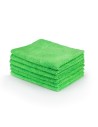
- Use the appropriate material for application: A microfiber cloth or a cotton swab are the most common methods. Avoid materials that may leave fibres on the track, as they will accumulate with use.
- Respect evaporation times: Many cleaners need a few minutes to evaporate completely before using the track or applying the next product. Respecting this time makes a difference in the final result.
- In modelling, always clean before priming: Even if the part seems clean, always apply the degreaser before the primer. The human eye does not detect surface grease, but the paint does.
- Ventilate the workspace: Some of these products contain solvents that require good ventilation. Always work in an airy space and, if the product indicates, wear gloves.
- Store products well sealed: Exposure to air degrades the formulation of many cleaners, especially those based on alcohol. Close containers tightly after each use.
Common mistakes we should avoid
Over the years, we have seen the same mistakes repeated in the workshop. Here are the most common with enhancer cleaners:
- Applying excessively: More product does not mean more cleaning or more grip. Excess cleaner can leave residues, damage the material, or create the opposite effect to what is desired. Apply the right amount and work patiently.
- Not cleaning the track before applying the grip enhancer: If the track has accumulated dirt, the enhancer acts on that dirt, not on the track. The correct order is always to clean first and enhance afterwards.
- Using the same product on all surfaces: A cleaner designed for the metal track may be too aggressive for a fine plastic part or a painted figure. Always use the product indicated for each surface.
- Ignoring the cleaning step in modelling: Many adhesion problems attributed to paint originate from a poorly prepared surface. Skipping the prior cleaning is one of the most costly mistakes in terms of time and material.
- Not testing new materials beforehand: If you are using a cleaner for the first time on a material you do not know well, always test in a less visible area. Especially with plastics of unknown composition or already painted parts.
- Poorly storing products: Storing them with the cap poorly closed, in places with variable temperatures, or exposed to direct light degrades their formulation much sooner than expected.
Recommendations for beginners and advanced users
If you are just starting out
The most important thing is to understand that cleaning and preparing surfaces is not an optional step: it is the foundation of any good result, both in slot racing and in modelling. Start with a versatile and mild action product, follow the manufacturer's instructions to the letter, and do not skip the cleaning step even if you are in a hurry. A clean track and a well-maintained car provide more satisfaction than one prepared in haste on dirty surfaces.
For the basic maintenance of a home track, a specific track cleaner is sufficient to start. If you also paint models or figures, incorporate a mild degreaser into your workshop kit: you will appreciate it from the first piece.
If you already have experience
Advanced users usually have a reference product, but it is worth periodically reviewing whether the market formulation has improved or if there are new products that better suit your specific needs. In competition, where margins are tight, the choice of grip enhancer cleaner and the frequency of application are part of the car's setup just like the motor or tyres.
For high-level modelling, combining a prior degreaser with a quality primer from brands like Vallejo or Ammo is the basis for a professional finish. The time invested in preparing surfaces always pays off in the final result.
| Type of enhancer cleaner |
Main use |
Target surface |
Recommended level |
| Track cleaner |
Improve electrical conductivity |
Metal track of slot car tracks |
All levels |
| Grip enhancer |
Increase tyre adhesion |
Slot track (with caution) |
Intermediate / Advanced |
| Degreaser for modelling |
Preparation of surfaces for painting |
Resin, plastic, metal |
All levels |
| Multi-purpose product |
General cleaning and preparation |
Tracks, cars, parts |
Beginner / Intermediate |
Frequently asked questions
How often should I clean the track of my circuit?
It depends on usage. In a home circuit with moderate use, every 3-4 sessions is a good reference. If you notice that the cars respond irregularly or lose speed for no apparent reason, it is a clear sign that the track needs cleaning.
Does the grip enhancer cleaner damage the track?
If used correctly and in the dosage indicated by the manufacturer, no. The problem arises when it is applied excessively or on incompatible tracks. Always read the instructions and, if in doubt, consult before applying.
Can I use a track cleaner on the car's braids?
Some products are formulated for use on track and braids. Always check the product sheet before using it on components other than the track. For the braids, a cotton swab slightly moistened with the product is usually sufficient.
Is a degreaser necessary before priming always?
In practice, yes. Especially with resin parts (which almost always have residues of release agent) and with metal parts. For injected plastic, it depends on the origin of the part, but a degreasing step does no harm and can save the painting work.
What is the difference between a cleaner and an enhancer?
The cleaner removes contaminants from the surface. The enhancer acts by improving a specific property of that surface (conductivity, grip, adhesion). Many products combine both functions, hence the name "enhancer cleaner."
Can I use isopropyl alcohol as an alternative?
High-purity isopropyl alcohol is a valid alternative as a degreaser for modelling surfaces, although it does not provide the enhancing properties of a specific product. For cleaning the slot track, products formulated for that purpose usually yield better results and are safer for the track material.
Does the enhancer cleaner directly improve the performance of the cars?
Indirectly, yes. By improving the conductivity of the track and the grip of the tyres, the car receives better current and has more available traction. It is not a substitute for good setup, but it complements mechanical work very well.
Is there a risk of damaging the car's paint with the track cleaner?
It depends on the product. Always use the cleaner on the track and avoid prolonged contact with the painted body. If you need to clean the underside of the car or the chassis, use specific products for that or mild degreasers.
Are these products necessary if my track is new?
A new track does not need immediate track cleaning, but it is advisable to give it a first pass to remove possible manufacturing or storage residues. From there, establish the maintenance routine from the beginning: it is much easier to keep the track clean than to recover it after it has been untreated for a while.
Can I use the same product on Scalextric tracks and Scaleauto tracks?
In general, yes, although the track systems are different (universal track in Scalextric, sport track in Scaleauto), the type of metal in the track is similar and the usual cleaners work on both. What changes is the geometry of the track, not the compatibility with cleaning products.
How often should I use the degreaser in modelling?
Every time you are going to prime or paint a new part, without exception. Also, if you handle a previously primed part a lot before painting it, because the grease from your hands can compromise the adhesion of the paint.
Do enhancer cleaners expire?
Most have a long shelf life if stored correctly (closed, stable temperature, without direct light). Some alcohol-based products evaporate if you do not close the cap properly, losing concentration. Always check the appearance and smell of the product before using it if it has been in the workshop for a while.