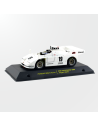
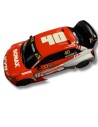
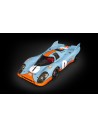
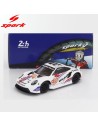
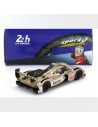
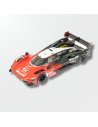
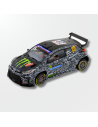
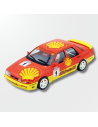
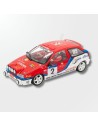
When we talk about static models in 1/8 scale, we are discussing the giants of miniature collecting. A piece at this scale is not simply a reduced representation of a real car: it is almost a sculptural work. With sizes that can exceed 50 centimetres in length, these models concentrate a level of detail, miniature engineering work, and a visual presence that no other common scale can match. If you have ever held one in your hands, you know exactly what we are talking about. If you are considering making the leap, you are about to understand why so many collectors consider them the pinnacle of this hobby.
The 1/8 scale occupies a very specific place in the world of modelling and diecast: it is neither the most accessible in price nor in space, but it does not aim to be. It is the scale chosen by those who want the best in terms of representation, who collect with a very defined criterion, and who value each piece as both an aesthetic and sentimental investment. Enthusiasts who arrive here usually come from having explored other scales —1/43, 1/18, 1/24— and have decided that they want to take a step further.
In these pages, you will find static car models in 1/8 scale, designed for both demanding collectors and modelling enthusiasts looking for a reference piece. Below, we will tell you everything you need to know to understand this scale, choose wisely, and make the most of your collection.
What is 1/8 scale and why is it so special
A 1/8 scale means that the model represents the real vehicle in a one-to-eight proportion: that is, the model measures exactly one eighth of the actual size of the car. This translates, in practice, into models ranging from 45 to 60 centimetres in length for most passenger cars and competition vehicles. For a Formula 1 single-seater or a Le Mans prototype, the measurements vary depending on the original proportions of the vehicle.
What makes this scale unique is that it allows for the faithful reproduction of elements that are impossible or must be simplified in smaller scales: seams in the seats, real screws in the engine panels, internal wiring cables, functional suspensions, articulated steering, doors and hoods that open to reveal an equally detailed interior or engine. At 1/8 scale, the manufacturer has no excuse to simplify: the space allows for everything.
Historically, 1/8 scale models have been the domain of major model manufacturers —with Pocher as a historical reference for decades— and special editions from companies specialising in high-end diecast. Today, the market has evolved, and there are offerings ranging from kits to build and paint to fully finished pieces ready for display.
How to correctly choose a 1/8 scale model
Before acquiring a model at this scale, it is advisable to be clear about several factors that will condition both the buying experience and long-term satisfaction.
Kit or finished model?
This is the first decision you need to make. Assembly kits require time, tools, skill, and, in many cases, paint. They offer total involvement in the process and allow for custom finishes. Ready-made models come ready for display, with all details applied at the factory. For collectors without experience in modelling or with little time available, the finished option is the most recommended. For those who enjoy the process as much as the result, the kit is the most rewarding option.
Manufacturing material
1/8 scale models are produced in different materials. Diecast (metal alloy) provides weight, solidity, and an immediate sense of quality to the touch. Injection plastic —predominant in assembly kits— allows for greater precision in fine parts and very small details. Some manufacturers combine both materials to take advantage of each one's benefits. There are also models with resin components for very detailed elements or complex geometrical pieces.
Level of detail and finish
Not all 1/8 scale models have the same level of detail. Check if it includes a visible engine, functional suspension, articulated steering, interior upholstery, instrumentation, and quality decals. Always compare actual photographs of the model, not just promotional renders.
Limited edition and collector's value
Many pieces at this scale are produced in limited runs. This can translate into appreciation over time, but also means that if you are looking for a specific model and let it pass, it may not be available later. If you know what you want, do not postpone it.
Main types and differences in 1/8 scale
Within the 1/8 scale, there is a significant variety of offerings, and knowing the differences will help you better orient your search.
Classic assembly kits
The tradition of 1/8 scale assembly kits has decades of history. They are long-term projects that can require weeks or months of work, but whose final result is incomparable. They require specific adhesives, paints —Vallejo, Tamiya, or Ammo are common references in the world of static modelling— and in many cases, water decals for decorations.
High-end diecast models
At the opposite end, we find fully finished pieces, with display finishes straight out of the box. They are usually special or collector's editions, with individual numbering and a certificate of authenticity. They represent iconic cars from the history of motorsport, Formula 1, Rally, or Le Mans.
Themed and licensed models
Some 1/8 scale models are based on very specific vehicles with official licensing from the team or the manufacturer of the real car. This type of model has greater rigor in reproducing colours, logos, and specific configurations from a season or race.
Technical aspects we should know
Although a static model has no motor or electronics to maintain, there are technical aspects that are worth understanding to correctly assess what we are buying.
Tolerances and adjustments
In assembly kits, the quality of the mould determines how much adjustment the parts need to fit together. Higher quality kits have very tight tolerances and precise fittings; lower quality ones may require additional sanding, filling, and correction before painting.
Decals and masks
The decoration of a model at this scale can be done using water decals, paint masks, or a combination of both. Water decals are the most common option in kits; finished models usually have the decoration applied at the factory using high-precision screen printing or tampoprint techniques.
Bases and display cases
Given the size of these models, choosing an appropriate base and, if desired, a protective display case is essential. Dust and direct sunlight are the main enemies of any collection, and at 1/8 scale, the exposed surface is much larger than in smaller scales.
Comparison of common scales in collecting
| Scale |
Approx. Length (passenger car) |
Detail |
Space required |
Typical profile |
| 1/64 |
~7 cm |
Basic |
Minimal |
Beginner, mass series |
| 1/43 |
~10 cm |
Medium-high |
Reduced |
Classic collector |
| 1/18 |
~25 cm |
High |
Moderate |
Intermediate/advanced collector |
| 1/12 |
~35 cm |
Very high |
Wide |
Advanced, motorcycles and F1 |
| 1/8 |
~50-60 cm |
Maximum |
Large |
Demanding collector |
Practical tips for conservation and display
A 1/8 scale model is an investment that deserves proper care. Here are the most useful tips to keep it in perfect condition:
- Avoid direct sunlight: UV rays degrade plastics, fade paints, and deteriorate decals over time. Display your models in areas of indirect light or use display cases with UV filters.
- Periodic cleaning: use a soft brush or low-pressure air to remove accumulated dust. Avoid damp cloths on painted surfaces without varnish, as they can lift pigment.
- Stable temperature and humidity: sudden temperature changes or excessive humidity can affect diecast parts and cause corrosion in metal areas or deformation in plastic components.
- Handle with care: due to their size, these models have fragile parts in highly detailed areas —mirrors, antennas, rear-view mirrors— that can break if the model is not held correctly by the body or base.
- Storage in original box: if you need to store the model, the original box is always the best option, as it is specifically designed to protect it.
Common mistakes to avoid
The world of 1/8 scale models has its peculiarities, and some mistakes are particularly common among those approaching this scale for the first time.
Underestimating the space needed
A 55-centimetre model needs real space. Many buyers are surprised when unpacking it. Before acquiring a piece at this scale, measure the available space in your display case or shelf and ensure that the model's base will also fit.
Buying a kit without prior experience
1/8 scale kits are complex projects. If you have no experience in static modelling, we recommend starting with smaller scales or directly with a finished model. Jumping into a kit of this size without prior practice can be frustrating and result in a finish far below the potential of the piece.
Not verifying the provenance and licensing
The market has models of very disparate quality. Some manufacturers of lesser reputation market pieces with poor finishes or without official licensing. Buying from specialised stores like Ministry of Hobby ensures that the provenance is correct and that the model matches what is shown.
Ignoring the total cost of a kit
The price of the kit is just the starting point. Paint, varnish, additional decals, tools, adhesives, and the time invested are all part of the actual cost of the project. Keep this in mind before deciding between a kit and a finished model.
Recommendations for beginners and advanced collectors
If you are starting in 1/8 scale
The clearest recommendation is to start with a finished model from a recognised manufacturer. This way, you can assess the real level of detail of this scale, the space it occupies, and whether it fits your collecting style, without committing to an assembly project that may be overwhelming at first. Choose a car that has personal significance for you: an iconic model from a brand you admire, a car from a historic race you have followed. The emotional connection with the piece is part of the pleasure of collecting.
If you already have experience in modelling or collecting
The 1/8 scale will open up a field of technical possibilities that other scales do not allow. A well-executed kit at this scale can become the centrepiece of your entire collection. Opt for projects that allow you to apply more elaborate painting and weathering techniques —the size of the surfaces makes it easier— and for models of vehicles with a rich history behind them: championship cars, legendary prototypes, single-seaters from unforgettable seasons.
If you already have models in 1/18 or 1/24 and want to make the leap, the difference in visual impact when moving to 1/8 is immediate. It is not just a matter of size: it is a distinctly different category of presence on the shelf.
Frequently asked questions about static models in 1/8 scale
How long is a 1/8 scale car approximately?
It depends on the real car, but most passenger cars and GTs represented in 1/8 scale measure between 45 and 60 centimetres in length. Formula 1 single-seaters are usually slightly shorter due to the actual dimensions of the original vehicle.
Is it better to buy a kit or a finished model?
It depends on your experience and what you are looking for. If you enjoy the assembly and painting process, a kit is immensely satisfying. If you prefer to focus on displaying and collecting, a finished model will give you better results without the learning curve.
What paints are used for static modelling at this scale?
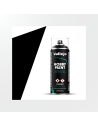
Acrylic paints from brands like Vallejo, Tamiya, or Ammo are the most commonly used in static modelling. Their water-based drying, ease of dilution, and wide range of colours make them ideal for both brush and airbrush.
Do I need an airbrush to paint a 1/8 scale model?
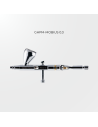
It is not essential, but at this scale, the airbrush makes a notable difference, especially for backgrounds, gradients, and weathering effects on large surfaces. For small details, the brush remains irreplaceable.
Do 1/8 scale models appreciate over time?
Limited editions and models from recognised manufacturers do tend to appreciate, especially when they represent iconic cars or historic seasons. That said, collecting solely as a financial investment is not usually the most rewarding motivation: the best approach is to choose what genuinely excites you.
What display case do I need for a model of this size?
You will need a display case with a minimum depth of 25-30 cm and an interior height of at least 25 cm for most models. Always measure the base of the model (not just the body) before choosing the display case.
Are 1/8 scale models suitable for children?
In general, no. They are collector's pieces with small and fragile components, delicate materials, and significant economic value. They are not designed for play but for display and adult collecting.
Can I mix models from different manufacturers in my 1/8 scale collection?
Perfectly. The 1/8 scale does not imply physical compatibility between parts —as is the case in slot with rail systems— so you can combine manufacturers and styles with total freedom. What is advisable is to maintain aesthetic coherence in the display area.
How long does it take to assemble a 1/8 scale kit?
It depends on the complexity of the kit and your experience, but it is common to talk about projects ranging from 40 to 150 hours of work for careful execution. They are long-term projects that many modellers balance with other activities over weeks or months.
What cars are most represented in 1/8 scale?
Historically, classic Formula 1 cars, the great GTs of Le Mans, and some iconic American muscle cars have been the most worked on in this scale. There is also representation of historic rally cars and some supercars from premium brands.
Is it necessary to varnish the finished model to preserve it better?
In factory-finished models, the varnish is already applied. In kits assembled and painted by oneself, it is highly recommended to apply a final coat of varnish —matte, satin, or glossy depending on the desired finish— to protect the paint and fix the decals.
Where can I find spare parts or loose pieces for a 1/8 scale kit?
Loose parts for kits at this scale are difficult to find outside specialised channels. At Ministry of Hobby, we work with a catalogue aimed at the demanding modeller; if you are looking for something specific, you can consult us directly, and we will guide you.