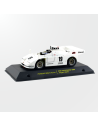
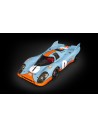
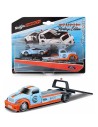
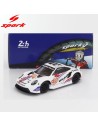
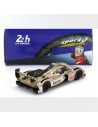
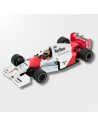
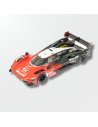
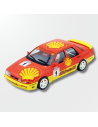
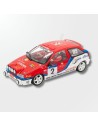
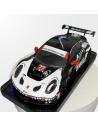
There are scales that captivate with their monumentality and others with their ingenuity. The 1/64 scale belongs to the latter category: tiny cars that hide a surprising level of detail, an undeniable collector's appeal, and a practicality that few scales can match. One and a half centimetres in width can suffice to represent an American muscle car, a classic rally car, or a modern hypercar with a fidelity that still impresses anyone holding them for the first time, even today, with so many years of diecast tradition behind.
In this scale, a full-size car —think of a standard saloon of about 4.5 metres— translates to a miniature of approximately 7 centimetres in length. This makes it one of the smallest scales with serious industrial production, just above the realm of micro-models and below the more popular 1/43 scale. And in that compact space lives a passionate community: collectors seeking themed series, automotive history enthusiasts, and modelling aficionados who appreciate being able to gather dozens —or hundreds— of models without exhibition space being an issue.
If you have been in the diecast collecting world for a while or have just discovered it, the 1/64 scale has something special: it allows for the construction of complete themed collections —all generations of a model, an entire brand, the cars of a historic competition— without the budget skyrocketing or the living room disappearing under display cases. It is, in many ways, the scale of organised passion.
At Ministry of Hobby, we select models with criteria: not everything that exists in 1/64 deserves a place in a serious collection, and our catalogue reflects that demand. Throughout this page, you will find everything you need to know to make informed choices, understand what differentiates one model from another, and get the most out of each piece.
What is the 1/64 scale and why does it matter in collecting
When we talk about the 1/64 scale, we are saying that the model measures exactly one sixty-fourth of the real vehicle it represents. In other words, one real metre equals just over 1.5 centimetres in the miniature. It is a scale with deep roots in the world of toys and collecting: the legendary Hot Wheels and Matchbox lines, born in the sixties and seventies respectively, popularised this format until it became synonymous with affordable and collectible diecast miniatures.
However, the 1/64 scale has evolved far beyond that origin. Today, it encompasses low-cost products aimed at the general public alongside limited edition series with detailed interiors, real rubber tyres, wheels with rim detail, and multi-layer paint finishes. This duality makes 1/64 a fascinating territory: there is entry for all budgets, but there is also a ceiling for the most demanding.
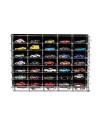
From the perspective of the adult collector, the 1/64 scale has an undeniable argument: the collection density per square metre. A standard display case can easily hold fifty or sixty 1/64 models, while that same case with 1/18 pieces would barely accommodate a dozen. For those wanting to gather the entire history of a manufacturer, the variants of an iconic model, or the complete grid of a historic championship, this scale is simply irreplaceable.
How to correctly choose a 1/64 scale model
Before adding a piece to your cart, it is wise to ask yourself a few questions. Not all 1/64 miniatures are at the same level or serve the same objectives.
Define what type of collector you are
Are you interested in historical competition cars, classic saloons, American muscle cars, or modern supercars? The 1/64 scale covers practically all niches, but each brand or product line tends to specialise in a specific theme. Knowing your preference saves you a lot of search time and helps you build a coherent collection.
Level of detail and price
The price range in 1/64 is broad. The most basic models usually have a metal body with simple plastic wheels and no detailed interiors. Premium ranges, on the other hand, incorporate functional suspensions, rubber tyres, interiors detailed with seats, steering wheels, and consoles, and paint with metallic or high-resolution matte effects. If the destination of the piece is a display case, it is worth investing in a higher range; if you are looking to complete a long series, standard models work perfectly.
Limited editions vs. regular production
Some 1/64 series are produced in very short runs, which gives them additional collector value over time. If you are interested in this angle, it is advisable to keep an eye on new releases and not miss out on pre-sales: once sold out, these references can multiply their secondary market price.
Compatibility with display cases and showcases
Not all 1/64 models come in the same type of box or with the same display system. Some include an integrated transparent dome, others come in standard blister packs or cardboard boxes. If you have a defined display system, check the dimensions and type of packaging before purchasing.
Main types and differences in the 1/64 scale
Within the 1/64 scale, product lines with very different philosophies coexist. We review the most relevant for an adult collector.
Diecast with metal body
This is the most widespread format. The body is made using pressure die-casting of zinc alloys (zamac), giving it a characteristic weight and solidity. The result is a robust miniature, with a good feel in hand and paint finishes that allow for a high level of detail. It is the reference standard in the 1/64 scale.
Models with additional resin or plastic parts
High-end models often combine a metal body with high-precision resin or plastic components for the more delicate elements: mirrors, spoilers, diffusers, or interiors. This combination allows for the reproduction of complex geometries that the die-casting process cannot capture with sufficient finesse.
Themed series and official licensed products
Many manufacturers work with official licenses from automotive brands, teams, or competitions. This guarantees the fidelity of the livery, logos, and sponsor colours. Official licensed series have greater documentary rigor and are usually better received by the most demanding collectors.
Special editions and collaborations
Some lines produce special editions linked to anniversaries, launches of real models, or collaborations with external brands. These pieces often include exclusive packaging, individual numbering, and certificates, and are aimed at both collecting and long-term investment.
Technical aspects we should know
Although at first glance a diecast miniature seems like a simple object, there are several technical aspects that determine its quality and longevity.
Alloys and materials
Zamac —an alloy of zinc, aluminium, magnesium, and copper— is the most commonly used material in the bodies of 1/64 diecasts. It is durable, takes paint well, and can be moulded precisely. However, some lower quality pieces may present long-term internal corrosion issues if the alloy does not have the correct proportion of elements. Serious brands rigorously control this process.
Paint finishes
The quality of the paint is one of the factors that most differentiates ranges. Premium models use water-based paints applied in multiple layers with a finishing varnish, resulting in deep colours and scratch protection. More economical models may show irregularities in coverage or premature chipping if not handled carefully.
Wheels and tyres
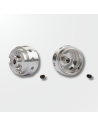
In basic models, wheels and tyres are a single piece of plastic. In higher ranges, the rim is a separate piece —sometimes metal— with spoke detail or specific design of the represented vehicle, and the tyre can be real rubber with tread detail. This detail makes a notable visual difference when displaying the model.
Interiors and windows
Detailed interiors with dashboards, steering wheels, and seats, along with transparent windows that allow viewing, are characteristic of high-end ranges. In many mid-priced 1/64 models, the interior is a single-colour plastic piece without detail, perfectly acceptable for a general collection but insufficient for those seeking maximum realism.
Practical conservation and display tips
A well-preserved miniature maintains its value and appearance for decades. Here are some specific recommendations.
Avoid direct sunlight
Ultraviolet radiation discolours paint and yellows plastics over time. If you display your models in cases, choose locations away from windows or use glass with UV filters.
Control humidity
High humidity can promote oxidation of metal components and deterioration of decals or adhesives on liveries. A closed display case in an environment with relative humidity between 40 and 60% is the ideal setting.
Correct handling
Diecast models should be handled with clean fingertips or, better yet, with fine cotton gloves. The natural oils from the skin can leave marks on the paint and, over time, affect the finish. To clean dust, a soft-bristled brush or a compressed air bulb are the safest tools.
Storage outside of display
If you store pieces without displaying them, do so in their original boxes, either horizontally or vertically as indicated by the packaging, and in a dry place. Never stack boxes with loose models inside: friction can scratch the paint.
Common mistakes to avoid
Whether you are starting in miniature collecting or have been doing it for years, there are recurring mistakes that are worth knowing in advance.
- Buying without thematic criteria: Gathering models without a guiding thread leads to scattered collections that lose visual and narrative value. Defining a line —a brand, an era, a type of competition— provides coherence and makes the collection more interesting.
- Ignoring the condition of the packaging: For adult collectors, the original box in good condition directly influences the resale value of a piece. Opening or damaging it unnecessarily is a mistake that cannot be undone.
- Confusing nominal scale with actual size: Two models declared as 1/64 may have slightly different sizes if the real vehicles they represent are of different lengths. Not all 1/64 models measure exactly the same.
- Neglecting regular cleaning: Dust accumulation on the paint, if cleaned roughly, can scratch it. Gentle and periodic maintenance prevents the need for more aggressive methods.
- Not verifying authenticity in the secondary market: Counterfeits of popular models exist. Buying from trusted specialist stores, like Ministry of Hobby, guarantees the authenticity and origin of the product.
Recommendations for beginners and advanced collectors
If you have just started
The first thing is not to try to cover everything at once. Choose a theme that you are truly passionate about —it could be a car brand, an era of motorsport, or a type of bodywork— and build from there. Mid-range models are a good starting point: they have enough detail to enjoy them and a price that allows you to expand the collection without stress. Also invest in a basic display case from the beginning: protecting the models from dust and light is the first step to keeping them well.
If you already have experience
For advanced collectors, the 1/64 scale offers interesting challenges: limited edition series with numbering, competition models with official licensing, discontinued production pieces with increasing market value. It is worth subscribing to updates from leading manufacturers and not hesitating at pre-sales of limited editions. It also makes a lot of sense to organise the collection with a digital inventory —there are specific apps for diecast— that allows you to know exactly what you have, what you are looking for, and the approximate value of your collection.
| Feature |
1/64 Scale |
1/43 Scale |
1/18 Scale |
| Approx. length (standard saloon) |
~7 cm |
~10 cm |
~25 cm |
| Display case space (units per linear metre) |
High (40-60 units) |
Medium (15-25 units) |
Low (4-6 units) |
| Potential level of detail |
Medium-high (premium range) |
High |
Very high |
| Average entry price |
Low-medium |
Medium |
High |
| Ideal for extensive themed collections |
Yes |
Partially |
Not recommended |
| Weight and solidity |
Light |
Medium |
Heavy |
Frequently asked questions about 1/64 scale miniatures
How long is a 1/64 scale car exactly?
It depends on the real vehicle represented. A 4.5-metre saloon translates to approximately 7 centimetres in miniature. A truck or a Formula 1 car —which is shorter— will result in a slightly different piece. The scale is constant; the final size varies with the original.
Are 1/64 models just for kids?
Not at all. Although the format has its origins in children's toys, the current 1/64 scale market is predominantly aimed at adult collectors. Many series are explicitly "adult" due to their complexity of detail, price, and collector orientation.
What is the difference between a basic diecast and a premium one in 1/64?
Mainly the level of detail in wheels, interiors, windows, and paint finish, and the quality of the materials. Premium models also tend to come in more elaborate packaging and with more limited runs.
How do I know if a 1/64 miniature has official licensing?
The packaging usually indicates the logos of the licensed manufacturers or teams. If it is not clear, the specialist store can confirm it. Licensed models faithfully reproduce the original colours, logos, and liveries.
Can 1/64 models be customised or painted?
Yes, although due to their size, they require fine tools and a lot of precision. Acrylic paints from brands like Vallejo or Tamiya, applied with a very fine brush or low-pressure airbrush, are the most common options. It is a common practice among experienced modellers.
Does humidity affect diecast models?
High humidity can cause internal oxidation in the zinc alloy and deteriorate decals or adhesives. Keeping models in closed display cases with controlled humidity —between 40 and 60%— prolongs their life in perfect condition.
What is "zamac" and why does it matter?
It is the most used metal alloy in diecasts: zinc, aluminium, magnesium, and copper. Its manufacturing quality largely determines the model's durability. An incorrect proportion can lead to internal corrosion over time, even without contact with water.
Is it worth keeping the original boxes?
If you have resale or long-term collector value in mind, yes: the original box in good condition can significantly influence the secondary market price. For purely display use, it is a personal decision.
How do I organise a large collection of 1/64 miniatures?
The most practical way is to use a digital inventory —there are specific applications for diecast collectors— where you can record brand, model, year, condition, and estimated value. Physically, display cases with inclined trays allow you to see several models at once without handling them.
What is the difference between 1/64 and other scales like 1/43 or 1/18?
Basically, the size, the maximum level of detail achievable, and the space required. The 1/64 scale allows for extensive collections with little space and lower investment per piece; the 1/18 scale offers maximum detail but requires more space and budget. The 1/43 scale sits at a very appreciated midpoint in Europe.