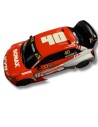
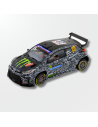
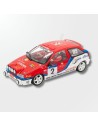
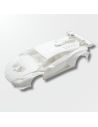
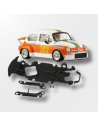
Rally is probably the motorsport discipline that ignites the most passion among slot and diecast enthusiasts. There is something about the image of a competition car flying down a dirt road, with the nose lifted in a jump or the rear end sliding through a corner on wet asphalt, that captivates in a way that few other categories can achieve. Modern rally captures all that essence and translates it into the cars of the latest generations: the models we have seen compete in the WRC, in national championships, and in regional rallies in recent years, with technology, aerodynamics, and safety levels very different from those of previous generations.
In this category, you will find slot replicas of contemporary rally cars: from the legendary World Rally Cars of the 2000s to the current Rally1 with hybrid engines, including the versatile R5 and Rally2 that dominate national championships around the world. These are models that combine a very high level of detail with a very characteristic track behaviour: all-wheel drive, low profiles, flared fenders, adjustable wings, and that unmistakable silhouette that distinguishes them from any GT or single-seater.
If you are passionate about the stages of Monte Carlo, the bumps of the Rally of Finland, or the mountain passes of the Rally of Catalonia, this section is made for you. Whether you are looking for a car to compete on track with maximum performance, or if you want a collector's piece with the official decoration of your favourite team, here is where to look. And if you enjoy preparing and fine-tuning your models, modern rally offers a really interesting starting point.
What is Modern Rally in slot and why does it deserve its own category
When we talk about modern rally in the world of slot, we refer to competition cars from the last few decades: those developed under the latest technical regulations of the WRC and national championships, with homologation specifications, power restrictions, advanced safety systems, and a very recognisable aesthetic for any motorsport fan.
This category differs from classic or historic rally —those Stratos, 037, Quattro, or Impreza 555— in that the models are current, identifiable by today's audience, and in many cases, still active in real competition. A Hyundai i20 N Rally1, a Toyota GR Yaris Rally1, a Ford Puma Rally1, or a Citroën C3 Rally2 are cars that fans have seen on television just a few weeks ago, which adds extra appeal for both the slot driver and the collector.
From a technical standpoint, modern rally cars in slot usually replicate very specific characteristics: bodies with large skirts and flares, detailed interiors with roll cages, decorations from real sponsors, and, in the best cases, a chassis designed to replicate the agile and responsive behaviour of these vehicles. These are models that, when well prepared, behave very differently from a GT or a single-seater on track.
How to correctly choose a Modern Rally car
The first question to ask before choosing is: what is the main use I want it for? The answer significantly changes the decision.
For collection or display: the most important aspect is fidelity to the real model, the quality of the body finish, the accuracy of the decals, and the details of the interior. In this case, it is worth looking at brands like Avant Slot or Scalextric, which offer editions with official licenses and very carefully crafted decorations.
For regular track use: track behaviour takes precedence. It is advisable to check the type of motorisation, the material of the chassis, and compatibility with the track system we have at home. Not all cars work the same on all systems: most 1/32 models are designed for universal track (Scalextric, Ninco) or sport track (Scaleauto, Slot.it), and mixing systems without proper information can lead to performance issues or even cornering problems.
For competition: here, more technical criteria come into play: the regulations of the championship to be participated in, the weight of the car, the type of allowed motor, and homologated tyres and wheels. In this context, brands like NSR, Slot.it, or Scaleauto offer highly developed options, although in modern rally, the reference catalogue for competition is somewhat more limited than in GT or Le Mans.
The most common scale is 1/32, which is the standard for slot, although there are some references in 1/24 for those looking for larger size and detail.
Main types and differences
Within modern rally, it is important to distinguish between the different categories of real cars that are replicated in slot, as they are not the same in aesthetics or behaviour:
- World Rally Cars (WRC / Rally1): these are the cars from the top category of the World Championship. Large, powerful, with aggressive aerodynamics. Slot replicas of these models are usually the most visually spectacular and the most sought after by collectors.
- Rally2 (formerly R5): the entry category to the WRC and the most widespread in national championships. Cars like the Fabia RS Rally2, the Hyundai i20 N Rally2, or the Ford Fiesta Rally2 have enormous popularity among fans. Their slot replicas are very common and are usually well documented.
- Rally3 and lower categories: less presence in the slot catalogue, although references are gradually appearing.
- Dirt vs. asphalt cars: although there is no real functional difference in slot, some models replicate specific configurations of suspension, tyres, and aerodynamics according to the type of stage, which adds documentary value to the piece.
From a manufacturing perspective, there are also significant differences between injection-moulded plastic cars —the most common and accessible— and resin-bodied cars, which offer greater precision in shapes and finer finishes. Avant Slot is one of the few brands that produces resin bodies industrially in this category, with very notable results.
Technical aspects we should know
Modern rally in slot has some technical peculiarities that are worth understanding before buying or preparing a car.
Motorisation: rally cars usually feature motors in an inline configuration (longitudinal motor, perpendicular to the rear axle), which lowers the centre of gravity and favours stability, especially in sharp direction changes. Some models opt for the sidewinder configuration (transverse motor, parallel to the rear axle), which provides more torque and a more direct response. The choice depends on the type of track and driving style.
Guide and braids: the guide is the element that keeps the car on the track, and its depth and geometry directly influence stability. The braids are the conductors that collect current from the track; their quality and contact affect the car's electrical performance. In rally cars, with their higher body height and centre of gravity compared to a GT, having a good guide is especially important.
Tyres: soft silicone or polyurethane tyres improve grip on track, but in a rally car —designed with a more worn competition tyre aesthetic— they can modify the appearance. Many enthusiasts keep the original tyres for collection and reserve the competition ones for the cars they use on track.
System compatibility: if you have a track at home, always check if the car is designed for universal track or sport track. Mixing cars from different systems —for example, a Scaleauto with a Scalextric track or a Ninco model on a Carrera track— can yield unpredictable results.
Practical tips for use, maintenance, and preparation
Whether the car will live in a display case or will run on track, there are some practices that make a difference:
- Initial running-in: new cars benefit from a gentle run-in at low power during the first laps, especially if the motor is new. This improves the settling of internal brushes and the adjustment of gears.
- Track cleaning: a dirty track is the number one enemy of performance. Dirt accumulated in the grooves of the track causes contact losses and erratic behaviour. Clean the circuit regularly.
- Lubrication: a minimal amount of lubricant on the axle and gears improves durability. But be careful: excess lubricant attracts dust and can contaminate the tyres, reducing grip.
- Collection storage: for models that will not run, store them away from direct light and dust. Plastic bodies can yellow over time if exposed to intense UV light.
- Braid inspection: with use, braids wear out and lose contact. It is one of the first points to check when a car starts to fail on track.
Common mistakes we should avoid
With years of experience in the sector, we have seen certain mistakes repeated that are worth mentioning:
- Buying without verifying system compatibility: not all cars work well on all tracks. Before buying, confirm if the model is for universal track or sport track.
- Confusing scales: a 1/32 car and a 1/24 car are not interchangeable either on track or in display. If you are completing a collection, scale matters.
- Over-tightening chassis screws: in rally models, where the chassis may be somewhat more flexible, over-tightening screws deforms the geometry and worsens behaviour. Adjust gently.
- Ignoring weight: modern rally works with cars that have a higher centre of gravity than a GT. Adding ballast in incorrect positions can make the car more unstable instead of improving grip.
- Not checking the guide after a track exit: impacts can misalign the guide or damage the braids. A quick inspection after each exit prevents bigger problems.
Recommendations for beginners and advanced users
If you are starting
The best approach is to start with a mid-range car from brands like Scalextric or Ninco, which offer good finishes at accessible prices and are fully compatible with the most widespread track systems on the market. Modern rally models from these brands usually come ready to run without the need for adjustments, making it much easier to enter the hobby.
Do not rush into preparations or modifications: first learn how the stock car behaves, understand what the guide is and what the braids are, and get familiar with basic maintenance. There is much to learn and enjoy before touching anything.
If you already have experience
Modern rally offers an interesting field for technical preparation. You can explore motor upgrades, changing tyres for higher grip rubber, optimising ballast, or working with alternative chassis. Brands like NSR, Slot.it, or Scaleauto offer high-performance spare parts and components compatible with many models, although in the rally segment, the preparation catalogue is somewhat more limited than in GT or single-seaters.
If collecting is your thing, modern rally gives you the opportunity to follow the real season and complete the grid of a championship with all the official cars: a very satisfying proposal for those who enjoy both real motorsport and its miniature replica.
| Real category |
Examples of cars |
Presence in slot |
User profile |
| Rally1 / WRC |
Toyota GR Yaris, Hyundai i20 N, Ford Puma |
High |
Collector, WRC fan |
| Rally2 / R5 |
Fabia RS Rally2, i20 N Rally2, Fiesta Rally2 |
Very high |
Collector and track driver |
| Rally3 / junior categories |
Ford Fiesta Rally3 |
Low / growing |
National rally enthusiast |
| Dirt / asphalt versions |
Variants of the above |
Medium |
Technical collector |
Frequently asked questions about Modern Rally in slot
What is the difference between a modern rally car and a classic rally car in slot?
Modern rally cars replicate vehicles from the latest technical regulations of the WRC and current championships, with more aerodynamic bodies and contemporary aesthetics. Classics —Stratos, Quattro, Delta, Impreza— adhere to earlier regulations and eras, with a very different aesthetic and a more nostalgic value for collectors.
Are modern rally cars compatible with any circuit?
It depends on the circuit system. Cars designed for universal track (Scalextric, Ninco) do not work the same on sport track (Scaleauto, Slot.it). Always check the product specifications before buying if you have a track at home.
What scale is the most common in modern rally?
The 1/32 scale is the standard for slot and the most represented in the modern rally catalogue. There are some references in 1/24, with larger size and detail, but they are less frequent.
Can I use a modern rally car in official competition?
It depends on the championship regulations. Many slot championships have specific categories by type of car and regulations. Check the regulations before buying if your goal is to compete.
Are resin bodies better than injection-moulded plastic ones?
Not necessarily better, but different. Resin allows for greater fidelity in shapes and finer finishes, but is usually more fragile against impacts. Injection-moulded plastic is more durable and accessible. For collection, resin wins; for intensive track use, plastic holds up better.
Which brands have the best modern rally catalogue?
Scalextric and Avant Slot have very recognisable references with official licenses. Ninco has also historically worked in this category. For prepared competition models, the catalogue is more limited than in GT, but it is growing season by season.
How do I know if my car's guide is in good condition?
If the car easily loses the track in corners it used to take well, or if I notice it rattling on the straights, it is likely that the guide is worn or misaligned. Inspect it visually and check that it turns freely without excessive play.
How often should I clean the braids?
It depends on usage. In regular running sessions, a check every few sessions is sufficient. If the car starts to stutter or you notice sparks on the track, check the braids: they may be dirty, bent, or worn.
Is it worth adding ballast to a modern rally car?
It can help improve traction and stability, but in rally cars —with a higher centre of gravity than a GT— care must be taken with the position. Ballast placed too high can worsen behaviour. Experiment with small amounts and low positions.
Do modern rally cars in slot have all-wheel drive like the real ones?
No. In slot, the traction is always rear-wheel: the motor drives the rear axle. The reference to all-wheel drive in real cars is purely aesthetic and design inspiration.
Can I customise the decoration of my modern rally car?
Yes. With acrylic paints from brands like Vallejo, Tamiya, or Kaleido, and with water decals, it is possible to repaint and customise any body. This is a very satisfying part of the hobby, although it requires practice and patience, especially for the glossy finishes typical of rally.
What is better to start with, a WRC or a Rally2?
For beginners, a Rally2 car can be a good option: they are usually somewhat more affordable, have a very wide offering, and represent the most seen cars in national championships, giving them a very high identification value for the average rally fan.