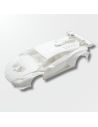
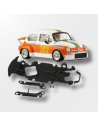
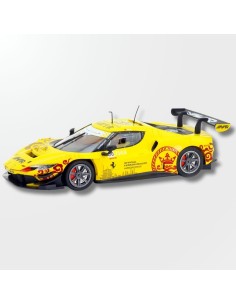
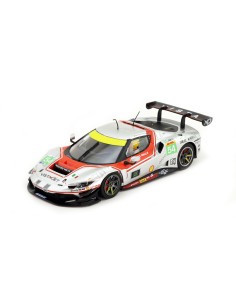
The 24 Hours of Le Mans is, without a doubt, the most iconic endurance race in the motorsport world. In slot racing, modern Le Mans cars hold an equally special place: they represent cutting-edge, state-of-the-art vehicles in miniature form, with a technical complexity that excites both collectors and competitive drivers. If you’ve made it this far, you probably already know what you’re looking for: an LMP prototype, a GTE, or a Hypercar with the level of detail and performance that only a category designed specifically for these types of machines can provide.
The leap from classic Le Mans to modern ones is not just aesthetic. The cars from the last few decades at the Circuit de la Sarthe showcase radical aerodynamic shapes, composite materials, integrated LED lighting in the originals, and a variety of categories ranging from hybrid era LMP1s — featuring brands like Audi, Porsche, or Toyota — to current Hypercars and GTEs that pit production manufacturers against each other on the track. Reproducing all of this in 1/32 scale is a challenge that brands like Slot.it, NSR, Avant Slot, and Scaleauto have taken on with outstanding results.
On the track, these models behave differently than a high-bodied GT or a single-seater. Their low profile, reduced centre of gravity, and pronounced aerodynamics give them a unique character that is noticeable from the very first metre of track. If you are interested in endurance slot racing — whether in a 24-hour format, long-distance leagues, or simply in night training sessions with lights — this category is your natural starting point.
Throughout this guide, we will review what defines modern Le Mans in slot, how to choose the most suitable model for your use, what technical differences exist between prototypes and GTEs, and what aspects you should clarify before making a purchase. Whether you are just starting or already have experience, you will find specific information to make the best decision.
What are modern Le Mans in slot and why do they matter
When we talk about modern Le Mans in slot, we refer to the cars that have competed in the 24 Hours of Le Mans and the World Endurance Championship (WEC) from the year 2000 onwards. The category encompasses several well-defined classes:
- LMP1 (Le Mans Prototype 1): the top-tier prototypes, dominated for over a decade by the Audi R18, Porsche 919 Hybrid, and Toyota TS050. With hybrid technology and blade-like shapes, they are the most technical and coveted models.
- LMP2: broader access prototypes, with standardized chassis. Oreca 07, Ligier JSP217, or Dallara are common references. In slot, they represent a balance between detail and price.
- GTE / GT3: production cars modified for long-distance competition. Ferrari 488, Porsche 911 RSR, Ford GT, or Aston Martin Vantage. They allow street brands to be seen in the most demanding context.
- Hypercar: the premier class of the WEC since 2021. Toyota GR010, Ferrari 499P, Cadillac V-Series.R, or Porsche 963. The most recent models with the highest collector potential.
In terms of slot, this variety translates into a rich and constantly updated catalogue. The most active brands release versions of real liveries — with car numbers, team colours, and authentic sponsors — which multiplies the appeal for both competitive drivers and collectors looking to reproduce a specific edition of the race.
How to correctly choose a modern Le Mans in slot
Before buying, it is advisable to ask yourself three questions: What is the intended use of the car? What type of track will it run on? What is the technical level of the user?
Competition use or collection use
A car for competing in a timed championship is not the same as a model for display or sporadic running. For competition, it is important to focus on the stock motorization, the quality of the tyres, the guide, and the braids, as well as the availability of spare parts. Slot.it and NSR are solid references in this regard: both brands have a wide and well-documented spare parts catalogue, and their cars are aimed at drivers who want to fine-tune their setup.
For collection, the criteria are different: the fidelity of the decoration, the level of detail of the body, the finishes of the interior, and the accuracy of the colours compared to the real car are more important.
Track system
This point is critical and often causes confusion. 1/32 slot cars are designed for two main systems:
- Universal track: compatible with Scalextric and Ninco tracks.
- Sport track: compatible with Scaleauto and Slot.it tracks.
Before purchasing, make sure you know your circuit's system. Mixing cars and tracks from different systems — for example, a car designed for sport track on a Scalextric circuit — can lead to guide and electrical contact issues. If you have doubts about the compatibility of your setup, consult us: we can help clarify the correct combination.
Scale and space
Most modern Le Mans in slot are manufactured in 1/32 scale, the de facto standard for competition and general use. There is also an offering in 1/24, which is larger and has a higher level of detail, but requires larger circuits and a significantly higher investment. For most enthusiasts, 1/32 offers the best balance between size, price, and availability of circuits.
Main types and differences
Within modern Le Mans, there are important differences between categories that are worth understanding for proper selection:
Closed vs. open prototypes
The most recent LMP1 and LMP2 cars have predominantly been closed (with a covered cockpit), while earlier versions from the 2000s maintained an open cockpit. In slot, this difference is noticeable in the model's aerodynamics and how it behaves in corners: closed cars generally have a more compact profile and a more efficient mass distribution.
GTE vs. prototypes
GTEs are taller and bulkier cars than LMPs. On track, their behaviour is more similar to that of a conventional GT: slightly more inertia, greater rear grip in some models, and an aesthetic closer to street cars. For a driver coming from GT3 or touring, the transition to GTE in slot feels natural.
Hypercar: the current frontier
Hypercars represent the most modern category. In slot, brands like Slot.it have already released models of the Toyota GR010 and the Porsche 963, and the offering continues to grow. They are cars with very high collector appeal, as they reproduce machines that are currently competing at Le Mans.
Technical aspects we should know
Modern Le Mans in slot, due to their morphology, present specific technical characteristics that directly influence their behaviour:
Low centre of gravity
LMP prototypes have their floor practically glued to the ground. In slot, this translates to very flat chassis and motors mounted in inline (longitudinal to the rear axle) or sidewinder (transversal) configurations, depending on the model. The inline configuration lowers the centre of gravity even further, improving stability in fast corners. The sidewinder, on the other hand, offers a more direct transmission and is common in many competition models.
Tyres and wheels
The low profile of the car requires tyres with a precise diameter. In competition models, the tyre compound is crucial: softer rubbers offer more grip but wear out faster in long-duration races, just like in reality. For a 24-hour slot championship, managing tyre wear is part of the strategy.
Guide and braids
The guide is the element that keeps the car on the track. In very low-profile prototypes, the vertical travel of the guide may be limited, which can affect electrical contact on uneven track sections. Braids should be checked periodically: poor contact results in loss of response and erratic behaviour.
Lighting
Many high-end modern Le Mans include functional lighting as standard or are prepared for installation. In a night slot race — or simply in a session with the lights off — lighting adds an immersive component that is hard to surpass. If this matters to you, check the model specifications to see if it includes LEDs or if it requires an additional kit.
Practical tips for use, maintenance, and preparation
A well-maintained modern Le Mans performs better and lasts longer. Here are the points you should not neglect:
- Cleaning braids and track: after each long session, check the condition of the braids. The buildup of graphite and dirt on the track directly affects electrical contact. A clean track is always faster.
- Lubrication of gears: apply specific slot lubricant to the crown gear and pinion. A drop is sufficient; excess attracts dust and worsens performance.
- Checking the guide: ensure that the guide turns freely and does not have excessive play. A worn or poorly adjusted guide is one of the most common causes of derailments.
- Condition of the tyres: clean the tyres before running. Dirt and dust significantly reduce grip. If the car has been run for many hours, consider changing the tyres before an important race.
- Chassis inspection: in very low-profile prototypes, the chassis may suffer slight deformations after impacts. Periodically check that it is flat and that the axles turn without rubbing against the body.
Common mistakes to avoid
With modern Le Mans in slot, some mistakes are repeated that are worth knowing in advance:
- Buying without checking track compatibility: as mentioned, mixing systems without being informed can cause problems. A car designed for sport track may not function correctly on a Scalextric or Carrera circuit without adapting the guide.
- Over-lubricating: more lubricant does not mean more speed. Excess lubricant in the transmission acts like a magnet for dust and can degrade the tyres.
- Ignoring the initial run-in: many competition models improve significantly after a proper run-in. Spend the first sessions at medium speed to allow the gears and motor to settle.
- Not checking the guide before a long race: in a 24-hour slot session, small problems are amplified. A poorly adjusted guide that causes a derailment in ten minutes can ruin the team's strategy in a long race.
- Confusing motor configurations: inline and sidewinder are not interchangeable without modifying the chassis. Before changing the motorization of a car, ensure that the chassis is designed for that configuration.
Recommendations for beginners and advanced users
If you are starting out
For those approaching modern Le Mans in slot for the first time, the best entry point is usually an LMP2 or GTE model from brands like Slot.it or Scalextric. They are well-finished cars, reasonably priced, and have balanced behaviour that does not require advanced adjustments to enjoy. The LMP2 has a more neutral driving experience than the more extreme LMP1s, making it easier to learn on the track.
Pay attention to your track's rail system before buying, and do not complicate the setup in the first sessions: stock tyres, original guide, and untouched motor are more than sufficient to start running and enjoying.
For experienced users
If you already have experience, LMP1s — especially hybrid models from the golden era of Le Mans — and current Hypercars offer the greatest preparation potential. Brands like Slot.it and NSR have very comprehensive spare parts catalogues: motors with different characteristics, crowns and pinions with various ratios, tyres of different compounds, and alternative chassis.
For long-distance competition, the choice of tyre compound and gear ratio are key variables. A torquey motor with a long gear ratio may be more efficient in endurance races than a high RPM motor optimized for qualifying. It is also worth exploring motorization configuration: a model with an inline motor offers stability advantages on fast circuits that an advanced driver will notice immediately.
| Category |
Car Profile |
Driving Difficulty |
Preparation Potential |
Recommended User Profile |
| LMP2 |
Closed prototype, low profile |
Medium |
Medium |
Introduction to prototypes, accessible competition |
| LMP1 (Audi R18, Toyota TS050…) |
Closed prototype, highly aerodynamic |
High |
High |
Experienced driver, advanced competition |
| GTE / GT3 |
Competition GT, greater volume |
Medium-low |
Medium |
Collectors, transition from conventional GT |
| Hypercar (GR010, Porsche 963…) |
Modern prototype, WEC premier class |
High |
High |
Advanced, collector of new releases |
Frequently asked questions about modern Le Mans in slot
What is the difference between an LMP1 and an LMP2 in slot?
The LMP1 represents the premier class of prototypes, with greater power, higher aerodynamic load, and more extreme shapes. In slot, LMP1 models typically have a more powerful motor and a more demanding driving experience. The LMP2 is more accessible, both in price and behaviour, making it ideal for getting started with Le Mans prototypes.
Are these cars compatible with any slot circuit?
It depends on the track system. Cars for universal track (Scalextric, Ninco) and those for sport track (Scaleauto, Slot.it) are not directly interchangeable without adapting the guide. Always check the system of the car and your track before purchasing.
Which brands make the best modern Le Mans in slot?
Slot.it and NSR are the most solid references for competition, with an excellent balance between detail and performance. Avant Slot stands out for its high-fidelity bodies. Scaleauto offers very competitive options in the competition segment. Scalextric has licenses for real cars with good visual finishes.
What motor configuration is best for endurance racing?
For long races, the inline motor has the advantage of lowering the centre of gravity and improving stability, which reduces derailments in prolonged sessions. The sidewinder offers greater response and is common in many models aimed at top speed. The choice also depends on the circuit and driving style.
Can I use a modern Le Mans on a small home circuit?
Yes, although very low-profile prototypes appreciate wider-radius corners. On small circuits with tight turns, it is advisable to reduce speed in those sections and ensure that the guide has enough travel to handle direction changes without derailing.
What should I check before a 24-hour slot race?
Guide in good condition and well-adjusted, clean braids with good contact, tyres in perfect condition, transmission properly lubricated, and chassis without deformations. In long races, small problems become major inconveniences: a 15-minute pre-race check can make the difference between finishing and not finishing.
Do current Hypercars already have representation in slot?
Yes. Slot.it has released models of the Toyota GR010 and the Porsche 963, among others. The offering grows each season, as slot brands closely follow the WEC calendar to launch new products aligned with the cars currently competing.
Is it better to buy a car already prepared for competition or to modify a stock one?
It depends on the level and budget. For beginners, a well-run stock car with proper maintenance is more than competitive. As experience is gained, adjustments to tyres, guide, gear ratio, and motor allow fine-tuning of the setup for each circuit. Brands like NSR and Slot.it offer "kit" versions designed specifically for those who want to build and prepare from scratch.
Does lighting affect the car's performance?
A well-installed lighting system consumes very little energy and does not appreciably affect track performance. What can influence is poorly routed wiring or improperly secured LEDs, which can add weight in unwanted areas or interfere with the body. If you install lighting, follow the kit instructions and ensure that the wiring does not rub against any moving components.
Is it worth investing in a Hypercar as a beginner?
Hypercars are high-end cars, with prices to match. For a beginner, the investment may be premature if they do not yet have the driving sensitivity to take advantage of their performance. It makes more sense to start with an LMP2 or a GTE, gain experience, and then make the leap to more demanding and expensive models.
Where can I find spare parts for these cars?
At Ministry of Hobby, we have spare parts for the main prototype brands: Slot.it, NSR, Avant Slot, and Scaleauto. If you need a specific component, you can consult us, and we will help you locate the correct part for your model.