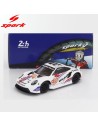
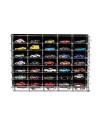
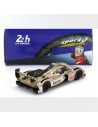
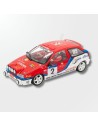
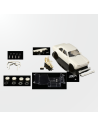
1/43 is much more than a small scale. It is the scale in which many enthusiasts took their first steps in collecting, and also the one to which veterans with decades of experience remain loyal. In this scale, there are everything from economical beginner models to high-end pieces with moving parts, impeccable paint finishes, and levels of detail that rival larger scales. If you have arrived here looking to expand your collection, find a specific model, or simply explore what 1/43 has to offer today, we will tell you everything.
The first thing to understand is that "1/43" does not define a single type of product: it encompasses mass-produced diecast miniatures, limited edition resin models, replicas of historic racing cars, classic utility vehicles, modern supercars, and much more. This diversity is precisely what makes this scale so exciting: there is something for every type of collector, with prices ranging from very accessible to collectible pieces priced like works of art.
Size is another of its virtues. A car in 1/43 measures approximately between 8 and 12 centimetres in length depending on the real model. This allows for the display of a large collection without the need for immense display cases, and facilitates transport and storage without sacrificing a surprising level of detail when the scale is well executed. It is not uncommon to find in 1/43 models with engraved headlights, detailed interiors, textured seats, or perfectly replicated race numbering.
The world of Tobby — that meeting point between toy and hobby — has one of its richest territories in 1/43. Here, the child discovering their first collectible car coexists with the adult seeking the exact replica of a 1970s Le Mans Ferrari. Ministry of Hobby selects with criteria: not everything that exists in 1/43 deserves a place in the catalogue, and that makes a difference.
What is the 1/43 scale and why it matters in collecting
The 1/43 scale means that the model is forty-three times smaller than the real vehicle. Its origin is linked to model trains: the O scale used this proportion for the vehicles accompanying the layouts, and from there it emerged as a reference for the first miniature cars. Since the 1930s and 1940s, brands like Dinky Toys were already producing models in this proportion, laying the foundations for what we now know as diecast collecting.
Today, 1/43 is established as one of the world reference scales in automobile collecting. It has an active community, specialised fairs, dedicated publications, and a robust secondary market. Collecting in 1/43 is not just about accumulating cars: it is about documenting the history of the automobile, competition, and popular culture. Many models represent Formula 1 single-seaters from specific seasons, Le Mans winning cars in the exact year they competed, or limited production versions of models that no longer exist physically.
From the collector's point of view, 1/43 offers a relationship between size, detail, and price that few scales can match. It is more economical than 1/18 — both the model itself and the space and furniture needed to display it — but allows for a very high level of finish and fidelity to the original when the manufacturer is chosen well.
How to correctly choose a 1/43 car
Before buying, it is advisable to ask yourself some specific questions. Not all 1/43 miniatures are the same, and price is not always the only indicator of quality.
Define your theme or collection line
Are you interested in Formula 1 cars from a specific era? Competition GTs? Classic rally cars from the 1980s? European post-war utility vehicles? 1/43 covers all this and more. Having a thematic line helps to give coherence to the collection and facilitates purchasing decisions without each new model being a deliberation of hours.
Diecast versus resin
Diecast models — made with zinc or aluminium alloys — tend to be more durable to the touch and more economical in entry-level ranges. Resin models allow for greater detail in small parts and more complex shapes, and are usually found in limited editions or high-fidelity ranges. Neither is better in absolute terms: it depends on what you are looking for.
Limited editions versus regular production
Some pieces in 1/43 are produced in very short runs, giving them additional collector value and potentially increasing in value over time. If that interests you, it is advisable to keep an eye on new releases and not wait too long. Regular production models allow for more calm in decision-making, but sometimes they are unexpectedly discontinued.
The level of finish and moving elements
In entry-level ranges, models usually have fixed doors and hoods, simplified interiors, and plastic mirrors. In mid and high ranges, we find opening doors, detailed steering wheels, simulated seat belts, articulated suspensions, or even visible engines. Decide what level you need before directing the budget.
Main types and differences in 1/43
Within 1/43, very different product profiles coexist. Knowing them helps to navigate the catalogue with more criteria.
Historic racing cars
This is probably the most active segment in 1/43. Formula 1 single-seaters from the 1950s to the 1990s, Le Mans prototypes, rally cars from groups A and B, Sport-Prototypes from the 1970s... Replicas of racing cars have constant demand and a very loyal community of enthusiasts. Specialist brands work with remarkable documentary fidelity, reproducing race decorations, sponsors, and the exact numbers of specific cars in specific editions.
Supercars and production saloons
Ferrari, Porsche, Lamborghini, Alfa Romeo, Mercedes... Production cars have a significant presence in 1/43. Here, more economical ranges aimed at the general public coexist with high-fidelity replicas for demanding collectors. The difference in finish between both extremes can be enormous.
Classics and European utility vehicles
1/43 is the natural scale for popular European post-war cars: Seat 600, Citroën 2CV, Renault 4, Volkswagen Beetle, Fiat 500... There are manufacturers specialised in this segment that document variants, colours, and versions with admirable meticulousness. For many Spanish collectors, these pieces also have a sentimental component that is difficult to quantify.
Special and numbered edition models
Some manufacturers produce very limited runs, individually numbered, with luxury packaging and model documentation. These pieces move away from the concept of "toy" to fully enter the realm of high-value collecting. Their price reflects both the quality of manufacturing and the exclusivity of the piece.
Technical aspects we should know
Although 1/43 does not have the technical complexity of a slot car or a complex static model, there are aspects that are worth understanding to make informed purchasing decisions.
Manufacturing materials
Classic diecast uses zamak (an alloy of zinc with aluminium, magnesium, and copper). It is robust, allows for good detail, and can be easily painted in the factory. Polyurethane resin allows for more complex shapes and finer parts, but it is more fragile and sensitive to impacts. Some models combine a diecast body with details in resin or injected plastic.
Paint finishes and decals
The quality of the paint greatly affects the final perception of the miniature. The best manufacturers use high-pigmentation paints with glossy, satin, or matte finishes according to the original, and apply graphic decorations using water slides or precision pad printing. In high ranges, metallic colours or weathering effects are achieved using techniques similar to those in static modelling.
Real scale versus nominal scale
Not all cars labelled as 1/43 have exactly that proportion. Some manufacturers slightly adjust the proportions to make the model more aesthetically pleasing or to facilitate production. This rarely affects the casual collector, but it is worth knowing if your intention is to make size comparisons or integrations in dioramas.
Bases and packaging
Many mid-high range models come with an included acrylic or lacquered wood base, which facilitates display. The packaging is also an indicator of the range: simple cardboard boxes versus lined cases or luxury packaging with a window. For limited edition models, keeping the original packaging is important for collector value.
Practical tips for display, conservation, and maintenance
A well-preserved miniature collection can maintain or even increase its value over the years. Here are the key points.
Dust protection
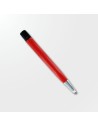
The biggest enemy of exposed miniatures is dust accumulated in hard-to-reach areas: grilles, mirrors, interior mouldings. Ideally, display in closed cabinets with airtight closures or at least with glass. If the models are on open shelves, periodic cleaning with a soft natural bristle brush — similar to those used in modelling to apply pigments — is the safest solution.
Light and temperature
Direct sunlight discolours paint and can cause micro-cracks in resin or plastic parts. Cabinets with cool LED lighting are the best option: they allow you to see the models in good light without generating heat or UV radiation. Also avoid areas with sudden temperature changes or high humidity.
Handling
Always with clean hands and holding the model by the base or the body, never by antennas, mirrors, or delicate parts. For resin models, this is especially important as they are more susceptible to breakage in fine parts.
Storing models in boxes
If you store models in their original box, do so horizontally, in a dry place, and without weight on top. Cardboard boxes can deform with humidity and weight, which can damage the model or the base if it has one.
Common mistakes to avoid
Whether you are just starting or have been in the hobby for years, there are recurring mistakes worth knowing to avoid falling into them.
- Buying without thematic criteria: accumulating models without a cohesive line can create a collection that is difficult to manage and with lower aesthetic and collector value. Defining a theme — even if it is broad — gives coherence.
- Relying solely on price as an indicator of quality: there are expensive models with disappointing finishes and moderately priced pieces with excellent fidelity. Read reviews, compare detailed photos, and if possible, see the model in person before buying.
- Neglecting the original packaging: for limited edition models, losing the original box can significantly reduce resale or collector value. Always keep them.
- Cleaning with abrasive products or dry cloths: they can scratch the paint or tear delicate decals. Always use a soft brush or a slightly damp microfiber cloth.
- Ignoring the provenance of the model: the second-hand market in 1/43 may include counterfeits or restored models sold as originals. Buying from specialised stores with guarantees avoids surprises.
- Not checking the condition of the model upon receipt: even if the packaging is perfect, it is advisable to check the model as soon as you receive it to detect any factory or transport defects within the claim period.
Recommendations for beginners and advanced collectors
If you are starting out
Choose an entry point that makes sense to you: a car that you are passionate about, a Formula 1 era that you remember with excitement, or a classic utility vehicle with sentimental value. You do not need the most expensive piece in the catalogue to start: there are high-quality 1/43 models at very reasonable prices that will allow you to learn to distinguish levels of finish without risking a high budget. Also invest in a basic display case from the beginning: the difference in conservation and presentation is immediate.
If you already have experience
You probably know what you are looking for better than anyone. What we can offer you is depth of catalogue, access to limited editions and new releases from specialised manufacturers that do not always reach general stores. If your collection already has a defined theme and you are looking for specific pieces — including discontinued or hard-to-find models — at Ministry of Hobby we work to have precisely that.
| Scale |
Approx. Length |
Detail Level |
Space Required |
Average Entry Price |
Typical Profile |
| 1/64 |
6-8 cm |
Basic / Moderate |
Very Reduced |
Low |
Beginner, mass collecting |
| 1/43 |
8-12 cm |
Moderate / High |
Reduced |
Medium |
General and specialised collector |
| 1/24 |
15-20 cm |
High / Very High |
Moderate |
Medium-High |
Static modelling, active hobbyist |
| 1/18 |
22-30 cm |
Very High / Premium |
High |
High |
Premium collector, display |
Frequently asked questions about 1/43 cars
Is 1/43 only for adult collectors or is it also suitable for children?
It depends on the model. There are basic range pieces perfectly suitable for children over 3 years old, robust and without small loose parts. Mid and high range models, especially those made of resin or with very delicate elements, are intended for adult collectors. Always check the manufacturer's age indication.
What is the difference between a diecast model and a resin one in 1/43?
Diecast (pressure casting with metal alloys) is more durable and economical in entry-level ranges. Resin allows for greater detail in complex shapes and fine parts, but it is more fragile. Resin models usually appear in limited high-fidelity editions.
Are 1/43 cars compatible with slot tracks?
No. 1/43 scale cars are static collectible miniatures, not designed to run on slot tracks. The most common domestic slot tracks work with 1/32 scale cars. Although there is slot racing in 1/43 (like the Policar system or old tracks of that proportion), it is a very specific market distinct from diecast collecting.
How do I know if a 1/43 model is of quality?
Look at the quality of the paint (no bubbles, good coverage), the precision of the decals (centred, without ripples), the sharpness of the engraved details (grilles, handles, mirrors), and the quality of the interior. Reviews from specialised collectors and detailed photos are your best guide before buying.
Is it worth keeping the original box?
Yes, especially for limited edition models or reputable manufacturers. A model in its original box in good condition can be worth considerably more in the secondary market than the same model without a box.
Which manufacturers have the best reputation in 1/43?
There are several established names in the sector, each with its specialty. Some excel in historic competition, others in European classics, and others in current production cars. At Ministry of Hobby, we select manufacturers based on the actual quality of their products, not the size of their catalogue.
Can I create dioramas with 1/43 models?
Yes, and it is a common practice among static modelling enthusiasts. There are scale accessories — figures, signs, urban furniture, vegetation — in compatible proportions. The result can be spectacular, especially in recreations of racing scenes or period scenes.
Does 1/43 appreciate in value over time?
Some models, especially numbered limited editions or discontinued models from reputable manufacturers, can indeed appreciate in value. However, collecting should not be seen as a guaranteed financial investment: buy what you are passionate about, and if it appreciates, even better.
How often should I clean my miniatures?
It depends on how you have them displayed. In a closed cabinet, cleaning every 6-12 months is sufficient. On open shelves, it may be necessary every 1-2 months. Always use a soft natural bristle brush or a microfiber cloth without abrasive products.
Where can I find discontinued models in 1/43?
The secondary market (collecting fairs, specialised online auctions) is the main source. At Ministry of Hobby, we work to have depth of catalogue in active items, and when there are new releases or restocks of highly sought-after pieces, we communicate it to our community.