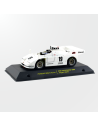
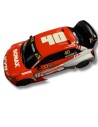
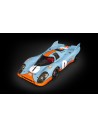
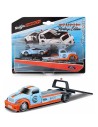
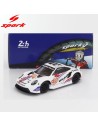
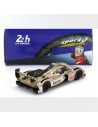
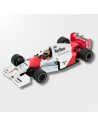
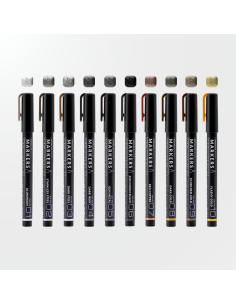
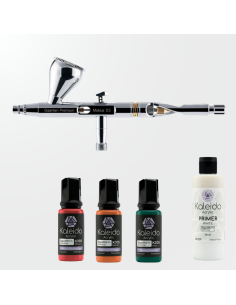
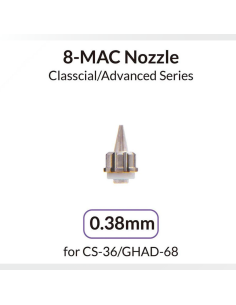
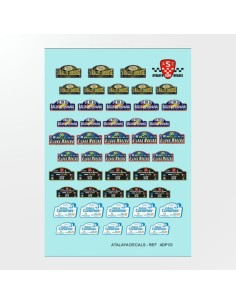
Painting and decorating a miniature, a slot car, a static model or a diorama figure is much more than just applying colour. It is the moment when a model comes to life, when hours of construction or preparation work transform into something worthy of being displayed in a showcase or competing on a track. To achieve that result, the material matters and so does the technique. In this section, you will find everything you need to tackle any decoration project, whether you are a beginner or a modeller with years of experience behind you.
Whether you are finishing a 1/32 competition car with an original livery, building a diorama set in World War II, or bringing a resin figure to life with brush shading, the technical needs are similar: good paint, the right tools, proper surface preparation, and knowledge of basic techniques. Here we cover all those disciplines: slot, static models, figures, and dioramas.
The market for paints and decoration for modelling has evolved enormously in recent years. Acrylic formulas have matured to offer results that were previously only achievable with enamels, entry-level airbrushes have become accessible and reliable, and brands like Vallejo, Tamiya, Kaleido, or Ammo have developed specific ranges for each technique and scale. Knowing how to navigate this offering is part of the work we do at Ministry of Hobby: selecting with criteria so that you can choose with knowledge.
What decoration in modelling encompasses and why it makes a difference
When we talk about decoration in the context of modelling, we refer to the entire process that transforms a raw piece —whether it is a slot body, a model fuselage, or a resin figure— into a finished model with realism and personality. This includes surface preparation, primer application, layering paint, shading and highlighting techniques, applying decals or masks, and final finishes with matte, satin, or glossy varnishes.
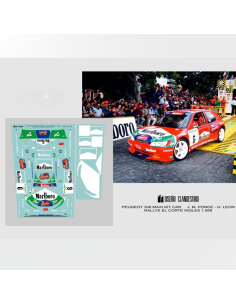
In the world of slot, decoration also has a competitive dimension: a well-prepared body with the correct weight influences the aerodynamics and balance of the car. But beyond performance, the livery is the identity of the car. Accurately reproducing a historical Le Mans decoration, a real-season GT, or a custom design is part of the pleasure of the hobby.
In static models and figures, decoration is an end in itself. Shading techniques, the use of washes, dry brushing, chipping, or aging allow achieving levels of realism that surprise even those who are not modellers. The final result largely depends on the quality of the materials and the knowledge of the appropriate techniques for each surface and scale.
How to correctly choose decoration materials
The choice of the right material depends on three factors: the discipline (slot, model, figure, diorama), the application technique (brush, airbrush, spray), and the type of finish you are looking for. There is no universal product that works equally well in all contexts, and understanding this avoids many frustrations.
Base or primer
Before applying any colour, the surface needs preparation. A good primer ensures paint adhesion, seals the piece, and reveals imperfections that should be corrected. For plastic, resin, or metal, there are specific primers. Brands like Vallejo or Tamiya offer primers in bottles for airbrush and in spray, with formulations adapted to each material.
Acrylic paints
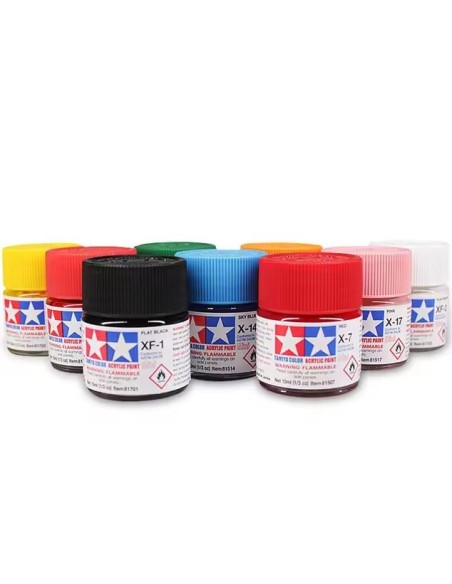
They are the dominant option today in modelling. Water-based, quick-drying, easy to clean, and excellent results when mastered. Vallejo is the reference with its Model Color, Model Air, or Mecha Color ranges; Tamiya with its XF/X acrylics; Ammo with ranges very focused on aging effects and textures. Kaleido, with very precise mixes for slot and vehicles, is also a highly valued option among the most demanding enthusiasts.
Enamels and lacquers
Although acrylics dominate, enamels are still very useful for washes and specific effects. Their longer drying time allows for blending and correcting more calmly. Lacquers offer very hard and glossy finishes, ideal for competition cars or very saturated liveries, but require more caution in handling and adequate ventilation.
Sprays
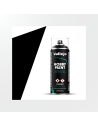
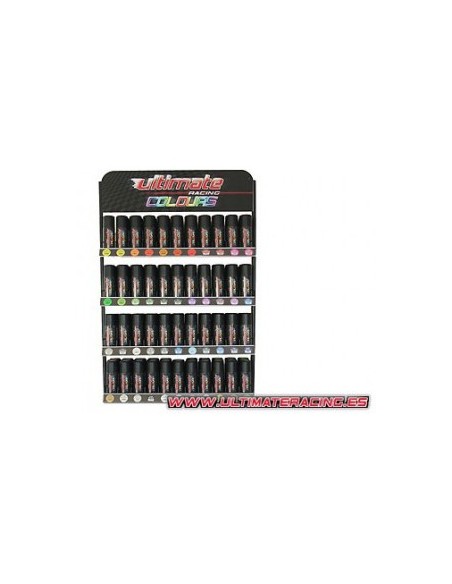
Sprays are the quickest solution for backgrounds, primers, and uniform finishes. Especially useful on slot bodies, where a thin and even coat is sought. Tamiya and Vallejo have very reliable spray ranges. For specific racing livery colours, some manufacturers offer custom mix sprays.
Airbrush
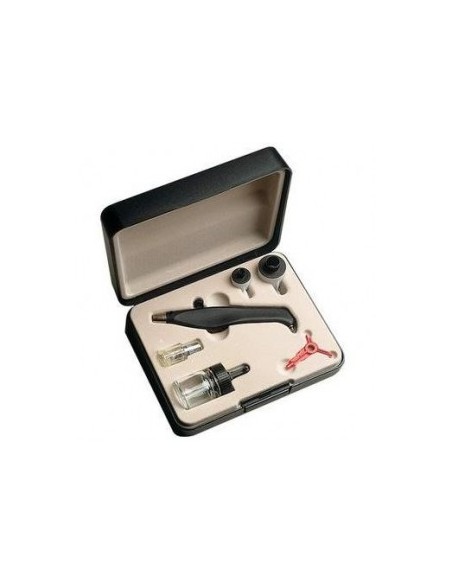
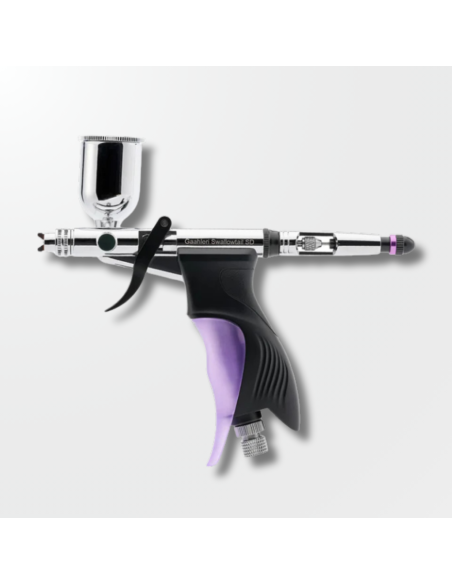
The airbrush is the tool that most elevates a modeller's level. It allows for thin layers, gradients, light and shadow areas, textures, and effects that are impossible to achieve with a brush. There is a technical entry barrier —learning to regulate pressure, paint viscosity, working distance— but once overcome, the results are incomparable. In the airbrush section, you will find double-action models to start with good criteria.
Main types and differences in decoration materials
| Type of material |
Main application |
Recommended technique |
Reference brands |
| Acrylic paint in bottle |
Models, figures, slot, dioramas |
Brush / airbrush |
Vallejo, Tamiya, Ammo, Kaleido |
| Colour spray |
Backgrounds, slot bodies, diorama backgrounds |
Direct spray |
Tamiya, Vallejo |
| Primer |
Preparation of plastic/resin/metal surfaces |
Airbrush / spray |
Vallejo, Tamiya |
| Varnish (matte/satin/gloss) |
Final finish and protection |
Airbrush / spray |
Vallejo, Ammo, Tamiya |
| Washes and filters |
Shading, aging, shadows |
Brush |
Ammo, Vallejo |
| Decals |
Liveries, license plates, insignias |
Water + fixatives |
Various depending on model |
| Airbrush |
All disciplines |
— |
Iwata, Harder & Steenbeck, Badger |
Technical aspects we need to know
Viscosity and dilution
One of the most common mistakes is using paint directly from the bottle without properly diluting it for the airbrush. The appropriate viscosity varies depending on the brand, the colour (whites and yellows tend to be denser), and the airbrush needle. As a general rule, properly diluted paint should have a consistency similar to whole milk. Using distilled water or the thinner specific to each brand is always preferable to tap water.
Thin layers vs. thick layers
Quality modelling is based on thin and successive layers, not on a single thick layer. Thin layers respect the detail of the piece, prevent textures from being lost, and allow for easy correction of mistakes. A thick layer of paint can obscure engravings, create bubbles, or take too long to dry.
Drying and curing times
Drying and curing are not the same. An acrylic paint may feel dry to the touch in 15-30 minutes, but its complete curing can take 24-48 hours. Applying a layer of varnish or a new layer of paint before the previous one has cured properly can cause it to lift or result in an uneven final finish.
Compatibility between products
Not all products are compatible with each other. In general, it is preferable to work within the same range or brand to ensure chemical compatibility. Mixing acrylics with enamels can cause reactions if drying times are not respected or if one layer is applied over another without the protection of an intermediate varnish.
Preparation of decals
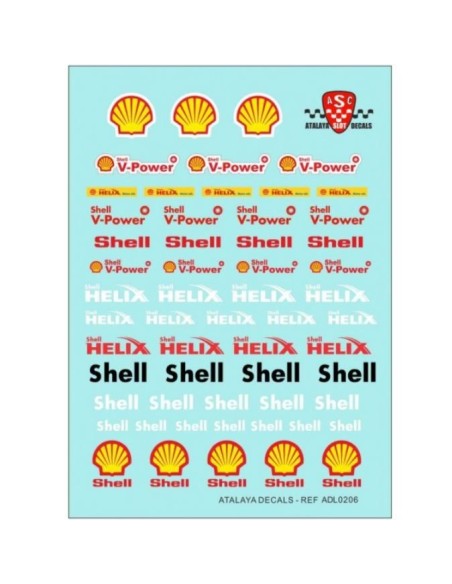
Decals require that the surface is previously varnished with gloss so that they settle without bubbles or wrinkles. After application, a fixer (Micro Sol, Micro Set, or similar) is used to adapt them to surfaces with relief. Once dry, they are protected with a final layer of varnish in the desired finish.
Practical usage and maintenance tips
- Shake the bottles well before use, especially metallic ones and colours with high pigment density. Many paints have an internal mixing ball that helps to homogenise the pigment.
- Clean the airbrush after each session. Leaving dried paint in the body or needle is the main cause of clogs and malfunction. A couple of minutes of cleaning with compatible solvent significantly extends the lifespan of the equipment.
- Store the bottles upright and tightly closed. Acrylic paint dries out when exposed to air, and dust can contaminate the pigment.
- Use a wet palette when painting with a brush to keep the paint fresh longer and work more comfortably.
- Always test on a scrap piece before applying to the final model, especially when using new techniques or products from a different brand than usual.
- Lighting matters. Working with good light prevents coverage errors and allows you to see colour nuances that may go unnoticed in poor lighting.
Common mistakes we should avoid
Not priming the piece
Skipping the priming step to save time often backfires: the paint does not adhere properly, chips off with contact, and does not cover evenly. Priming is a mandatory step, not optional.
Applying the airbrush too close or with too much pressure
Excess pressure and being too close cause the paint to accumulate, run, or create unwanted textures. The optimal distance is usually between 10 and 20 cm, depending on the type of work. Start with low pressures and adjust as needed.
Using sprays in humid or extremely cold conditions
Spray paints are sensitive to temperature and humidity. On very humid days, the finish may appear whitish or rough (blush). Ideally, work between 18 and 25 °C with moderate humidity.
Mixing systems without an intermediate protective layer
If you use enamels over acrylics or vice versa, always protect with a layer of varnish before changing chemical families. Without that shield, the solvent in the enamel can attack the underlying acrylic layer and ruin the work.
Not renewing oxidised or dried-out material
A bottle of paint with lumps or with the lid sealed by dried residue will not yield good results even if filtered. Sometimes it is better to renew the material than to try to recover it at the expense of the model.
Recommendations for beginners and advanced users
If you are starting
Start with a reputable acrylic range like Vallejo Model Color or Tamiya. They are easy to use with a brush, have a wide catalogue, and their behaviour is predictable. It is not necessary to invest in an airbrush from day one: mastering the brush first will give you technical foundations that will also serve you well with the airbrush later.
Practice the basic techniques —basecoat, wash, and dry brushing— on low-value pieces before applying them to your main project. Modelling is a hobby where learning is part of the enjoyment.
If you already have experience
Explore the specialised ranges: Ammo has very comprehensive lines for rust, dust, dirt, and wear effects; Kaleido offers precision mixes for competition cars and exact liveries. If you do not yet regularly work with an airbrush, now is the time to incorporate it: the results in shading, gradients, and pre-shading are incomparable to those achieved with a brush.
Experiment with masking techniques for multi-colour liveries on slot cars or vehicle models: low-tack masking tape, masking fluid, and cutting templates are essential allies for clean and professional finishes.
Frequently asked questions about decoration and paints for modelling
What paint is best for slot bodies?
It depends on the finish you are looking for. For backgrounds and solid colours, Tamiya sprays are very popular for their coverage and quick drying. For airbrush work and detailed liveries, Vallejo Model Air and Kaleido are highly valued. If you are looking for specific racing livery colours, Kaleido is especially interesting for its precision mixes.
Is it necessary to prime always before painting?
In practically all cases, yes. Priming ensures adhesion, unifies the base tone, and reveals imperfections. On unprimed plastic, paint tends to chip off over time or with wear.
Can I use modelling paints with an airbrush directly?
Some paints are formulated specifically for airbrush (like Vallejo's Model Air range). Others require prior dilution. Always use the thinner recommended by the manufacturer to maintain the properties of the paint.
What is the difference between matte, satin, and glossy varnish?
Varnish not only protects: it defines the final visual finish. Glossy varnish adds depth and is essential before applying decals. Satin is very natural for modern vehicles. Matte eliminates reflections and is ideal for figures, dioramas, and military vehicles. Many modellers apply glossy varnish after decals and finish with matte to unify the finish.
How do I correctly apply a decal?
Varnish the surface with gloss, cut the decal precisely, soak it for a few seconds in warm water, slide it into the correct position, and remove excess water with kitchen paper. Apply Micro Set or Micro Sol to adapt it to surfaces with relief. Once completely dry, protect with a layer of varnish.
What airbrush do you recommend for beginners?
A double-action airbrush with gravity feed is the best option to start. It gives you control over the flow of paint and air independently, allowing for greater precision. Brands like Iwata or Harder & Steenbeck have entry-level models that offer very reliable performance.
Can modelling sprays be used on resin?
Yes, as long as the resin is properly prepared: clean, degreased, and with an appropriate primer layer for resin. Without that preparation, the spray may not adhere or react with the material.
Can I mix paints from different brands?
In general, acrylic paints from different brands are compatible with each other, although results may vary in coverage and finish. The most important thing is not to mix different chemical families (acrylics with enamels) without a protective varnish layer in between.
What technique is best for aging a model vehicle?
Aging techniques combine several steps: washes with dark colours to mark joints and shadows, dry brushing with lighter colours to simulate wear on edges, colour filters for tonal coherence, and dust or rust effects with pigments or specific products like those from the Ammo range.
How often should I clean the airbrush?
After each work session, always. If you change colours during the session, a quick rinse with solvent is sufficient. At the end, disassemble the needle and nozzle and clean thoroughly. A well-maintained airbrush lasts for years without needing repair.
Do acrylic paints expire?
Technically they do not expire, but over time they can lose properties: the pigment settles, the formula dries out, or the consistency changes. A well-sealed bottle stored away from heat and direct light can last many years in perfect condition. If you notice lumps or irreversible separation of the pigment, it is better to renew it.
What is the difference between Vallejo's Model Color and Model Air ranges?
Model Color is primarily formulated for brush use: higher viscosity, excellent brush coverage, easily mixable. Model Air is optimized for airbrush: lower viscosity and finer pigment to pass through the needle without clogging. Although both can be used with the other method with the appropriate dilution, you will work better if you respect the intended use of each range.