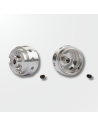
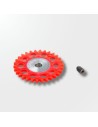
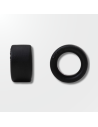
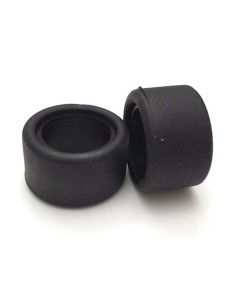
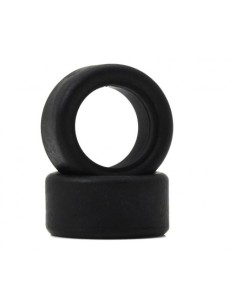
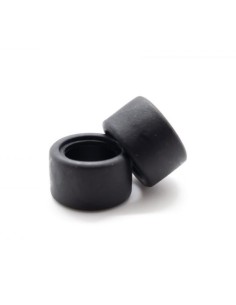
If you are looking to improve your car's performance on the track, few decisions have as much impact as the correct choice of wheels and tyres. They are the only point of contact between the car and the track: traction during acceleration, stability in corners, braking capability, and ultimately lap times depend on them. Yet, it is common to see them treated as a secondary accessory. In this category, you will find everything you need to understand what you have fitted, what you should fit, and how to get the best performance from each combination.
Whether you are a competitive driver looking for the stickiest compound for a regulated championship, a tuner experimenting with different diameters to adjust the gearing, or simply someone wanting to replace the worn tyres on a collector's model, here are the tools to make the right decision. The world of slot racing has a vast technical richness in this area, and each brand —NSR, Slot.it, Scaleauto, Avant Slot— has its own philosophy regarding materials, hardness, and geometries.
Next, we will break down everything you need to know: types of wheels and tyres, how they affect performance, how to choose them according to your car and track, the most common mistakes, and the recommendations we provide from our workshop experience.
What are slot wheels and tyres and why are they so important
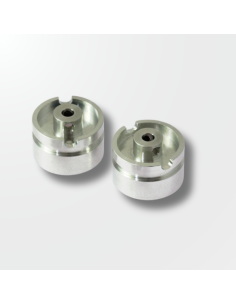
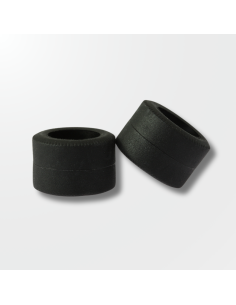
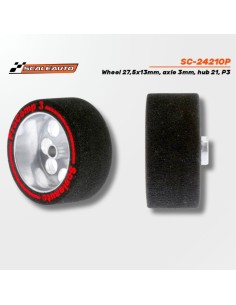
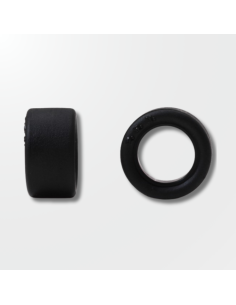
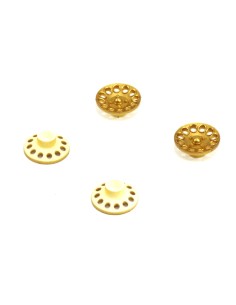
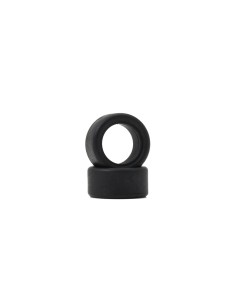
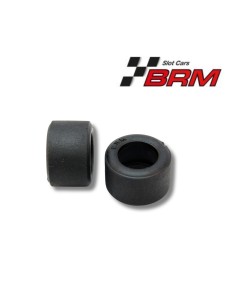
In a slot car, the wheels are the rigid parts —generally made of plastic or aluminium— on which the tyres are mounted. The tyres are the rubber or urethane elements that make direct contact with the track surface. Although they may seem like minor components, their influence on the car's dynamic behaviour is decisive.
The grip offered by the tyres directly determines how much power from the motor can be transferred to the track without the wheels spinning. A tyre that is too hard on a synthetic track can cause the car to lose traction as soon as the throttle is opened aggressively. A tyre that is too soft can deform excessively, alter the effective diameter, and make the car unpredictable.
The wheels, on the other hand, determine the mounting width, the lateral position of the tyre relative to the body, the ease of mounting, and the surface finish that the rubber works against. A wheel with slight imbalance can introduce vibrations that, at high speeds, translate into instability. This is why the most demanding tuners machine the wheels on the axle itself to ensure perfect concentricity.
In summary: wheels and tyres are not insignificant consumables. They are an active part of the car's preparation, and choosing them well —or poorly— makes a difference of tenths of a second on each lap.
How to correctly choose wheels and tyres
The correct choice depends on several factors that must be analysed together, not separately:
Compatibility with the car
The first step is to know what inner diameter (that of the axle), what width, and what outer diameter your car can accommodate. Each model has specific wheel measurements, and not all wheels from a manufacturer fit all their cars. NSR, for example, distinguishes between wheels for 3 mm and 2.38 mm axles, and between different widths for front and rear axles. Before purchasing, consult the technical sheet of the car or the reference number of the original tyre.
Type of track
The surface of the track is the most critical factor in choosing the compound. Plastic tracks (Scalextric, Carrera, Ninco) usually require softer or urethane rubbers to achieve sufficient grip. Wooden or resin tracks, more commonly used in competition, allow for harder compounds because the surface already offers more grip. Using an ultra-soft competition tyre on a domestic plastic track may seem like a good idea, but it often generates too much grip during braking and makes the car twitchy.
Level of use
For recreational use at home, the standard tyres are usually sufficient, although replacing them when they wear out significantly improves handling. For competition, the choice of compound, pre-treatment (cleaning, gluing), and diameter grinding are part of the preparation ritual before each heat.
Competition regulations
If you are racing in a championship, always check the regulations. Many championships specify the homologated tyre or limit the allowed treatment. Using an unauthorised compound can lead to disqualification.
Main types and differences
By tyre material
- Natural rubber: the most classic material. Offers good grip on traction surfaces and can be treated with additives. Tends to degrade faster with heat and intensive use.
- Urethane: a more modern compound, widely used in competition. Offers greater durability, more consistent diameter, and adapts well to both plastic and wooden tracks. It is the preferred material of brands like NSR and Slot.it for their competition references.
- Silicone: very soft, maximum grip, but wears out quickly and is more difficult to work with. Less common in the catalogues of major manufacturers.
By durometer (hardness)
The durometer measures the hardness of the compound. A lower number indicates a softer and stickier tyre (in principle). References are usually expressed with Shore A: values between 25 and 40 are very soft; between 40 and 60, medium; above 60, hard. NSR, for example, clearly distinguishes between its "ultrasoft", "soft", "medium", and "hard" tyres, designed for different conditions and surfaces.
By type of wheel
- Plastic wheels: the most economical and those that usually come as standard. Sufficient for home use, but may have slight imbalances.
- Aluminium wheels: greater dimensional precision, better surface finish for the tyre, ideal for competition. More expensive, but noticeable on the track.
- High-tolerance plastic wheels: an intermediate solution offered by brands like Slot.it, with very precise dimensional quality at a reasonable price.
By position (front/rear)
Front wheels and tyres are generally narrower and of smaller diameter than the rear ones. In many competition cars, the front ones serve more as lateral guides than for traction, so the compound is less important than on the rear axle. That said, the front tyres also influence corner stability, and excessive front grip can cause understeer.
Technical aspects we need to know
Effective diameter and gearing
The diameter of the rear tyre directly affects the car's gearing ratio. A larger diameter tyre means the car travels further per motor rotation, which equates to lowering the gearing. This is especially relevant when changing tyres in conjunction with adjusting the pinion and crown gear: it is common to fine-tune the gearing first and then choose the tyre diameter that best fits that ratio for the specific track.
Concentricity
A poorly mounted tyre or a wheel with eccentricity causes the car to "bounce" at high speeds, as the effective diameter varies with each wheel rotation. To avoid this, tuners grind the tyres mounted on the car using specific slot lathes or controlled drills, ensuring that the diameter is uniform around the entire perimeter.
Tyre gluing
In competition, it is common to glue the tyres to the wheel with cyanoacrylate (CA) adhesive to prevent them from spinning on the wheel under high stress. The amount of glue and the application technique are critical: too much can unbalance the wheel or harden the tyre; too little and the tyre will spin under strong acceleration.
Grip treatments
There are specific products to increase tyre grip, from cleaners that remove the oxidised surface layer to additives that temporarily soften the compound. Their use is regulated or prohibited in many championships, so always check the regulations before applying any treatment.
Compatibility with the rail system
The width of the wheel must be compatible with the track's rail width you are using. A rear tyre that is too wide can rub against the guide in tight corners; one that is too narrow can leave the car unstable. This aspect is more relevant in 1/24 cars or in extreme 1/32 preparations.
Practical tips for use, maintenance, and preparation
- Clean the tyres before each session: accumulated dust and dirt significantly reduce grip. A slightly damp cloth or a specific tyre cleaning product is sufficient.
- Check for wear regularly: urethane and rubber tyres wear out with use. A heavily worn tyre not only loses grip but also alters the diameter and, therefore, the effective gearing.
- Grind after mounting: if you are looking for maximum performance, always grind the rear tyres after mounting them. Even the best factory tyres have slight diameter variations that grinding eliminates.
- Store tyres properly: rubber and urethane degrade with UV light, heat, and ozone. Store them in an airtight bag, in a cool, dark place. Spare tyres stored in poor conditions can become hardened and perform worse than cheaper ones in good condition.
- Do not mix wheels of different weights on the same axle: if you mount aluminium wheels on one side and plastic on the other, the car may become laterally unbalanced and pull to one side during acceleration.
- Check lateral play: ensure that the tyres do not rub against the body or the rail guide. A small constant rub can heat the tyre, deform it, and ruin the car's handling.
Common mistakes to avoid
Choosing by price without considering compatibility
Buying the cheapest tyre without checking that the inner diameter and width are correct for your wheel is a classic mistake. A tyre that does not sit well on the wheel will be eccentric from the first moment, no matter how much you grind it.
Assuming that softer is always better
A softer compound is not universally better. On very abrasive tracks or during long sessions, a tyre that is too soft wears out quickly, loses diameter, and can even disintegrate. The ideal compound depends on the surface, ambient temperature, and session duration.
Ignoring concentricity
Mounting new tyres without grinding and assuming the factory diameter is acceptable for home use, but in competition, every hundredth counts. Eccentricity, even if minimal, introduces vibrations that amplify at high speeds.
Not gluing the tyres when required
In competition, if you do not glue the tyres to the wheel, under strong acceleration, the tyre may spin on the wheel, especially at moments of maximum traction. The result is loss of power and erratic car response.
Mixing references of different diameters on the rear axle
If you mount two tyres of the same model but from different batches or with different degrees of wear, the car may pull to the side of the tyre with the smaller diameter. In competition, this is corrected by grinding both at the same time while mounted on the car.
Forgetting to check the wheels when changing tyres
Wheels also wear out or can deform over time, especially plastic ones. Before mounting a new tyre, check that the wheel is in good condition: no cracks, no deformations, and with a clean seat.
Recommendations for beginners and advanced users
If you are starting
For those taking their first steps in slot racing, the recommendation is simple: keep the original tyres of the car in good condition, clean them regularly, and replace them when you notice that the car is slipping more than usual or grip has decreased. It is not necessary to delve into compounds or grinding until you have a clear progression in the hobby. However, when the time comes for your first change, opt for a reference from the same manufacturer and the same size as the original: this way, you will avoid surprises.
If you have been in the hobby for a while
With experience, working with wheels and tyres becomes a fascinating part of preparation. It is worth investing in aluminium wheels for the rear axle, exploring different compounds according to the usual track, and learning to grind. Brands like NSR, Slot.it, and Scaleauto offer a very complete catalogue with different durometers and sizes: experiment with them and record what works on your specific circuit. The accumulated knowledge about your own track is irreplaceable.
For competition
In the context of competition, working with tyres becomes systematic: selecting the compound according to the expected temperature of the venue, grinding on a bench before the session, verifying the diameter with a micrometer, correct gluing to the wheel, and treatment allowed by regulations (or renouncing it if prohibited). Consistency between sessions —noting what you mounted, what results you achieved— is as important as the material itself.
| Material |
Grip |
Durability |
Ideal for |
Reference brands |
| Natural rubber |
High |
Medium |
General use, plastic tracks |
Scalextric (standard), Avant Slot |
| Soft urethane |
Very high |
Medium-high |
Competition, wooden/resin tracks |
NSR, Slot.it, Scaleauto |
| Hard urethane |
Medium |
High |
Abrasive tracks, long sessions |
NSR, Slot.it |
| Silicone |
Maximum |
Low |
Very specific use, smooth tracks |
Specialised references |
Frequently asked questions about wheels and tyres
Can I mount NSR tyres on a Slot.it car?
Yes, as long as the inner diameter of the tyre matches the diameter of the wheel and the width is compatible. Many tuners mix references from different manufacturers precisely to find the ideal compound for their car. Always check the measurements before purchasing.
How often should tyres be changed?
It depends on the compound, the hardness of the track, and the intensity of use. In moderate home use, urethane tyres can last many sessions without losing performance. In competition, it is common to change them every few heats or even between sessions if wear demands it. The clearest sign is loss of grip and increased slipping under acceleration.
What is tyre grinding and do I need to do it?
Grinding involves equalising the diameter of the tyre mounted on the car to ensure concentricity. For home use, it is not essential, but for competition, it significantly improves the stability and predictability of the car at high speeds.
Are aluminium wheels worth it compared to plastic ones?
For recreational use, plastic ones are perfectly sufficient. For competition, aluminium wheels offer greater dimensional precision, better balance, and a more regular seating surface for the tyre. The performance difference is real and noticeable.
Can I use grip treatments in competition?
It depends on the regulations of your championship. Many championships prohibit the use of additives or external treatments on tyres. Always check the regulations before applying any product.
What is the difference between tyres for universal rail and sport rail?
The difference is not so much in the tyre itself but in the track width and the wheel measurements required by each system. Ensure that the wheel measurements are compatible with the distance between rails of your track (universal rail for Scalextric/Ninco, sport rail for Scaleauto/Slot.it) to avoid the car rubbing or being too loose.
Are the standard tyres on cars of sufficient quality?
The tyres fitted as standard by brands like NSR, Slot.it, or Scaleauto are already of good quality and perfectly valid for competition. In the case of cars more aimed at the general public, they may be more basic, and replacing them with aftermarket references significantly improves performance.
Can I glue the tyres with any glue?
No. The standard adhesive for gluing tyres to wheels in slot racing is low-viscosity cyanoacrylate (CA). Other glues may be incompatible with the tyre material, unbalance the wheel due to excess mass, or not withstand the temperature and stress conditions that the wheel is subjected to on the track.
Does the colour of the tyre matter?
Not directly the colour, but in some brands, the colour indicates the durometer (for example, NSR uses different colours for its different compounds). Always consult the manufacturer's technical reference to know exactly what compound you are buying.
Do front tyres influence the car's behaviour?
Yes, although less than the rear ones. A front tyre with good grip improves corner stability and reduces the tendency to understeer. However, excessive front grip can make the car twitchy on corner entry. In many competition setups, special attention is paid to front/rear balance.
How do I know what wheel size I need for my car?
The most reliable way is to consult the technical documentation from the car manufacturer or the reference of the original tyres. You can also measure the diameter of the original wheel and its width with a caliper and look for references with those measurements in the aftermarket manufacturer's catalogue.
Can slot tyres be used on diecast cars?
In general, no. Collectible diecast cars are not designed to run, and their wheels are merely decorative, with dimensions and materials different from those of a slot car. If you are looking for replacement wheels for a diecast, the correct approach is to look for specific parts from the manufacturer or the corresponding model.