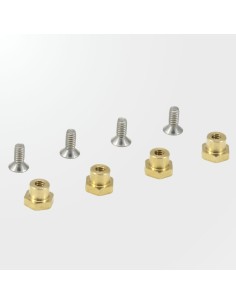
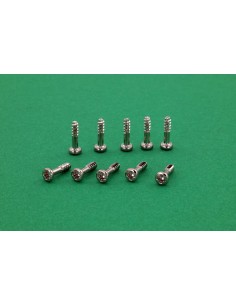
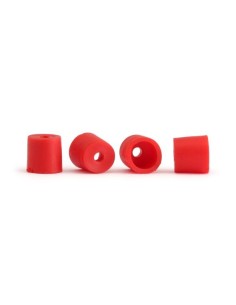
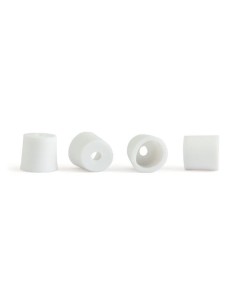
There are parts that no one mentions until they are needed, and screws and nuts are the perfect example. A chassis that vibrates, a motor that moves, a body that does not sit well… in most cases, the solution lies in proper fastening. Not through an expensive or hard-to-find part, but through the right screw, in the correct metric, tightened with care. In the world of slot racing, the preparation of static models, the assembly of figures and dioramas, or the maintenance of diecast collections, these small elements make the difference between a well-finished job and one that disassembles or loses precision over time.
At Ministry of Hobby, you will find screws and nuts specifically selected for these disciplines: common metrics in slot (M2, M2.5, M3), appropriate materials for each use, and formats designed to make working at scale not a struggle against the material itself. If you are preparing a car for competition, restoring a model, or securing components in a diorama, here you have what you need without having to resort to industrial hardware stores where nothing is designed for small format parts.
What are screws and nuts in modelling and slot, and why do they matter
In the context of modelling and slot, screws and nuts are not generic elements: they are precision components. Their small dimensions require tight tolerances, and a tenths error in metric can translate into play, vibration, or breakage of the receiving part. Unlike conventional screws, we usually work with very small metrics here — M2 and M2.5 are the most common in 1/32 slot — and with materials that balance lightness, strength, and ease of handling in very tight spaces.
The function of these elements goes beyond holding: in a slot car, the fastening of the motor, the bracket, the guide, or the chassis directly influences the dynamic behaviour. A poorly tightened screw generates micro-vibrations that reduce traction and contact of the braids. In static models, a screw joint allows for future disassemblies without damaging surfaces, something that glue does not offer. In figures and dioramas, certain threaded assemblies provide structural rigidity to constructions that would otherwise be fragile.
Understanding what each type is for and in what context to use it is the first step to making the right choice and avoiding future problems.
How to correctly choose screws and nuts for your project
The correct choice depends on several factors that should be analysed before purchasing:
- Metric: this is the diameter of the screw. In slot and modelling, the most common are M2, M2.5, and M3. Before ordering, measure or consult the specifications of the chassis or component manufacturer.
- Length: too short and it does not secure; too long and it touches where it should not or protrudes. In slot, the spaces are so tight that a few extra millimetres can interfere with the motor, axle, or body.
- Material: stainless steel is the most balanced option for most uses. Carbon steel is harder but can rust with moisture. Nylon or technical plastic is used when electrical interference is to be avoided or simply to reduce weight in non-structural areas.
- Type of head: internal hex (allen), Phillips (star), or flat. In slot, allen is often used because the screwdriver does not slip in tight spaces. In modelling, it is used interchangeably depending on the access available.
- Type of nut: standard, self-locking (nylock), or blind. Self-locking nuts are very useful in parts with vibration, as they do not loosen with use. Blind nuts provide a clean finish where the thread should not be visible.
A practical tip: if you are unsure of the metric of an existing screw, use a caliper or a thread gauge set before ordering. Forcing an incorrect metric damages the thread of the receiving component, and in technical plastic or resin parts, this can be irreparable.
Main types and differences
Screws for modelling and slot can be classified in several ways. These are the most relevant groups:
By metric
- M2: the smallest and most common in 1/32 slot. Used to secure motors, guides, brackets, and bodies. Requires precision screwdrivers.
- M2.5: slightly more robust. Common in competition chassis and some 1/24 slot components.
- M3: more common in 1/24 slot and in larger scale models, where the parts have more mass and require greater fastening.
By material
- Stainless steel: resistant to corrosion, good strength-to-weight ratio. Most common option for general use.
- Treated steel: greater hardness, useful in areas of high mechanical demand. Can rust if exposed to moisture.
- Nylon / technical plastic: very light, electrically insulating. Useful in areas where metal contact could create short circuits or where weight is critical.
- Brass: occasionally used in restorations or when a specific finish is sought. Less hard than steel.
By type of head
- Allen (internal hex): preferred in slot and modelling for its precise grip and low profile.
- Phillips / Pozidriv: more accessible but with a higher risk of slipping in tight spaces.
- Flat or countersunk head: flush with the surface. Used when visual finish matters.
By function of the nut
- Standard hex nut: general use, easy to find and work with.
- Self-locking nut (nylock): incorporates a nylon insert that prevents loosening due to vibration. Ideal for motors and axles.
- Blind nut: covers the end of the screw. Useful in visible areas or where the thread should not be exposed.
Technical aspects we should know
Working with small format screws has its technical peculiarities. It is advisable to keep them in mind to avoid damaging parts or wasting hours searching for the problem:
Thread pitch
The pitch is the distance between two consecutive threads. In standard metric (ISO), the pitch for M2 is 0.4 mm, for M2.5 is 0.45 mm, and for M3 is 0.5 mm. Most modelling screws follow this standard, but there are fine pitch variants. If you mix screws of different pitches in the same thread, you will irreparably damage it.
Tightening torque
For M2 and M2.5 screws, the maximum recommended tightening torque is extremely low (less than 0.5 Nm). Over-tightening with powerful tools can break the screw or damage the thread of the receiving part. In technical plastic or resin components, the risk is even greater. The norm in slot is to tighten until you feel resistance and give a quarter turn more, no more.
Threaded inserts
In resin, 3D printed, or soft plastic parts, brass or steel threaded inserts greatly improve the durability of the joint. They are installed with heat or pressure and allow the use of standard screws without the risk of the thread stripping with repeated use.
Thread adhesives
In applications with vibration where self-locking nuts are not to be used, a drop of low-strength thread adhesive (like Loctite 222 or similar) can be applied to the screw before tightening. This allows for later disassembly with a tool without excessive force.
Practical tips for use, maintenance, or preparation
Precision screws require certain care to perform well and last. These are the recommendations we apply ourselves in the workshop:
- Store by metric and length. A small drawer organiser with labels is the best investment you can make. Mixing metrics leads to errors and wasted time.
- Use quality precision screwdrivers. A worn or loose tip ruins the screw head at the first attempt. For allen, invest in a set of keys with tight tolerances for M2 and M2.5.
- Do not reuse self-locking screws more than once or twice. The nylon insert loses its locking ability with each tightening cycle. For competition, replace them in each important preparation.
- Check the screws of the chassis before each running session. Track vibration loosens even well-tightened screws. A quick check with the allen key before running avoids surprises.
- Clean the thread before reusing. Residues of adhesive, dirt, or metal shavings on the thread can cause incorrect tightening even if it seems correct. A toothbrush and isopropyl alcohol do the job.
- In models and dioramas, protect exposed threads with a thin layer of technical vaseline if the model will be in a humid environment or if the material is prone to corrosion.
Common mistakes to avoid
Screws may seem simple, but in the day-to-day of the hobby, mistakes are made that have greater consequences than expected:
- Using the wrong metric by force. This is the most destructive mistake. Forcing an M2.5 where an M2 belongs will strip the thread of the component. If it does not fit with your fingers, it is not the correct metric.
- Over-tightening plastic or resin parts. Technical plastic can withstand less than metal. If the part creaks or you feel unusual resistance, stop: it is already too much.
- Not checking the length before tightening. An overly long screw that touches the motor, electronics, or axle can cause hard-to-diagnose failures.
- Ignoring self-locking nuts in applications with vibration. In motors and brackets, a standard nut without thread adhesive will loosen on its own with use. It is not a defect of the component: it is physics.
- Losing screws by not having an organisation system. Working on a workshop tray or a light cloth prevents M2 screws from rolling on the floor without you being able to find them.
- Buying generic hardware screws without checking the tolerance. Low-cost industrial screws sometimes have dimensional variations that in such small metrics generate play or difficulty in tightening correctly.
Recommendations for beginners and advanced users
If you are starting
The most practical thing is to get a selection of M2 and M2.5 in stainless steel, in the most common lengths (3, 4, 5, and 6 mm), along with their corresponding nuts. Add a set of quality precision screwdrivers with allen tips in those metrics and you will cover 90% of the situations that arise in 1/32 slot and in medium scale models. There is no need to start with a huge assortment: better a few well-chosen references than a hundred screws you do not know when you will use.
If you already have experience
Advanced users in competition slot often go further: titanium screws to reduce weight in areas where every tenth of a gram matters, threaded inserts in resin chassis to improve the durability of joints, and thread adhesives of different strengths depending on the area of the car. It is also worth having some blind nuts and fine adjustment nuts on hand for components where the exact position of the part is regulated by the nut. For advanced modelling, brass inserts for 3D printing open structural possibilities that previously required much more complex solutions.
| Metric |
Most common use |
Recommended lengths |
Most common material |
| M2 |
Slot 1/32: motor, guide, body |
3, 4, 5, 6 mm |
Stainless steel |
| M2.5 |
Slot 1/32 competition, chassis, bracket |
4, 5, 6, 8 mm |
Stainless steel / titanium |
| M3 |
Slot 1/24, models, dioramas |
5, 6, 8, 10 mm |
Stainless steel |
| Nylon M2–M3 |
Areas with electrical risk or where weight is reduced |
Variable |
Technical nylon |
Frequently asked questions
What metric do most 1/32 slot cars use?
M2 is the most common for securing motors, guides, and bodies in 1/32 slot cars from brands like NSR, Slot.it, Avant Slot, or Scaleauto. M2.5 appears in competition chassis and some specific components. It is always advisable to check the manufacturer's specifications.
Can I use conventional hardware screws in slot?
Technically yes, if the metric and length are correct. However, low-cost industrial screws may have dimensional variations that in such small scales generate play or tightening difficulties. For occasional use, it may work; for competition, it is worth using precision screws.
What is the difference between a normal nut and a self-locking one?
The self-locking nut incorporates a nylon insert inside that generates additional resistance to loosening. It is essential in areas with vibration such as motors or axles, where a standard nut would tend to loosen with use.
When are nylon screws used instead of metal ones?
Mainly when there is a risk of short circuit due to metal contact with electrical parts of the car, or when weight needs to be minimized in non-structural areas. They are also used in some model joints where any mark or deformation on painted surfaces is to be avoided.
How do I know the length of screw I need?
Measure the total thickness of the parts you are going to pass through and add the space for the nut (or the depth of the threaded hole if it goes into a pre-threaded part). The screw should not protrude more than 1-2 mm in most slot applications. If you do not have the original screw as a reference, a digital caliper is the most useful tool.
Can screws and nuts be reused?
Stainless steel screws in good condition can be reused without issue as long as the thread is intact. Self-locking nuts (nylock) lose effectiveness with each use cycle: for competition, it is advisable to replace them regularly.
What is a threaded insert and when is it used?
It is a metal element (usually brass) that is installed in a plastic, resin, or 3D printed part to create a durable threaded anchor point. It is used when the receiving part does not have enough strength to hold a thread directly, preventing the thread from stripping with repeated use.
Does thread adhesive damage plastic components?
It depends on the type. Low-strength thread adhesives (like Loctite 222) are safe on most technical plastics. High-strength ones can attack certain polymers. It is always advisable to test in a non-visible area before applying to important components.
What is the difference between allen head and Phillips head in modelling screws?
The allen head (internal hex) offers better torque transmission and less risk of the tool slipping, which is crucial in tight spaces. The Phillips head is more accessible but has a greater tendency to slip if the tip is not in perfect condition.
Are titanium screws worth it for competition slot?
In competition-prepared cars where weight needs to be minimized, yes. Titanium offers comparable strength to steel with significantly less weight. The cost is higher, but in competition, the difference in grams can influence the car's behaviour.
Where are screws and nuts usually placed in a slot car?
The most common points are the fastening of the motor to the bracket or chassis, the securing of the guide, the anchoring of the body to the chassis, and, in some models, the fastening of the rear bracket or suspension stops. In advanced preparations, they are also used to adjust the rigidity of the chassis.
Can I use slot screws in static models or figures?
Perfectly. Metrics M2 and M2.5 are useful in static model assemblies where a removable joint is desired, or in bases of figures and dioramas where structural rigidity is needed. The logic of choice (metric, length, material) is the same regardless of the discipline.