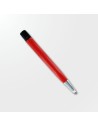
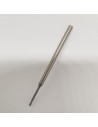
When working in modelling, slot or any discipline that involves building, adapting or repairing scale parts, there always comes a time when we need to drill a chassis, trim a resin body, open a housing for an LED or adjust the position of a mounting point. For all this —and much more— drills and cutting discs are tools that cannot be missing in the workshop. They are not secondary accessories: they are the instruments that make the difference between a clean job and one that needs to be redone.
In static modelling, precision when drilling directly affects the assembly of injected plastic or resin parts. In slot, opening the correct diameter in a chassis to mount a motor or adjusting the guide housing requires a drill of the exact size and sufficient control. In figures and dioramas, micro-drilling tasks to insert fixing pins, rods or decorative elements demand very fine measurements. And for straight or curved cuts in sheets of plastic, polyurethane foam, balsa wood or metal sheet, cutting discs mounted on rotary tools are the most versatile solution.
The market offer is enormous and not all drills or discs are suitable for the same materials or applications. Choosing correctly prevents part breakage, frayed edges, unnecessary heating and, ultimately, wasted work. In this section, you will find a selection designed for the demanding modeller: from precision drills of very small diameters to cutting discs of different materials and thicknesses, compatible with mini hand drills and rotary tools like Dremel.
What are drills and cutting discs in modelling and why do they matter
A drill is a cylindrical cutting tool designed to penetrate materials. Depending on its geometry, manufacturing material and coating, it is optimized to work on plastic, resin, metal, wood or combinations of them. In modelling and slot, the most common are those with small diameters —often between 0.3 mm and 4 mm— mounted on mini hand drills or rotary tools.
A cutting disc, on the other hand, is an abrasive wheel or thin-edged blade that, spinning at high speed attached to a rotary tool, allows for cutting materials with a clean and controlled cut. Its reduced thickness minimizes material waste and allows working in very tight spaces, something especially valuable when cutting slot chassis parts, model sprue or metal rods of millimetric diameter.
Both tools are essential because:
- They allow modifying existing parts without the need to manufacture from scratch.
- They facilitate the adaptation of spare parts to cars or models with slightly different measurements.
- They are the basis of scratch building and any conversion or kitbash.
- They provide clean finishes when used correctly, reducing subsequent sanding and filling work.
How to choose the right drills and cutting discs
The first criterion is the material we are going to work on. Drilling ABS plastic from a slot body is not the same as penetrating a machined aluminium chassis, an epoxy resin part or a brass rod. Each material requires a different drill geometry and material:
- Plastic and resin: high-speed steel (HSS) drills with a moderate tip angle. Medium-low speed to avoid melting the material.
- Soft metals (brass, aluminium): HSS drills or those with titanium coating. Moderate speed with cooling if possible.
- Wood and balsa: standard HSS drills at controlled speed. Balsa is very soft and can splinter if the speed is excessive.
- Abrasive materials (carbon fibre, hard composites): drills with carbide or diamond tips, always with respiratory protection.
The second criterion is the diameter. In modelling, precision is millimetric. Before buying, measure with a caliper the hole you need or the screw/pin that must fit. A set of drills with increments of 0.1 mm is an investment that pays off in the first project.
For cutting discs, the key factors are the diameter of the disc, its thickness and the abrasive material. Thinner discs (0.5-1 mm) provide cleaner cuts but are more fragile. Thicker ones hold up better, but the kerf (material removed in the cut) is greater. For cutting plastic, reinforced resin discs work very well. For metal, aluminium oxide or silicon carbide discs are more suitable.
Finally, always check compatibility with your rotary tool. Most mini drills and Dremel-type tools accept shafts of 2.35 mm or 3.17 mm. Confirm the shaft before purchasing to avoid surprises.
Main types and differences
Drills by type and application
- HSS drills (high-speed steel): the most versatile and economical. Suitable for plastic, wood and soft metals. They are the starting point for any modeller.
- Titanium-coated drills (TiN): greater surface hardness, longer life in metallic materials. The golden coating is their visual characteristic.
- Tungsten carbide drills: extremely hard and fragile at the same time. Ideal for very abrasive or hard materials. Require careful handling to avoid breaking.
- Diamond drills: for ceramic materials, glass or very hard composites. Specialized use in advanced modelling.
- Centering drills (with flat or 90° tip): useful for starting holes in curved or rounded surfaces without the drill slipping.
Cutting discs by type
- Reinforced resin discs: the most common in modelling. Cut plastic, wood and resin cleanly. Available in various diameters and thicknesses.
- Aluminium oxide discs: greater hardness, suitable for soft metals and composite materials.
- Silicon carbide discs: for harder metals and ceramic materials.
- Electroplated diamond discs: maximum hardness, for very specific applications and high hardness materials.
Related accessories
A precision chuck and a vertical drill stand are complements that multiply the precision of these tools. With a vertical stand, we can make perpendicular drillings without deviation, which is critical when working on small slot or model parts.
Technical aspects we should know
Rotational speed (RPM) is one of the most critical and often ignored factors. Each combination of material and drill diameter has an optimal RPM range. In general:
- The larger the drill diameter, the lower the recommended speed.
- For plastic and resin, medium-low speeds prevent the material from melting or fraying.
- For metals, moderate speeds with gentle and constant pressure.
Feed pressure also matters. Forcing the drill accelerates wear and increases the risk of breakage. For drills with diameters less than 1 mm, the feed should be very gentle, almost without pressure: we let the tool work by itself.
Heat is the enemy of drills and material. In long drillings or in metallic materials, taking brief pauses or cooling with a bit of cutting oil prolongs the life of the drill and improves the finish.
In cutting discs, tangential speed is key for safety. Never exceed the maximum RPM indicated by the manufacturer. A disc that breaks at high speed can cause serious damage. Always work with protective glasses.
The working angle with the cutting disc also affects the result. A perpendicular angle to the material provides the cleanest cut. Tilting the disc increases friction and the risk of disc breakage.
Practical usage, maintenance and preparation tips
- Always mark the drilling point with a centering punch before applying the drill. This prevents slipping when starting to drill, especially on curved or smooth surfaces.
- Use a block of wood or foam as support under the piece you are going to drill. When the drill penetrates the material, the block prevents tearing on the exit face.
- Clean the drills after each use, especially if you have worked with resin or melted plastic. Residues accumulated on the drill's helix reduce its efficiency and accelerate wear.
- Store the drills in an organizer with individual compartments or in the original case. The tips are delicate and a blow can dull the edge.
- Do not reuse damaged cutting discs. A disc with cracks or chipping can break during use. The price of a new disc does not justify the risk.
- When cutting plastic with a disc, make the cut in a single pass at a constant speed. Multiple passes over the same groove generate unnecessary heat and can melt the edge.
- For drilling in slot chassis, hold the piece with a small clamp or locking pliers. Never with a free hand if the drill is larger than 1.5 mm in diameter.
Common mistakes to avoid
- Using a drill of incorrect diameter: a mistake of tenths of a millimetre can make a screw loose or not fit. Always measure before drilling.
- Drilling at maximum speed regardless of the material: excessive speed in plastic causes material melting; in metal, premature drill wear.
- Not securing the piece properly: a piece that spins with the drill can break or cause an accident. Firm holding is always a prerequisite.
- Ignoring the deburring direction: after drilling, the edges of the hole are left with burrs. Ignoring them can hinder the assembly of parts. A simple scalpel or reamer removes them in seconds.
- Mixing cutting discs with grinding material: cutting discs are not designed for lateral grinding work. Using them this way increases the risk of breakage.
- Working without eye protection: plastic, metal or resin chips fly out at high speed. Safety glasses are not optional.
- Buying drills without checking the shaft: if the shaft is not compatible with your rotary tool's chuck, the drill will not be centred and the result will be an oval hole.
Recommendations for beginners and advanced users
If you are starting
The most practical thing is to get a basic set of HSS drills that covers the most common diameters in modelling: from 0.5 mm to 3 mm with increments of 0.5 mm is sufficient to start. Combine it with a pack of reinforced resin cutting discs in the standard diameter for your rotary tool. With that, you can tackle the vast majority of initial jobs in models, slot or figures.
Always practice on scrap material before drilling or cutting a final piece. The leftover sprue plastic from models or old chassis parts are perfect for calibrating speed and pressure.
If you already have experience
Expand the drill set towards the extremes: 0.3 mm and 0.4 mm drills for micro-detail work in figures and dioramas, and tungsten carbide drills for work in metals or resins heavily loaded with abrasive pigments. Also consider a set of tapered reamers to clean and calibrate existing holes.
For discs, thinner ones (0.5 mm) with electroplated diamond edges open up a world of possibilities for ultra-clean cuts in difficult materials. They are more expensive but last much longer if used correctly.
A column stand for rotary tools is the investment that marks the before and after in precision. It allows for perfectly perpendicular drillings with controlled depth, something essential if you are preparing competition chassis or building dioramas with precise structural elements.
| Type of tool |
Recommended material |
Common diameters / thickness |
User level |
| HSS Drill |
Plastic, resin, wood, soft metals |
0.3 – 4 mm |
All |
| TiN Drill (titanium) |
Metals, hard resins |
0.5 – 4 mm |
Intermediate / Advanced |
| Tungsten carbide drill |
Hard metals, fibre, abrasive composites |
0.3 – 3 mm |
Advanced |
| Cutting disc (reinforced resin) |
Plastic, wood, resin |
Ø 22-38 mm / 0.8-1.2 mm thickness |
All |
| Cutting disc (aluminium oxide) |
Soft metal, composite materials |
Ø 22-38 mm / 0.8-1 mm thickness |
Intermediate / Advanced |
| Electroplated diamond disc |
Metal, ceramic, hard materials |
Ø 22-30 mm / 0.5 mm thickness |
Advanced |
Frequently asked questions
What diameter drill do I need for a slot car guide?
It depends on the model and brand of the car, but the most common guide housings in 1/32 cars usually require drillings of between 2 and 3 mm. Always measure your guide pin with a caliper before drilling.
Can I use hardware store drills for modelling?
Standard hardware store drills are valid for diameters starting from 1.5-2 mm and less demanding materials. For diameters less than 1 mm or delicate materials, it is better to use specific modelling drills, which have greater manufacturing precision and tighter tolerances.
How long do cutting discs last?
It depends on the material being cut, the speed of use and care. A reinforced resin disc used on plastic at the right speed can last many cuts. If we force it on metal or at excessive speed, it deteriorates quickly. The sign that it needs to be changed is a cut that starts to cost more than usual.
What rotary tool is compatible with these accessories?
Most drills and cutting discs for modelling are designed for rotary tools with a chuck of 2.35 mm or 3.17 mm (1/8"). Dremel, Proxxon or their equivalents work perfectly. Check the shaft of the drill or disc and the chuck of your tool before buying.
Is it necessary to lubricate the drills when drilling?
For plastic and wood, it is not necessary. For metal, a small drop of cutting oil at the drilling point reduces heat, improves the finish and significantly extends the life of the drill.
How do I prevent the drill from slipping when starting to drill on a curved surface?
Use a centering punch to make a small preliminary mark. That small indentation guides the tip of the drill and prevents it from shifting when starting to drill. It is a step that saves a lot of trouble.
What is the risk of using a cutting disc at an angle?
Tilting the disc relative to the material increases lateral friction on the abrasive surface, for which the disc is not designed. This can cause the disc to break violently. Always cut with the disc perpendicular to the material.
Can I use these drills in a conventional column drill?
Yes, as long as the drill's chuck accepts the drill shaft. Very small diameter drills (less than 0.5 mm) require precision chucks, which are not always available in standard home drills. For micro-drills, the mini hand drill or rotary tool offers better control.
Are modelling drills suitable for working with carbon fibre?
Carbon fibre is a very abrasive material that quickly wears out conventional HSS drills. For drilling it, tungsten carbide drills or diamond drills are ideal. Additionally, it is essential to use an FFP2 mask or higher, as carbon fibre dust is harmful to health.
How do I properly store small diameter drills?
Precision drill sets usually come in cases with individual compartments or foam strips. Store them this way, with the tip protected. Mixing them loosely in a box is the quickest way to dull the tips and lose the numbering of each diameter.
What should I do if a drill breaks inside the piece?
If it is tungsten carbide (very fragile), the piece usually remains embedded and is very difficult to extract. Preventively, use appropriate speeds and gentle pressure. If the drill is HSS and breaks, it can sometimes be extracted with a small screw extractor or, if the material is plastic, with controlled heat. In high-value parts, prevention is the only real solution.