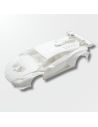
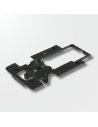
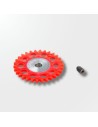
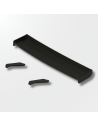
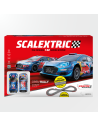
When we talk about the M Series in the world of slot racing, we refer to a category that has earned the respect of both drivers and preparers alike. It is not a random name: the M Series encompasses a family of cars and components designed for those seeking more than just going around the track. Here, detail matters, performance matters, and fidelity to the real prototype is part of the experience.
If you have made it this far, it is because you already have some idea of what you are looking for or, at least, you have heard about this series and want to understand why it generates so much discussion in forums and in the competition pits. At Ministry of Hobby, we have been working with this category for some time and we know that the demand is not coincidental: the cars and components of the M Series offer a combination of performance and finish that is hard to find in other ranges.
Whether you are a club driver looking to fine-tune your setup or a collector who values model accuracy above all else, this section has something for you. Throughout this guide, we will explain what defines the M Series, how to choose within it, what technical aspects you should know before buying, and what mistakes to avoid. No beating around the bush and with the experience of someone who has assembled and disassembled these cars many times.
What is the M Series and why does it generate so much interest
The M Series is a designation that identifies a line of products — primarily slot cars — characterized by a level of detail, chassis rigidity, and body finish above the average of entry-level ranges. The name varies slightly depending on the manufacturer, but the concept is consistent: cars designed to compete and to look good, without sacrificing either objective.
What distinguishes a model from the M Series from other cars of the same scale is primarily the attention to the whole system. It is not enough to have a powerful motor if the chassis flexes or if the braids do not make good contact. The M Series works on the coherence of the system: adjusted chassis geometry, quality guide, thicker braids, balanced wheels, and tyres with the appropriate profile for the type of track on which they will be used.
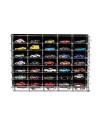
For the collector, the M Series also offers bodies with a level of tampo and painted detail that approaches what we would find in limited edition resins, but within a more accessible mass production. This makes it a very balanced option for those who want a display of premium-looking cars without reaching the price of an Avant Slot resin.
How to choose correctly within the M Series
The first selection criterion is always the use you are going to give it. A car from the M Series designed for club competition must comply with your championship regulations: check the motor limit, minimum weight, tyre restrictions, and whether or not modifying the guide is allowed. Not all models from the M Series are homologable in all championships, so check before buying.
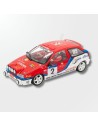
If your goal is collection or enjoyment on a home track, the criterion changes: here the prototype that you are passionate about takes precedence. The M Series usually covers GT cars, endurance prototypes, and touring sedans, with references to real seasons and teams. Choose the one that appeals to you the most and do not worry excessively about the technical specifications: with a basic setup and clean braids, any model from this range runs very well from the first moment.
A third factor is compatibility with your track system. Most cars from the M Series are prepared to work with universal track (Scalextric, Ninco) or sport track (Scaleauto, Slot.it). Mixing systems without being informed can cause guide or braid problems, so check what type of track you have before deciding.
Main types and differences within the M Series
Within the M Series, we can distinguish several families according to the discipline of origin of the represented prototype:
- GT and Gran Turismo: closed body cars based on prototypes competing in series such as the GT World Challenge or similar. They are the most common on club tracks due to their balanced behaviour.
- Endurance prototypes: LMP1, LMP2, and related categories. More aerodynamically aggressive, with longer guides to stabilize corner entry. More technical to prepare.
- Sedans and touring: references to touring championships, with a taller body and higher centre of gravity. They require tyres with more grip to compensate.
- Special editions and historical decorations: some models from the M Series replicate iconic liveries from Le Mans, Spa, or Bathurst. Their value is predominantly collectible, although they remain fully drivable.
Within each family, you will also find differences in factory motorization. It is important to distinguish well: a sidewinder motor is mounted parallel to the rear axle (transverse), resulting in a lower centre of gravity and a more direct response; an inline motor is mounted perpendicular to the rear axle, in line with the car, which also lowers the centre of gravity and offers different driving characteristics depending on the rear setup; and an anglewinder motor is positioned at an angle to the rear axle, seeking a balance between the two previous solutions. There is no universally better configuration: it depends on the track, the regulations, and the driving style.
Technical aspects we need to know
Before touching anything on an M Series car, it is advisable to understand how its components are interrelated. Changing just one element without considering the rest can improve one aspect but worsen another.
Guide and braids
The guide is the point of contact between the car and the track. A worn or excessively loose guide will cause derailments in tight corners. The braids, on the other hand, are the electrical conductors that collect current from the track: they must be clean, well seated, and without sharp bends. Basic maintenance — cleaning the braids with a bit of isopropyl alcohol and checking the guide before each session — makes a difference in lap consistency.
Tyres and wheels
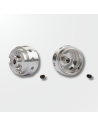
The factory tyres of the M Series cars are adequate for home use, but if you are going to compete, it is advisable to consider a change to a more specific rubber depending on the type of track. On plastic tracks, a softer rubber improves grip; on wooden tracks, a harder and polished rubber may be more consistent. The wheels must be well balanced: an eccentric wheel transmits vibration to the chassis and penalizes stability at high speed.
Motor
The standard motor is usually more than sufficient for home use and many club championships. If your regulations allow modifications, brands like NSR, Slot.it, or Scaleauto offer replacement motors with different power curves. Before increasing power, ensure that the rest of the running gear can handle it: a very powerful motor on an unadjusted chassis will only cause more derailments.
Practical tips for use, maintenance, and preparation
The maintenance of an M Series car does not require extensive knowledge, but it does require consistency. These are the points that most influence the lifespan and performance:
- Periodic cleaning of braids: accumulating dirt on the braids increases electrical resistance and reduces motor response. Clean them before each competition session.
- Lubrication of gears: a drop of specific slot lubricant on the gear between crown and pinion reduces wear and noise. Do not exceed the amount: excess lubricant attracts dust and can dirty the braids.
- Checking the guide: ensure that it does not have excessive lateral play and that the fixing screw is tightened without blocking rotation.
- Proper storage: store the cars in their boxes or in specific car holders, away from direct light and humidity. Plastic bodies can deform with heat.
- Motor break-in: before demanding from the motor on track, give it a gentle break-in at low voltage for a few minutes. This helps to seat the brushes and prolongs lifespan.
Common mistakes we should avoid
Over the years, we have seen the same mistakes repeated, both in beginners and in experienced drivers. These are the most common with M Series cars:
- Mixing track systems without being informed: using a car prepared for sport track on a universal track (or vice versa) causes guide and braid problems. Confirm your system before buying.
- Tightening the guide screw too much: the guide needs some freedom of movement to follow the track. An excessively tightened screw blocks it and increases derailments.
- Using inappropriate lubricant: never use WD-40 or generic mineral oils on the gears of a slot car. They attack plastics and leave sticky residues that accumulate dirt.
- Ignoring wheel balance: buying new tyres without verifying that the wheels are well turned is wasting money. Dynamic imbalance at high speed is one of the biggest enemies of lap consistency.
- Increasing power before adjusting the chassis: a poorly set chassis with more power only amplifies problems. The correct order is: adjust first, increase power later.
Recommendations for beginners and advanced users
If you are just starting
The smartest choice is to select a model from the M Series in its stock version — unmodified — and dedicate the first sessions to understanding how the car behaves on your track. Do not change several elements at once: if you modify the motor, wheels, and tyres on the same day, you will not know which part made the difference. Take it step by step, take note of each change, and learn to read how the car responds.
For maintenance, a basic kit with specific lubricant, isopropyl alcohol, a precision screwdriver, and spare braids is more than sufficient for the first few months.
If you already have experience
Advanced users often find in the M Series a very solid base for more specific setups. The chassis rigidity allows for geometry work without reaching the limits you would find in entry-level ranges. Brands like NSR, Slot.it, Avant Slot, or Scaleauto offer compatible spare parts for many models in this series: crowns with different teeth, pinions, motors with specific power curves, and competition tyres.
If you participate in organized championships, check your club's regulations before any preparation. Many club championships have restrictions on motor type, minimum weight, or allowed tyres, and skipping those rules can invalidate your results even if your car is faster.
| Motor Configuration |
Position |
Centre of Gravity |
Usage Profile |
| Sidewinder |
Parallel to the rear axle (transverse) |
Low |
Technical tracks, GT, prototypes |
| Inline |
Perpendicular to the rear axle (longitudinal) |
Very low |
Fast tracks, high top speed |
| Anglewinder |
At an angle to the rear axle |
Intermediate |
Versatility, balance between response and stability |
Frequently asked questions about the M Series
Are M Series cars suitable for beginners?
Yes, although their technical level is a step above entry-level ranges. If you are just starting, they are perfectly manageable, but they require a bit more attention in maintenance than an entry-level car.
Are they compatible with all tracks?
It depends on whether the car is prepared for universal track (Scalextric, Ninco) or sport track (Scaleauto, Slot.it). Check the model specifications before buying if you are unsure of your track system.
Can I use M Series cars in club competition?
In many cases, yes, but you should always check your championship regulations. Some clubs require model homologation or motor restrictions that may affect certain models in this series.
What is the difference between an M Series car and a resin car?
Resin cars, like those from Avant Slot, offer a superior level of detail and are generally more limited editions. M Series cars are produced in series with high-quality plastic bodies, making them more accessible in price and easier to repair after impacts.
How often should I clean the braids?
The ideal is to clean them before each competition session and, for home use, every 2-3 sessions or when you notice a loss of response on the throttle.
Can I replace the factory motor with a more powerful one?
Yes, as long as your championship regulations allow it. Before doing so, ensure that the chassis and running gear are well adjusted: a more powerful motor on a poorly set base will only generate more instability.
What lubricant should I use on the gears?
Always use specific lubricants for slot or modelling. Avoid WD-40 and generic mineral oils, which can attack plastics and leave sticky residues.
Which is better, sidewinder, inline, or anglewinder?
There is no universal answer. The sidewinder is transverse to the rear axle and lowers the centre of gravity; the inline is longitudinal and also lowers the centre of gravity with different characteristics; the anglewinder seeks a balance between both configurations. The choice depends on the track, the regulations, and your driving style.
Are the standard tyres sufficient for competition?
For basic level championships and home tracks, yes. If you compete at more demanding levels, it is advisable to consider specific tyres depending on the surface type of your track.
How do I know if my wheels are well balanced?
If you notice vibration in the car at high speed or irregularities in the straight line, the wheels may have eccentricity. Wheel turning on the car itself is the usual solution in the preparation world.
Are spare parts available for M Series cars?
Generally, yes. Brands like NSR, Slot.it, Avant Slot, or Scaleauto have extensive spare parts catalogs, and many components are interchangeable between models of the same family.
Is it worth buying the M Series if I only want to collect?
Without a doubt. The level of body detail, tampo, and historical decorations offered by the M Series makes it a very serious option for collectors who want drivable models with a premium finish without reaching the price of the most exclusive resins.