
Shopping Cart
-
-
 James Bond Aston Martin 'Goldfinger'€62.00 €69.00
 Mosler MT900R Salvatore Noviello 11th Anniversary EVO3€63.57 €73.57
 Formula 90-97 Blanco/Azul/Amarillo 1990 Nº6 morro bajo€76.30 €79.90
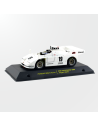 Porsche 908/3 Turbo White Edition Jürgen Barth€29.50 €36.00
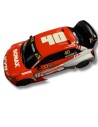 Advance Audi S1 WRC Sonax€30.00
 -
 Rodador con transformador€40.00
 Punta Hex. 0.9 mm€3.40
 -
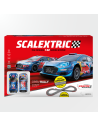 Circuito Open Rally Set€188.43
 Muelle para mandos€2.00


1/8TT
At Ministry of Hobby, we select each 1/8TT model with criteria: we prioritise brands with a real spare parts catalogue, chassis tested in competition, and proven performance on dirt. Here you will find the advice that makes the difference between making the right choice or regretting it on the track.
There are no products.
If you've been looking at off-road radio-controlled cars for a while and the 1/8TT format has appeared time and again on your radar, it's no coincidence. This scale and category represent one of the sweet spots of RC off-road: large enough to convey a real driving sensation, yet manageable enough to enjoy on dirt tracks and dusty paths without needing a whole trailer to transport it. The 1/8TT — where TT stands for Truggy Touring or, more commonly in hobby jargon, simply Truggy — combines the visual aggression of a monster truck with the agility and dynamic behaviour of a buggy, resulting in a platform that appeals to both competitive drivers and hobbyists seeking pure fun on dirt.
At Ministry of Hobby, we have been working with this category for years and we know that choosing a 1/8TT is not trivial. There are significant differences between electric and nitro models, between RTR (Ready To Run) versions and kits, between chassis designed for federated competition and proposals aimed at weekend fun. This guide is designed to help you reach the product sheet knowing exactly what you are looking for.
What is the 1/8TT and why does it have its own place in RC off-road
The name says it all if you know how to decipher it: 1/8 is the scale, and TT (Truggy) defines the body category. A 1/8 scale car measures approximately between 50 and 55 cm in length, making it a robust physical platform, with space for powerful motors, high-capacity batteries or generous fuel tanks, and wide-travel suspensions capable of absorbing the toughest bumps.
The Truggy concept was born as a hybrid: it takes the chassis and running gear of a competitive 1/8 buggy — low, dynamic, with relatively small wheels — and combines it with a taller and more protected body, larger and wider wheels with off-road profiles, and a greater ground clearance. The result is a car that can run on prepared dirt tracks with the precision of a buggy, but fits better on more uneven terrain or in mixed-use sessions where the ground is not always perfect.
At a competitive level, the 1/8TT has its own categories in the main radio control organisations (EFRA, IFMAR), with specific regulations governing weight, motor size, tank capacity, or battery energy depending on the variant. This means that if you have aspirations to compete, you are choosing a category with its own structure and circuit, not a marginal niche.
How to correctly choose a 1/8TT
Before looking at brands or models, answer these questions:
- Electric or nitro? This is the most important decision and conditions everything else: maintenance costs, user experience, ease of tuning, and where you can run.
- RTR or kit? An RTR (Ready To Run) comes almost ready to run; a kit requires complete assembly. Assembly teaches you the car from the inside, but requires time and tools.
- Competition or recreational use? Competition cars usually come without electronics (just chassis and mechanics) so the driver can choose their own components; recreational RTRs include everything.
- Do you have a dirt track nearby or run on free terrain? The answer affects the type of tyres, suspension setup, and the type of differential that suits you best.
Once you have answered these questions, consider the availability of spare parts for the model you are interested in. In the 1/8TT, the parts that wear out or break the most are predictable: pins, driveshaft couplings, suspension mounts, tyres. Choosing a brand with a solid spare parts catalogue and a distributor in Spain is not a minor detail; it is what separates a car that runs for years from one that ends up in a drawer.
Main types and differences within the 1/8TT
1/8TT electric (E-Truggy)
Electric 1/8TTs have undergone spectacular evolution in the last decade. With high-power brushless systems and 4S or 6S LiPo batteries, modern E-Truggies comfortably exceed 60-70 km/h in standard configuration and offer instantaneous and very linear throttle response. The advantages over nitro are clear: immediate start, easier maintenance, the ability to run in enclosed spaces without fumes, and a lower cost per session once the battery is amortised.
The E-Truggy is the preferred option for those starting in 1/8 and for those who prefer to focus on driving rather than mechanical tuning. In competition, the electric 1/8TT category is well established and the regulations are becoming increasingly demanding and precise.
1/8TT nitro (N-Truggy)
The nitro Truggy maintains an appeal that is hard to explain to those who have not experienced it: the sound of the two-stroke engine, the heat of the mechanics, the need to tune the carburetion according to the temperature and humidity of the day… For many veteran drivers, nitro remains the ultimate experience. 3.5cc engines are the standard in this scale, with powers varying according to preparation and running conditions.
Nitro maintenance is more intensive: carburetion, air filter, engine temperature, clutch adjustment, fuel quality. In return, you can refuel in seconds and run long sessions without stopping. For high-level competition, the nitro variant remains very popular in Europe.
Competition kits vs. RTR
Competition kits are bare chassis, without electronics, designed for drivers who know exactly what motor, receiver, servos, and speed controller they want to install. They are more expensive to set up from scratch but offer maximum flexibility and performance. RTRs include everything needed to run out of the box: electronics, painted body, mounted tyres. They are the natural entry point for those who do not want to complicate the initial setup.
Technical aspects we need to know
Transmission and differential
Most 1/8TTs use four-wheel drive (4WD) with three differentials: front, centre, and rear. The configuration and type of oil in each differential directly affect the car's behaviour in corners, traction during acceleration, and overall stability. Ball differentials allow for finer adjustments; gear differentials are more robust for intensive recreational use.
Suspension
The 1/8TT features independent suspension at all four corners with adjustable oil shock absorbers. The spring stiffness, oil viscosity, and position of the suspension arms are variables that are adjusted according to the type of track and terrain conditions. In recreational use, the factory setup is usually a good starting point; in competition, suspension setup is a discipline in itself.
Tyres and wheels
The tyre profile is critical to the behaviour of the 1/8TT. For loose dirt, aggressive treads are used; for compacted tracks, intermediate profiles with a larger contact area. The hardness of the compound (generally indicated with a number) also influences: softer compounds offer more grip but wear out faster. In competition, choosing the right tyre for the day's conditions can make several tenths of a second difference per lap.
Electronics (electric versions)
In a competition E-Truggy, the key components are the brushless motor (power, number of poles, KV), the electronic speed controller (ESC), and the LiPo battery. The ESC must be able to manage the current demanded by the motor without overheating. In high-competition models, ESCs with telemetry data and advanced programming are used to optimise the power curve.
Practical tips for use, maintenance, and preparation
- Pre-session check: check the tightness of critical screws (wheels, suspension arms, driveshafts), the condition of the tyres, and the battery charge or fuel level.
- Lubrication: driveshafts, bearings, and gears benefit from periodic lubrication with specific RC products. Do not use generic lubricants that can attack plastics.
- Air filter: on dirt tracks, the filter gets dirty quickly. Clean and re-oil it regularly; an engine that inhales dirt degrades its performance and lifespan in just a few sessions.
- Motor temperature (electric): after a demanding session, check the temperature of the motor and the ESC. If they consistently exceed 70-80 ºC, review the ESC programming or add active cooling.
- LiPo storage: if you are not going to use the car for several days, discharge the batteries to the storage voltage (usually 3.8 V per cell). This significantly extends their lifespan.
- Nitro — carburetion: adjust the mixture according to the ambient temperature. A mixture that is too lean can destroy the engine in minutes; too rich reduces power but is much safer for running.
Common mistakes we should avoid
- Buying without checking spare parts availability: some imported models without an official distributor in Spain have hard-to-find parts. Always check before buying.
- Ignoring the suspension setup: running with the factory configuration is valid to start, but if the car behaves strangely on track, check the setup before blaming the car.
- Mixing incompatible electronic components: motor, ESC, and battery must be properly matched. A 100A ESC with a very aggressive motor and a low-discharge battery is a combination with an expiration date.
- Not checking the condition of the driveshafts: they are the parts that suffer the most in the 1/8TT. A dry or worn driveshaft transmits vibrations, consumes power, and ends up breaking at the worst moment.
- Starting the nitro without proper break-in: the combustion engine needs a break-in period with rich mixtures and short sessions for the internal parts to settle. Skipping this step drastically shortens the engine's lifespan.
Recommendations for beginners and advanced users
If you are starting in 1/8TT
Opt for a recognised brand RTR electric. The electric version allows you to focus on learning to drive without worrying about carburetion or the intensive maintenance of nitro. Choose a model with a good online community and easy access to spare parts. Don't obsess over performance from day one: first learn to read the track and perform basic maintenance.
Invest in a good battery charger from the start. A cheap charger can damage your LiPo or charge them slowly; a quality charger takes care of your batteries and informs you of the real state of each cell.
If you already have experience in RC or come from 1/10
The jump to 1/8TT can be made with a competition kit if you are clear about what electronics you want to install. Pay special attention to the differential and suspension setup from day one; the 1/8TT is more sensitive to these adjustments than smaller scale cars. If you are going to compete, inform yourself about the current regulations of your circuit before buying the motor or battery.
Also consider the nitro option if you are looking for the most complete experience and do not mind dedicating time to maintenance. The learning curve of the combustion engine is steeper, but the satisfaction of tuning a nitro engine and seeing how performance improves has no equivalent in the electric world.
| Feature | 1/8TT Electric | 1/8TT Nitro |
|---|---|---|
| Start | Immediate | Requires starting procedure |
| Maintenance | Low-medium | High |
| Run time per session | Limited by battery (20-30 min) | High (refueling in seconds) |
| Cost per session | Low (electricity) | Medium-high (fuel) |
| Throttle response | Instantaneous and very linear | Progressive, with character |
| Use in enclosed spaces | No restrictions | Limited by gases and noise |
| User profile | Beginner to advanced | Intermediate to expert |
Frequently asked questions about the 1/8TT
What does "TT" in 1/8TT mean exactly?
TT is short for Truggy, an off-road radio control category that combines characteristics of both buggy and monster truck. It is a category recognised at the competitive level by the main international RC organisations.
Is the 1/8TT suitable for beginners?
It can be, especially in the RTR electric version. However, the size and power of these cars require a minimum of attention in handling. If this is your first RC, start with moderate speeds until you become familiar with the car's behaviour.
Can I run a 1/8TT on any surface?
It is optimised for dirt, gravel, and uneven surfaces. It can run on asphalt, but it is not its natural environment and tyre wear accelerates. For mixed use, there are specific low-profile tyres for harder surfaces.
What battery do I need for an electric 1/8TT?
Most 1/8 scale E-Truggies use 4S (14.8 V) or 6S (22.2 V) LiPo batteries, with capacities typically between 4,000 and 6,000 mAh. Always check the specifications of the ESC and motor before choosing the battery.
How long does a session last with the electric 1/8TT?
It depends on the battery capacity, voltage, and driving style. Under normal conditions, a 5,000 mAh 4S battery offers between 20 and 30 minutes of active running. With two batteries, you can chain sessions without long waits.
Is the nitro 1/8TT harder to maintain?
Yes, it requires more attention: carburetion adjustment, air filter cleaning, clutch inspection, and proper break-in of the new engine. It is not complicated, but it does require learning a set of procedures that the electric does not need.
Can I use spare parts from a 1/8 buggy on my Truggy?
In many cases yes, especially if the Truggy shares a chassis platform with the buggy from the same brand. Check the manual or the manufacturer's spare parts catalogue to confirm piece-by-piece compatibility.
What is the difference between a 1/8TT and a 1/8 monster truck?
The monster truck has larger wheels, greater ground clearance, and a tall body designed to jump over obstacles. The Truggy is lower, more dynamic on track, and optimised for high-speed driving on dirt. They are distinct categories with different behaviours and regulations.
Do I need a circuit to enjoy the 1/8TT?
It is not essential. Many enthusiasts enjoy the Truggy on natural terrain, dirt roads, or clearings. That said, a prepared dirt circuit allows you to make the most of the car's handling and setup potential.
How do I know if the 1/8TT I am interested in has spare parts available in Spain?
At Ministry of Hobby, you can consult us directly: one of the criteria we use to select the catalogue is precisely the real availability of spare parts. If a brand does not have parts support, it does not make it into our selection.
How much does it cost to get started in 1/8TT?
An entry-level RTR electric typically ranges between €300 and €500, plus the cost of a charger and batteries if they are not included. A competition kit with high-level electronics can easily exceed €800-1,000. The nitro RTR has a similar range to the electric, but you must also account for the cost of fuel.
Are there official competition categories for the 1/8TT in Spain?
Yes. The RFAE (Royal Spanish Automobile Federation) includes categories for RC off-road, and many clubs integrated into it organise championships for both electric and nitro 1/8TT. Check with your local circuit for the calendar and specific regulations in your area.