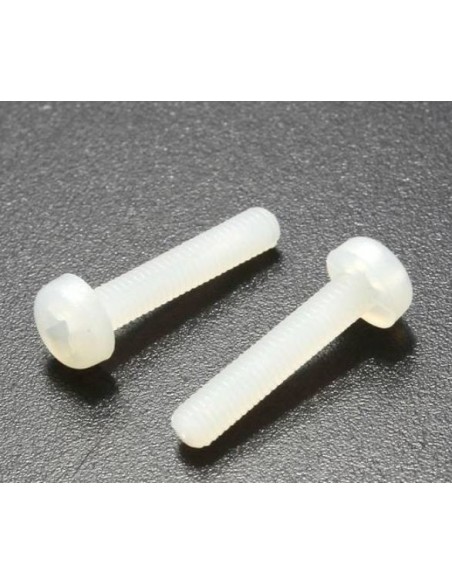
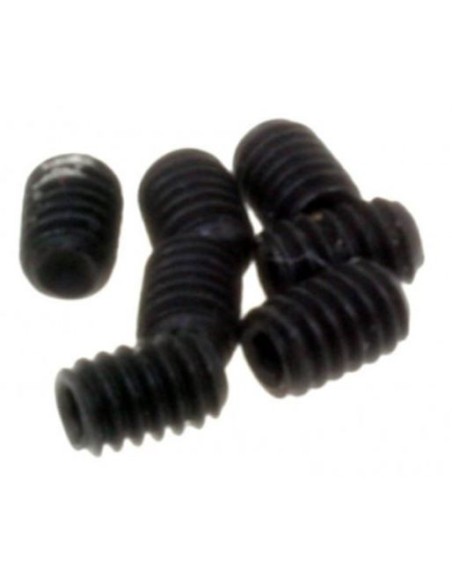
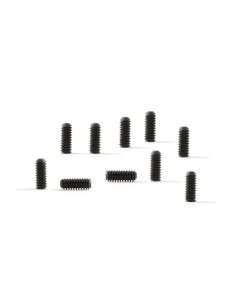
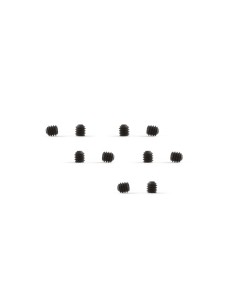
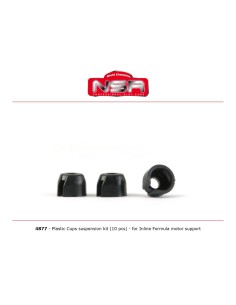
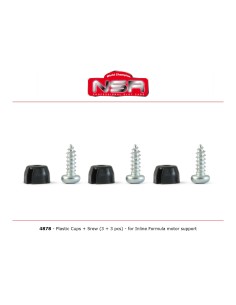
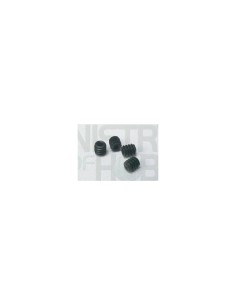
There are parts that go unnoticed until something doesn't work as it should. Screws are a good example: small, seemingly minor, but responsible for keeping the chassis firm, ensuring the motor doesn't move under load, and allowing the body to pivot smoothly or remain locked depending on the setup requirements. In the world of competitive slot racing, screws are not an accessory: they are part of the setup.
At Ministry of Hobby, we gather high-precision technical screws specifically designed for slot cars in 1/32 and 1/24 scale. We are not talking about conventional hardware: we are talking about parts selected for their diameter, thread pitch, exact length, and, in many cases, their material, because in slot racing, every tenth of a gram matters. Whether you are building a chassis from scratch or adjusting the body-chassis connection for a more progressive pivot, you will find here the references that are actually used in the workshop.
The search intent of those who arrive at this category is usually very specific: someone who needs to replace a lost screw, someone who wants to switch to titanium to lighten the assembly, or someone who is learning what function each fastening point serves in their car. This text aims to address all three profiles with useful and direct information.
What are screws for slot cars and why do they matter so much
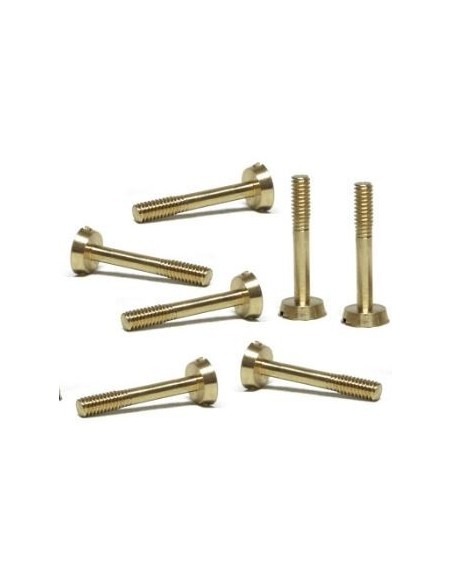
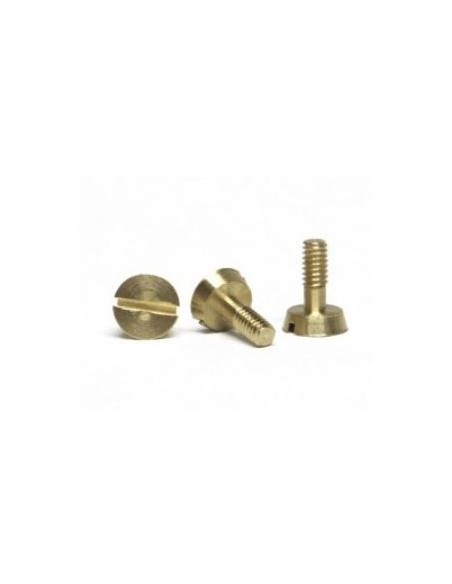
A screw in a slot car does not serve the same function at all points where it appears. There are screws whose mission is to fix rigidly —such as those that hold the motor to the mount or those that anchor the rear axle support to the chassis— and there are screws whose mission is precisely the opposite: to allow controlled movement. The latter case is that of the screws connecting the chassis and body with a smooth neck, designed so that the body can pivot freely over the chassis without rubbing or getting stuck.
The pivoting (what is called body float in English) is one of the most important concepts in preparing a competitive slot car. When the body can move independently of the chassis, the car better absorbs track irregularities, maintains contact with the track in fast corners, and reduces vibrations affecting the guide. For this pivoting to work well, the screw that articulates it must have a smooth neck of exact diameter, without threads in the area that passes through the body’s pontoon. If the screw has threads along its entire length, the body threads onto it and loses freedom of movement. It is a small detail with significant consequences.
On the other hand, rigid fastening screws must ensure that no component moves due to accumulated vibration during a long session. A motor that moves even slightly changes the crown-pinion engagement and can ruin a race or damage parts. The correct choice of screw —head type, length, diameter, and material— is part of the preparation work.
How to correctly choose screws for your car
Before purchasing, it is advisable to clarify several parameters:
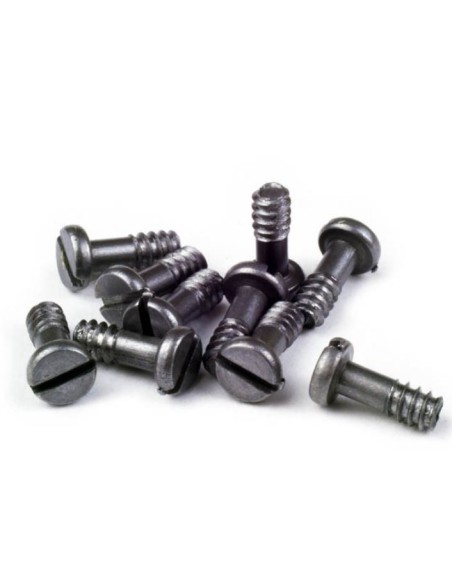
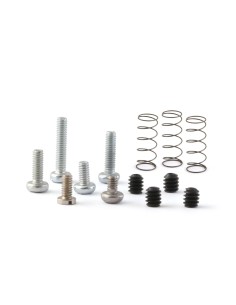
- Diameter and thread pitch: Most competitive slot cars use metric screws (M2, M2.5, or M3 are the most common). Some more economical models or those of American origin may use sheet metal screws (self-tapping), which do not require a nut or threaded insert in the chassis. Check what system your car uses before ordering.
- Length: A screw that is too long can interfere with other internal parts or prevent the head from resting properly. If it is too short, the grip is insufficient. Always measure the thickness of the component you are going to fasten.
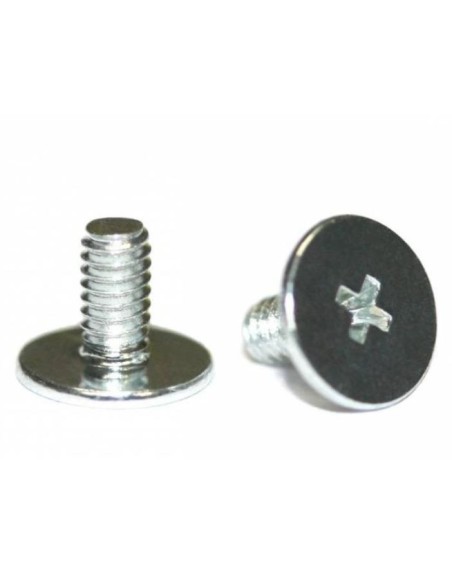
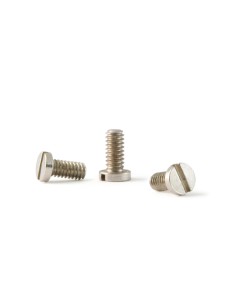
- Head type: The Allen head (internal hexagonal) is the most common in preparation because it allows precise tightening and does not damage the slot with use. The countersunk head is flush with the surface, useful when nothing can protrude. The flat head offers a larger contact surface. Choose according to the available space and the tool you use.
- Material: Stainless steel is the standard option: durable, economical, and reliable. Aluminium significantly reduces weight but has lower torsional strength, so it is used in points with low mechanical demand. Titanium is the premium option: extraordinary strength-to-weight ratio, ideal for competition where every gram counts.
- Smooth neck or fully threaded: As explained earlier, for pivot points you need screws with a smooth neck. For rigid fastening, full threading is standard.
Main types and differences
Screws for slot cars can be classified in several ways. Here are the most relevant categories from a functional perspective:
By thread type
- Metric screws: Standard thread (M2, M2.5, M3). Require a threaded insert or nut for fastening. They are the most used in technical plastic or carbon fibre chassis with metal inserts. They allow for greater tightening precision.
- Sheet metal screws: Self-tapping, they create their own thread in the material. Common in soft plastic chassis or bodies. They are quicker to assemble, but the grip deteriorates with repeated disassembly.
By head type
- Allen head (internal hexagonal): The most versatile and precise. Tightens with an Allen key and withstands repeated use without deterioration.
- Countersunk head: Sits flush with the surface. Useful under bodies or in areas where the head cannot protrude.
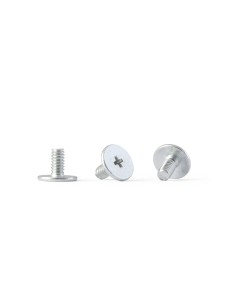
- Flat head: Greater contact surface. Common in accessory fastenings or in areas where pressure distribution is desired.
By material
- Stainless steel: Standard and reliable. Good resistance to corrosion and torsion. The most used in most applications.
- Aluminium: Much lighter than steel. Suitable for low mechanical demand points where weight is a priority. Be careful with excessive tightening: the head can be damaged.
- Titanium: The serious competition option. Light as aluminium but with mechanical strength close to steel. Higher price, justified in high-performance setups.
Technical aspects we need to know
Beyond the types, there are some technical concepts that mark the difference between mediocre preparation and truly careful work:
Tightening torque: In small diameter aluminium or titanium screws (M2, M2.5), excessive tightening can break the head or damage the insert. Learn to tighten "just right": it should not move, but without forcing. A precision screwdriver or a quality Allen key helps to have more control than a generic tool.
The use of thread locker: In points subjected to constant vibration (motor mount, axle support), it is common to apply a small amount of low-resistance thread locker (like blue Loctite) to prevent the screw from loosening during the race. Do not use high-resistance thread locker in these applications: you will not be able to disassemble without damaging the part.
The importance of the smooth neck in pivoting: It has been mentioned before, but it deserves emphasis. In screws designed to articulate pivoting, the neck area —the part without threads that passes through the body’s pontoon— must have the exact diameter so that the body slides without excessive play but without rubbing. A neck that is too thin generates unpredictable movement; too thick, and the body will not pivot.
Compatibility with chassis: Chassis from brands like NSR, Slot.it, Avant Slot, or Scaleauto mostly use standard metric screws. Before ordering, check the manual or the chassis specification to confirm the original diameters and lengths.
Practical tips for use, maintenance, and preparation
- Keep a small stock of screws in the most common diameters (M2 and M2.5 in lengths of 4, 6, and 8 mm). Losing one in the middle of a preparation session is more common than it seems.
- When disassembling aluminium or titanium screws, store them separately and label them if necessary. Mixing them with steel screws can lead to tightening confusion or mounting the wrong material in the wrong place.
- Periodically check the screws fastening the motor and axle support, especially after long or competitive sessions. Vibration loosens what seems well tightened.
- If you use screws with thread locker, change the screw or clean the thread if you need to disassemble it several times: the thread locker loses effectiveness with repeated disassembly.
- For pivoting screws, periodically check that the neck shows no wear or deformation. A worn neck introduces unwanted play in the body’s movement.
Common mistakes we should avoid
- Using fully threaded screws where a smooth neck is needed: The most common mistake among beginners. If the body does not pivot correctly and the car is rigid in corners, this is the first point to check.
- Tightening aluminium screws as if they were steel: Aluminium is softer, and the hexagonal head can easily deteriorate. Use the Allen key of the exact size and apply progressive force.
- Ignoring length: A screw that is too long can touch internal components of the chassis and create tensions or interferences. Measure before mounting.
- Not using thread locker in critical points: A motor that moves due to vibration changes the engagement and can cause mechanical failures during a race.
- Mixing thread systems: Mounting a metric screw in a self-tapping hole —or vice versa— damages the thread and can render the fastening point unusable.
- Buying generic hardware screws: The measurements may seem the same, but the dimensional tolerance in conventional hardware screws is greater. In small diameters, that difference is noticeable in performance.
Recommendations for beginners and advanced users
If you are starting
The most important thing at the beginning is to understand what function each screw serves before touching it. Do not change anything without knowing why you are changing it. If your car has factory screws that work well, the first step is to learn to identify their type and diameter. From there, the most common change as a first step in preparation is to replace the body-chassis connection screws with models with a smooth neck that allow for clean pivoting. It is a simple, economical improvement with an immediate effect on the car's behaviour in corners.
If you already have experience
In advanced preparations, titanium screws in points with the highest mechanical demand (motor mount, axle support fastening) allow for weight reduction in areas where mass does not benefit dynamic behaviour. Combined with precise adjustment of the smooth neck in the pivoting screws and the correct use of thread locker, a more stable, predictable setup is achieved, difficult to disturb during a long race.
It is also advisable to explore material combinations: steel in high-demand points, aluminium in lightweight accessory fastenings, titanium in critical points where weight and strength must coexist. There is no universal rule: each chassis and each track requires a different balance.
| Material |
Relative Weight |
Mechanical Strength |
Relative Price |
Recommended Use |
| Stainless Steel |
High |
High |
Low |
Motor fastenings, axles, general use |
| Aluminium |
Low |
Medium |
Medium |
Accessories, body, points without high demand |
| Titanium |
Low |
High |
High |
Competition, critical points where weight and strength matter |
Frequently asked questions about screws for slot cars
What screw diameter is most common in 1/32 slot cars?
The most common are M2 and M2.5. Some chassis use M3 in higher demand points like the motor mount. Always check the technical sheet of your chassis or the manufacturer's manual.
What is the difference between a metric screw and a sheet metal screw?
The metric screw requires a threaded insert or nut for fastening; the sheet metal screw (self-tapping) creates its own thread in the material. The metric screw is more precise and durable with repeated disassembly; the sheet metal screw is quicker to assemble but the grip deteriorates if disassembled many times.
Why must the pivoting screw have a smooth neck?
Because the body must be able to move freely over the screw. If there are threads in that area, the body threads onto it and loses freedom of movement, blocking the pivoting and stiffening the car's behaviour in corners.
Can I use normal hardware screws for my slot car?
It is not recommended. The dimensional tolerances of conventional hardware are greater, and in small diameters, that difference can translate into unwanted play or incorrect fitting. Always use precision screws specific to slot or technical modelling.
When is it advisable to use thread locker on the car screws?
In points subjected to continuous vibration: motor fastening, rear axle support, mount. Use low-resistance thread locker (blue type) to be able to disassemble without damage. Never use high-resistance thread locker in these applications.
Do titanium screws really make a difference in a slot car?
In competition, yes. Titanium allows for weight reduction in mechanically demanding points while maintaining the strength of steel. In casual recreational use, stainless steel is perfectly sufficient. It is an investment that makes sense when the rest of the setup has already been optimized.
Are aluminium screws safe for fastening the motor?
It depends on the motor and chassis. Aluminium has lower torsional strength than steel, so in points with high vibration or high tightening torque, steel or titanium are safer. Aluminium is reserved for lower mechanical demand fastenings.
What type of head is most recommended for a competition car?
The Allen head (internal hexagonal) is preferred in preparation because it allows for precise tightening, does not deteriorate with repeated use, and takes up little space. The countersunk head is useful when the head cannot protrude from the surface.
How do I know what screw length I need?
Measure the thickness of the component you are going to pass through. The screw length should be sufficient for at least 2-3 turns of well-engaged threads, but without the end interfering with other internal parts of the chassis.
Can I mix screws of different materials in the same car?
Yes, and in fact, it is common in advanced preparations: steel in the most demanding points, aluminium in lightweight accessory fastenings, and titanium in points where weight needs to be reduced without sacrificing strength. The key is to assign each material according to the screw's function.
How often should I check the screws on my car?
After each long session or competition, it is advisable to check at least the screws of the motor and axle support. Accumulated vibration can loosen what seemed well tightened. A quick check with the Allen key takes less than two minutes and can prevent a failure during a race.
Are slot screws compatible between brands?
If they have the same diameter, thread pitch, and length, yes. Metric screws are standardized, so an M2.5×6 from any brand will fit any chassis with that same thread. What varies is the head type, material, and quality of dimensional tolerance.