If there is one component that defines the character of a slot car, it is the motor. Changing it, upgrading it, or choosing the right one from the start makes the difference between a car that behaves as you want and one that fails to respond. It doesn't matter whether you are preparing a car for competition, adjusting a home circuit model, or seeking more balance in your driving: the choice of motor is the most important technical decision you will make when assembling or improving your slot car.
In this section, you will find motors for all profiles: from the smooth and controllable ones for beginners or those who want to enjoy without complications, to the higher torque and RPM motors for those seeking the limit on track. You will also find specific options for different mounting systems, as not all motors are interchangeable.
Before buying, it is advisable to understand what type of motor you need, in what position it will be mounted in your car, and what consequences that choice has on overall behaviour. It is not just about more or less power: the position of the motor, its size, the type of can, and the relationship with the rest of the transmission determine how the car feels in each corner, how it brakes, and how it accelerates. We will break it all down calmly.
What is a slot motor and why it changes everything
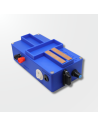
The motor of a slot car is responsible for converting the electrical energy it receives from the track into rotational movement, which through the transmission (pinion, crown gear, and axle) reaches the rear wheels. It is the heart of the car's mechanics and, therefore, the component that most influences its performance.
Slot motors are miniature DC motors, usually with a permanent magnet and carbon brushes. They operate continuously while there is current, and the direction of rotation depends on the polarity. The maximum speed and torque depend on the motor's design: number of turns of the winding, type of magnet, size of the can, and manufacturing quality.
A worn, dirty, or poorly sized motor for the transmission ratio can ruin the behaviour of a car that is perfectly tuned in every other aspect. That is why, when something is not working well on track, the motor should always be one of the first elements to check.
Brands like NSR, Slot.it, Scaleauto, and Avant Slot offer high-quality motors with detailed and verified specifications, making it much easier to choose when you already know what you are looking for.
How to correctly choose a slot motor
Choosing a motor is not just a matter of power. Several factors must be aligned for the result to be as expected:
- Size compatibility (can): The most common slot motors are 20×15 mm can (the so-called "small can" or FK-180) and 25×20 mm can (FC-130, FF-050, and similar). Before buying, check what format your car's chassis accepts.
- Mounting position: A motor designed for sidewinder mounting is not the same as one designed for inline or anglewinder. The position determines the necessary chassis and gearing.
- RPM and torque: High RPM motors with low torque are more suitable for long, fast tracks. High torque but lower RPM motors respond better on technical tracks with many slow corners. Look for balance according to the circuit where you race.
- Championship regulations: If you race in organised competition, the regulations limit the allowed motors. Ensure that the motor you choose is homologated for your category before purchasing.
- Usage level: For recreational or family use, it makes no sense to invest in a competition motor. There are intermediate options that offer more response than the standard motor without skyrocketing the price or complicating control.
A common mistake is to buy the most powerful motor available without considering the rest of the tuning. A very powerful motor in a car with insufficient grip, poorly adjusted transmission, or poorly distributed weight does not improve behaviour: it worsens it.
Main types and differences
Slot motors are primarily classified by their mounting position in the car, and each has direct implications on dynamic behaviour:
Sidewinder
In the sidewinder configuration, the motor is mounted parallel to the rear axle, transversely to the car. It is the most common arrangement in modern competition cars. The motor is located to one side of the axle, requiring the use of a pinion and a crown gear to transmit movement. This arrangement allows for better weight centralisation and facilitates access to the motor for maintenance. It is very popular in chassis such as those from NSR and Slot.it.
Inline
In the inline configuration, the motor is placed perpendicular to the rear axle, that is, in line with the car's longitudinal axis. This position lowers the centre of gravity and provides a more balanced weight distribution. It is common in long-standing competition cars and also in some beginner ranges. It requires a specific transmission, usually through pinion and bevel gear.
Anglewinder
In the anglewinder configuration, the motor is placed at an angle to the rear axle, combining advantages of the two previous systems: it allows the motor to be lowered compared to the classic sidewinder and offers more flexibility in chassis design. It is a common solution in high-level competition chassis, where every millimetre of centre of gravity height matters.
By technical specification
Beyond position, motors are also differentiated by their electrical characteristics:
- Stock or series motors: Those that come factory-installed in cars. They work well for recreational use but are rarely competitive on organised circuits.
- Homologated competition motors: With controlled specifications (RPM, resistance, torque) to ensure equal conditions among drivers.
- Free motors: Without restrictions, used in open categories or for extreme preparations. They allow for maximum performance but require very careful tuning of the rest of the car.
Technical aspects we should know
To get the most out of the motor and avoid problems, there are some technical concepts that are good to have clear:
- No-load RPM: Revolutions per minute without load. They serve as a reference, but actual behaviour on track also depends on torque and the transmission ratio.
- Winding resistance (Ω): Lower resistance means the motor consumes more current and usually develops more torque. Low-resistance motors (1-2 Ω) are the most powerful but also the most demanding on track electronics.
- Magnet: The type and strength of the magnet influence the motor's response and efficiency. Some motors allow replacing the magnet with one of different strength to adjust performance.
- Braids: Slot motors have braids (the flexible carbon contacts that transmit current to the collector). With use, they wear out and should be checked periodically. If the motor loses power without apparent cause, the braids are the first thing to check.
- Bearings vs. bushings: Motors with ball bearings have less friction and greater durability than those with bushings, but they are also more expensive. For competition, bearings make a difference.
Practical tips for use, maintenance, and preparation
A well-maintained motor lasts much longer and performs better. These are the practices we recommend from our experience:
- Initial break-in: New motors benefit from a progressive break-in before pushing them to the limit. Some sessions at half power allow the braids to settle properly on the collector.
- Cleaning the collector: With use, the collector gets dirty with carbon residue. Cleaning it with a specific cleaner and a fine swab improves contact and motor response.
- Lubrication: The motor shaft can benefit from a minimal drop of special slot oil at the ends. Never use greasy oils or excessive amounts: they can contaminate the braids and the collector.
- Checking the braids: Check their pressure and condition. Loose or worn braids cause current cuts and loss of performance. Replace them when needed; they are a consumable.
- Checking alignment: A misaligned motor with the axle generates noise, vibration, and premature wear. Verify that the pinion meshes correctly with the crown gear without excessive play or tightness.
Common mistakes we should avoid
Most problems with slot motors originate from avoidable mistakes. The most common ones we see are:
- Installing an incompatible motor with the chassis: Not all motors fit all chassis. Before buying, confirm the can format and the mounting arrangement that your chassis accepts.
- Ignoring the transmission ratio: A high RPM motor with an inadequate transmission ratio can be uncontrollable or, conversely, fall short. Adjust the pinion and crown gear to the type of motor you are mounting.
- Not breaking in: Taking a new motor to the max from the first moment shortens its lifespan and can damage the braids prematurely.
- Using inappropriate lubricants: Sewing machine oil, WD-40, or any non-specific product for slot can damage the internal parts of the motor or contaminate the contacts.
- Neglecting cleaning: Dust, dirt from the braids, and tyre residue eventually affect performance. Regular cleaning of the motor and its environment in the chassis is essential.
- Buying for power without context: The most powerful motor is not always the best for your situation. Assess your driving level, the type of track, and the regulations before deciding.
Recommendations for beginners and advanced users
If you are starting
The most important thing at the beginning is a controllable motor that allows you to learn to manage power without the car going out of control in every corner. Mid-range motors with moderate RPM and good torque are ideal for this profile. Brands like Scaleauto or Slot.it offer very balanced options in this range.
Don't worry yet about the technical details of the winding or the type of magnet. Focus on ensuring the motor is compatible with your car and on learning to keep it clean and in good condition.
If you already have experience
At this point, you already know what type of track you race on, what level of power you can manage, and what limitations your current car has. It is time to fine-tune: choose motors with specific specifications, experiment with different transmission ratios, and adjust the motor to the chassis to optimise behaviour.
For competitive level racing, the references from NSR and Slot.it are the most used, with extensive support for spare parts and verified technical traceability on circuits across Europe.
Comparative table: types of motor by use and profile
| Type of motor |
User profile |
Main use |
Main advantage |
| Stock / series |
Beginner, recreational use |
Home track, initiation |
Controllable, economical |
| Homologated competition |
Championship driver |
Circuit with regulations |
Equal conditions |
| High performance free |
Advanced user, preparer |
Free, no restrictions |
Maximum performance |
| Specific sidewinder |
Intermediate / advanced |
Chassis with side mount |
Accessibility and balance |
| Specific inline |
Intermediate / advanced |
Longitudinal chassis |
Low centre of gravity |
| Specific anglewinder |
Advanced / competition |
High-level chassis |
Combination of advantages |
Frequently asked questions about slot motors
Can I put any motor in my slot car?
No. The motor must be compatible with your chassis's mounting format (size) and arrangement (sidewinder, inline, or anglewinder). Before buying, check your car's specifications.
What does it mean for a motor to be homologated?
It means it has been approved for use in a specific competition category, meeting the limits set in the regulations (usually RPM, resistance, or torque). Only homologated motors can be used in those categories.
How long does a slot motor last?
It depends on use, maintenance, and motor quality. A well-maintained motor, with proper break-in and regular cleaning, can last many seasons. Those used without care and maintenance degrade much sooner.
How do I know if my motor is worn out?
The most common symptoms are: progressive loss of power, unusual noise or vibration, intermittent current cuts, and excessive sparking at the collector. If several of these symptoms appear, it is time to check the braids, the collector, and the overall condition of the motor.
Inline or sidewinder, which is better?
There is no universal answer. The sidewinder is more common in modern competition cars and facilitates access to the motor. The inline lowers the centre of gravity and can improve stability. The choice depends on the chassis, the type of track, and the driver's preferences.
Do I also need to change the pinion and crown gear when changing the motor?
Not always, but it is highly recommended to check the transmission ratio when changing motors. A different motor may require a different ratio to perform well. Additionally, if the pinion is worn, it is a good time to replace it.
What happens if the motor is dirty?
A dirty motor loses efficiency, increases current consumption, and can cause contact failures. Dirt on the collector and braids is the most common cause of performance loss without apparent reason.
Can I use the same motor in different cars?
Yes, as long as the format and mounting position are compatible. Many preparers have reference motors that rotate between chassis according to each car's preparation or the championship's demands.
What is the difference between a 20,000 RPM motor and a 30,000 RPM motor?
The higher RPM motor has greater top speed but not necessarily more torque. The lower RPM motor may have more pulling power and be more controllable in slow corners. The transmission ratio can partially compensate for these differences, but it does not eliminate them.
Is a motor with bearings better?
In general, yes, especially for intensive use or competition. Ball bearings reduce friction and wear compared to bushings, resulting in more performance and longer lifespan. For occasional recreational use, bushings are perfectly valid.
How often should I clean the motor?
It depends on use. In competition, it is advisable to check the motor after each intense session. For home use, cleaning every few sessions is sufficient. The important thing is not to wait until performance drops significantly to take action.
Do slot motors work the same on all track systems?
The motor itself does not depend on the track system (the motor does not touch the track directly), but the voltage and current supplied by the track do affect its performance. Higher voltage tracks can make a motor perform better, but they also subject it to greater stress. Always adjust the power supply to the type of motor you are using.