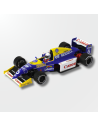
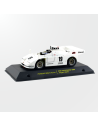
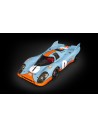
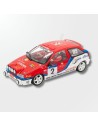
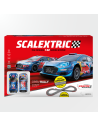
Radio control has been one of the most exciting disciplines of the scale hobby for decades. Controlling a vehicle —whether it's a car drifting on gravel, a boat gliding over water, or a plane soaring above your head— with a remote in your hands and the feeling of piloting it yourself is something difficult to explain to those who haven't experienced it. At Ministry of Hobby, we have been helping enthusiasts of all levels find the right model, the correct spare parts, and the necessary knowledge to fully enjoy this discipline for years.
If you are just starting out, the world of radio control can seem vast: brands, frequencies, types of motors, propulsion systems, scales… There is a lot of technical vocabulary and many options. That’s why we want this page to serve as a practical guide: by the time you finish reading it, you will know exactly what type of RC suits you, what questions to ask yourself before buying, and what mistakes to avoid. And if you are already an experienced pilot, you will find technical information that will help you fine-tune your setup or make the leap to competition.
We cover all disciplines: off-road and on-road RC cars, buggies, crawlers, competition trucks, electric and gas boats, planes and gliders, helicopters, and FPV drones. Whether you are looking for family fun on a weekend or want to prepare a car for a federated race, here is your starting point.
What is radio control and why is it so addictive
Radio control —also simply known as RC— is the technology that allows you to operate vehicles or devices remotely using a transmitter (the pilot's remote) and a receiver installed in the model. The signal travels via radio frequency, typically in the 2.4 GHz bands in modern equipment, ensuring a quick response and no interference with nearby models.
What makes radio control special compared to other hobbies is its combination of factors: there is a real learning curve (learning to pilot well requires practice and technique), a mechanical and electronic component that invites tinkering, and an active community that organizes meetups, championships, and events. It’s not just about pressing a button and letting the car turn by itself; it’s about reading the terrain, correcting the trajectory, managing the battery, and knowing the limits of your model.
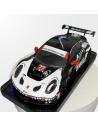
Moreover, RC has a collector and aesthetic dimension that should not be underestimated. Many models replicate real vehicles with astonishing detail: Dakar rally trucks, circuit cars painted with racing liveries, historical boats… building, decorating, and customizing the model is as much a part of the pleasure as piloting it.
How to choose your first radio control model
Before buying, it’s advisable to ask yourself three key questions:
- Where am I going to use it? A garden with grass is not the same as an asphalt track, a lake, or a dirt field. Each environment calls for a different type of vehicle.
- How much time and money do I want to dedicate to it? An RTR (Ready to Run) model allows you to start racing in minutes; a kit will take you hours to assemble, but you will learn a lot about RC mechanics.
- What is my skill level? Beginner models usually have simpler electronics, greater stability, and lower top speeds. Competition models require knowledge of setup and maintenance.
Once you have answered those questions, scale comes into play. The most common scales are 1/10 and 1/8 for cars, although there are also options in 1/12, 1/16, or 1/5. The lower the denominator, the larger the size: a 1/5 car is huge and powerful, ideal for open spaces; a 1/16 is more manageable in indoor or small garden settings. Boats have their own scales, and planes are usually measured by wingspan.
Regarding propulsion, most current models are electric: quieter, easier to maintain, and with excellent performance thanks to LiPo batteries. Combustion models (nitromethane or gas) still have their followers due to the sound, smell, and autonomy, but they require more maintenance and experience.
Main types and differences in radio control
RC Cars
This is the most popular discipline. Within RC cars, we find two main families:
- On-road: Designed for hard, smooth surfaces. They include touring, formula, and drift. They are faster in a straight line but less versatile on uneven terrain.
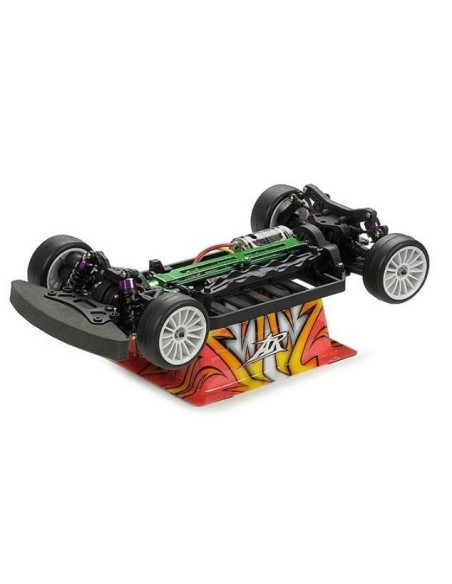
- Off-road: With longer suspensions, knobby tyres, and greater ground clearance. They include buggies, monster trucks, crawlers, and short course trucks. They perform well on dirt, gravel, grass, and obstacles.
The crawlers deserve a separate mention: they are models specifically designed to overcome obstacles at very low speeds, replicating 4x4 trail driving. They are ideal for those who enjoy the technique of driving more than speed.
RC Boats
They range from simple catamarans for ponds to high-speed racing boats or replicas of historical vessels. RC navigation requires a good understanding of water behaviour and access to a lake or pond. Competition models can reach surprising speeds.
RC Planes and Helicopters
They require more space and more hours of learning than cars. Gliders are a good starting point due to their slower and more predictable flight. RC helicopters are technically demanding: controlling collective and cyclic pitch tests any pilot's reflexes.
FPV Drones
The most recent and fastest-growing discipline. FPV (First Person View) drones are piloted with goggles that transmit the drone's camera image in real-time, providing an immersive flying experience. There are racing, freestyle, and cinematic models. It’s a world with a lot of customization and an active community.
Technical aspects to know
The transmitter and receiver
The transmitter is the remote that the pilot uses. Beginner models usually include a basic 2 or 3 channel transmitter. For competition or advanced piloting, programmable transmitters with 4 or more channels allow you to adjust servo response, rates, exponentials, and many other parameters that make a difference on the track.
The ESC (electronic speed controller)
The ESC regulates the power that reaches the motor. A good ESC allows you to adjust braking, motor timing, and acceleration curve. In competition, the ESC is as important as the motor itself.
Brushless vs. Brushed Motors
Brushed motors are more economical and easier to control, ideal for beginners. Brushless motors are more efficient, more powerful, and more durable, but require a compatible ESC and have a higher initial cost. Almost all current competition models use brushless motors.
Batteries: NiMH vs. LiPo
NiMH batteries are more robust and easier to handle, very common in beginner models. LiPo batteries offer higher energy density, lower weight, and better performance, but require specific chargers and certain storage and handling precautions.
Servos
The servo is the component that moves the steering (and other functions in planes or boats). The response speed and torque of the servo directly influence piloting precision. In competition, a good high-speed servo can make a difference in every corner.
Practical usage and maintenance tips
- Check the model before each session: check the tension of the wheels, the condition of the tyres, the battery connectors, and ensure there are no loose screws.
- Take care of LiPo batteries: never discharge them below the minimum voltage per cell, store them at storage voltage if you won't use them for days, and avoid charging them unattended.
- Clean the model after each use on dirt: accumulated dirt in the differential, drive belt, or bearings shortens its lifespan.
- Lubricate wisely: use the appropriate lubricants for each part. The differential, gearbox, and bearings have different needs. Don’t lubricate everything with the same product.
- Adjust the geometry: caster, camber, and toe directly affect track behaviour. Learn to read how tyres wear to diagnose the setup.
- Store the model correctly: in a place without humidity, with the battery disconnected, and, if it’s a painted model, protected from dust and direct light.
Common mistakes to avoid
- Buying for maximum speed without considering the environment: a very fast car in a small space is difficult to control and breaks more often.
- Ignoring the importance of the transmitter: many beginners invest their entire budget in the model and skimp on the transmitter. A good programmable transmitter enhances the experience and lasts through several models.
- Not reading the manual before the first startup: each model has its ESC calibration procedure, battery limits, and basic adjustments. Skipping this generates avoidable problems.
- Charging LiPo batteries unattended or with an unsuitable charger: this is the most dangerous mistake in the hobby. Always use a certified balance charger.
- Not breaking in the motor in combustion models: a new nitromethane engine needs proper break-in to perform and last. Skipping this step drastically shortens its lifespan.
- Mixing incompatible components: not all ESCs are compatible with all brushless motors, and not all batteries have the appropriate connector. Always check before buying spare parts or upgrades.
Recommendations for beginners and advanced users
If you are just starting out
Opt for an RTR electric model in 1/10 or 1/16 scale, with an entry-level brushed or brushless motor and a NiMH battery included. This way, you can start running from day one without needing prior technical knowledge. An off-road buggy is a good first option: it withstands impacts well, works on many terrains, and has many available spare parts. Don’t look for maximum speed; look for reliability and ease of handling.
Dedicate the first sessions to learning to control the model, not to going full throttle. Hand-eye coordination improves with practice, and a well-treated model will last for years.
If you already have experience
The next level involves a programmable transmitter that allows you to adjust servo response and acceleration curve, and switching to LiPo batteries if you haven't done so already. In cars, exploring suspension setup —varying spring hardness, shock oil, and geometry— opens up a world of possibilities. If you have space and access to a track, amateur competition is the best testing ground: it forces you to fine-tune the model, improve your piloting, and meet people with the same passion.
For advanced users looking to enter federated competition, it is essential to know the regulations of the category, choose the corresponding homologated model, and work on the setup with patience. Races are won both in the pits and on the track.
| Discipline |
Ideal Surface |
Recommended Level |
Common Propulsion |
| On-road Car |
Asphalt / Indoor Track |
Intermediate - Advanced |
Brushless Electric |
| Off-road Buggy |
Dirt / Gravel / Grass |
Beginner - Advanced |
Brushed / Brushless Electric |
| Crawler |
Rocks / Obstacles |
All Levels |
Brushed Electric |
| Boat |
Calm Water / Lake |
Beginner - Advanced |
Electric / Combustion |
| Plane / Glider |
Open Field |
Intermediate - Advanced |
Brushless Electric |
| FPV Drone |
Indoor / Outdoor |
Intermediate - Advanced |
Brushless Electric |
Frequently asked questions about radio control
What is the difference between an RTR model and a kit?
RTR (Ready to Run) means that the model comes assembled and ready to use, usually with electronics installed and sometimes with a battery and charger included. A kit is a set of parts that you must assemble yourself: it takes longer, but you learn a lot about the internal workings of the model and can choose the electronics to your liking.
Is electric or combustion better for beginners?
For most beginners, electric is the best option: it is quieter, requires less maintenance, and the learning curve is smoother. Combustion models have a lot of charm, but they require knowledge of carburation, break-in, and cleaning that can frustrate newcomers.
What battery do I need for my RC model?
It depends on the model. Always check the voltage and format (number of cells, physical size) specified by the manufacturer. If you opt for LiPo, make sure you have a compatible balance charger. Never use a battery with a higher voltage than specified without verifying that the electronics can handle it.
Can I use any transmitter with any receiver?
In general, the transmitter and receiver should be from the same brand or protocol. There are exceptions with multi-system transmitters or universal receivers, but this is not common. For beginners, a transmitter-receiver pack from the same brand guarantees total compatibility.
What scale is best for running at home or in the garden?
Scales 1/16 and 1/18 are more manageable in small spaces. A 1/10 already requires some space to perform well. If the garden is very small, consider a crawler as well: its lower speed makes it more controllable in limited spaces.
How long does a LiPo battery last in a session?
It depends on the capacity (mAh), the weight of the model, and the intensity of use. On average, a 5,000 mAh battery in a 1/10 car offers between 20 and 40 minutes of running time. Having two batteries is a good idea to avoid interrupting the session.
Is maintenance necessary after each use?
It depends on the type of use. If you have run on dirt or water, basic cleaning is highly recommended. If you have run on an asphalt track or indoors, checking the screws and the general condition is sufficient. Regular maintenance prevents more costly breakdowns in the long run.
Can you compete officially with RC models?
Yes. There are national and international championships in various disciplines (off-road cars, on-road, crawling, boats…) with specific regulations. In Spain, there are several clubs and federated circuits. To start competing, the best approach is to visit a local club and ask about the most accessible category.
What is the 2.4 GHz protocol and why is it important?
It is the working frequency of most modern transmitters. It allows multiple pilots to race at the same time without interference between them, as each transmitter binds exclusively to its receiver through a process called binding. This is a significant advantage over previous fixed-frequency systems.
Are spare parts easy to find?
For the most popular brands (Traxxas, Tamiya, Team Associated, Arrma, among others), spare parts are usually well available. Before buying a model, it’s advisable to check that spare parts have good availability in the European market, especially if you want to engage in competition.