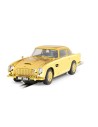
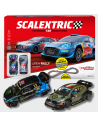
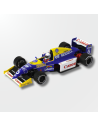
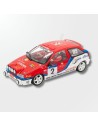
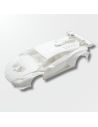
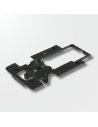
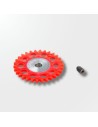
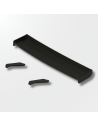
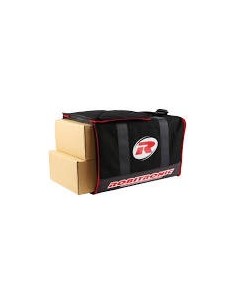
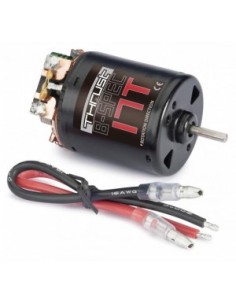
When you fully immerse yourself in the world of radio control, you quickly realise that the vehicle itself is just the starting point. What truly defines the experience —the servo response, cornering stability, battery life, remote precision— largely depends on the RC accessories you choose. Whether you are someone who has just bought their first electric buggy and wants to get more out of it, or a driver with years of competition experience looking to fine-tune every component, this category precisely meets that need.
The market for RC vehicle accessories is vast, and navigating it without guidance can become frustrating. There are generic parts that fit almost any platform and very specific components designed for particular models or brands. There are upgrades that you notice at the first turn of the wheel and others whose effect is more subtle but equally important in the long run. At Ministry of Hobby, we have been working with this catalogue for years because we are enthusiasts before we are sellers: we know what works, what is empty marketing, and which parts are truly worth incorporating into your setup.
RC accessories cover a very broad spectrum: control electronics, traction and transmission systems, bodies, suspension parts, power systems, specific maintenance tools, and much more. Depending on whether your vehicle is a track competition car, crawler, off-road buggy, touring on asphalt, or drift, the priorities change. That’s why it makes sense to have a good understanding of what is available, what compatibilities exist, and how each accessory influences the final behaviour of the model.
In this section, you will find everything from the most common accessories that any enthusiast needs sooner or later, to more technical parts aimed at serious tuning and setup. All with the confidence of knowing it is curated by people who also use it.
What are RC accessories and why are they so important
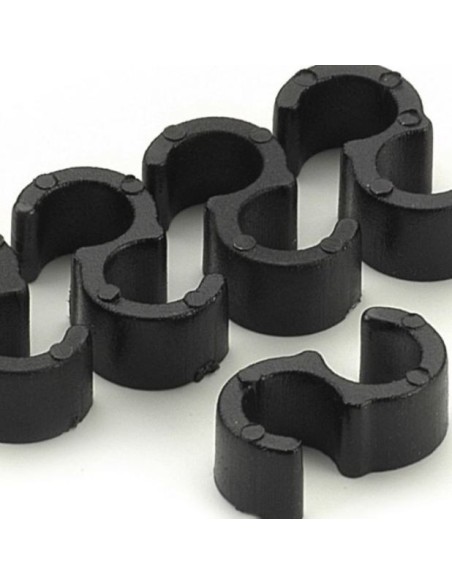
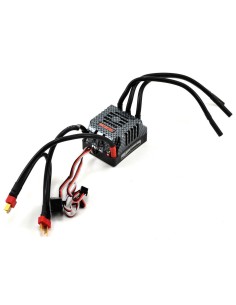
An RC accessory is any component, part, or addition that is added, replaced, or improved in a radio-controlled vehicle beyond its stock configuration. This includes both electronic elements —receivers, electronic speed controllers (ESC), servos, batteries— and mechanical parts —wheels, shocks, differential, drive shaft— as well as aesthetic or protective elements —bodies, dust screens, antenna mounts—.
The importance of these accessories goes far beyond personalisation. A servo with a faster response can be the difference between controlling the car in a tight corner or losing it against the barrier. A well-chosen LiPo battery multiplies session time and improves power delivery compared to the standard NiMH batteries that usually come with starter kits. A set of tyres suitable for the type of surface —asphalt, compacted dirt, grass, gravel— radically changes the grip and predictability of the model.
Moreover, RC accessories are the usual way to extend the lifespan of a vehicle. Parts wear out, break from impact, or simply become obsolete due to market evolution. Having access to a good catalogue of spare parts and upgrades is what allows you to keep the car in optimal condition year after year, without having to replace the entire platform.
For those who compete, accessories are also a tuning tool: every adjustment in shock hardness, gear ratio, or steering geometry has a measurable impact on lap times. This level of technical involvement is precisely what hooks many enthusiasts for decades.
How to correctly choose RC accessories
The first criterion is always compatibility. Before adding any accessory to your vehicle, you must confirm that it is compatible with your specific platform: the brand, model, and scale of the car determine which parts fit physically and which do not. Many electronic components are universal —most servos and ESCs are installed generically— but mechanical parts are usually specific to each model or chassis family.
The second criterion is the use you will give it. It makes no sense to install a competition ESC with advanced programming on a casual crawler, just as it would not make sense to equip a track buggy with all-terrain tyres. First, define what you want to improve: maximum speed?, reliability?, usage time on a charge?, steering response?, exterior appearance? Each objective leads to a different type of accessory.
The third is the level of installation you are willing to undertake. There are accessories that can be installed in minutes —changing wheels, replacing the body— and others that require soldering, programming, or adjusting with specific tools. If you are just starting, it is advisable to go step by step and not attempt to transform the entire car at once. The results will be more predictable, and you will learn better how each change responds.
The fourth is the quality of the component. In RC accessories, the average price usually reflects durability and performance reasonably well. Very cheap components of unknown origin may seem like a bargain until they fail mid-session or, worse, damage other more expensive components. Established brands with available spares are always a safer investment.
Main types and differences of RC accessories
The category of RC accessories is broad, but it can be organised into major families:
- Electronics: ESCs (electronic speed controllers), radio receivers, servos, gyroscopes, and stabilisation systems. They are the nervous system of the car: they determine how each input from the driver is responded to. The quality of the steering servo, for example, is immediately noticeable in driving precision.
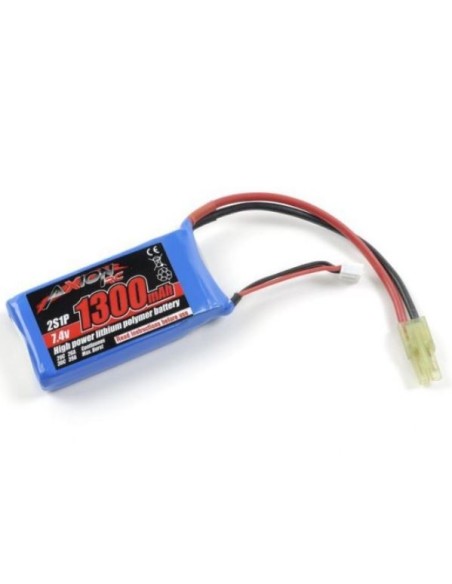
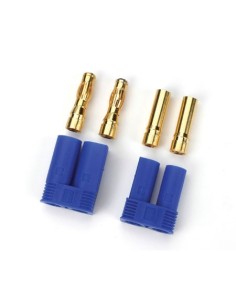
- Batteries and chargers: LiPo batteries have largely displaced NiMH due to their better weight/power ratio and more consistent discharge. However, they require specific chargers and more care in storage. NiMH still remains a solid option for casual use and for those who prefer greater simplicity.
- Tyres and wheels: One of the changes with the most immediate impact on behaviour. Each compound and tread pattern is designed for a specific type of surface. The wheels affect the offset and, therefore, the track width of the car.
- Suspension and chassis: Adjustable oil shocks, springs of different hardness, suspension mounts, reinforcement parts. These are accessories aimed at fine tuning and structural durability of the vehicle.
- Transmission: Gears, differential, drive shafts, transmission axles. They directly influence the power delivery to the wheels and the response to traction changes.
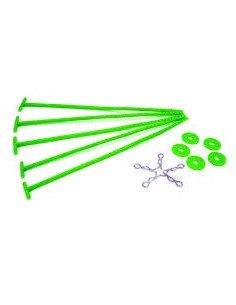
- Bodies and aesthetics: Unpainted polycarbonate bodies, decorative parts, decals, mounting systems. They allow personalisation of the vehicle's visual identity and protect the internal mechanics.
- Tools and maintenance: Specific wrenches, precision screwdrivers, lubricants, cleaners. Essential for keeping the car in good condition and making adjustments comfortably.
Technical aspects we should know
Before buying any RC accessory, it is advisable to have some technical concepts clear that constantly appear in product specifications:
In electronics
Servos are classified by torque (in kg·cm or N·m) and response speed (in seconds/60°). For track competition cars, speed is sought; for crawlers, torque. The ESC must be compatible with the type of motor —brushed or brushless— and support the maximum amperage demanded by the setup. Combining a brushless motor with a brushed ESC is a common mistake that renders the system useless.
In batteries
Capacity (mAh) determines usage time; nominal voltage (number of cells "S") determines available power; discharge rate (C) determines how much current the battery can safely deliver. A 2S LiPo battery is equivalent to about 7.4 V nominal; a 3S to 11.1 V. This data must be within the ranges accepted by the ESC and the motor.
In tyres
The hardness of the compound is usually expressed with a numerical or nominal scale (soft, medium, hard). Softer compounds provide more grip but wear out faster; harder ones are more durable but offer less traction on low-grip surfaces. The tread —slick, M-terrain, spike— is also a determining factor depending on the surface.
In suspension
The hardness of the spring, camber angle, toe, and centre of gravity height are parameters that are adjusted through suspension accessories. Small variations have notable effects on cornering behaviour and straight-line stability.
Practical tips for use, maintenance, and preparation
- Clean after each session. Dirt accumulated in the transmission, bearings, and servos is the number one cause of premature wear. A soft brush, compressed air, and specific cleaner are sufficient for most situations.
- Lubricate wisely. Too much lubricant attracts dirt; too little generates friction. Ball bearings need light lubrication; the differential requires oil of the appropriate viscosity depending on the type of surface and driving style.
- Charge batteries correctly. LiPos should never be discharged below 3 V per cell or overcharged. Always store them at 50-60% charge if you won’t be using them for several days.
- Adjust one parameter at a time. If you change tyres, springs, and shocks all at once, you won’t know what improved what. Take the time to evaluate each modification separately.
- Check screws periodically. Vibrations and impacts loosen screws. A couple of minutes of checking before each session can prevent losing parts on the track.
- Document your settings. Note what changes you have made and what results you have obtained. It is the fastest way to learn and to recover a configuration that worked well.
Common mistakes we should avoid
Buying by price without checking compatibilities. Acquiring a servo or an ESC without confirming that it fits with the receiver, motor, and chassis is one of the most common and frustrating mistakes. Spend five minutes reviewing the specifications before adding to the cart.
Mixing voltages and battery types without checking the ESC ranges. An ESC designed for 2S can burn out with a 3S battery. Always stay within the ranges indicated by the manufacturer.
Ignoring bearing maintenance. They are small and cheap components, but their condition directly affects transmission efficiency and motor heating. Replace them at the first sign of roughness or excessive play.
Installing a body without checking the fit of the windshield and mounts. A body that does not sit well can detach while running or limit the movement of the suspension.
Over-lubricating the steering servo. Excess lubricant on the servo or steering rods can cause them to slip or the assembly to gain play that degrades precision.
Not programming the ESC after installation. Many ESCs require calibration with the receiver and transmitter once installed. Skipping this step can result in erratic responses or loss of motor braking.
Recommendations for beginners and advanced users
If you are starting
The smartest approach is to start with maintenance accessories: a good set of tools suitable for your vehicle, a quality charger if your kit came with a basic one, and perhaps a set of tyres adapted to the surface where you usually run. These three changes have a real impact and do not require advanced installation knowledge. Avoid getting into electronics at this stage if you have no prior experience: a mistake here can damage more expensive components.
It is also highly recommended to get some spare screws of the same type used by your model. Screws are the first victims of impacts, and losing one on the track can stop you completely.
For experienced users
The world of RC accessories for advanced users revolves around tuning and extracting performance. A good suspension setup —springs of various hardness, shock oil of different viscosities— along with tyres of a compound suited to the temperature and surface of the day can make several tenths of a difference in competition.
On the electronic side, programming the ESC (power curve, brake, neutral point), choosing a high-speed servo for steering, and using a gyroscope in drift or high-speed cars are improvements that go beyond hardware and enter software configuration. There are ESCs with mobile apps or PC interfaces that allow for very precise customisation.
If you compete, always take a kit of critical spare parts to the track: steering servo, receiver, at least one fully charged spare battery, and the fuses or connectors corresponding to your system. Reliability in competition is built before leaving home.
| Type of accessory |
Main impact |
Recommended profile |
Installation difficulty |
| Steering servo |
Precision and response |
All levels |
Low-Medium |
| ESC (speed controller) |
Power and braking control |
Medium-Advanced |
Medium |
| LiPo battery |
Usage time and power |
All levels |
Low |
| Tyres |
Grip and behaviour |
All levels |
Very low |
| Adjustable shocks |
Stability and tuning |
Medium-Advanced |
Medium |
| Body |
Protection and aesthetics |
All levels |
Low |
| Gyroscope |
Stability (drift/high speed) |
Advanced |
Medium-High |
| Specific tools |
Maintenance and adjustment |
All levels |
N/A |
Frequently asked questions about RC accessories
Are all RC accessories compatible with each other?
No. Compatibility depends on the radio protocol (for electronics), the voltage and type of battery (for the electrical system), and the physical dimensions of the chassis (for mechanical parts). Always check the specifications before purchasing.
What is the difference between a brushed motor and a brushless one?
A brushed motor (with carbon brushes) is simpler, cheaper, and easier to maintain, but less efficient and has a shorter lifespan. A brushless motor has no brushes, is more efficient, more powerful, and more durable, but requires a specific ESC and is more expensive. For casual use, a brushed may be sufficient; for competition or high performance, brushless is the current standard.
Can I use a LiPo battery in any RC car?
Only if the ESC and motor support the voltage of that battery. Additionally, LiPos have dimensions that must fit in the chassis compartment. Always check the voltage ranges accepted by your speed controller before installing a LiPo.
How long does it take to notice the difference when changing tyres?
Immediately. The tyre is one of the accessories with the greatest perceived impact from the first metre. Switching from a generic tyre to one with a compound suited to the surface can significantly improve grip, especially in corners.
Is it complicated to program an ESC?
It depends on the model. Basic ESCs are calibrated through a sequence of buttons and throttle positions, something that can be done in a few minutes by following the manual. Advanced models offer programming via card, USB interface, or mobile app, allowing for much finer adjustment but also requiring more learning time.
What servo should I choose for a track car?
For asphalt track, response speed (low latency) is prioritised over torque. A digital servo with a fast response —under 0.10 s/60°— makes a difference in high-speed driving. In crawlers or heavy off-road vehicles, torque is the priority factor.
How often should I lubricate the bearings?
It depends on usage and driving conditions. In dirt or gravel sessions, it is advisable to check and clean the bearings after each day. On clean asphalt tracks, a check every two or three sessions may be sufficient. The most reliable indicator is the feel: if the bearing turns with resistance or makes noise, it needs cleaning and lubrication.
Do polycarbonate bodies need maintenance?
Yes. It is advisable to clean them with water and mild soap after each use, especially if you have run on dirt. Avoid aggressive solvents that may attack the interior paint. Store them out of direct sunlight to prevent the polycarbonate from becoming brittle over time.
What is the difference between a 2.4 GHz receiver and one of 27/40 MHz?
2.4 GHz systems are the current standard: automatic link with the transmitter, no interference between pilots, faster response. 27 and 40 MHz systems are old technology, with a higher risk of interference if multiple pilots use the same frequency. Virtually all current equipment operates on 2.4 GHz.
Can I improve the autonomy of my RC without changing the battery?
Yes, in part. Reducing the weight of the setup, optimising the transmission to roll with less friction, using tyres with lower rolling resistance, and configuring the ESC for a smoother power profile are ways to extend autonomy without changing the battery. But the most direct and effective way remains to use a higher capacity battery.
Do I need a gyroscope in my RC car?
It is not essential in most applications. The gyroscope provides active stability by automatically correcting direction, which is especially useful in drift cars —where oversteering is part of the driving style— and in very high-speed vehicles where pilot corrections come too late. For standard driving on track or off-road, it is not necessary.