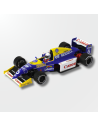
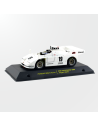
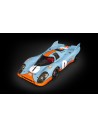
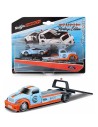
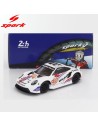
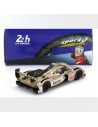
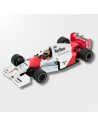
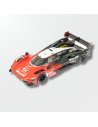
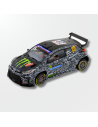
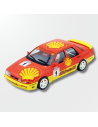
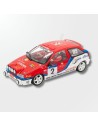
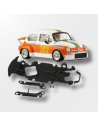
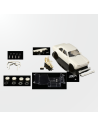
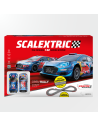
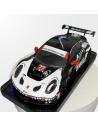
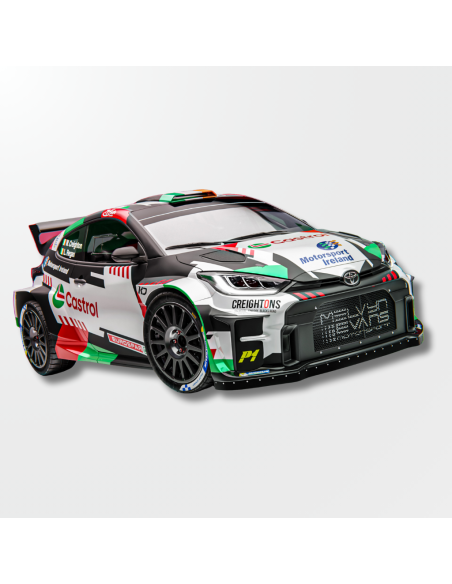
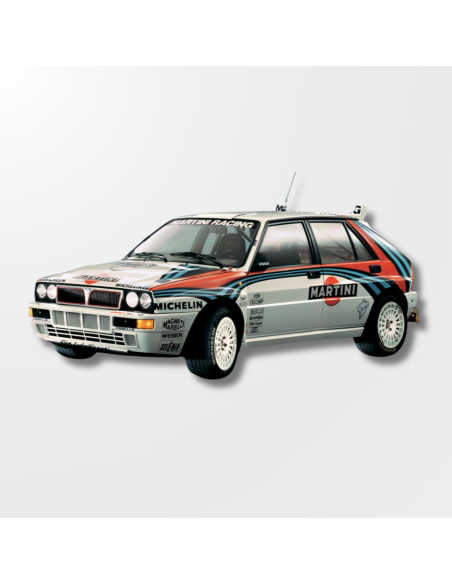
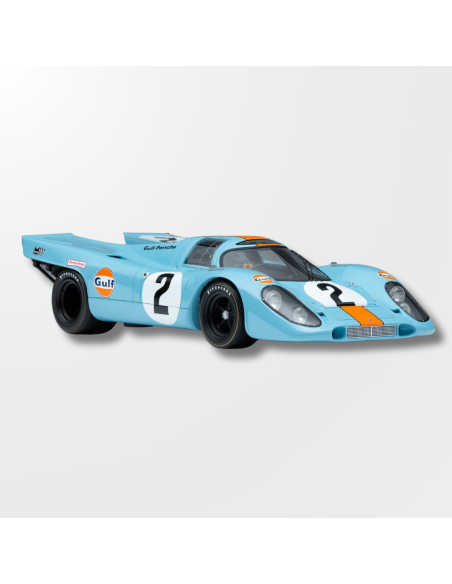
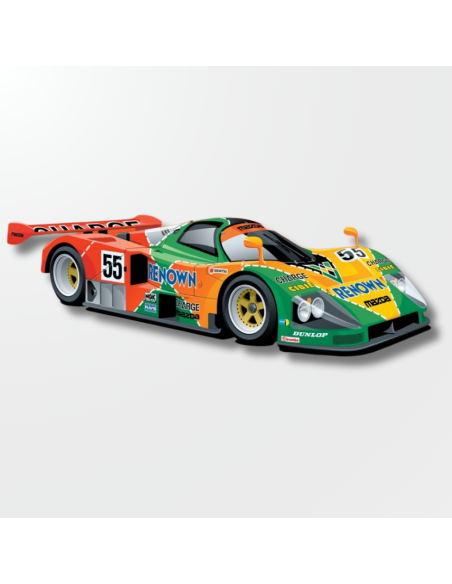
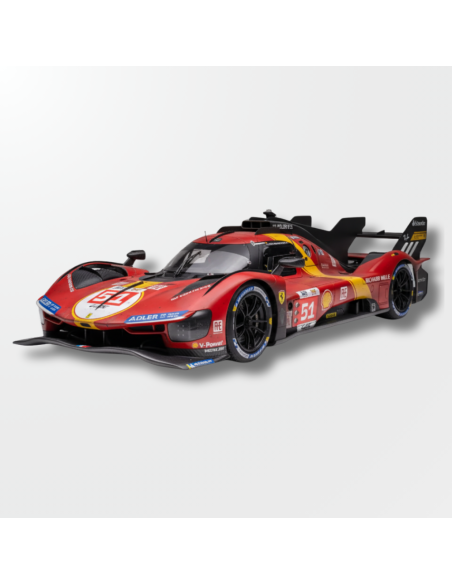
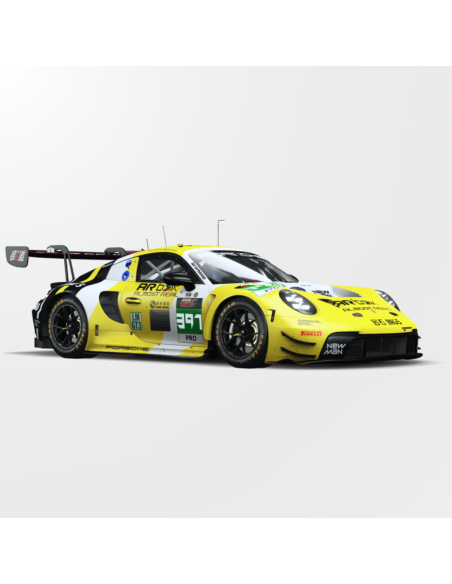
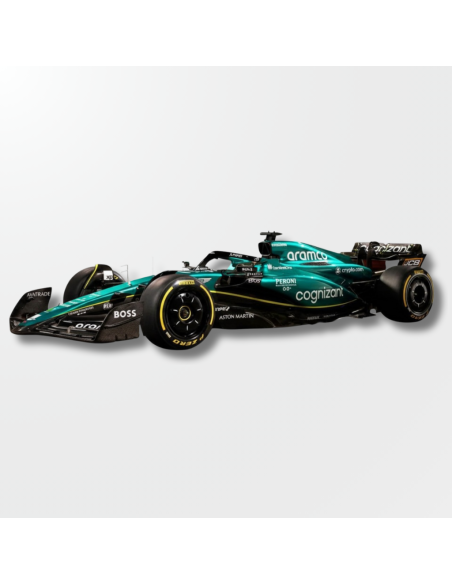
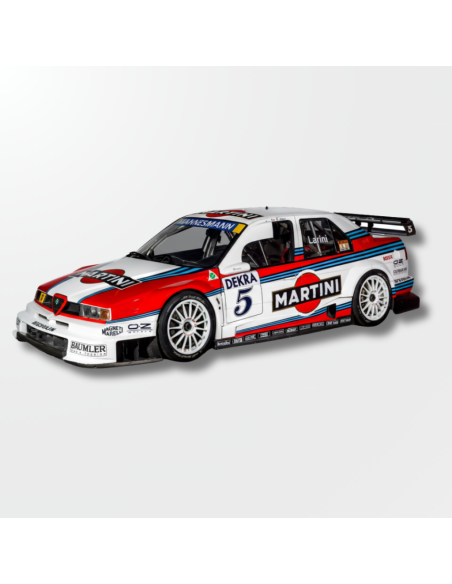
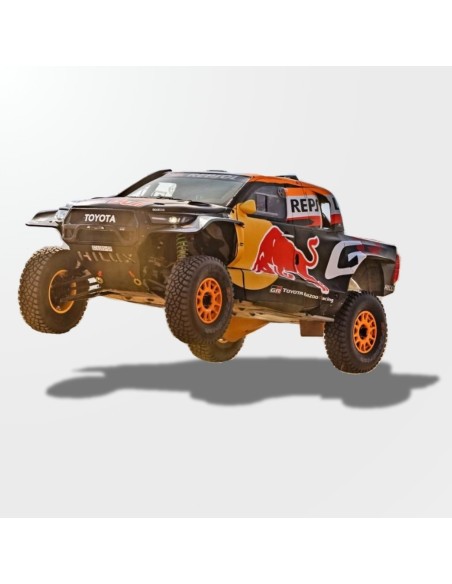
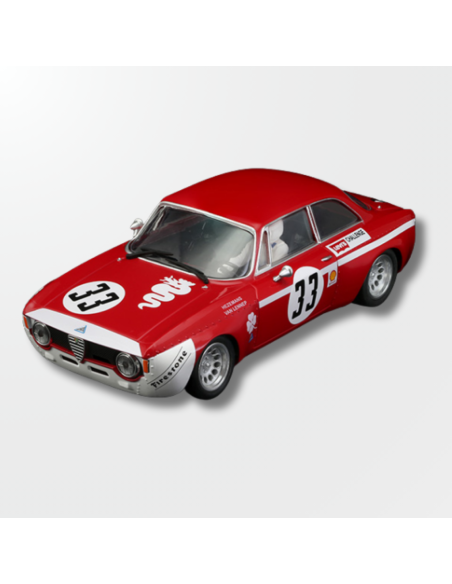
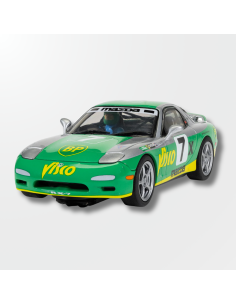
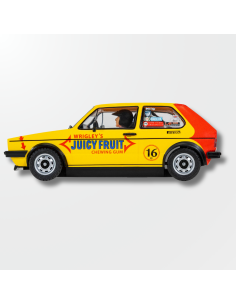
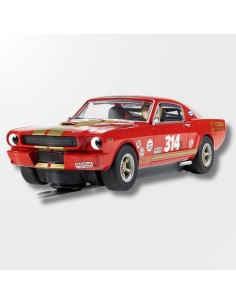
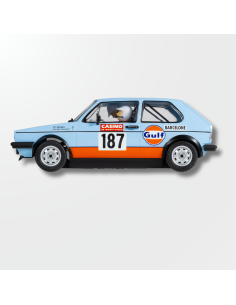
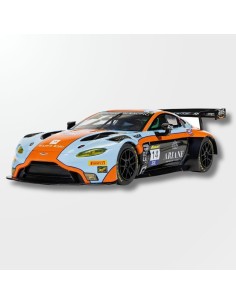
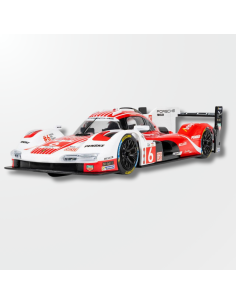
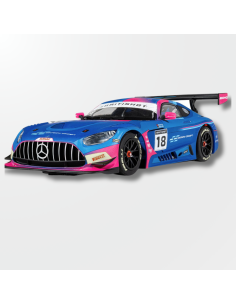
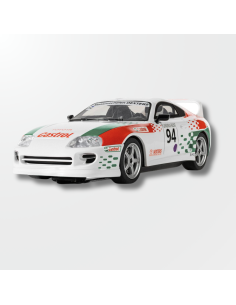
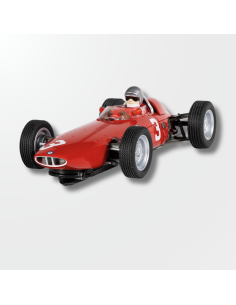
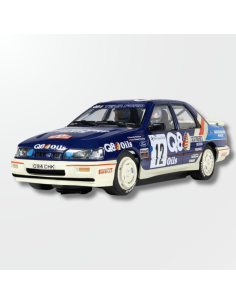
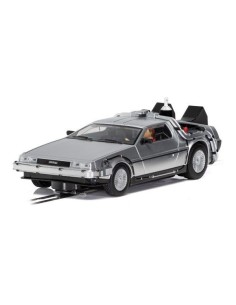
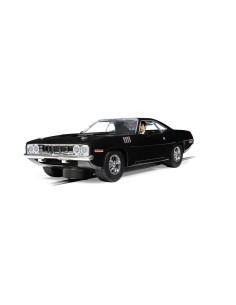
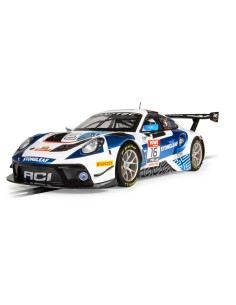
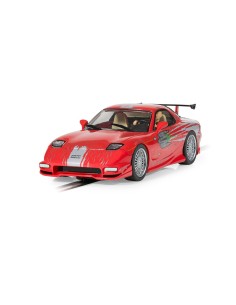
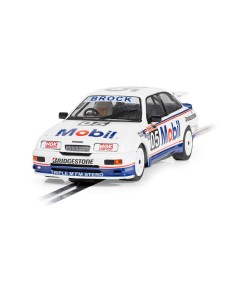
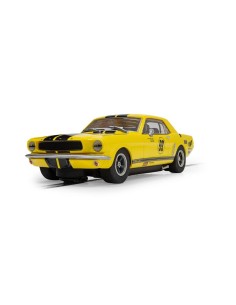
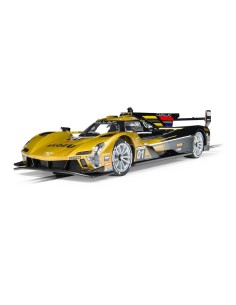
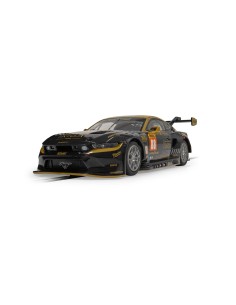
If you are looking for a slot car, whether to compete on your local track, to add a gem to your display case, or to start out in this hobby on the right foot, you have come to the right place. At Ministry of Hobby we bring together hundreds of models from the most relevant brands on the market: from affordable references perfect for beginners, to high-performance pieces designed for those already chasing every tenth on the stopwatch. The range is wide, but here the key is not quantity: it is knowing what is behind each model and helping you find the one that truly suits you.
The world of slot racing has been evolving for decades. What began as a children's toy has become a serious, technical, and exciting hobby, with an active community, organized championships, and a growing market of manufacturers. Today, choosing a slot car means considering the scale, track system, motorization, body materials, and level of finish. It is not complicated once you understand the basics, but it is advisable to be clear about them before buying.
In this section you will find models in 1/32 and 1/24 scale, the two dominant formats in the sector, in ready-to-run versions (RTR, Ready to Race) and also in kit form for those who enjoy the building process as much as the track. Rally, GT, Le Mans, Formula 1, Raid, classic cars, limited edition resins… there is something for every taste and every level.
What is a slot car and why does it remain so addictive
A slot car is a motorized miniature that runs guided by a milled slot in the track. A guide fits into that slot, the braid picks up electrical current from the circuit, and the motor propels the vehicle. Simple in concept, exciting in practice.
What makes this hobby special is the combination of speed, technique, and collecting. You can enjoy it from several angles: as a driver seeking the perfect lap time, as a mechanic fine-tuning chassis and motors, or as a collector appreciating the fidelity of a scale replica of a Ferrari 330 P4 or a Porsche 917. Many enthusiasts combine all three facets.
The fidelity of current models is impressive. Brands like Avant Slot, NSR, Slot.it or Scaleauto produce cars with high-resolution finishes, highly detailed decals, bodies that faithfully reproduce the original liveries, and mechanics designed to perform on track. Scalextric and Ninco, for their part, offer accessible and recognizable models that remain a benchmark for millions of enthusiasts worldwide.
The hobby does not age because it is constantly reinventing itself: new liveries, new limited editions, new competition categories. There is always something to add to the collection or something to improve on the car you already have.
How to correctly choose your next slot car
Before focusing on the model or brand, answer three basic questions: What type of track will you use it on? What is your skill level? Are you looking to race or to collect?
Compatibility with your track system
This is the most important point and the one that causes the most confusion. Not all cars work equally well on all tracks. There are two main systems:
- Universal track: this is used by Scalextric and Ninco. Most 1/32 models on the market are designed for this system.
- Sport track: this is used by Scaleauto and Slot.it. It has a different geometry and requires specific guides.
Mixing systems without proper information can lead to handling problems or even prevent the car from running correctly. If your track is Scalextric, Scaleauto, Ninco or Carrera, always check compatibility before buying a new model.
Scale: 1/32 or 1/24
1/32 scale is the most widespread. The cars measure between 10 and 14 cm depending on the prototype, are easy to handle, have a huge range of models, and the tracks take up a reasonable amount of space. It is the ideal scale to start with and also for federated competition.
1/24 scale is larger, heavier, and more expensive. The models offer more interior space for advanced mechanics and are highly valued in high-level competition and collecting. They require specific circuits and more physical space.
Intended use: competition, leisure or collecting
A car designed for competition prioritizes performance: calibrated motor, rigid chassis, grippy tyres, optimized weight. A collector's car prioritizes visual detail: faithful livery, detailed interior, premium finishes. Many models fulfill both functions, but it is worth knowing which aspect weighs more in your decision.
Main types and differences
The slot car catalog can be organized in several ways. By real racing category, by scale, by body type, or by brand. Here are the most useful keys:
By racing category
- GT and Touring: the most popular. They replicate racing cars like those seen in the GT World Challenge, Blancpain or endurance championships. Good stability and a wide range.
- Le Mans / Prototypes: LMP1, LMP2, closed or open bodies. High aerodynamics, very fast on track. NSR and Slot.it dominate this segment.
- Formula 1 and single-seaters: less lateral grip due to the open profile, more sensitive to driving technique. Ideal for experienced drivers.
- Rally and Raid: replicas of off-road cars with characteristic suspensions. Very attractive aesthetics for collectors.
- Classics: historic models from the 60s, 70s, and 80s. One of the specialties of Avant Slot, with limited edition resin models highly valued by collectors.
By body type
- Injected plastic: the most common. Lightweight, impact resistant, wide range of colors and finishes. It is the standard material in NSR, Slot.it, Scalextric, or Scaleauto.
- Resin: allows for highly detailed reproductions and smaller production runs. More fragile against impacts. Avant Slot is one of the few brands that produces resin models industrially with exceptional finish.
Technical aspects you should know
Knowing the basic mechanics of a slot car helps you get more out of it, detect problems, and understand what you are buying when you read a model's spec sheet.
Motor configuration: Sidewinder, Inline, and Anglewinder
The position of the motor inside the chassis largely determines the car's behavior on track:
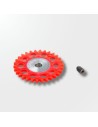
- Sidewinder: the motor is parallel to the rear axle, that is, transverse. It is the most common configuration. Offers a good balance between stability and performance.
- Inline: the motor is perpendicular to the rear axle, in line with the car's direction. Being longer, it lowers the center of gravity and improves cornering stability.
- Anglewinder: the motor is mounted at an angle to the rear axle. It combines features of the previous two and is common in high-performance competition cars.
When you read a model's technical sheet, the motor configuration will tell you a lot about its expected behavior on track.
Guide and braid
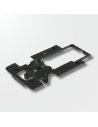
The guide is the part that fits into the track slot and keeps the car on course. The braid are the flexible electrical contacts that pick up the current. Both elements wear out with use and are common replacement parts. Make sure that spare parts are available for the model you choose.
Tyres and wheels
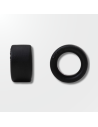
The type of tyre (rubber, silicone, urethane) directly affects grip and speed. Competition models usually have higher grip tyres, while collector models prioritize aesthetics. On many cars it is possible to change the stock tyres for higher performance ones.
Practical tips for use and maintenance
A well-maintained slot car performs better and lasts longer. These are the habits that make the difference:
- Clean the braid regularly. Dirt accumulated on the electrical contacts is the number one cause of power loss and current failures.
- Lubricate wisely. One drop of lubricant on the motor shaft and gears is enough. Excess lubricant attracts dust and deteriorates the tyres.
- Check the guide fit. A loose or worn guide causes unnecessary de-slotting. It is one of the easiest and cheapest parts to replace.
- Store cars dust-free. Display cases or original boxes protect the bodywork and finishes, especially on resin or limited edition models.
- Run in the motor before pushing it. New models improve their performance after a few initial laps at moderate speed. Do not start at full throttle from the beginning.
Common mistakes to avoid
Whether you are just starting out or have been in the hobby for years, these are the most common mistakes when buying or using slot cars:
- Not checking track compatibility before buying. As we have seen, not all cars work well on all systems. One minute of research can save you disappointment.
- Buying by price without considering use. A cheap car for high-level competition will frustrate you. A competition car in the hands of a beginner can be difficult to control. The right model is the one that fits your level and your goal.
- Ignoring available spare parts. Brands with a limited spare parts catalog can leave you stranded in case of any breakdown. NSR, Slot.it, Avant Slot, and Scaleauto have a very solid spare parts ecosystem.
- Mixing track systems without information. Using a car calibrated for sport track on a universal track (or vice versa) can give unpredictable results. Always get informed.
- Neglecting track cleaning. Car performance also depends on the condition of the circuit. A dirty track penalizes even the best model.
Recommendations for beginners and advanced users
If you are starting out
The most important thing is not to complicate things at the beginning. Choose a 1/32 scale model, in RTR (ready to race) configuration and from a brand with good spare parts availability. Scalextric and Ninco are solid options to get started: good price-to-fun ratio, huge community, and easy access to parts. If your budget allows, an entry-level model from NSR or Slot.it will give you noticeably superior performance from day one.
Also prioritize that the slot car is compatible with the track you already have or are going to buy. And don't rush: the hobby has a lot to offer, and there will always be time to move up to more demanding models.
If you already have experience
At intermediate and advanced levels, the choice of slot car depends greatly on the rules of the championship you compete in or the type of track you have at home. Consider the motor configuration (Sidewinder, Inline, or Anglewinder), the type of chassis (rigid, flexible, articulated), the tyre profile, and the available adjustment options.
Brands like NSR, Slot.it, and Scaleauto offer catalogs with multiple variants of the same model: different motors, different chassis configurations, different tyre hardness. That modularity is what a driver looking to fine-tune the setup for each circuit seeks.
For advanced collectors, Avant Slot resins are a benchmark: limited runs, museum-quality finishes, and historical prototypes you won't find from any other manufacturer at that level of industrial detail.
| Scale |
Approx. length |
Main use |
Track space |
User profile |
| 1/32 |
10–14 cm |
Competition and collection |
Moderate |
All levels |
| 1/24 |
17–20 cm |
Advanced competition and collection |
Large |
Intermediate / Advanced |
Frequently asked questions about slot cars
What is the difference between a 1/32 slot car and a 1/24?
The scale indicates the ratio between the model and the real car. A 1/32 is 32 times smaller than the original; a 1/24, 24 times. The 1/24 is larger, heavier, and requires wider circuits. The 1/32 is the most widespread and versatile format.
Are all slot cars compatible with any track?
No. There are two main rail systems: the universal rail (Scalextric, Ninco) and the sport rail (Scaleauto, Slot.it). Most 1/32 models are designed for one or the other. Always check compatibility before buying.
What does it mean for a slot car to be RTR?
RTR means Ready to Race, that is, ready to run out of the box. It does not require assembly or prior preparation. It is the most convenient option for most enthusiasts.
What is better to start with: Scalextric, NSR or Slot.it?
It depends on your goal. Scalextric is more affordable and very easy to find. NSR and Slot.it offer higher performance from day one, with better mechanics and more customization options, but at a higher price. If you want to compete soon, NSR or Slot.it are an investment that is justified.
What is the difference between Sidewinder, Inline, and Anglewinder motorization?
The Sidewinder has the motor parallel to the rear axle (transverse). The Inline has it perpendicular (longitudinal), which lowers the center of gravity. The Anglewinder mounts it at an angle, combining features of both. Each configuration has a different driving profile.
Are resin slot cars better than plastic ones?
Not necessarily better, just different. Resin allows for more detailed reproductions and more exclusive runs, but it is more fragile against impacts. Injected plastic is more resistant and common in models for intensive track use.
How often should a slot car be cleaned and maintained?
It depends on use. With regular track use, an inspection of braid and guide every few sessions is enough. Lubrication of gears and axles is done less frequently, but should not be neglected. Collection slot cars that do not run need less maintenance, but it is advisable to store them in a dust- and moisture-free environment.
Can I use any controller with my slot car?
The controller is independent of the slot car: it acts on the track, not directly on the vehicle. Make sure the controller is compatible with your track system (analog or digital) and with the type of connector your circuit uses.
Which brands have the best spare parts catalog?
NSR, Slot.it, Avant Slot, and Scaleauto have very complete spare parts ecosystems. This is an important factor to consider, especially if you are going to compete, as you will need to replace braid, guides, tyres, and other components regularly.
Is it possible to upgrade a standard slot car?
Yes, and it is one of the most enjoyable parts of the hobby. You can work on the motor, tyres, wheels, guide, braid, chassis, and weight. The availability of upgrades depends on the model and brand: NSR, SLOT.IT, and Scaleauto cars are especially modular in this regard.
Which scale is best for sanctioned competition?
The majority of sanctioned championships in Spain and Europe are held in 1/32 scale. It is the format with the largest number of categories, the widest range of homologated models, and the most active clubs.
Can collectible slot cars also be used on track?
In general, yes, especially if they are plastic. With resin models you have to be more careful, as the bodywork can be damaged by a strong impact. If you have a limited edition or high-value collector's model, the most prudent option is to keep it for display and use another example for running.