There is a huge difference between a slot car that comes out of the box and a well-prepared slot car. That difference has a name: set up. The set up is the combination of adjustments, modifications, and technical decisions that transform a standard model into a finely-tuned competition tool, capable of cornering accurately, accelerating without losing traction, and braking safely. At Ministry of Hobby, we know that for many enthusiasts, the set up is not an obligation; it is the true hobby within the hobby.
Whether you are new to the world of slot racing and want to understand why your car skids in corners, or if you are already competing in championships and looking for that tenth of a second that makes the difference, this guide is designed for you. Here, you will not find vagueness: we will talk about specific components, real decisions, and the mistakes that almost everyone makes at the beginning.
The set up encompasses everything from the choice of chassis and tyre hardness to body height, additional weight, braid tension, or guide type. Each variable influences the car's behaviour on track, and all are interconnected. Changing one without considering the others can worsen what you were trying to improve. Therefore, understanding the logic of the whole is as important as knowing each piece individually.
Competition slot racing —especially in 1/32 scale with brands like NSR, Slot.it, Scaleauto, or Avant Slot— has elevated the set up to a level of sophistication that years ago seemed exclusive to real motorsport. Today, any enthusiast with curiosity and a bit of method can learn to prepare their car systematically and achieve remarkable results in a very short time.
What is set up and why does it make such a difference
The term set up refers to the complete technical configuration of a slot car before running it on a specific track. There is no universal set up: the optimal preparation depends on the circuit, the type of track —universal in the case of Scalextric and Ninco, sport in the case of Scaleauto and Slot.it—, grip conditions, and the driver's own driving preferences.
A poorly set up car may be fast on the straight but unstable in corners, or have good grip but lack top speed. The set up seeks the balance between all these factors to achieve the best possible lap consistently, not just in a single turn but throughout an entire session or championship.
The basic parameters worked on in a set up include:
- Tyres: hardness, profile, diameter, and material. The tyre is the only point of contact with the track and conditions everything else.
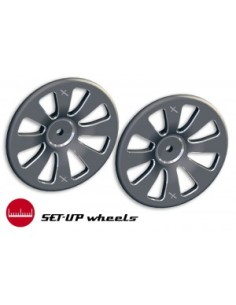
- Wheels: diameter and material, which determine the ride height and tyre compression.
- Chassis: rigidity, flexibility, and geometry. A very rigid chassis may lose traction on uneven tracks; one that is excessively flexible can be unpredictable.
- Guide: type, length, and play. The guide is the piece that follows the track and transmits the current; its adjustment directly affects steering and electrical contact.
- Braid: tension and cleanliness. Without good electrical contact, all mechanical preparation is useless.
- Motor and gear ratio: choice of motor according to the circuit and adjustment of the pinion/crown gear ratio for the desired power profile.
- Additional weight: ballast in strategic positions to improve stability or rear grip.
- Body height: the distance between the body and the chassis influences the centre of gravity and small-scale aerodynamics.
How to correctly choose the set up for your car
The first mistake that almost everyone makes is trying to set up a car without having a clear reference point. Before changing anything, it is advisable to run the car in its factory configuration and note the behaviours that we want to correct: does it skid in corners? Does it lose speed on the straight? Does it bounce on elevation changes? Each symptom points to a specific cause.
The second fundamental criterion is to adapt the set up to the circuit. A technical track with many slow corners requires a set up with more grip and less top speed; an oval or high-speed track rewards aerodynamics and a long gear ratio. It makes no sense to prepare the car at home with a configuration designed for a circuit you do not know.
The third key element is to work methodically: change only one variable at a time, run several laps, and evaluate. If you change tyres, guide, and ballast at the same time and the car improves, you will not know what worked. If it worsens, neither will you.
Finally, consider the level of the championship or session in which you are going to compete. An aggressive set up, maximally optimized, can be counterproductive if the regulations limit certain components or if the circuit is not in the best condition.
Main types and differences in set up
We can distinguish several approaches depending on the objective:
Street or recreational set up
For those who enjoy slot racing at home or with friends without a strong competitive vocation. Here, stability, ease of driving, and component durability take precedence. Adjustments are moderate, and reliability is not sacrificed in search of a tenth of a second.
Competition set up for universal track
Designed for Scalextric or Ninco tracks. The guide must fit well to the track, tyres are usually softer to maximize grip on less adhesive surfaces, and the gear ratio is adapted to the track profile.
Competition set up for sport track
For Scaleauto or Slot.it tracks. The sport track has different tolerances that directly influence the guide and steering behaviour. In general, components of higher precision are used, and rolling parameters are fine-tuned more.
Set up for resin and lightweight bodies
Cars with resin bodies, like those from Avant Slot, behave differently from injected plastic models. The rigidity of the body and its lower weight require recalibrating the ballast and mass distribution.
Technical aspects we need to know
Understanding slot mechanics well is essential for setting up with criteria. These are the most relevant technical concepts:
Motorization: Sidewinder, Inline, and Anglewinder
The type of motor mounting conditions the entire set up approach. In Sidewinder configuration, the motor is parallel to the rear axle (transverse), allowing for a more centered and compact weight distribution. In Inline configuration, the motor is in line with the rear axle (perpendicular), lowering the centre of gravity and favouring stability at high speeds. In Anglewinder configuration, the motor is positioned at an angle to the rear axle, seeking a balance between the advantages of the two previous systems.
Each configuration has its own optimal gear ratios and space requirements for ballast.
Pinion/crown gear ratio
This ratio determines the torque and top speed of the car. A large crown gear with a small pinion provides more acceleration and torque, ideal for technical tracks. A small crown gear with a larger pinion increases top speed, better for fast tracks. Adjusting this ratio is one of the simplest and most impactful changes on behaviour.
Braid and electrical contact
The braids are the pieces that conduct electricity from the track to the motor. A worn, dirty, or poorly tensioned braid causes interruptions in the power supply that result in erratic behaviours, especially during braking and corner exit. Cleaning and regularly replacing them is a fundamental part of the set up.
Chassis geometry and flex
The flexibility of the chassis acts as a rudimentary suspension system. A chassis that can work slightly vertically allows all four wheels to maintain contact with the track on uneven surfaces, improving traction. However, too much flex makes the car difficult to predict. Some chassis are adjustable in this aspect.
Practical tips for use and preparation
- Clean the track before running: dust and dirt on the track degrade electrical contact and tyres. A clean track is the first step for any set up.
- Break in new tyres: new tyres, especially silicone ones, need a break-in period to reach their optimal temperature and grip. Do not evaluate grip in the first laps.
- Keep a record of changes: note every modification and its effect. Over time, this record becomes your greatest learning tool.
- Check the wheel-tyre fit: ensure that the tyres are well seated on the wheels and without deformations. A poorly mounted tyre introduces vibrations that affect the entire dynamics.
- Check the guide play: too much play causes imprecision; too tight increases resistance to forward motion. The ideal point depends on the track and the car.
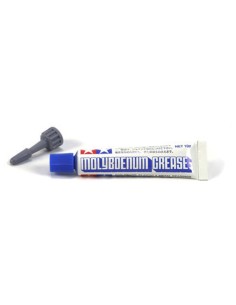
- Use lubricant judiciously: a small amount of lubricant on the axle and pinion is sufficient. Excess attracts dust and ends up doing more harm than good.
- Periodically check the motor: ensure that the mounting is secure and that the pinion is well aligned with the crown gear. A slight misalignment can lead to premature wear and noise.
Common mistakes to avoid
Changing too many things at once
This is the most common mistake and the one that delays learning the most. Without isolating variables, it is impossible to know what improves and what worsens. Always work on a single parameter per testing session.
Not adapting the set up to the track
A car prepared for universal track can behave very differently on a sport track, and vice versa. Before competing on a new track, inform yourself about the system and adjust accordingly. Mixing configurations without informing yourself —for example, using a set up designed for Scalextric on a Carrera or Scaleauto track— can ruin an entire session.
Neglecting the braids
Many problems attributed to the motor or chassis originate from worn braids. They are the first thing to check when the car behaves erratically.
Ignoring the break-in
Skipping the initial break-in and demanding maximum performance from the start wears components out prematurely and does not provide a real reading of the car's behaviour.
Overloading with ballast
Adding weight improves stability, but too much ballast penalizes acceleration and performance in fast corners. The ballast should be placed in specific and calculated positions, not added randomly.
Using tyres outside their range
A tyre that is too soft for the track's grip level wears out very quickly; one that is too hard does not reach the optimal working temperature. The choice of compound should be made based on the actual running conditions.
Recommendations for beginners and advanced users
If you are just starting
The smartest thing is to start with a car from a brand with a good range of spare parts and documentation, such as NSR or Slot.it. These manufacturers offer well-designed chassis as standard and a wide variety of adjustment options without the need for complex modifications. The first step should be to understand how the car works in its factory configuration before changing anything.
Start with the most accessible elements: tyres, guide, and braids. These are the three points where the return on investment is most immediate and where the margin for improvement is usually greater in mid-level cars.
If you already have experience
For advanced users, the set up becomes a process of continuous optimization. The most interesting aspects to explore are chassis geometry, mass distribution, and gear ratio based on the motor's power profile. Brands like Scaleauto and Avant Slot offer high-performance components with a very precise level of adjustment.
At this stage, it is very valuable to carry objective data: lap timing, tyre temperature, wear per session. The difference between a good set up and an excellent one is not always perceived while driving; sometimes it is only seen in the numbers.
| Parameter |
Main effect |
When to adjust it |
| Tyre hardness |
Grip and wear |
According to track type and conditions |
| Pinion/crown gear ratio |
Acceleration vs. top speed |
According to circuit profile |
| Type of guide |
Steering and electrical contact |
According to track system (universal/sport) |
| Braid tension |
Electrical continuity |
With each periodic check |
| Ballast position |
Weight distribution and stability |
According to circuit type and motor |
| Chassis flexibility |
Traction on uneven surfaces |
According to track quality and regularity |
| Type of motorization |
Centre of gravity and mass distribution |
When choosing or changing the motor-chassis set |
Frequently asked questions about set up
Is it necessary to set up a slot car for recreational use?
It is not mandatory, but even in a recreational context, some small adjustments —correct tyres, well-adjusted guide, braids in good condition— significantly improve the driving experience and reduce technical problems.
How long does it take to prepare a car for competition?
It depends on the starting level and the experience of the preparer. With a competition-grade car and good components, a basic set up can be resolved in an afternoon. An exhaustive preparation aimed at a championship may take several testing and adjustment sessions.
Can I use the same set up on any track?
No. The optimal set up varies according to the circuit, the type of track, and the grip conditions. It is common in competition to adjust at least the gear ratio and tyres according to the specific track.
What is the difference between a set up for universal track and one for sport track?
The universal track —Scalextric, Ninco— has different dimensions and tolerances compared to the sport track —Scaleauto, Slot.it—. This primarily affects the guide, cornering behaviour, and the type of adjustment needed for the braids. Taking a car prepared for one system to a track of the other system without adapting it can yield very poor results.
When should I change the tyres?
When they show uneven visible wear, when the car starts to slide in conditions where it previously cornered well, or when they exceed a certain number of intensive use sessions. There is no fixed rule: it depends on the compound, the track, and the driving style.
Does ballast always improve performance?
Not necessarily. Ballast improves stability and grip, but it adds weight that penalizes acceleration. Its usefulness depends on the circuit profile and the chosen motor. On very fast tracks with few corners, ballast can be counterproductive.
What is better for a beginner: Sidewinder, Inline, or Anglewinder?
The Sidewinder is the most common configuration and has the most variety of available components. It is a good option to start. The Inline offers a lower centre of gravity, which favours stability, but may require more fine-tuning. The Anglewinder is common in advanced competition.
Do the braids significantly affect performance?
Yes, directly. Worn or dirty braids cause micro-cuts in the power supply that result in speed losses, erratic throttle responses, and braking problems. It is one of the most important and underrated maintenance points.
Can I improve any slot car with set up, or are there models with a very low ceiling?
All cars can be improved, but the margin depends heavily on the starting model. Cars from brands with a wide range of spare parts —NSR, Slot.it, Scaleauto, Avant Slot— offer many more possibilities for real improvement than basic models designed exclusively for recreational enjoyment.
What basic tools do I need to do set up?
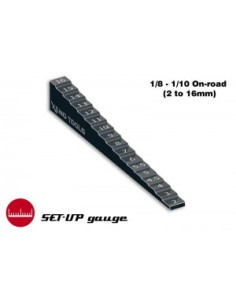
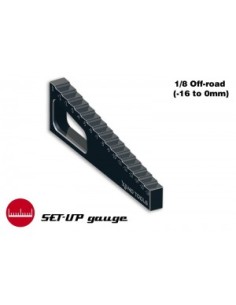
A clean workbench, precision screwdrivers, a tyre diameter gauge, a caliper, specific slot lubricant, and good lighting are more than sufficient to get started. As you progress, more specific tools such as guide calibrators, miniature torque wrenches, or alignment jigs can be added.
How often should I check the set up of my car?
Before each competition session, it is advisable to do at least a quick check of the braids, guide, and tyres. A complete check —including motor, transmission, and chassis— is recommended every few intensive use sessions or whenever the car starts to show behaviours different from the usual.
Is it worth investing in competition components if I only run at home?
It depends on what you are looking for. If you enjoy the preparation process as much as the driving, it makes sense. If you simply want to run without complications, a basic maintenance routine and good tyres are more than enough to enjoy at home.