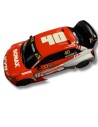
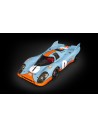
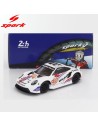
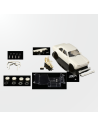
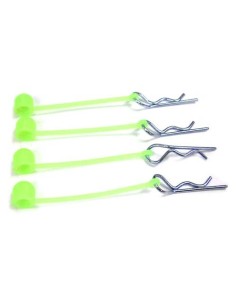
If you are looking for a body for your slot car, you know that the choice goes far beyond the visual aspect. The body is, to a large extent, the identity of the model: it defines the silhouette, influences the weight, determines the aerodynamics, and marks the starting point of any preparation or decoration project. Whether you want to faithfully reproduce a real competition machine or are looking for something functional to run fast on track, the decision matters.
In this section, you will find bodies for the main scales and disciplines of slot racing: from GT and Le Mans sports cars to F1 single-seaters, including prototypes, touring sedans, rally, and raid cars. The catalogue covers different materials —injected ABS, polycarbonate, and resin— and includes both competition-oriented options and pieces designed for collecting and static display.
The variety can be overwhelming at first. Therefore, before you rush to buy, it is advisable to understand what characteristics define each type of body, what each material implies, how weight affects track performance, and what you should look for to ensure that the piece fits your chassis. In the following sections, we break it all down in detail, from the most basic concepts to the technical aspects that make a difference in a competition session.
If you have been in the hobby for a while, you probably already have clear preferences. If you are new, this content will help you navigate without getting lost in unnecessary technicalities. Let's get to the point.
What is a slot body and why is it so important
The body of a slot car is the outer piece that covers the chassis and mechanical components. It serves several functions at once: it protects the internal components, defines the aerodynamics of the model, and, above all, determines its visual identity. It is the part that the eye sees on track, the one that gives personality to the model, and the one that, in many cases, motivates the purchase.
Beyond aesthetics, the body directly influences performance. The weight of the piece affects the overall balance of the car, and its distribution can modify cornering behaviour. A very heavy body on a light chassis will raise the centre of gravity and make the car less stable. Conversely, an ultra-light body on a well-configured chassis can significantly improve dynamic response.
In competition, the regulations of each championship usually specify what types of bodies are allowed, what the minimum weight of the set must be, and whether the piece must be stock or can be modified. This makes the choice of body a technical decision and not just aesthetic.
From a collector's perspective, the body is everything: the level of detail of the mould, fidelity to the original decoration, and quality of finish are the criteria that determine the value of the model. A well-replicated body, with clean lines and precise tampoprint, can be the difference between a car that is a pleasure to look at and one that simply runs.
How to correctly choose a body
The first question you should ask yourself is what you need it for: competition, collection, custom decoration, or simply running? The answer conditions everything else.
Compatibility with the chassis
This is the most critical point. Not all bodies fit all chassis. Bodies are mounted on the chassis using posts, clips, or screws, and the position of these anchors varies by manufacturer and model. Before buying, check that the body is compatible with the chassis you have or plan to use. Brands like NSR, Slot.it, Scaleauto, or Avant Slot have their own anchoring systems, although in many cases they offer adapters or different versions of the same body for different chassis.
Scale
The most common scales in slot racing are 1/32 and 1/24. Most of the body catalogue is in 1/32, which is the standard for the most widespread championships and offers the greatest variety. 1/24 is larger, more detailed, and usually more expensive, and is used on specific circuits. Ensure that the scale of the body matches that of your chassis.
Track system
The body itself is not linked to the track system (universal track or sport track), but the chassis is. If you are going to buy the body and chassis separately, check their joint compatibility with the system you are using: Scalextric or Ninco for universal track; Scaleauto or Slot.it for sport track.
Intended use
If it is for federated competition, check the regulations of your championship before buying. If it is for decoration or collection, prioritise the level of detail and quality of the mould. If it is for a free preparation project, lightness and ease of painting may be determining factors.
Main types and differences
There are three main materials used to manufacture slot bodies, and each has a different usage profile.
Injected ABS
This is the most common material for stock bodies. ABS is a rigid plastic that allows for moulds with a high level of detail and consistent finishes. It is easy to paint and work with, and it accepts primers and acrylic paints well. Its weight is moderate, and its impact resistance is reasonable, although it can break in strong collisions. The vast majority of cars from brands like Scalextric, Ninco, NSR, or Avant Slot use injected ABS.
Polycarbonate (Lexan)
Much more flexible and resistant than ABS, polycarbonate is mainly used in bodies designed for high-intensity competition. It is almost unbreakable compared to ABS. The main difference in handling is that it is painted from the inside: the decoration is protected under the transparent surface, giving it a very characteristic glossy finish. It requires specific paints compatible with this material. It is popular among enthusiasts who create custom decorations and in competition categories where impacts are frequent.
Resin
Resin allows for the replication of more complex geometries and shorter runs with greater fidelity to the real model. It is the material of choice for limited edition bodies, niche cars, or models that do not justify the cost of an injection mould. Avant Slot is one of the few brands that produces resin bodies on an industrial level with consistent quality guarantees. Resin is usually slightly heavier and more fragile against impacts than ABS, but it offers a very high level of detail. It is used less for pure competition; for collection and dioramas, it is a premium option.
By discipline
Beyond the material, bodies are classified by the discipline they represent:
- GT and Sport: the most popular models in amateur and professional championships. Ferrari, Porsche, McLaren, Audi, BMW... the catalogue is vast.
- Le Mans Prototypes (LMP): extreme aerodynamics, usually with wings and skirts. Very popular in pure speed categories.
- Touring and sedans: street cars originating from real competition, widely used in club championships.
- F1 and single-seaters: open bodies, without roofs, requiring specific chassis.
- Rally and Raid: taller profile, robust bodies, closely associated with classic and contemporary models.
Technical aspects we need to know
When delving into the preparation of slot cars, the body stops being just an aesthetic shell and becomes another technical variable.
Weight and distribution
The weight of the body directly affects the dynamic behaviour of the model. Generally, the lighter, the better for cornering speed. However, in some setups, a little weight in the body can stabilise the front end. In competition, ballast is often used to find the optimal balance, and the body is part of that equation.
Mounting height
The height at which the body is mounted on the chassis can affect the centre of gravity and, in some circuits, also the aerodynamics. A body that "flies" too high may catch more air unfavourably; too low may scrape in tight corners.
Stiffness vs. flexibility
Rigid ABS bodies transmit more force to the chassis in the event of an impact, which can damage the guide or axle. Polycarbonate bodies absorb impacts better due to their flexibility. In very technical competition circuits, with tight corners and a high likelihood of contact, this factor can be relevant.
Compatibility with windows, lights, and interiors
Some bodies include windows, interiors, or drivers. Others come in white, without any accessories. If your project includes LED lighting, ensure that the body has enough space to accommodate the light elements without interfering with the mechanical components.
Practical tips for use, maintenance, and preparation
A well-maintained body can last many years and maintain an impeccable appearance even after multiple running sessions.
- Regular cleaning: dust and dirt accumulate on the body during running. Use a soft cloth or a fine brush to clean hard-to-reach areas without scratching the surface.
- Priming before painting: both in ABS and resin, it is essential to apply a layer of primer before the base paint. This ensures adhesion and prevents the paint from peeling over time. For polycarbonate, use primers specific to that material.
- Recommended paints: for ABS and resin, acrylic paints from brands like Vallejo, Tamiya, or Ammo work very well. For polycarbonate, always consult specific paints for Lexan.
- Protective varnish: if you have decorated the body, apply a layer of varnish at the end to protect the decoration and unify the finish. Choose matte, satin, or glossy finish according to the effect you are looking for.
- Repairing breaks: minor breaks in ABS can be repaired with cyanoacrylate glue applied carefully. In resin pieces, the process is similar but requires more delicacy. Polycarbonate bodies rarely break, but if they bend permanently, it is difficult to return them to their original shape.
- Storage: store bodies in a place without humidity and away from direct sunlight, which can fade colours over time.
Common mistakes we should avoid
Buying a body without checking compatibility with the chassis is the most common mistake, especially among newcomers. Before confirming any purchase, always check that the anchoring system of the body is compatible with the chassis you have.
Another common mistake is confusing the scale. A 1/24 body will not fit a 1/32 chassis and vice versa. It seems obvious, but when buying at different times and from different suppliers, it is easy to lose track.
Painting over ABS without priming is another classic mistake. The paint may seem to adhere well at first, but without primer, it will eventually peel off with heat or friction. Take that extra step, and the result will last much longer.
In competition, ignoring the regulations regarding bodies can lead to unnecessary disqualifications. Some championships specify the exact model of body allowed, the minimum weight, or the prohibition of certain modifications. Make sure to inform yourself before preparing the car.
Finally, do not force the anchoring posts if the body does not fit naturally. If there is resistance, check compatibility before forcing: a broken post can ruin both the body and the chassis.
Recommendations for beginners and advanced users
If you are starting
Start with an injected ABS body from a well-established brand like NSR, Scalextric, or Avant Slot. They are easier to work with, more resistant to initial assembly mistakes, and have good availability of spare parts. Opt for models for which there is abundant documentation and reference community, so you can resolve doubts easily.
Don't complicate yourself with polycarbonate until you master standard acrylic paints. The painting process from the inside requires experience and careful planning of the layer order.
If you already have experience
Advanced enthusiasts often work with white bodies —without decoration— to create custom liveries. Polycarbonate offers spectacular results if you know how to handle it. Resin bodies from brands like Avant Slot open the range to very specific models that the injection market does not cover.
In competitive racing, the choice of body can be part of the strategy: lighter bodies, analysis of weight on each axle, mounting height adjusted to the millimetre. If you participate in championships with homologated regulations, ensure that you always work with models homologated for that category.
| Material |
Stiffness |
Weight |
Ease of painting |
Impact resistance |
Main use |
| Injected ABS |
High |
Moderate |
Very easy |
Medium |
Stock, collection, general competition |
| Polycarbonate (Lexan) |
Low (flexible) |
Low |
Medium (interior painting) |
Very high |
Intense competition, custom decoration |
| Resin |
High |
Moderate-high |
Easy (requires priming) |
Low-medium |
Collection, niche models, premium detail |
Frequently asked questions about slot bodies
Do all bodies fit any chassis?
No. Each manufacturer has its own anchoring system. Before buying, always check that the body is compatible with your specific chassis. Many brands indicate in the product sheet which chassis it is compatible with.
Can I paint an ABS body with regular modelling paints?
Yes, as long as you first apply a layer of primer. Acrylic paints from brands like Vallejo, Tamiya, or Ammo adhere very well to primed ABS and yield excellent results.
What is the difference between a white body and a decorated one?
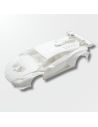
A white body comes without paint or decoration, ready for the user to apply their own livery. Decorated bodies come with the colour scheme already applied from the factory, usually reproducing a real competition decoration. White bodies are the preferred option for those who want to customise their model.
Are polycarbonate bodies better for competition?
It depends on the championship regulations. Polycarbonate is more resistant to impacts, but not all championships allow it. Additionally, the painting process is more demanding. For high-contact competition, it can be an advantage; for cleaner running, ABS is sufficient.
Can I use a 1/32 body on a sport track circuit?
The track system (universal track or sport track) does not directly affect the body, but the chassis and guide do. What you need to verify is that the chassis you use in that system is compatible with the body you have chosen.
Can resin bodies be used in competition?
It depends on the regulations. Some championships allow them, while others require stock injected ABS bodies. Always check the championship rules before preparing the car.
What does it mean for a body to be "homologated"?
An homologated body has been approved for use in a specific competition category. The bodies or associations managing the championship verify that it meets the requirements for weight, dimensions, and model. Using a non-homologated body in a homologated category can lead to disqualification.
How can I tell if a body fits well on my chassis before buying it?
The best way is to consult the technical product sheet or contact us directly. At Ministry of Hobby, we know the catalogue in detail and can guide you on specific compatibilities before you make a decision.
Can ABS bodies be modified?
Yes. ABS can be cut, sanded, drilled, and filled with modelling putty. It is a very workable material. In free competition, enthusiasts modify bodies to improve aerodynamics or reduce weight. In regulated competition, modifications are often limited or prohibited.
How much does the weight of the body influence the speed of the car?
The total weight of the model influences top speed and dynamic response, especially in corners. A lighter body, while keeping the same chassis and motor, can improve lap times on technical circuits. However, a car that is too light may lose traction. Balance is key.
Can I install LED lighting in any body?
In principle, yes, as long as there is enough space inside to accommodate the components. Polycarbonate bodies are especially suitable for lighting, as light transmits very well through the material. In ABS, it is common to drill the headlights and place specific lenses.
Which brands have the best body catalogue?
NSR, Slot.it, Avant Slot, and Scaleauto are solid references in bodies for preparation and competition. Scalextric has a wide catalogue of stock models. Avant Slot stands out particularly in resins with niche models that other brands do not cover.