
Shopping Cart
-

-
 James Bond Aston Martin 'Goldfinger'€62.00 €69.00
 Mosler MT900R Salvatore Noviello 11th Anniversary EVO3€63.57 €73.57
 Formula 90-97 Blanco/Azul/Amarillo 1990 Nº6 morro bajo€76.30 €79.90
 Porsche 908/3 Turbo White Edition Jürgen Barth€29.50 €36.00
 Advance Audi S1 WRC Sonax€30.00
 -
 Rodador con transformador€40.00
 Punta Hex. 0.9 mm€3.40
 -
 Circuito Open Rally Set€188.43
 Muelle para mandos€2.00


















0.195mm tin braid - 1 metre

€5.28
Tax included
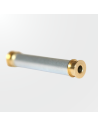
Competition tinned braid from Sideways, with a thickness of just 0.195 mm and a width of 3.95 mm. Extremely flexible, it is designed to maximise current capture in any guide configuration.
Sideways Tinned Braid for Competition: Performance in Every Millimetre
The Sideways SWBR02T tinned braid is a preparation spare part specifically designed for competitive environments where electrical conductivity and flexibility of contact with the rail make the difference between winning and losing tenths.
Technical Features
- Thickness: 0.195 mm — extraordinarily thin, ideal for low-profile guides and tight installations.
- Width: 3.95 mm — properly covers the contact surface of the standard competition guide.
- Length: 1 metre, sufficient for multiple installations or to have a working reserve.
- Material: tinned braid, with excellent conductivity and resistance to oxidation.
- Flexibility: very high, allowing for continuous and uniform contact with the rail even in the sharpest direction changes.
Function and Performance
Braids are the electrical bridge between the rail and the car's motor. A rigid or excessively thick braid generates friction, penalises the movement of the guide, and can cause contact losses in fast corners. The thickness of 0.195 mm of this Sideways reference minimises that mechanical resistance to the minimum, favouring the guide to work with total freedom of movement and ensuring that the current reaches the motor consistently and cleanly.
The tinning of the braid also improves conductivity compared to untreated copper braids and delays the onset of oxidation, extending its lifespan and maintaining stable electrical performance throughout running sessions.
Compatibility and Applications
This braid is suitable for any standard competition guide that accommodates a width of approximately 3.95 mm. It is especially recommended for setups where the aim is to minimise internal friction of the guide-braid assembly, common in club or indoor circuit competition setups.
As it is one metre of continuous material, the preparer can cut exactly the length needed for each installation and use the surplus for future replacements or adjustments.
Installation and Preparation
The process of replacing braids is straightforward but requires precision: it is important to ensure that the cut is clean and that the ends are well seated in the guide terminals to guarantee uninterrupted electrical contact. It is recommended to use just the right amount of solder or mechanical pressure depending on the type of guide, avoiding stiffening the working area of the braid.
Frequently Asked Questions
What type of guide is this braid designed for?
It is designed for competition guides that accommodate a braid width of around 3.95 mm. Check the specifications of your guide before installation to ensure the width fits correctly.
What advantage does a braid as thin as 0.195 mm have?
A smaller thickness implies greater mechanical flexibility, allowing the guide to move more freely within the rail. This translates into more consistent electrical contact and a more precise response from the car, especially in corners and elevation changes.
How often should braids be replaced?
It depends on usage and the type of track. In competition with intensive running, it is common to check and replace them every few sessions. A worn or dirty braid directly affects electrical performance and, therefore, the speed and response of the car.
Does one metre of braid allow for several installations?
Yes. One metre is usually more than enough for several complete sets of braids, so it is always a good idea to keep the surplus as a spare for the next session or race.
Is it compatible with cars from brands other than Sideways?
Generally yes, as long as the width of 3.95 mm is compatible with the guide installed in the car. Being a standard preparation material, it can be used in cars from different brands without restrictions, adapting the cutting length to each installation.
The Sideways SWBR02T is a 0.195 mm tinned braid designed for slot car competition use, offering exceptional flexibility and consistent electrical contact between the guide and the rail. With a width of 3.95 mm and a length of 1 metre, this braid is a go-to choice for club racers and serious hobbyists looking to optimise guide performance and power delivery. Compatible with standard competition guides, it delivers low mechanical resistance and reliable conductivity across extended running sessions.
SWBR02T
12 Items
No reviews
Comments (0)
No customer reviews for the moment.
Tap to zoom
