
Shopping Cart
-

-
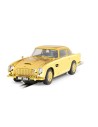 James Bond Aston Martin 'Goldfinger'€62.00 €69.00
 Mosler MT900R Salvatore Noviello 11th Anniversary EVO3€63.57 €73.57
 Formula 90-97 Blanco/Azul/Amarillo 1990 Nº6 morro bajo€76.30 €79.90
 Porsche 908/3 Turbo White Edition Jürgen Barth€29.50 €36.00
 Advance Audi S1 WRC Sonax€30.00
 -
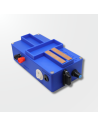 Rodador con transformador€40.00
 Punta Hex. 0.9 mm€3.40
 -
 Circuito Open Rally Set€188.43
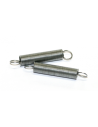 Muelle para mandos€2.00














Hard progressive suspension springs for competition

Last items in stock
€5.05
Tax included
Six high hardness progressive suspension springs designed by NSR for competition chassis. Their adaptive response under lateral load eliminates bounce in fast corners, keeps the motor axle in position, and ensures consistent traction in inline, anglewinder, and sidewinder configurations.
Total control over the chassis: NSR1205 hard progressive springs for drivers who leave nothing to chance
In slot racing, chassis tuning makes the difference between a car that runs and a car that wins. Suspension springs are not just a simple replacement: they are the interface between the motor pod and the track, and their calibration determines how the rear axle reacts to every corner, bump, and weight transfer. NSR, with its usual technical rigor, has developed these high hardness progressive springs with maximum grip conditions in mind.
Function and performance
The concept of progressive spring is key to understanding why this component performs better than a linear stiffness spring in certain configurations. At the beginning of compression, the spring offers relatively soft resistance, allowing the motor pod to follow the small movements of the chassis without transmitting harsh vibrations to the axle. As lateral force increases — in faster corners or sudden direction changes — stiffness progressively increases, preventing excessive movement of the motor pod and keeping the tyre in firm contact with the track.
The hard variant of this progressiveness is designed for scenarios where grip levels are high: perfectly conditioned plastic tracks, smooth wooden surfaces, or circuits where tyre grip is so high that a soft suspension would generate uncontrollable bouncing in fast corners. Under these conditions, the firmness of the NSR1205 spring becomes a direct advantage: the car recovers axle position more quickly and traction remains consistent throughout the corner.
Compatibility and installation
These springs are designed for NSR motor pods that incorporate the suspension system with screws and spring housing. They are compatible with inline, anglewinder, and sidewinder motor configurations, as long as the motor pod has the corresponding suspension system. The package includes 6 units, allowing experimentation with different hardness combinations when used alongside springs from other NSR ranges.
- Response type: Progressive (variable stiffness depending on the applied load).
- Hardness level: High.
- Compatible configurations: Inline, anglewinder, sidewinder (NSR motor pods with suspension system).
- Contents: 6 springs per package.
Preparation and tuning
The choice between soft, medium, or hard springs mainly depends on two factors: the grip level of the track and the aerodynamic configuration of the car. As a general reference, hard springs perform better when grip is high and cornering speed is elevated. If the track has low adhesion or many irregularities, a softer spring usually offers better results by allowing the motor pod to absorb surface changes.
A common mistake is to install springs that are too hard on low-grip tracks, thinking that this will make the car more stable: the effect is the opposite, as the motor pod cannot absorb track variations and the tyre loses contact at critical moments. With the NSR1205, the optimal starting point is high-grip tracks or endurance sessions where consistent performance over many laps is a priority.
For installation, it is advisable to check that the spring housings in the motor pod are clean and free of lubricant residues that could compromise the spring's travel. A small amount of dry grease at the contact points helps maintain the original progressiveness for a longer time.
Frequently asked questions
How many springs are included in the NSR1205 package?
The package contains 6 high hardness progressive suspension springs.
Are they compatible with all slot chassis?
No. They are specifically designed for NSR motor pods that incorporate the suspension system with screws and spring housing. They are not compatible with chassis that do not have this system.
What is the difference between a progressive spring and a linear one?
A linear spring offers the same resistance throughout its compression. A progressive spring increases its stiffness as it compresses, allowing for smooth behaviour in small movements and firm handling under high lateral loads, such as those experienced in fast corners.
When should I opt for high hardness instead of medium or low?
High hardness is recommended on tracks with high grip levels, very smooth surfaces, or competitions where cornering speed is high and axle bounce needs to be avoided. On tracks with low grip or many irregularities, a softer spring usually works better.
Can I combine springs of different hardness in the same car?
Yes. Since the package includes 6 units, it is possible to experiment by combining springs of different hardness from the NSR range to find the optimal balance based on the position in the motor pod or the characteristics of the circuit.
Do springs lose properties with prolonged use?
NSR manufactures these springs from high elasticity steel with specific heat treatment to maintain their mechanical properties during long competition sessions. Nevertheless, like any component subjected to repeated compression cycles, it is advisable to inspect them periodically and replace them if any loss of length or irregular stiffness is noticed.
NSR1205 hard progressive suspension springs deliver the adaptive stiffness needed for high-grip slot car tracks. Designed for NSR motor pods with suspension systems, these six springs suit inline, anglewinder and sidewinder setups, preventing axle bounce and ensuring consistent traction through fast corners. An essential tuning component for club and endurance slot racing competitors.
NSR1205
3 Items
No reviews
Comments (0)
No customer reviews for the moment.
Tap to zoom
