Shopping Cart
-

-
 James Bond Aston Martin 'Goldfinger'€62.00 €69.00
 Mosler MT900R Salvatore Noviello 11th Anniversary EVO3€63.57 €73.57
 Formula 90-97 Blanco/Azul/Amarillo 1990 Nº6 morro bajo€76.30 €79.90
 Porsche 908/3 Turbo White Edition Jürgen Barth€29.50 €36.00
 Advance Audi S1 WRC Sonax€30.00
 -
 Rodador con transformador€40.00
 Punta Hex. 0.9 mm€3.40
 -
 Circuito Open Rally Set€188.43
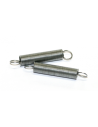 Muelle para mandos€2.00








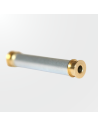






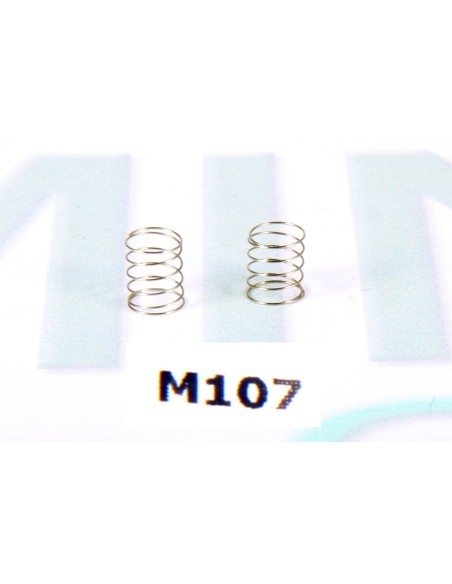
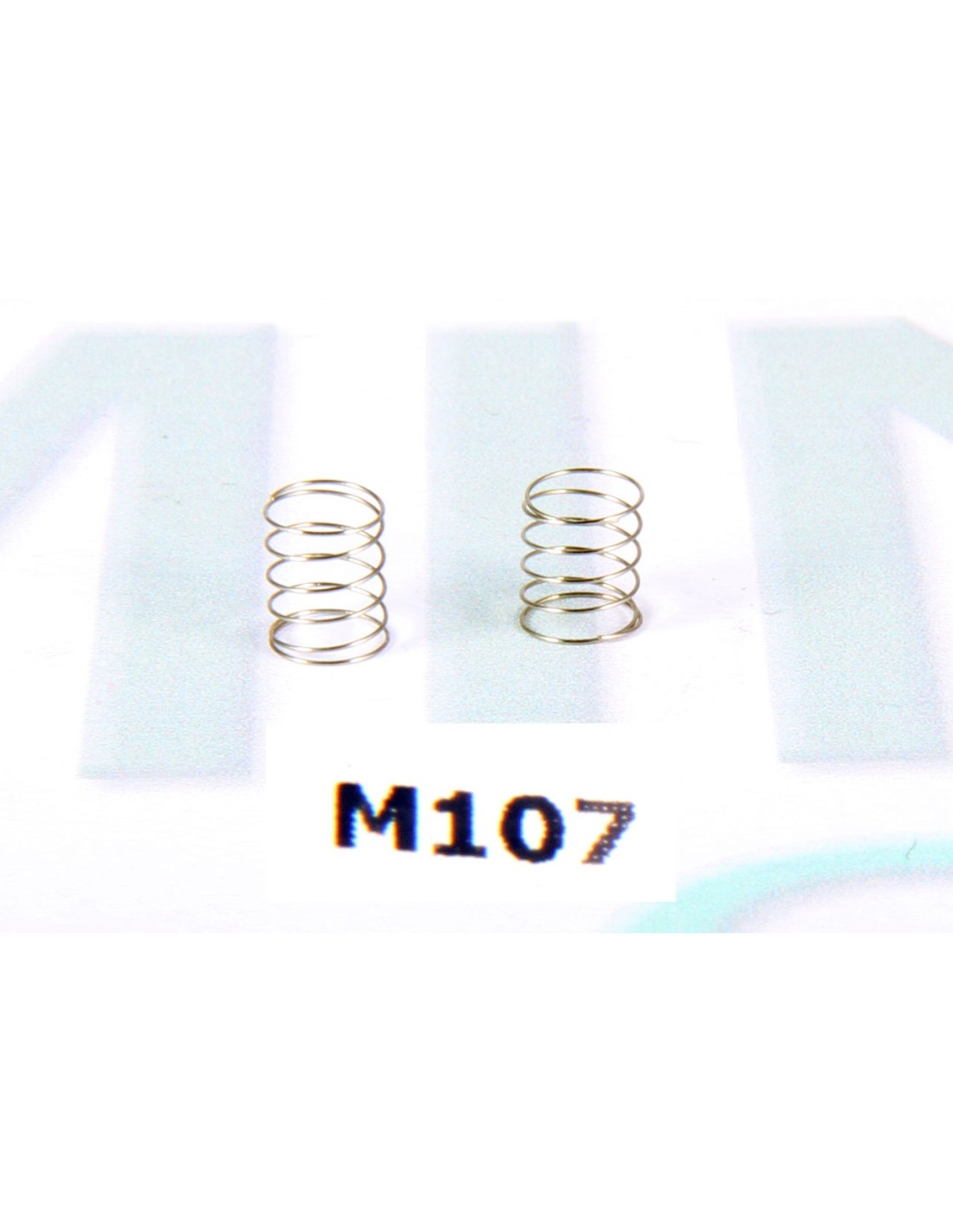
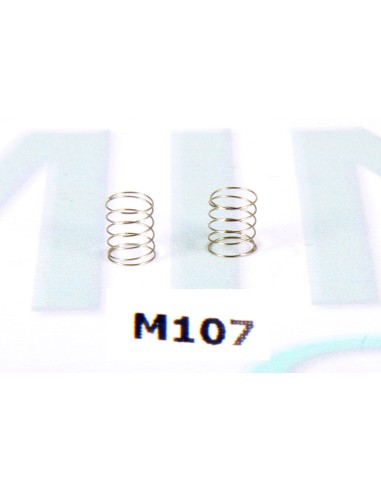
ACTIVE GUIDE SPRING SET

€1.84
Tax included
Spare spring pair for active guide, ref. CXM107. Essential for maintaining the correct tension of the guide and ensuring reliable contact of the braids with the track.
The springs that keep your guide active at its exact working point
An active guide only performs at its best when its springs are in perfect condition. Over time and with use, these small but critical components lose tension, resulting in loss of contact with the track, braids that do not press evenly, and inconsistent electrical response. The pair of springs for active guide CXM107 allows you to restore that original behaviour without the need to replace the entire assembly.
Function and performance
The springs of the active guide have a dual purpose: to keep the guide centred in its resting position and to ensure it returns to that position at the appropriate speed after each change of direction or jolt. A worn spring causes:
- Speed fluctuations due to irregular electrical contact.
- Increased tendency to derail in fast corners.
- Inaccurate response to the controller, especially during sudden braking.
Regularly replacing them is part of the basic maintenance of any car prepared for club competition or for intensive recreational use.
Compatibility
These springs are designed for active guides compatible with the reference CXM107. Before placing your order, check that your car's active guide system corresponds to this reference to ensure exact compatibility.
Installation and preparation
The replacement process is straightforward: remove the guide from the guide holder, extract the worn springs, place the new ones ensuring they are correctly seated in their retaining slots, and reassemble the unit. Afterwards, check that the guide moves freely and returns to centre without excessive resistance or play.
If during installation you notice wear on the guide body itself or on the braids, take the opportunity to also check those components: a good setup always starts with a complete inspection of the front end.
Common mistakes
- Reusing visibly deformed springs: although they may seem functional, even minimal deformation alters the return tension and penalises driving.
- Installing only one of the two springs: the pair works in balance; replacing only the one that appears more worn without changing the other creates asymmetrical tensions.
- Forcing the seating: if the spring does not fit smoothly, check that it is the correct reference before applying pressure.
Frequently asked questions
How often should I change the active guide springs?
It depends on usage. In a club competition car, it is advisable to check them at each periodic maintenance session. For recreational use, an inspection every few track sessions is sufficient. If you notice loss of contact or the guide does not return smoothly, replace them immediately.
Can I use these springs in any active guide?
They are designed for the reference CXM107. Not all active guide systems share the same spring dimensions, so it is important to confirm that your guide corresponds to this reference before installing them.
Does the condition of the springs affect the electrical behaviour of the car?
Yes, directly. A spring without the proper tension allows the guide to vibrate or lose position, causing the braids not to press consistently on the track and the car to receive power intermittently.
Is special tooling required for the change?
Generally no, although having fine-tipped pliers makes it much easier to extract and insert the springs into their seats without deforming them.
The CXM107 active guide spring set is an essential spare part for slot car maintenance, ensuring consistent electrical contact and proper guide return in competitive and recreational use. Keep your slot car performing at its best by replacing worn guide springs regularly — a small detail that makes a real difference on track.
CXM107
8 Items
No reviews
Comments (0)
No customer reviews for the moment.
Tap to zoom