There is a part of the hobby that is not visible, but is noticeable in every lap, in every layer of paint, and in every piece that fits without play: maintenance. Oils and greases are perhaps the most underestimated consumables in the world of slot and modelling, and also the ones that make the most difference when used correctly. A motor that does not receive proper lubrication loses performance, generates unnecessary heat, and ages prematurely. A poorly lubricated axle introduces vibrations. Gears without specific grease develop premature wear that, over time, forces the replacement of parts that could have lasted for years.
At Ministry of Hobby, we work with lubricants specially selected for the demands of competitive slot racing, collectible cars, and static models. We are not talking about generic hardware store oils: we are talking about products formulated for very tight tolerances, high revolutions, and materials such as technical plastic, brass, or steel. Knowing which to apply at each point, in what quantity, and how often is part of the knowledge that makes the difference between a hobbyist who maintains and one who simply replaces.
Whether you are preparing a car for competition, adjusting the motor of a model with moving parts, preserving a diecast piece, or assembling a diorama with articulated mechanisms, here you will find the right product and the necessary information to use it correctly. This guide helps you understand what you have at hand, how to choose wisely, and how to get the most out of each product in the category.
What are hobby oils and greases and why do they matter
Slot and modelling lubricants are chemical compounds designed to reduce friction between contacting surfaces, protect materials from wear, and, in some cases, act as a barrier against corrosion or oxidation. Unlike industrial lubricants, those formulated for hobby consider the specific materials of the sector: ABS plastics, nylon, rubbers, brass, zinc alloys, and lightweight metals.
The basic distinction between oil and grease is viscosity and method of application. Oils are fluids, of low viscosity, ideal for hard-to-reach points, axles, bearings, and motors. Greases are thicker compounds that adhere better to exposed surfaces, gears, and sliding guides, where the lubricant needs to stay in place longer without being displaced by movement.
In slot racing, a poorly chosen lubricant can be counterproductive: an oil that is too thick in a high-rev motor increases internal resistance and reduces power. An inappropriate grease on gears can trap dirt and become an abrasive that wears instead of protects. That is why the choice is not trivial and deserves to be treated seriously.
How to choose the right lubricant
The correct selection starts with a simple question: What surface am I going to lubricate and what type of movement does it have? From there, the key criteria are:
- Viscosity: the faster a part spins or the smaller the tolerance, the thinner the lubricant should be. High-rev slot motors appreciate very light oils; plastic gears work better with medium viscosity greases.
- Material compatibility: some solvents present in certain lubricants attack plastic or rubber. Always check that the product is safe for the materials you will be treating. Nylon bearings, very common in plastic chassis, are especially sensitive.
- Operating temperature: a competition car generates heat. The lubricant must maintain its properties within the temperature range at which the motor or axle will operate.
- Synthetic vs. mineral formulation: synthetic oils offer greater stability, do not degrade as quickly, and are more resistant to temperature variations. For competitive use or frequent maintenance, a synthetic base is the recommended option.
- Quantity: in precision lubrication, less is usually more. Overdoing the amount of oil in a motor, for example, can cause the lubricant to migrate to the braids and electrical contacts, leading to performance losses and driving issues.
Main types and differences
Within the category, we can distinguish several functional groups:
Motor and bearing oils
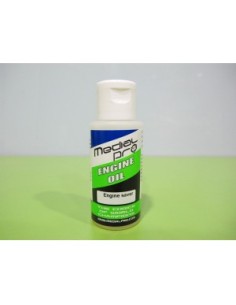
These are the finest lubricants in the catalogue. They are applied in tiny amounts to the motor shafts, rear axle bearings, and any high-speed rotation point. Their goal is to minimize friction without adding resistance. In competitive slot racing, brands like NSR or Slot.it recommend periodically lubricating their motors with specific low-viscosity oils, as their powertrains operate at thousands of rpm and wear without lubrication is rapid.
Gear greases
Crown and pinion systems—both in slot and in models with moving parts—require a grease that stays between the teeth and reduces wear from repeated contact. Gear greases usually have a lithium or PTFE (Teflon) base and are formulated to adhere without being displaced by rotational movement. A crown worn due to lack of lubrication is one of the most avoidable replacements in the workshop.
Lubricants for guides and rails
The guide slides over the rail and accumulates dirt with use. Some specific lubricants for this area help reduce lateral friction and extend the lifespan of both the guide and the track. Their use must be very controlled: overdoing it can reduce the car's grip.
General maintenance oils
For conservation pieces, hinges, articulated mechanisms in dioramas, or diecast pieces with moving parts, there is a range of light conservation oils that protect against oxidation and maintain smooth movement without dirtying or leaving visible residues.
Degreasing cleaners
Although technically not lubricants, they are part of the process: before relubricating, it is essential to clean away old lubricant residues, dirt, and dust. Specific degreasers for slot and modelling are safe with the sector's materials and prepare the surface for the new lubricant to work optimally.
Technical aspects we need to know
Understanding a minimum of lubrication chemistry helps us make better decisions:
- PTFE (Teflon): a very common additive in precision lubricants. It creates a solid film with a very low coefficient of friction on surfaces. It is especially useful in gears and guides.
- ISO and NLGI viscosity: oils are classified by ISO grade (the higher, the denser) and greases by NLGI grade (0 to 6, from more fluid to more solid). For slot, oils usually fall within low ranges (ISO 15-32) and greases in NLGI 1-2.
- Lubricant migration: in electric motors, oil tends to migrate by capillarity towards the braids and the collector. If this happens, electrical conductivity is affected. That is why the minimum necessary is applied and with precision tools (dosage needle or fine brush).
- Thermal degradation: repeated heat degrades lubricants. In long slot sessions or intensive use, it is advisable to check and renew the lubricant more frequently than in casual use.
- Compatibility with sealants and glues: in static modelling, some lubricants can interfere with adhesives or acrylic paints if they come into contact. Keeping them away from areas that will be painted or glued is basic practice.
Practical tips for use, maintenance, and conservation
Correct lubrication is routine, not repair. These are the habits that make the difference:
- Establish a maintenance schedule: in competitive slot racing, it is usual to check lubrication every 3-5 race sessions, or before an important test. In casual use, with each general check of the car is sufficient.
- Clean before lubricating: applying oil over dirt or degraded lubricant does not help. Use an appropriate degreaser, let it dry, and then apply the new lubricant.
- Use the right tools: a dosage needle or a fine-tipped brush allows you to apply the exact amount in the precise place. Avoid sprays in delicate areas: it is very difficult to control the amount and direction.
- Document what you use and where: especially in cars prepared for competition, keeping a record of which lubricant you have at each point allows you to reproduce configurations that work and detect problems faster.
- Store products properly: keep oils and greases with the cap tightly closed, away from heat sources and direct light. Most have a long shelf life if stored correctly, but exposure to heat can alter their viscosity.
- In diecast and collecting: conservation oils are allies for pieces with moving parts (doors, hoods, suspensions). A minimal drop on each joint, applied carefully, preserves movement without staining the piece.
Common mistakes to avoid
Over the years, we see the same mistakes repeated. Knowing them in advance saves time, money, and some disappointment:
- Over-lubricating: more is not better. Excess oil in a motor or axle attracts dirt, migrates where it shouldn't, and can end up reducing performance instead of improving it.
- Using cooking oil or household lubricants: olive oil or WD-40 are not formulated for slot tolerances or modelling materials. WD-40 in particular is more of a degreaser than a lubricant, and can deteriorate plastics and rubbers over time.
- Not cleaning old lubricant: lubricant ages, oxidizes, and can become abrasive. Relubricating over old residue multiplies the problem.
- Applying gear grease to bearings: precision bearings need fine oil, not grease. Grease in a high-speed bearing increases resistance and generates heat.
- Ignoring lubrication until something fails: noise or loss of power are symptoms that damage has already been done. Preventive lubrication is always cheaper than replacement.
- Not checking compatibility with plastics: some lubricants contain solvents that attack ABS or polystyrene. Always check the technical data sheet of the product or do a test in a non-visible area before applying.
Recommendations for beginners and advanced users
If you are just starting
You do not need ten different products to start maintaining your cars or models well. With a fine oil for motors and axles, a specific grease for gears, and a basic degreaser, you have covered the essential points. Always apply the minimum amount, clean before lubricating, and do not lubricate what does not need lubrication.
For your first steps in slot, the most common maintenance is that of the motor and rear axle. Check the manufacturer's manual for your car—brands like NSR or Avant Slot include clear instructions—and do not hesitate to ask in the community or our team if you have questions about which product to use on your specific model.
For experienced users
As you progress in preparing cars for competition, lubrication becomes another variable in tuning. The choice between an ISO 15 or ISO 22 viscosity oil in the motor can influence tenths of a second per lap. Some preparers test different lubricants on a bench before a race to see which offers better response when hot.
In advanced static modelling, lubrication plays a different role: ensuring smooth movement of articulated parts without leaving stains or affecting painted finishes. Here, neutral silicone oils are highly valued for their compatibility with a wide variety of materials and finishes.
| Type of lubricant |
Main application |
Viscosity |
User profile |
| Motor oil |
Motor shafts, bearings |
Very low (fluid) |
Slot competition and casual |
| Gear grease |
Crown, pinion, transmissions |
Medium-high (grease) |
Slot, models with moving parts |
| Silicone oil |
Plastics, rubbers, joints |
Variable |
Modelling, diecast, dioramas |
| Conservation oil |
Moving parts, collecting |
Low |
Diecast, collecting |
| Degreaser |
Cleaning prior to lubrication |
— (solvent) |
All types of users |
Frequently asked questions about oils and greases
How often should I lubricate my slot car motor?
It depends on usage. In competition, every 3-5 intense sessions or before an important race. In casual use, with each general check of the car. The most important thing is to clean the old lubricant before applying the new one.
Can I use WD-40 to lubricate a slot motor?
It is not recommended. WD-40 is primarily a degreaser and moisture displacer, not a long-lasting lubricant. It can deteriorate plastics and rubbers, and its lubricating effect disappears quickly. Always use a specific oil for slot or modelling.
What is the difference between lubricating with oil and with grease?
Oil is fluid and easily penetrates hard-to-reach areas; ideal for motors, axles, and high-speed bearings. Grease is thicker, adheres to surfaces, and is more suitable for gears and points where the lubricant needs to stay in place longer.
Should I lubricate the guide as well?
With great caution and in minimal amounts. Some lubricants are specifically formulated for the guide and rail, but excess can reduce the car's grip and dirty the track. In most cases, a well-seated and clean guide works better than one with excess lubricant.
Do lubricants attack plastics?
Some do. Products containing aromatic solvents or hydrocarbons can crack or soften certain plastics (especially polystyrene and ABS). Always check the technical data sheet and, if in doubt, test in a non-visible area before applying.
What lubricant should I use for diecast pieces with moving parts?
Neutral silicone oils or very low viscosity conservation oils are the safest. They do not stain, are compatible with most finishes, and protect against oxidation without leaving visible residues.
How much oil should I apply to the motor?
The minimum possible: a very small drop on each motor shaft is sufficient. Excess migrates to the braids and electrical contacts, which can negatively affect the car's performance.
Are the same lubricants used for static models as for slot?
To a large extent, yes. Silicone oils and conservation products work well in both contexts. For high-rev parts (slot motors), it is preferable to use specific oils formulated for that use, which ensure stability at working rpm.
Should I lubricate new bearings before using them?
Ball bearings usually come with a small amount of factory lubricant. Some preparers clean them with degreaser and relubricate with specific precision bearing oil, thus controlling exactly the type and amount of lubricant. For casual use, the factory lubricant is sufficient for a while.
What do I use to clean old lubricant before relubricating?
With a specific degreaser for slot or modelling, that is safe with plastics and metals. Apply with a cotton swab or a lint-free cloth, let it act for a few seconds, and remove. Ensure that the piece is completely dry before applying the new lubricant.
Do lubricants have an expiration date?
They do not have a strict expiration date, but they do have a shelf life. If stored correctly (cap closed, away from heat and direct light), most last several years without losing their properties. If you notice that they have changed colour, smell, or consistency, it is time to replace them.
What happens if I mix different types of lubricant?
In general, it is not recommended. Some lubricants are incompatible with each other and can form deposits or lose their properties when mixed. It is always better to clean the previous lubricant before applying a different one.