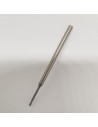
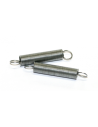
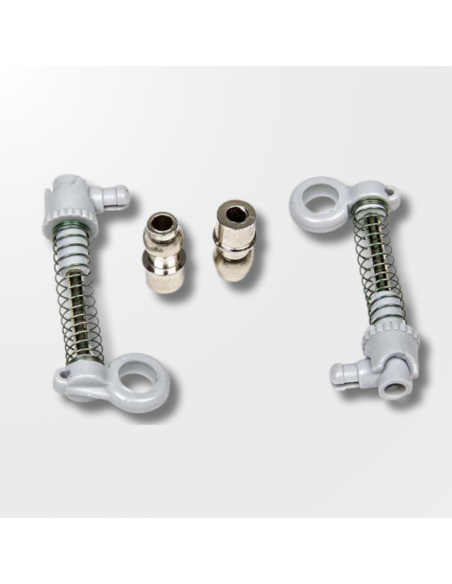
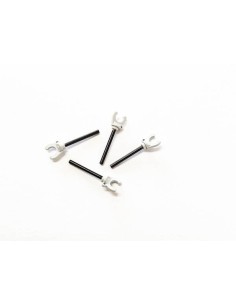
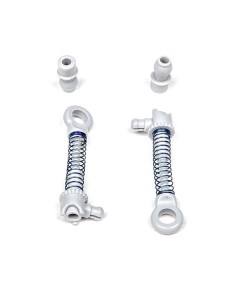
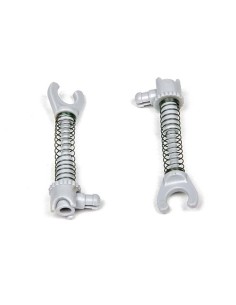
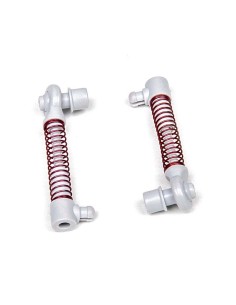
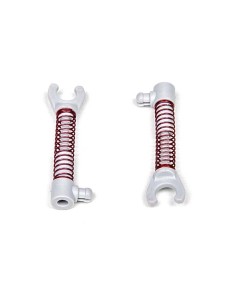
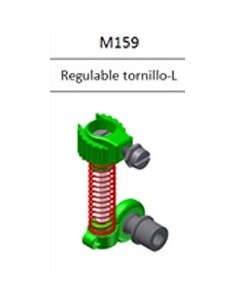
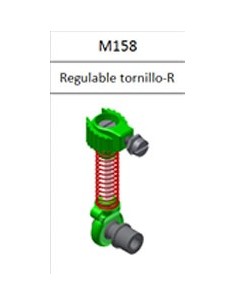
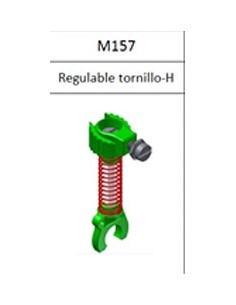
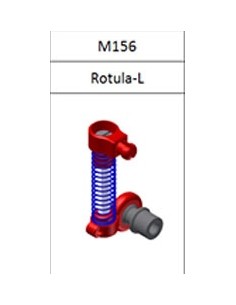
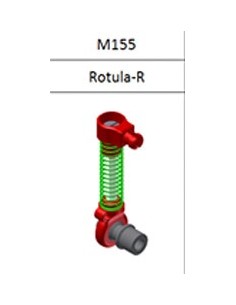
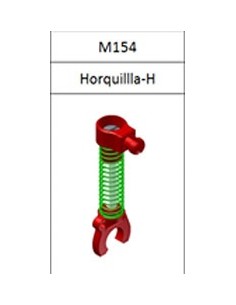
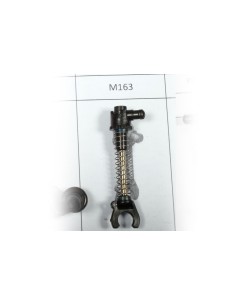
When a slot car loses traction during acceleration, bounces on the track's bumps, or shows instability in fast corners, the suspension system is almost always the first place to look. The dampers —and the entire suspension setup surrounding them— are one of those elements that go unnoticed until something fails or, conversely, until you adjust them properly and the car feels completely different. Absorbing the irregularities of the track, controlling mass transfers during braking and acceleration, and maintaining contact between the tyres and the asphalt: that is their mission. And in competitive slot racing, where margins for improvement are measured in hundredths, choosing the right damper or spring can decide a race.
In this section, you will find technical suspension systems for 1/32 and 1/24 slot cars: springs of different hardness, magnetic damping systems, and motor pods that work alongside them. Whether you are preparing a car for federated competition or looking to improve your car's performance on a home track, here are the components used by the most demanding drivers.
What are dampers in slot and why do they matter
In the world of slot, the term "damper" does not always refer to a telescopic damper as in a real car. Suspension is resolved in different ways depending on the type of chassis and the philosophy of each manufacturer, but the goal is always the same: to allow the chassis —and especially the rear axle with the driven tyres— to maintain maximum contact with the track over any irregularity.
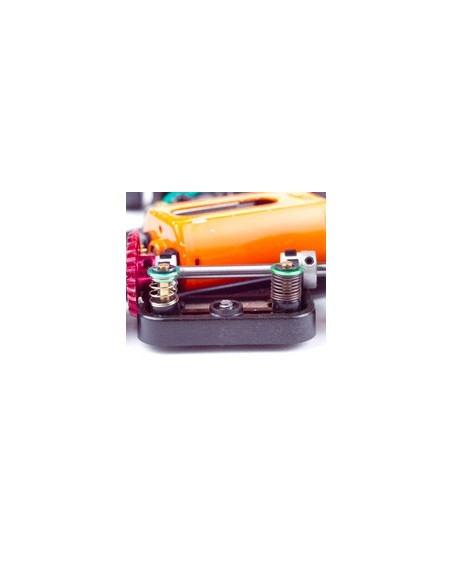
High-performance slot cars, especially those designed for technical plastic tracks or wooden circuits, use floating chassis where the motor pod can move vertically relative to the main chassis. This movement is what "dampens" the impacts and allows the rear tyres to maintain grip when passing over joints, bumps, or uneven sections. The element that controls this movement —and acts as a real damper— is the spring.
A spring that is too hard will cause the car not to absorb irregularities well and to bounce. One that is too soft may cause the motor pod to oscillate excessively, making the car unpredictable. Finding the exact point, depending on the weight of the car, the mounted motor, the driving style, and the characteristics of the track, is part of the art of the slot preparer.
How to choose the right dampers
The choice of damping system depends on several factors that should be analysed before purchasing:
- Type of chassis: Not all chassis accommodate all systems. Floating chassis from brands like NSR or Slot.it have their own specific motor pods and springs, and compatibility is not always direct between brands.
- Type of track: On plastic tracks with pronounced joints, a system with more travel and greater absorption capacity is appreciated. On well-leveled wooden tracks, a firmer spring offers greater consistency in lap times.
- Motor and configuration: The weight and layout of the motor directly influence how the suspension works. A heavier motor in an inline configuration (in line with the rear axle) distributes loads differently than one in a sidewinder configuration (transverse to the axle), and that changes the optimal spring hardness.
- Spring hardness: Manufacturers identify hardness by colours, although the colour coding is not universal among brands. Always consult the product sheet or the manufacturer's documentation to know which hardness corresponds to each colour in each range.
- Competition use vs. recreational use: For competition, fine-tuning the damper is critical. For home use or tracks with little elevation, a simpler and more forgiving system may be sufficient and easier to maintain.
Main types and differences
There are several damping solutions in the competitive slot market, each with its advantages and context of use:
Steel or stainless steel springs
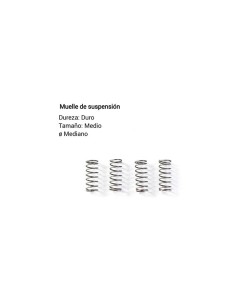
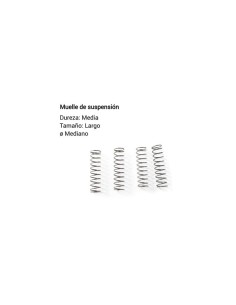
These are the most widespread and versatile solution. They are positioned between the motor pod and the chassis, controlling the vertical travel of the drive assembly. Their main advantage is precision: by changing the spring for one of a different hardness, you can adjust the car's behaviour directly and reproducibly. Most leading manufacturers —NSR, Slot.it, Scaleauto— offer their springs in various hardnesses coded by colour, allowing you to find the optimal point through trial and adjustment.
Magnetic damping systems
Some chassis use magnets to generate a return force on the motor pod without mechanical friction. The principle is similar to that of springs, but the response is more progressive and there is no material fatigue over time. They are less common and are usually linked to specific chassis from certain manufacturers.
Technical foams and damping rubbers
In some setups, especially in handmade preparations or certain more flexible plastic chassis, small blocks of technical foam or rubber are used to limit or soften the movement of the motor pod. They are economical, easy to cut to size, and allow for quick experiments, although their response is less precise than that of a calibrated spring.
Integrated motor pods
The motor pod is not the damper itself, but it is an indivisible part of the system. A rigid or damaged motor pod will nullify any spring, no matter how good it is. In this section, you will also find replacement and competition motor pods compatible with the most common chassis on the market.
Technical aspects we need to know
To get the most out of your slot car's damping system, it is important to understand some technical concepts that directly influence how each component works:
- Spring preload: The initial position of the spring before the car moves affects the balance point of the motor pod. Adjusting the preload —using the adjustment screw on chassis that allow it— changes how much rear load the car has at rest and during acceleration.
- Motor pod travel: The available space for the motor pod to move up and down limits the effectiveness of the system. If the travel is too short, the damper "works" in a very limited range; if it is excessive, the car may become imprecise.
- Lateral friction: The motor pod must be able to move vertically with the least lateral friction possible. If there is excessive play from side to side, the car will be inconsistent in corners. If it is too tight, the pod will not move freely and the damper will not fulfil its function.
- Interaction with the adhesion magnet: In cars that use magnets to generate downforce on the track, the distance between the magnet and the metal rail varies with the movement of the motor pod. This means that the spring adjustment also influences the generated adhesion force, creating an interaction that the experienced preparer learns to manage.
- Compatibility between brands: NSR, Slot.it, and Scaleauto springs are not directly interchangeable. The outer diameter, thread pitch, and free length vary. Before mixing components from different manufacturers, check the dimensions or consult us.
Practical tips for use, maintenance, and preparation
The damping system of a slot car requires little maintenance, but good habits make a difference in the longevity of the components and the consistency of performance:
- Periodic cleaning: Dust and tyre debris accumulate around the motor pod and can increase lateral friction or block the system's travel. A gentle cleaning with a cotton swab and a specific cleaner, without greasy lubricants that attract more dirt, is sufficient.
- Spring inspection: Over time, springs can fatigue and lose their original hardness, especially if the car has suffered hard impacts. If you notice that the car's behaviour has changed without modifying anything, checking the condition of the spring is a good starting point.
- Gradual adjustment: When changing the hardness of the spring, do so incrementally. Jumping from a very soft spring to a very hard one at once makes it difficult to understand what each change is contributing. Move one step at a time and validate on track before proceeding.
- Break-in period: Some steel springs need a brief break-in period to settle. The first few minutes of racing, the behaviour may be slightly different from what the car will exhibit after the system has stabilised.
- Configuration log: If you compete, keep a record of which spring you use on each track and under what conditions. Memory helps, but data is more reliable when it comes to repeating a winning setup.
Common mistakes to avoid
Some mistakes are very common among those new to adjusting slot suspension, and it is worth knowing them to avoid wasting time and money:
- Ignoring the condition of the motor pod: A deformed motor pod, with excessive play or worn supports, causes any spring to perform below its potential. Before investing in competition springs, ensure that the pod is in good condition.
- Mixing rail systems without considering it: The rail system —universal (Scalextric, Ninco) or sport (Scaleauto, Slot.it)— determines which chassis and guides are compatible, and by extension, which motor pods fit. Ensure that all components of your setup are coherent with each other.
- Over-lubricating: Excess lubricant around the motor pod attracts dirt and can alter the response of the spring. Less is more in this case.
- Confusing hardness with performance: A harder spring is not always faster. On tracks with many irregularities, a softer spring can generate better traction and more consistent lap times than a hard one that causes the car to bounce.
- Not testing under real race conditions: The track temperature, the condition of the tyres, and the fuel load (metaphorically speaking) change the car's behaviour. Always adjust with the car in conditions as close as possible to those of competition.
Recommendations for beginners and advanced users
If you are starting out
If you have just entered the world of competitive slot racing and still have no experience with suspension adjustments, it is advisable to start with the factory setup of the chassis you have chosen and learn to "listen" to the car on track before modifying anything. When you identify a specific problem —bouncing on joints, loss of traction on corner exit, erratic behaviour— then it makes sense to intervene in the damping system. Starting with the medium hardness spring recommended by the manufacturer is always a sensible starting point.
If you already have experience
For experienced preparers, fine-tuning the damping system is one of the most effective levers for finding tenths on track. Playing with preload, combining different front and rear springs in chassis that allow it, or experimenting with the geometry of the motor pod opens up a very rich field of work. NSR and Slot.it in particular offer catalogues of springs and pods with enough variety to carry out a very systematic and reproducible job.
| Type of damping |
Adjustment precision |
Ease of use |
Maintenance |
Recommended profile |
| Calibrated steel spring |
High |
Medium |
Low |
Competition and advanced use |
| Magnetic system |
Medium-High |
High |
Very low |
Advanced use, specific chassis |
| Technical foam / rubber |
Low-Medium |
High |
Low |
Beginners, handmade preparations |
Frequently asked questions about slot dampers
What is the difference between a soft and a hard spring?
The hardness of the spring determines how much resistance it opposes to the movement of the motor pod. A soft spring allows for greater travel and better absorbs irregularities, but it can make the car less precise. A hard spring offers more consistency on smooth tracks, but it can cause the car to bounce on uneven surfaces.
Are NSR and Slot.it springs interchangeable?
Generally no, because the dimensions (outer diameter, free length, and pitch) can vary between manufacturers. Always check the specifications before mixing components from different brands.
Can I use a Slot.it damping system on an NSR car?
It depends on the specific chassis. Some Slot.it motor pods and springs can adapt to NSR chassis if the measurements match, but it is not a direct compatibility. If in doubt, consult us before purchasing.
How do I know if my car's spring is fatigued?
A fatigued spring loses part of its free length (it becomes shorter) and its response becomes less consistent. If the car's behaviour has changed without modifying anything else, measure the length of the spring and compare it to the original specification.
Does damping affect the magnet's force on the track?
Yes. In cars with adhesion magnets, the vertical movement of the motor pod changes the distance between the magnet and the metal rail of the track, altering the downforce generated. A softer spring may bring the magnet closer to the track over irregularities, increasing adhesion at those points.
Is it necessary to change the spring according to the type of track?
It is highly recommended if you compete on different surfaces. A plastic track with pronounced joints requires a spring with more travel than a well-leveled wooden track. Carrying a small kit with two or three different hardnesses allows you to adapt the car to each circuit.
Does the motor pod form part of the damping system?
Yes, it is an indivisible part of the system. The spring works in conjunction with the motor pod: if the pod is deformed or has excessive play, the spring cannot function correctly. Always check the condition of the motor pod before changing the spring.
Are magnetic damping systems better than spring systems?
Not necessarily. Magnetic systems offer a progressive response and no material fatigue, but calibrated springs allow for finer adjustments and are the dominant option in high-level competition. The choice depends on the available chassis and the driver's preferences.
Can I install a damping system on a car that does not come with stock suspension?
In some cases, it is possible through modifications to the chassis, but it requires advanced preparation knowledge. For high-end competition cars, the most efficient option is to choose a chassis that already integrates technical suspension from the factory.
How often should I check the damping system?
In recreational use, a visual inspection every few sessions is sufficient. In competition, ideally, check the condition of the spring and motor pod in each preparation session, especially if the car has suffered any accidents or off-track excursions.