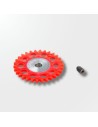
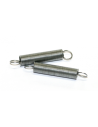
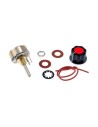
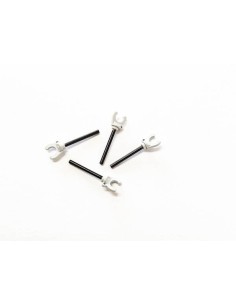
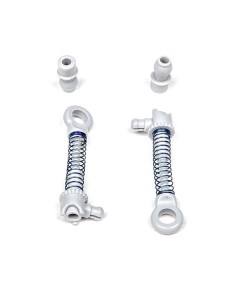
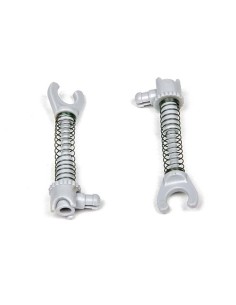
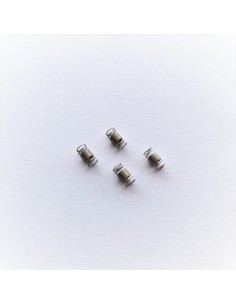
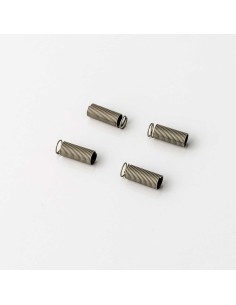
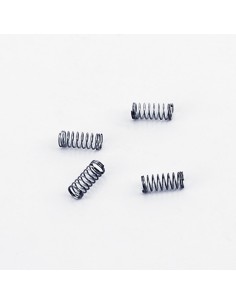
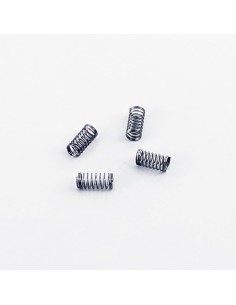
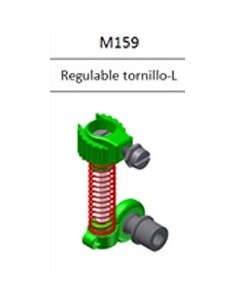
In the world of competitive slot racing, there are components that do not shine at first glance but have a huge impact on the car's behaviour on track. The axle dampers are one of them. That small piece of rubber, silicone, or foam placed between the chassis and the drive axle is not a decorative accessory: it is responsible for keeping the axle in contact with the ground at all times, ensuring that the drive wheels grip as they should, and allowing the car to absorb the irregularities of the track without losing stability.
If you have ever noticed that your slot car vibrates excessively, loses traction in certain areas of the circuit, or that the throttle response is not smooth, it is very likely that the rear axle damping system has something to say. A worn, too stiff, or simply non-existent damper can ruin a setup that is otherwise impeccable. And the opposite is also true: with the correct damper, a standard chassis can perform much better than expected.
At Ministry of Hobby, we know that this type of component is often sought after when there is already a specific problem on the table: the car is not running well, the tuner wants to fine-tune the setup, or it is simply time to renew parts that have seen many hours of racing. That is why we have organised this section with technical criteria, so you can quickly find what you need without wasting time.
Whether you are a hobbyist building your first competition car or an experienced driver looking for the perfect tenth, here you have everything you need to understand exactly what an axle damper does, how to choose it, and how to get the most out of it.
What is an axle damper and why is it important
The axle damper is the flexible connecting element between the chassis and the drive axle, usually the rear one. Its main function is to allow the axle some vertical freedom of movement, so that the drive wheels can follow the profile of the track even when it is not perfectly flat.
In a rigid car without any damping, the axle is fixed to the chassis. This means that any imperfection in the track — a joint between sections, a raised curve, a worn braking zone — can cause one or both wheels to lose contact with the track for fractions of a second. Those fractions translate into loss of traction, acceleration errors, and, in many cases, off-track excursions at the most inopportune moments.
The damper acts as a small cushion that absorbs those disturbances. Depending on the material and hardness, it allows more or less movement, more or less damping. And that seemingly small difference translates directly into the car's behaviour on the plastic asphalt.
In addition to traction, the damper influences braking stability and how the car distributes its weight when exiting a corner. It is not an exaggeration to say that, alongside the tyres and the guide, it is one of the three elements that most condition the actual driving of a slot car.
How to correctly choose the axle damper
The correct choice depends on several factors that should be clear before purchasing:
- Compatibility with the chassis: Not all dampers fit all chassis. The anchoring point, axle diameter, and support geometry determine which parts are valid for your car. Always check the product technical sheet and, if in doubt, consult the forum or ask us directly.
- Hardness of the damper: A softer damper allows greater freedom of movement for the axle, improving contact on uneven circuits or those with many curves. A harder one offers greater consistency on smooth tracks and high-speed circuits. There is no universally perfect hardness: it depends on the track, the car, and the driving style.
- Material: The most common dampers are made of silicone, rubber, or technical foam. Silicone is the most widespread option in competition due to its durability and consistency throughout the race. Foam can be a more economical alternative for recreational use.
- Track system: Although the damper itself does not depend on the track system (universal or sport), it is worth considering when thinking about the whole: a chassis prepared for Scalextric or Ninco may require different configurations than one designed for Scaleauto or Slot.it.
- Level of car preparation: In a standard box car, the damper can be the simplest and cheapest improvement with the greatest return. In an advanced competition car, the damper is part of a broader setup system that includes chassis height, tyre hardness, and weight distribution.
Main types and differences
Within axle dampers, we find several configurations depending on how they integrate into the chassis and how they work:
Block or pad dampers
These are the most common. They are placed directly on the axle support, between it and the chassis. They work by compression: when the axle rises, they compress the damping material and generate a return force that keeps the axle in contact with the track. They are simple, lightweight, and easy to replace.
Ring or tube dampers
These are mounted around the axle itself or the side supports. They offer more symmetrical damping and are common in competition chassis where fine-tuning behaviour is a priority.
Leaf or spring systems
Some chassis incorporate a flexible leaf system that acts as a spring over the axle. It is not always replaced with a conventional damper, but in many cases, it can be complemented or replaced with specific parts that improve response.
Free-cut technical foams
These allow the tuner to cut the damper to size to fit exactly into the available space in the chassis. They are a very versatile solution, especially in custom preparation projects or in resin chassis where space is tighter.
Technical aspects we should know
To get the most out of axle dampers, it is important to understand some technical concepts that often appear in forums and in the catalogues of brands like NSR, Slot.it, or Scaleauto:
- Shore or hardness: This is expressed in Shore A units. The lower the value, the softer the material. In slot, dampers usually range between low values (very flexible material) and medium values (material with more body). The exact values vary by manufacturer, so the most useful approach is to test and compare.
- Preload: This is the initial compression that the damper has when the car is at rest. Excessive preload can cause the axle to be too pressed downwards and increase friction. Insufficient preload can leave too much play. The optimal point is one where the axle has freedom of movement but always returns to its working position.
- Compatibility with the motorisation: The type of motorisation influences how the rear axle works. In a sidewinder configuration (motor parallel to the rear axle), the damper works under different lateral loads than in an inline configuration (motor perpendicular to the axle, in line with the car), where longitudinal forces are more pronounced. In anglewinder, the angular position of the motor generates a third load pattern. Knowing your configuration will help you choose the most suitable hardness.
- Wear and lifespan: Silicone materials have a long lifespan, but not indefinite. With heat, oils, and accumulated vibration, the damper can lose properties and harden or deform. Periodically checking it is a good maintenance practice.
Practical tips for use, maintenance, and preparation
Installing an axle damper is not complicated, but it is advisable to follow some steps to ensure that the result is as expected:
- Before mounting the new damper, clean the axle support and the chassis housing. Any residue of old oil or dirt can alter the behaviour of the part.
- Place the damper without forcing it. If you need too much pressure to fit it, the size may not be correct or the chassis may have some dirt deposit that you have not seen.
- Check that the axle rotates freely after installation. If there is more resistance than usual, the damper may be too compressed or misaligned.
- Do a test on the circuit before considering the configuration good. Observe if the car improves its behaviour in the areas where you previously had traction or vibration problems.
- If you use lubricant on the axle, be careful that it does not soak the damper. Some materials absorb oil and degrade sooner than expected.
- Always take a spare damper to the races. It is a small, cheap part that can make a difference if damaged during the session.
Common mistakes we should avoid
- Using the wrong damper for the chassis: Installing a piece of incorrect dimensions can cause the axle to be misaligned or the damping not to work as it should. Always check compatibility.
- Ignoring the condition of the old damper: Many tuners check motors, crowns, and tyres but forget the damper until the car starts having problems. Include it in your maintenance checklist.
- Always looking for the softest damper: Softer is not always better. On smooth and fast tracks, an excessively soft damper can generate parasitic movements that harm stability. Adapt the hardness to the actual conditions of use.
- Not checking the preload after installation: Installing the damper without verifying that the axle has the correct play is a common mistake. Take two minutes to check that everything is in order before letting the car loose on track.
- Confusing the damper with the real problem: Sometimes the car's poor behaviour originates from elsewhere: worn tyres, a twisted chassis, a damaged guide. The damper may be part of the solution, but it is not everything. Make a complete diagnosis before blindly changing parts.
Recommendations for beginners and advanced users
If you are starting
The simplest option is to choose a medium hardness damper from a reference brand like NSR or Slot.it, compatible with your chassis. These brands offer well-documented parts, with good value for money, and you will find abundant information in the community on how to install them. Do not complicate yourself with advanced configurations until you have a clear understanding of how your car responds.
If you have experience
The damper can become a very precise tuning tool. Experiment with different hardnesses for each type of circuit, combine them with chassis height adjustments, and try different positions to find the optimal working point. Brands like Scaleauto or Avant Slot offer specific options for competition that deserve attention.
In any case, keeping a record of the changes you make and their effects on the car's behaviour is always a recommended practice. Competitive slot racing is, to a large extent, an exercise in methodology.
| Type of damper |
Common material |
Recommended use |
Level |
| Block / pad |
Silicone, rubber |
General use, easy installation |
Beginner / Advanced |
| Ring / tube |
Silicone |
Competition, symmetrical adjustment |
Advanced |
| Free technical foam |
Technical foam |
Custom preparation, resin chassis |
Advanced |
| Leaf / spring |
Technical plastic / metal |
Specific chassis with integrated system |
Advanced |
Frequently asked questions about axle dampers
Is it mandatory to install an axle damper on a slot car?
It is not strictly mandatory, but in competition, it is practically essential. In recreational use with well-maintained tracks, it can be dispensed with, although its positive effect on traction is noticeable even in that context.
What is the difference between a silicone damper and a rubber one?
Silicone offers greater durability, better heat resistance, and more consistent properties over time. Rubber can be a valid and more economical alternative, but it tends to degrade sooner, especially if lubricants are involved.
Can I use the same damper for the front and rear axle?
In some chassis, the geometry is similar on both axles, but not always. Check your chassis specifications before assuming that the same part works for both.
How often should I check or change the damper?
It depends on usage. In competition, it is advisable to check it after each long session and change it if it shows signs of deformation or hardening. In recreational use, a check every certain number of running hours is sufficient.
Does the damper affect chassis height?
Yes. The thickness and compression of the damper influence the height at which the axle works relative to the chassis. If you change the damper, always check that the chassis height remains correct for your configuration.
Is the same damper compatible with universal and sport track?
The damper itself does not depend on the track system, but on the chassis. What you should keep in mind is that chassis designed for Scalextric or Ninco (universal track) have different geometries than those for Scaleauto or Slot.it (sport track), and that can condition which damper fits each one.
Are dampers from different brands interchangeable?
Not always. Although there are general-use parts that work on several chassis, it is safest to verify specific compatibility. Product sheets and the community of each brand are good sources of information.
Can I make a homemade damper with regular foam?
Technically yes, but the results are unpredictable. The technical foams from manufacturers are selected for their hardness, density, and behaviour under pressure. A domestic foam can yield very disparate results and it is difficult to replicate the same working point from one session to another.
Does the damper influence motor consumption?
Indirectly, yes. A damper that is too stiff can increase axle friction and make the motor work with more resistance. A properly adjusted one helps the assembly roll more efficiently.
What brands offer the most used dampers in competition?
NSR, Slot.it, and Scaleauto are the most common references in the competition circuit. Each has its own solutions, and it is common for tuners to test different options before settling on one for a specific chassis.