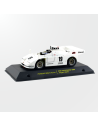
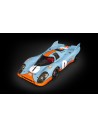
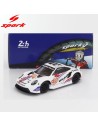
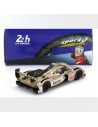
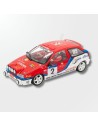
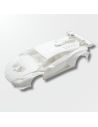
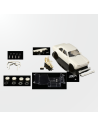
When we talk about preparation in slot racing, every gram counts. The body is one of the elements that most influences the car's behaviour, and 3D printed parts have opened up a very interesting avenue for those who want to fine-tune their setup without relying on the standard commercial body catalogue. Whether you are looking to lighten the front end, want a model that does not exist in resin or injected plastic, or simply because you are attracted to the idea of having something unique and functional, 3D bodies offer a level of freedom that was previously unthinkable for the average enthusiast.
In recent years, 3D printing has transitioned from being a technological curiosity to becoming a real tool within the hobby. Brands, tuners, and enthusiasts use this technology to create parts with geometries impossible for traditional injection moulding, with tight tolerances and, above all, with very precise weight control. This has a direct impact on the car's dynamics on the track.
If you are looking for 3D bodies for your slot cars, you probably already understand that not all options are the same. The material, printing process, surface finish, and structural design make notable differences between a usable part and one that will end up in the drawer. In this category, you will find bodies designed to perform, with the advice of those of us who have been in the sector for years and know what works and what doesn't.
What are 3D bodies and why are they of interest in slot racing
A 3D body is a part manufactured through additive printing, that is, built layer by layer from a digital file. Unlike injected plastic or cast resin bodies, they do not require physical moulds, allowing for the production of complex geometries and short runs in a cost-effective manner.
In the world of slot racing, this has several very relevant practical implications:
- Weight: 3D printed bodies can be extraordinarily lightweight, especially if designed with thin walls and optimised internal structures. Reducing weight at the front of the car improves mass distribution and favours stability in corners.
- Availability: Out-of-production models, prototypes, or hard-to-obtain licences can be reproduced independently, always within the corresponding legal framework.
- Customisation: Digital design allows for the adaptation of mounting points, ride heights, or cockpit geometry to a specific chassis, something impossible with a standard body.
- Rapid iteration: In competition, being able to test different versions of the same body without mould costs is a huge advantage for the tuner looking for the optimal setup.
This is not an inferior alternative to traditional bodies, but rather a different tool with its own strengths. Understanding when and why to use it makes the difference between a mediocre result and one that is truly competitive.
How to correctly choose a 3D body
Before rushing to buy, it is advisable to clarify several factors that will condition both performance and user experience:
Compatibility with the chassis
Not all 3D bodies are designed for all chassis. Always check that the part you are interested in is designed for the chassis you are using, or that it has sufficient adjustment margin. The mounting points, guide post height, and wheelbase are critical. A poorly fitting body can rub on the axles, limit the guide's movement, or, in the worst case, make the car uncontrollable.
Printing material
The material affects weight, stiffness, impact resistance, and ease of sanding and painting. Not all filaments or photopolymer resins behave the same. Later, we will dedicate a specific section to the most common materials.
Surface finish
3D printing leaves visible layer marks to a greater or lesser extent. If the body is to be painted, the necessary preparation time must be considered. Some parts arrive already sanded or with a surface treatment; others require prior work.
Intended use: decorative or competitive
A body intended for display or home track use does not need the same characteristics as one designed for competition with strict regulations. In competition, many organisations limit materials and minimum body weights; check before buying.
Main types and differences
Within the universe of 3D bodies for slot racing, we can distinguish several types according to the manufacturing process and the intended use:
FDM (Fused Deposition Modeling)
This is the most widespread process in desktop 3D printing. A thermoplastic filament is melted and deposited layer by layer. FDM parts have good mechanical resistance but a less refined surface finish than other technologies. They are suitable for prototypes, fit tests, or projects where the final finish will be achieved with filler and sanding. Weight can be controlled by varying the interior fill percentage.
SLA / MSLA (photopolymer resin)
Resin printers cure the material layer by layer using UV light. The result is a much smoother surface and a significantly higher level of detail compared to FDM. Photopolymer resin bodies are closer to the finish of traditional cast resins and require less preparation before painting. Their main disadvantage is greater fragility against impacts if the appropriate resin is not used.
Professional production parts
Some brands and tuners use industrial printers with engineering materials (nylon, polycarbonate, high-temperature ABS) to produce bodies with very tight tolerances and superior mechanical properties. These parts usually have a higher cost but offer directly competitive results.
Technical aspects we need to know
Weight and mass distribution
The main reason many enthusiasts are interested in 3D bodies is the possibility of reducing weight at the front axle. A lightweight front end helps a rear-wheel drive car pivot more easily and reduces the tendency to nosedive during hard braking. However, balance must be found: a body that is too light at the front without compensatory ballast can make the car twitchy and difficult to control.
Structural stiffness
An excessively flexible body can generate vibrations that affect the contact of the braids with the track and, consequently, the electrical supply to the motor. Look for parts that combine lightness with sufficient structural stiffness, especially in the areas where they attach to the chassis.
Height and overhangs
The regulations of many competitions regulate the minimum height of the body above the track. Ensure that the part meets the requirements of the championship you will be participating in before preparing the car.
Compatibility with track systems
Although the body does not interact directly with the track, it can condition the position of the guide and therefore the performance in corners. This is especially relevant if you compete in different systems (Scalextric, Scaleauto, Ninco, Carrera), where the track width and slot depth may vary.
Practical tips for use, maintenance, and preparation
Surface preparation before painting
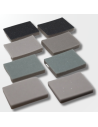
Regardless of the printing process, it is common to apply a primer coat before applying colour. For FDM parts, it is advisable to sand with fine grit (400-600) to remove the most evident layer marks. For resin parts, ensure that the curing is complete before sanding or priming, as uncured resin may react poorly with certain products.
Painting
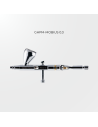
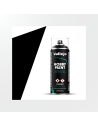
3D bodies accept modelling acrylic paints (Vallejo, Tamiya, Kaleido, Ammo) well, both by brush and airbrush. The airbrush provides more uniform finishes and allows for techniques such as fading or preshading. Spray lacquers also work, but carefully control the layer thickness to avoid covering details.
Attachment to the chassis
Periodically check the attachment points. Printed plastic can fatigue with repeated use, especially if the fit is very tight. If you notice play, a drop of cyanoacrylate on the post usually resolves the issue without adding significant weight.
Storage
Store painted and finished bodies away from direct sunlight to avoid yellowing or degradation of the material, especially in photopolymer resin parts.
Common mistakes to avoid
- Buying without verifying compatibility with the chassis: This is the most common mistake. A beautiful body that does not fit is wasted money and time. Always check the technical sheet or ask before buying.
- Ignoring the total weight of the assembly: Lightening the body only makes sense if you consider the total weight of the car and where you need it. Always calculate the whole, not the isolated part.
- Painting without priming: Skipping the primer on 3D bodies usually results in an uneven finish and paint that lifts with the first impacts.
- Using resins that are not fully cured: Newly printed photopolymer resin parts can be sticky and have not developed their full mechanical potential. Always respect the recommended curing time.
- Forcing the fit: If the body does not fit easily, do not force it. Gently sand the contact points instead of prying, or check if there is a revised version of the file.
- Not checking the regulations before competing: Many championships have specific rules regarding body materials. A part that seems perfect to you may be excluded in technical checks.
Recommendations for beginners and advanced users
If you are starting
The most sensible approach is to start with a 3D body designed for a widely used chassis, which comes with clear assembly instructions and, if possible, already has a good surface finish from the factory. Do not complicate yourself with elaborate painting projects at first: a coat of primer and two coats of base colour will already yield a very decent result. Focus on getting the car to run well before worrying about aesthetics.
Check in-store which bodies are most popular for the chassis you already have. The experience of other users is the best shortcut to avoid beginner mistakes.
If you already have experience
3D bodies open up possibilities that do not exist in the commercial catalogue: from reproducing historical liveries that were never produced in series to designing an aerodynamically optimised body from scratch for your competition setup. Combine the choice of material with a serious study of weight distribution and work with the regulation data on the table from the very beginning.
If you prepare cars for competition, consider having several body sets for different weight adjustments or track configurations. The ease of production of 3D parts makes this perfectly viable without the cost that would be incurred with traditional resin.
| Technology |
Surface Finish |
Weight |
Impact Resistance |
Preparation Before Painting |
Recommended Use |
| FDM (filament) |
Medium (visible layer marks) |
Very light (adjustable) |
High |
Sanding + priming |
Prototypes, competition, custom projects |
| SLA / MSLA (UV resin) |
High (fine surface) |
Light |
Medium (depends on resin) |
Curing + priming |
Detail, collection, elaborate painting |
| Industrial Printing |
High |
Variable (depending on material) |
Very high |
Minimal |
High-level competition, mass production |
Frequently Asked Questions
Are 3D bodies compatible with any chassis?
No. Each body is designed for one or several specific chassis. Always check that the part is compatible with the chassis you are using before buying. If in doubt, consult us.
How much do they weigh compared to an injected plastic body?
It depends on the material and interior design, but generally, well-designed 3D bodies can be between 20% and 50% lighter than their injected plastic equivalent. This varies greatly depending on the fill percentage and wall thickness chosen.
Can I paint them like a resin or plastic body?
Yes, with the proper preparation. For FDM, you need to sand and apply primer. For UV resin, ensure complete curing before priming. After that, the painting process with acrylics or airbrush is practically identical.
Are they valid for competition?
It depends on the regulations of each championship. Some allow them without restrictions, while others limit materials or set a minimum body weight. Always check the regulations of your competition before preparing the car.
Can they be used on Scalextric, Scaleauto, Ninco, or Carrera tracks?
The body itself does not interact with the track, but the chassis it is mounted on must be compatible with the track system you are using. Always verify the compatibility of the chassis, not just the body.
Which material is better, FDM or UV resin?
There is no absolute better option. If you prioritise lightness and impact resistance, FDM is usually more suitable. If you prioritise level of detail and surface finish, UV resin is superior. For collection projects or elaborate painting, UV resin is the usual choice.
How much preparation work do they need before painting?
FDM parts require sanding and a good coat of primer. UV resin parts require less sanding but should not skip the priming. In both cases, investing time in surface preparation makes a difference in the final result.
Can they be combined with traditional resin or plastic bodies on the same car?
It does not make much sense in terms of assembly, as a slot car carries only one body. However, you can have several interchangeable body sets, each with different materials, to adapt the weight according to the track or championship.
Do 3D bodies yellow over time?
Unpainted UV resin parts can yellow with prolonged exposure to UV light. Once painted and varnished, this problem practically disappears. FDM parts are more stable, although it depends on the filament used.
Can I order a 3D body of a specific model that I cannot find in the catalogue?
This is a question we get often. If you have a model in mind that is not in our catalogue, consult us: in many cases, we can guide you towards solutions within the sector or indicate if there is a compatible project with what you are looking for.