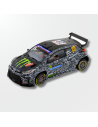
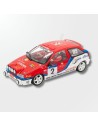
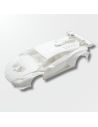
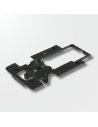
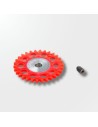
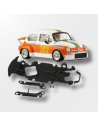
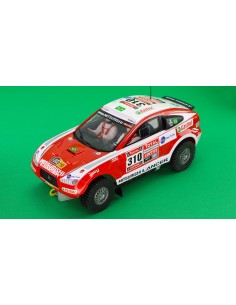
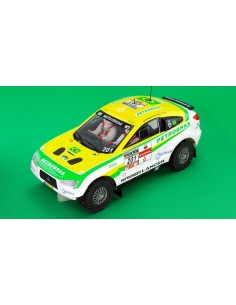
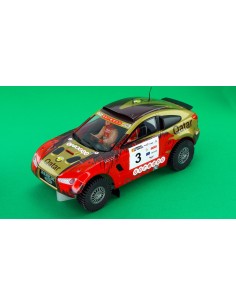
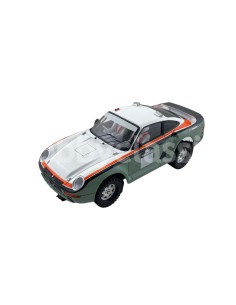
There are disciplines in motorsport that are not measured solely in seconds per lap, but in thousands of kilometres crossing deserts, dunes, and dirt tracks. Raid is exactly that: extreme endurance, navigation, mechanics pushed to the limit, and an epic that is hard to match. In the world of slot racing, raid cars encapsulate all that spirit in a miniature that has nothing to envy from any GT or single-seater. From the legendary trucks of the Paris-Dakar to the 4x4 vehicles that have made history in the Pharaohs Rally, this category attracts both collectors seeking historical fidelity and drivers wanting to experience a completely different driving style from that of a conventional asphalt circuit.
Unlike circuit cars, where grip and top speed are almost everything, raid slot models feature tall bodies, long suspensions, and a particular weight distribution that gives them a unique character on the track. Driving them well requires understanding their peculiarities: they tend to roll more, need a well-adjusted guide, and respond differently to sudden changes in direction. They are, ultimately, an exciting challenge that breaks the monotony of the more common categories.
If you have been in the hobby for a while or have just discovered that competition off-road vehicles also have their place in slot racing, in this space you will find everything you need to know to choose, prepare, and enjoy any raid model to the fullest. From the technical aspects of the motorisation to maintenance tips and the most common mistakes, we will tell you with the same rigor that a mechanic uses to prepare a desert beast before the start.
What is raid and why does it have its own space in slot racing
Raid is a long-distance motorsport discipline in which vehicles compete not on a closed circuit, but over stages of hundreds or thousands of kilometres, often on unprepared terrain: sand dunes, dirt tracks, rocks, and mountain passes. The Paris-Dakar —now Dakar Rally— is the most well-known example worldwide, but there are other events with a rich tradition such as the Pharaohs Rally in Egypt, the Abu Dhabi Desert Challenge, or the Silk Way Rally.
These competitions feature a wide variety of categories: 4x4 cars (buggies, competition SUVs, prototypes), motorcycles, quads, and trucks. This variety translates into slot racing with an enormous richness of bodies and liveries, each with its own story behind it. A Mitsubishi Pajero Evolution from the Schlesser team, a Peugeot 405 T16 Grand Raid, or a Kamaz truck are pieces that deserve a prominent place both on the track and in the display case.
In slot racing, raid is not just about aesthetics. Models in this category typically have a higher chassis, a greater proportional wheelbase, and bodies that create more aerodynamic drag than a circuit sports car. This results in genuinely different behaviour: they are more prone to roll over in tight corners taken too quickly, require tyres with good lateral grip, and appreciate a track with wide curves. Those who master them dominate a facet of slot racing that very few explore.
How to correctly choose a raid slot car
Before adding a model to your cart, it is important to have some basic criteria clear that make the difference between a good purchase and a disappointment.
Compatible track system
The first step is to ensure that the model is compatible with your track system. The two main standards in 1/32 are the universal track (Scalextric, Ninco) and the sport track (Scaleauto, Slot.it). Although many raid cars are manufactured for universal track, it is advisable to check this before purchasing, especially if your track is from a manufacturer like Carrera, whose track measurements differ.
Scale
Most raid slot cars are produced in 1/32 scale, the most widespread in the hobby. Some collectible or high-end models may appear in 1/24 or even in diecast versions in scales like 1/18 or 1/43. Each scale has its advantages: 1/32 for racing, larger scales for displaying with all the detail.
Level of detail and fidelity to the original
For collectors, the accuracy of the livery and the quality of the finishes are paramount. Brands like Avant Slot or Scalextric have produced replicas of raid cars with a notable level of detail, featuring precise decals and decorations faithful to the real competition vehicles. If the goal is to race, detail matters less than the rigidity of the chassis and the quality of the guide and braids.
Intended use: collection or competition
A resin model with exquisite decoration is not designed to be battered in training sessions. If you plan to race regularly, choose models with technical plastic or metal chassis, and reserve the more delicate pieces for display.
Types and main differences in raid slot
Within the raid slot category, several types of vehicles coexist, each with its own idiosyncrasy both in reality and in miniature.
Buggies and prototypes
They are the fastest vehicles in real raid. With rear or all-wheel drive, lightweight bodies, and high-powered motors, in slot racing they translate into models with a low centre of gravity and good manoeuvrability. They are the most "sporty" within the category.
Modified production SUVs and 4x4s
Models based on production vehicles (Mitsubishi, Toyota, Nissan) that have been prepared for competition. Their bodies are bulkier and taller, which is noticeable in slot racing: greater resistance in corners and a calmer behaviour at low speeds. Ideal for enthusiasts seeking deliberate and technical driving.
Trucks
The giants of Dakar also have their slot representation, although less extensive. A Kamaz or a MAN competition truck in 1/32 scale is a coveted object for any collector. Their driving on the track is a spectacle in itself: mass, inertia, and the need to anticipate each braking.
Motorcycles and quads
Less common but present in the catalogues of some brands, rally raid motorcycles in slot are highly valued collector's items, although their use on the track is more limited due to the inherent lateral stability difficulties of two-wheeled models.
Technical aspects we should know
Raid slot cars have technical peculiarities that are worth understanding to get the most out of them.
Motor and mounting type
Most raid models in 1/32 incorporate a motor in inline configuration (perpendicular to the rear axle, in line with the vehicle), which helps lower the centre of gravity. Some more modern prototypes may use sidewinder configuration (motor parallel to the rear axle, transverse), which offers easier access for changing the crown gear and pinion. The anglewinder configuration —motor angled relative to the rear axle— appears in some high-end models aimed at competition.
Guide and braids
The guide is the element that keeps the car on the track. In raid models, where the body is taller and the centre of gravity is also higher, a well-adjusted guide is critical. The braids must have good contact to ensure stable current transmission, especially in corners. Check them regularly and replace them at the first sign of wear.
Tyres
Raid slot cars typically use wide tyres to compensate for their greater height. The compound directly influences grip: softer tyres improve traction but wear out faster. For use on wooden or plastic tracks, a prior grind can significantly improve performance.
Chassis and rigidity
Since raid models are more exposed to lateral jolts due to their greater height, a rigid chassis is preferable to prevent the car from "dancing" in corners. If the model allows, a small ballast placed low can improve stability without excessively penalising speed.
Practical tips for use, maintenance, and preparation
Raid cars deserve the same care in the workshop as any other slot car, although with some specific nuances.
- Lubrication: The rear axle and gears should be lubricated with specific slot products. Avoid excess: leftover grease can stain the tyres and drastically reduce grip.
- Cleaning braids: With a heavily used track, the braids accumulate rust and dirt. Clean them with a slightly damp cotton swab in isopropyl alcohol before each long session.
- Guide inspection: Check that the guide rotates freely and is not worn at the base. A damaged guide causes continuous track losses, especially in chicanes.
- Guide pressure adjustment: In raid models with a guide spring, adjust the pressure so that the car does not lift in corners. Too much pressure can slow the model down; too little can cause it to lose the track.
- Storage: Store raid models out of direct sunlight to protect the colours of the liveries. A box or display case with a lid keeps them dust-free and in perfect condition for the collection or the next session.
Common mistakes to avoid
Whether you are new to this category or have been in the hobby for a while, these mistakes can ruin a session or damage a valuable model.
- Racing at GT speeds with a raid car: Physics does not forgive. A slot SUV at full power in a tight corner will roll over. Learn its limits before opening the controller wide.
- Mixing track systems without checking: A car designed for sport track may not fit properly on a universal track (Scalextric, Ninco) and vice versa. Always check compatibility.
- Neglecting the braids: This is the most common mistake among beginners. Rusty or poorly positioned braids cause continuous current failures that can be mistaken for motor or track problems.
- Ignoring tyre balancing: A tyre that does not support evenly generates vibrations and loss of control. A basic grind around the tyre solves the problem in a few minutes.
- Adding too much ballast high up: Adding weight to the top of the chassis raises the centre of gravity even more. If you ballast, always do it at the lowest part of the chassis.
- Not respecting the break-in period: New motors need a few minutes at half power before being pushed to the max. Skipping this step significantly reduces their lifespan.
Recommendations for beginners and advanced users
If you are starting with raid slot
Choose a model from a well-established brand like Scalextric or Avant Slot, which usually include a guide and braids configuration ready to race from the get-go. Start on a track with wide curves and few chicanes: raid appreciates space. Do not adjust anything until you have done at least a couple of sessions and understand how the car behaves in each sector of the layout.
If you already have experience
Explore the specific preparation of these models: changing tyres to a softer compound, fine-tuning the guide pressure, and replacing the motor with a higher torque one (ideal in inline or anglewinder configuration) can completely transform a raid car's behaviour on the track. Brands like NSR or Slot.it offer motors and spare parts compatible with many chassis in this category. If you are interested in organised competition, check the regulations of your local championship: some include specific raid categories with motor and weight restrictions that are worth knowing before preparing the car.
| Type of vehicle |
Driving |
Ideal for |
Stability |
| Buggy / Prototype |
Agile, requires technique |
Competition and active driving |
High (low CG) |
| SUV / 4x4 |
Deliberate, technical |
Collection and relaxed sessions |
Medium |
| Truck |
Heavy, much inertia |
Collection, display |
Medium-low in corners |
| Motorcycle / Quad |
Delicate, limited |
Mainly collection |
Low |
Frequently asked questions about raid slot
Are raid slot cars suitable for beginners?
Yes, although they require a bit more patience at the wheel than a conventional circuit car. Their behaviour in corners is less forgiving at high speeds, but once their limits are understood, they are very rewarding to drive.
Can they be raced on any slot track?
Generally yes, as long as the track system is compatible. What may not adapt as well are layouts with very tight corners or sharp chicanes, where the greater height of the model works against it.
What scale is most common in raid slot?
Scale 1/32 is the most widespread for track use. For collection, there are replicas in 1/18 and 1/43 in diecast format, although they are not designed for racing.
Which brands make good raid cars in slot?
Avant Slot and Scalextric have released raid models with a notable level of detail and finish. For high-end collectible pieces, it is worth keeping an eye out for limited editions from manufacturers specialised in resin.
What is the difference between an inline motor and a sidewinder in a raid car?
The inline motor (perpendicular to the rear axle, in line with the car) lowers the centre of gravity, which is very positive in a model that is already tall. The sidewinder (parallel to the rear axle, transverse) facilitates access to the crown gear and pinion, but may slightly raise the CG. In raid models, the inline is usually the more stable option.
Do I need a special track to race with raid cars?
Not necessarily. Any track compatible with the car's system will do. What is recommended is a layout with generous curves and few very sharp direction changes, where the model can shine without compromising stability.
How can I improve the grip of a raid slot car?
Grind the tyres to ensure they support evenly, use a softer compound if the track allows, and make sure the guide exerts the appropriate pressure on the track. A small ballast at the bottom of the chassis also helps keep the car glued to the track.
Can raid cars be prepared for competition?
Yes. Although they are not the most common category in organised championships, there are clubs and themed championships where raids have their own class. Check the specific regulations before preparing the car to ensure compliance with motor, weight, and allowed modifications restrictions.
What is the difference between a rally car and a raid car in slot?
Rally is contested over timed stage sections on roads closed to traffic (asphalt or dirt), while raid is a long-distance event on open terrain. In slot, rally cars typically have lower and more aerodynamic bodies; raid cars are taller, sturdier, and have a greater wheelbase.
Is it worth collecting raid cars even if I don't have a track?
Absolutely. Many enthusiasts collect raid models for their historical value and the spectacular nature of their liveries without ever racing them. A well-lit display case featuring a Peugeot 405 T16 Grand Raid or a Toyota Hilux from Dakar is hard to beat aesthetically.
How often should I check the braids of a raid car?
It depends on usage. For regular sessions (once or twice a week), a bi-weekly check is sufficient. If you compete or race in long sessions, check them at the start of each session and replace them as soon as you notice loss of contact or signs of rust.