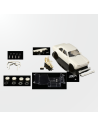
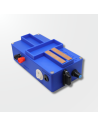
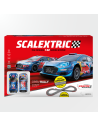
When we want to improve the electrical performance of a slot car, it is rarely enough to change a single part. The actual performance on the track depends on the motor, braids, guide, and wiring working together in harmony. This is why electric combos for slot cars exist: to provide you with the components that work best together in one step, eliminating doubts about compatibility and saving you time in searching and testing.
At Ministry of Hobby, we have been preparing and advising on electronics applied to slot racing for years. We know that both the driver looking for their first serious upgrade and the competition preparer fine-tuning tenths in the pits have a common need: that the electrical components they install are reliable, compatible, and well-balanced with each other. That is exactly what you will find in this section.
Electric combos for slot cars typically group elements such as motors with their reference pinions, sets of braids with adapted guides, or wiring kits with specific connectors. Depending on the manufacturer and the level of preparation you are aiming for, the combination varies, but the goal is always the same: to install, adjust, and hit the track with guarantees from the very first moment.
Whether you have a 1/32 competition car in a club championship or you are preparing a GT to run on a sport or universal track, choosing the right electrical set makes the difference between a car fighting for pole position and one that lags behind. In this guide, we explain what an electric combo really encompasses, how to choose it according to your case, and what mistakes to avoid before soldering anything.
What are electric combos for cars and why do they matter
An electric combo for slot cars is a set of power and electrical transmission components designed to work together coherently. Instead of buying each piece separately and hoping everything fits, the combo offers an integrated solution where each element has been selected or validated to complement the rest.
The components that usually form part of these combos are:
- Motor: the heart of the system, which converts electrical energy into rotational motion. Its power, torque, and response characteristics define the car's character.
- Braids: the contacts that collect current from the track and transmit it to the motor. Their quality and condition directly influence electrical continuity and, therefore, the car's consistency on the track.
- Guide: the piece that fits into the track and keeps the car on the racing line. In many combos, it is associated with the braids because they work inseparably.
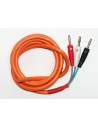
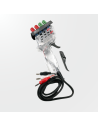
- Wiring and connectors: the circuit through which current travels from the braids to the motor. Adequately sized wiring reduces power losses and improves response.
- Reference pinion: some combos that include a motor also incorporate the most common or recommended pinion for that motor, facilitating the initial setup.
The reason these sets make sense is technical: a very powerful motor connected to worn braids or thin wiring will lose part of its potential performance. A well-balanced car electrically responds better to the controls, accelerates more progressively, and maintains consistent behaviour throughout the entire track session.
How to correctly choose an electric combo for your car
Before deciding on a specific combo, there are several questions that should be answered honestly:
What track system do you use?
The type of track your car runs on affects certain aspects of the electrical set, especially the design and dimensions of the guide. Universal track systems, common with brands like Scalextric or Ninco, have a different track width than sport track systems, typical of brands like Scaleauto or Slot.it. Before purchasing a combo that includes a guide, confirm which system you will be running on to ensure a proper fit.
What are the regulations of your championship?
If you are racing in a club or federated championship, the regulations may limit the type of motor, maximum power, or even the type of braids allowed. Reading the regulations before investing in a combo will save you unpleasant surprises at the verification table. Many club championships have categories with standard motors where the electric combo focuses on braids, guide, and wiring, leaving the motor fixed.
What is your level of preparation?
Not all combos are equal in installation complexity. Some are designed for drivers with basic knowledge to assemble in minutes; others are aimed at preparers who will adjust every detail. Choose a combo that matches your experience or the help you have available.
What type of driving do you prioritise?
A car for a technical circuit with many slow corners needs a different motor profile than one for a fast oval or a track with long straights. Combos that include a motor are usually labelled by the manufacturer with a usage orientation: competition, general use, slow tracks, fast tracks. Rely on that information, and if you have doubts, consult us.
Main types and differences between electric combos
We can classify electric combos for slot cars based on the components they group:
Motor + pinion combos
These are the most common in the preparation world. They include a specific motor along with the pinion that best suits its torque and RPM characteristics. Brands like NSR, Slot.it, or Scaleauto offer these types of combinations optimised for their own chassis, although the motors are compatible with many other cars as long as the mounting (sidewinder, inline, or anglewinder) is appropriate.
Braids + guide combos
Designed to improve current collection without touching the motor. They are ideal when the car already has a good motor but suffers from intermittent issues, cuts, or loss of contact in corners. They include braids with greater flexibility or lower electrical resistance along with a guide of optimised dimensions or material.
Complete electric combos
They group motor, braids, guide, and wiring in one package. They are the most convenient option for a comprehensive electrical renewal of the car, especially when starting from an entry-level car and wanting to make a clear performance leap.
Combos for specific categories
Some manufacturers and distributors prepare combos aimed at specific regulations: fixed motor categories, classes of historical cars, GT categories, or prototype categories. In these cases, the combo is already validated to comply with the restrictions of the relevant regulations.
Technical aspects we need to know
To get the most out of an electric combo, it is important to understand some fundamental technical concepts:
Types of motor mounting
The position of the motor within the car's chassis defines its designation and affects track behaviour:
- Sidewinder: the motor is mounted parallel to the rear axle. This is the most common mounting in 1/32 competition cars, as it allows for a lower height of the assembly and good weight distribution.
- Inline: the motor is placed perpendicular to the rear axle, in line with the car. It lowers the centre of gravity by placing the motor closer to the ground and is common in low-bodied cars.
- Anglewinder: the motor is positioned at an intermediate angle relative to the rear axle, seeking a balance between the advantages of sidewinder and inline. This is the most technical mounting and is present in high-performance cars.
When choosing a combo that includes a motor, ensure that the mounting type is compatible with your car's chassis. Installing a sidewinder motor in a chassis designed for inline, or vice versa, may be impossible or require significant modifications.
Electrical resistance of the braids
Quality braids have lower electrical resistance, meaning more amperes reach the motor at the same voltage. In practice, the car responds better to the controls and maintains power more consistently. Quality aftermarket braids from brands like NSR, Slot.it, Avant Slot, or Scaleauto are a noticeable improvement over stock braids in many cars.
Wiring gauge
Insufficient gauge wiring limits current flow and generates heat, which can degrade the insulation over time. In competition cars, the wiring is usually of a larger gauge than stock to minimise losses, especially when working with high-power motors.
Practical installation and maintenance tips
A well-installed electric combo is as important as the combo itself. Here are some workshop recommendations that we apply ourselves:
- Clean before installing: before mounting any new electrical component, clean the chassis, soldering points, and guide rail. Dirt and grease are the main enemies of electrical continuity.
- Solder with just the right heat: excessive temperature when soldering can damage the motor or melt the wiring insulation. Use a fine-tipped soldering iron and work quickly.
- Adjust the pressure of the braids: braids with too much pressure on the track slow the car down; too little pressure causes intermittent issues. The correct adjustment is key for good performance.
- Check the guide periodically: wear on the guide affects the racing line and stability. Replace it when you notice the car losing precision in corners.
- Run in the motor before competing: new brush motors require a break-in period at low voltage to settle the brushes and optimise contact. Respect this process if the manufacturer indicates it.
- Keep your track clean: a dirty track increases electrical resistance and causes even the best electric combo to underperform.
Common mistakes to avoid
Over the years, we have seen the same mistakes repeated in club circuits and preparation workshops. We share them so you don’t fall into them:
- Mixing track systems without checking: installing a guide designed for sport track on a car that will run on universal track (or vice versa) can cause the car not to fit well on the track or derail frequently. Before buying any combo that includes a guide, confirm your track system. Brands like Scalextric, Scaleauto, Ninco, or Carrera have tracks with different track geometries.
- Ignoring the type of motor mounting: as explained earlier, a motor designed for sidewinder is not always mountable in an inline chassis. Check compatibility before purchasing.
- Underestimating the braids: many drivers invest in a reference motor and leave the stock braids. The result is a motor that does not receive all the current it could, losing part of its potential performance.
- Not running in the new motor: jumping into competition with an unbroken-in motor can shorten its lifespan and prevent it from performing at its optimal level from the start.
- Skipping the regulations: in competition, installing a non-homologated motor or component for the category can lead to exclusion. Always check your championship regulations before preparing the car.
- Buying based on price without considering compatibility: a cheaper combo that is not compatible with your chassis or track system is not a bargain. Compatibility is the first criterion; price is the second.
Recommendations for beginners and advanced users
If you are just starting
The most common scenario is that your first car comes with a stock electrical set that is perfectly valid for running and learning. The first meaningful upgrade usually involves improving the braids and guide: these are affordable, easy to install changes that have a real impact on the car's consistency. A braids + guide combo from brands like NSR or Slot.it is an excellent first investment.
Don’t rush to change the motor until you have mastered the track and understand what you are asking of the car. A more powerful motor in the hands of an inexperienced driver is often harder to control, not faster.
If you already have experience
At this level, combos that include a motor make perfect sense. You know your driving style, whether your track has more slow corners or long straights, and you probably have the judgement to assess the car's response. Here, the ideal combo is one that combines a motor with the appropriate torque curve profile for your circuit, along with braids and wiring that do not limit its potential.
Brands like NSR, Slot.it, Avant Slot, or Scaleauto offer reference motors with validated pinion combos that are the usual starting point in most club championships and federated competitions. If you have doubts about which one best fits your category and circuit, we are here to guide you.
| Combo Type |
Included Components |
User Profile |
Performance Impact |
| Braids + Guide |
Quality braids + optimised guide |
Beginner / initial upgrade |
Improves electrical continuity and racing line |
| Motor + Pinion |
Reference motor + drive pinion |
Intermediate / competition |
Increases power and overall performance |
| Complete Combo |
Motor + braids + guide + wiring |
Comprehensive renewal / advanced competition |
Maximum performance of the electrical set |
| Regulated Combo |
Validated components for specific category |
Federated or club championship driver |
Performance within regulations |
Frequently asked questions about electric combos for cars
Is an electric combo compatible with any slot car?
Not necessarily. Compatibility depends on the type of motor mounting (sidewinder, inline, or anglewinder), the track system, and the dimensions of the chassis. Always check the specifications of the combo and, if in doubt, consult us before purchasing.
What improves performance more: changing the motor or upgrading the braids?
It depends on the starting point. If the braids are worn or of low quality, upgrading them has an immediate and noticeable impact. If the motor is already a real limitation for your level, changing the motor will make a bigger difference. In many cases, the combination of both is what provides the definitive leap.
Can I install an electric combo myself?
Yes, most combos are designed to be installed by the driver themselves with basic workshop tools: soldering iron, solder, pliers, and screwdrivers. Combos that only include braids and a guide often do not even require soldering.
Are the braids in the combo better than the stock ones?
In the vast majority of cases, yes. Aftermarket braids from specialised brands have lower electrical resistance and greater flexibility than stock ones, resulting in more efficient and consistent current collection.
Do I need to run in the motor before competing?
Brush motors, which are the most common in slot racing, benefit from a break-in period at low voltage to settle the internal contacts. Many manufacturers indicate this in the instructions. Respecting it extends the motor's lifespan and improves its performance from the start.
What happens if I mix components from different brands?
It is not necessarily a problem, but compatibility must be checked. An NSR motor can work perfectly with Slot.it braids if the mounting is compatible. What is not advisable is to mix without verifying, especially regarding the type of guide and track system.
Do electric combos work for universal and sport track systems?
It depends on what the combo includes. If it only has a motor and pinion, compatibility with one or the other track system is not a factor. If it includes a guide, it is essential that it is suitable for your type of track. Universal track systems like those from Scalextric or Ninco and sport track systems like those from Scaleauto or Slot.it require guides with different geometries.
Which brands offer the most valued electric combos in competition?
NSR, Slot.it, Avant Slot, and Scaleauto are the usual references in the world of slot racing competition. Each has its own product philosophy and strengths, so the choice also depends on the type of chassis and category you are competing in.
Does a more expensive combo always mean better performance?
Not necessarily. The most expensive combo may be the most powerful or the most specialised, but if it does not fit your level, your track, or your regulations, it will not provide the expected performance. The best combo is the one that best fits your specific situation.
How often should I check the braids and guide?
It depends on usage. In intensive track sessions or regular competition, it is advisable to check them after each session and replace them when visible wear, loss of flexibility in the braids, or excessive play in the guide is noticed. It is one of the simplest and most cost-effective maintenance operations in terms of performance.
Can I use a slot electric combo in a car of another scale, like 1/24?
Some components, especially motors and wiring, may be common across scales if the dimensions and mounting are compatible. However, guides and braids are usually specific to each scale and track system. Always check compatibility before assuming that a 1/32 combo works for a 1/24 car.