Building or expanding a slot circuit involves much more than just placing track sections and putting a car on top. Behind every timed lap, there is an electrical installation that, if well designed, goes completely unnoticed; and if it fails, it turns the session into a source of frustration. Switches, connectors, and cables are exactly that invisible part: the elements that ensure that the current reaches where it needs to go, in the correct amount, without interruptions or voltage drops. Whether you are setting up your first circuit at home or managing a competition table with several independent lanes, the quality and proper choice of these components make the difference between a reliable system and one that fails at the worst moment.
In this section, you will find everything necessary to correctly wire your installation: from the main switch that safely cuts off the power, to the connectors that join track sections or distribute current between areas, as well as cables of different sections to adapt to each section of the circuit. It doesn't matter if you are working with a domestic power supply, a competition central unit, or a classic analogue transformer: here you have the components to meet every need in an orderly and professional manner.
This section is also very useful for those who take the hobby to the next level: those who build detailed pits with lighting, install lap counters, add traffic lights, or simply want to have a clean cut-off point in their permanent installation. The right connectors allow you to expand the circuit without having to redo all the wiring, and the cables of the correct section prevent voltage drops that directly affect the performance of the cars.
What these components are and why they matter
A slot circuit is, in essence, an electrical circuit. The track conducts current from the power supply to the metal rails, and from there to the car's braids, which transmit it to the motor. Any weak point in that chain — a loose connector, an insufficiently sized cable, a poor-quality switch — results in a loss of performance, sparks, overheating, or directly in cars that do not respond smoothly.
Switches allow you to cut and restore the electrical supply in a controlled manner. They are essential in permanent or semi-permanent installations, where leaving the power supply connected without an accessible cut-off point is neither practical nor safe. They are also used to enable or disable areas of the circuit, isolate lanes in multi-lane configurations, or control accessories such as ambient lighting or decorative elements with electrical consumption.
Connectors are the bridges between different elements of the installation. They facilitate modular assembly: if you want to extend the circuit, change the arrangement of the sections, or disassemble the track for storage, good connectors make everything much faster and prevent you from having to cut and splice cables every time. In competition installations, where the track is frequently assembled and disassembled, high-quality connectors are simply indispensable.
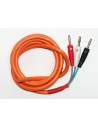
Cables are the most underestimated component of all. Many enthusiasts believe that any cable will do, but the conductor's section determines how much current can pass without the cable heating up or causing a noticeable voltage drop. In long circuits or with many cars, using a cable that is too thin can cause the car on the farthest lane from the power supply to perform worse than the one on the closest lane, which is unacceptable in competition.
How to correctly choose these components
The correct choice depends on the type of installation you have or want to set up. There are some basic criteria that are worth clarifying before purchasing:
- Maximum system current: The first piece of information you need is how much current your installation handles. A domestic power supply for recreational use can work with 2-3 amperes; a competition central unit with several stations can easily exceed 10-15 A. Switches and connectors must be rated to handle that current without overheating.
- Cable section: For standard installations of one or two lanes, a 1.5 mm² cable is usually sufficient. In larger installations or with long sections, it is advisable to increase to 2.5 mm² or even more in the main section from the power supply. The distribution sections to the individual lanes can use smaller sections.
- Type of connector: There are bayonet connectors, screw connectors, push connectors, and banana-type connectors, among others. For slot circuits, the most common are 4 mm banana-type connectors or quick push connectors. The important thing is that they are robust, do not lose contact with use, and are easy to connect and disconnect.
- Intended use: A permanent installation at home can afford a more definitive wiring, with well-secured screw terminals. A track that is set up for competition and then stored needs quick, removable, and reliable solutions.
Main types and differences
Switches
The most common in slot installations are toggle switches and push-button switches. Toggle switches offer a clear visual position of on/off, making them very practical on a circuit control panel. Latching push-button switches have a similar function but take up less space. There are also key switches for installations where access control to the equipment is desired.
For circuits with several independent lanes, it is common to use one switch per lane, so that each driver can be enabled or cut off individually. This is especially useful in practice sessions or when there is an accident on the track and you want to stop a car without halting the entire session.
Connectors
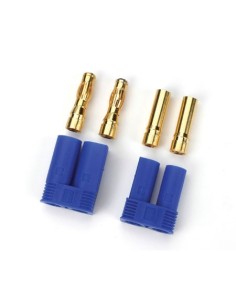
4 mm banana connectors are the most widespread in the world of competition slot racing. They are robust, easy to connect, and allow polarity identification by colours (red for positive, black for negative). Terminal block connectors are a more economical and versatile solution for joining cables at fixed points in the installation. Powerpole connectors (or similar quick-connect types) are popular in advanced installations for their ease of use and connection security.
Cables
The most common cable in slot installations is flexible tinned copper wire with PVC insulation. It is advisable to use flexible cables (with many fine copper strands) instead of rigid cables, as they better withstand bends and movement when assembling and disassembling the track. The colour of the insulation helps identify polarity: red for positive, black or blue for negative, although in personal installations each enthusiast has their own conventions.
Technical aspects we should know
Although you don't need to be an electrician to wire a slot circuit, understanding some basic concepts avoids many problems:
- Voltage drop: The longer the cable and the smaller its section, the greater the electrical resistance and the more voltage is lost before reaching the car. In large circuits, it is advisable to bring the main power supply to the centre of the circuit (or distribute it at several points) instead of connecting it only at one end. This way, the maximum distance from any point on the track to the power supply point is halved.
- Contact resistance: A dirty, oxidised, or poorly tightened connector introduces additional resistance into the circuit. This can cause sparks, localized heating, and loss of performance. It is advisable to periodically check the condition of the connectors and clean them if necessary.
- Polarity: In analogue slot racing, polarity determines the direction of the motor, so an inverted connection makes the car go backwards. In digital installations, some systems are more tolerant, but it is always advisable to respect the polarity marked by the track or central unit manufacturer.
- Fuses and protections: In installations with a certain power, it is highly recommended to incorporate a fuse in the main section, between the power supply and the circuit. If a short circuit occurs (a car fallen on the track, an accident, a bare wire), the fuse protects the power supply and the rest of the equipment.
Practical installation and maintenance tips
A few habits make the difference between an installation that lasts for years without problems and one that requires constant review:
- Plan the wiring route before starting. Identify where you will place the main power point, the switch, and the distribution connectors. Well-planned wiring is shorter, neater, and easier to maintain.
- Use crimped terminals. Crimping a terminal to the end of the cable (instead of simply twisting the wires and putting them in a screw) greatly improves contact reliability and prevents the copper strands from breaking due to vibration or movement.
- Label the cables. In installations with several lanes and accessories, labeling each cable when assembling saves a lot of time when modifications or repairs are needed.
- Check the connectors periodically. Especially in circuits that are assembled and disassembled, check that the connectors are not bent, oxidised, or loose. A faulty connector is a sure source of problems.
- Do not oversize unnecessarily. An excessively thick cable is difficult to handle and can damage the terminals of more delicate connections. Adapt the section to the actual current of your installation.
Common mistakes we should avoid
- Using cable that is too thin in the main section. This is the most common mistake and the one that most affects performance. The section of the main cable must be sized for the total current of the installation, not for a single lane.
- Ignoring polarity. Especially in new installations or when making modifications, it is easy to reverse positive and negative. Always check before turning on that the polarity is correct at all points.
- Splicing cables without protection. A splice without insulating tape or without an appropriate connector is a potential short-circuit point. All splices must be well insulated.
- Forgetting an accessible cut-off point. In permanent installations, not having a switch at hand forces you to unplug the power supply every time you want to cut the supply, which over time wears out both the power supply and the power cable.
- Mixing connectors of different standards. Although it is sometimes possible to adapt, mixing connector types creates weak points in the installation and complicates maintenance. It is better to choose one standard and maintain it throughout the installation.
Recommendations for beginners and advanced users
If you are starting
The most important thing when starting is not to overcomplicate things. For a simple home circuit, with a power supply and one or two lanes, a good 1.5 mm² cable, a toggle switch, and a couple of 4 mm banana connectors are all you need. Buy a little more cable than you think you will need: there is always leftover, but never enough. And before permanently assembling anything, do a continuity test to ensure everything is properly connected.
If you already have experience
In larger competition or permanent installations, it is worth investing in higher quality connectors (Powerpole type or similar), 2.5 mm² cable for the main section, and a distribution board with a switch for each lane. If the installation includes electronic accessories (lap counters, traffic lights, lighting), consider routing the signal wiring separately from the power wiring to avoid interference. And if you set up the track in an area where there may be humidity or temperature variations, use connectors with oxidation protection.
Frequently asked questions
What cable section do I need for my slot circuit?
For domestic circuits of one or two lanes with power supplies of up to 3-4 A, 1.5 mm² is sufficient. For larger or competition installations with several lanes and higher power supplies, it is advisable to use 2.5 mm² in the main section and 1.5 mm² in the branches to each lane.
What type of switch is most suitable for a slot circuit?
Toggle switches are the most popular due to their visual clarity and robustness. Make sure to choose one with a current capacity suitable for your installation: always check the amperage specification in direct current (DC), not just in alternating current (AC).
Can I use the connectors from the original factory track in a competition installation?
The connectors included with factory tracks are usually sufficient for recreational use, but in competition installations where the track is frequently assembled and disassembled, it is advisable to replace them with more robust and higher quality connectors.
How do I know if a connector is causing problems?
The most common symptoms are: cars that stutter in certain areas of the track, localized heating at some point in the wiring, visible sparks at the connections, or detectable voltage drops with a multimeter. If you suspect a connector, clean it or replace it.
Is it necessary to use a fuse in a domestic slot circuit?
It is not mandatory, but it is highly recommended in installations with a certain power. A fuse in the main section protects the power supply and the rest of the equipment in case of a short circuit, which can occur due to a car fallen with the braids touching both rails at the same time.
What is the difference between a banana connector and a terminal block connector?
The 4 mm banana connector is a quick connection type (it plugs in and unplugs in seconds) and is very common in precision electronics and competition. The terminal block connector is more economical and versatile, ideal for fixed points in the installation where you do not need to disconnect frequently.
Can I wire the power supply at several points on the track?
Yes, and in long circuits, it is highly recommended. Feeding the track at several distributed points reduces voltage drop and ensures that all sections receive the same voltage, which is critical in competition.
What does it mean for a cable to be "flexible" versus "rigid"?
A flexible cable has the conductor made up of many fine copper strands, allowing it to bend repeatedly without breaking. A rigid cable has a solid conductor or few thick strands, making it harder to handle and prone to breaking over time if bent a lot. For slot installations, flexible cable is always preferred.
How do I identify polarity in cables and connectors?
By convention, red is positive and black (or blue) is negative. In banana connectors, this colour code is also respected. If you have doubts with an existing installation, a multimeter in DC voltmeter mode will instantly indicate which is positive and which is negative.
Are connectors and cables compatible between different track systems?
In general, yes, because they connect to the electrical installation independently of the type of rail (universal or sport). What varies between track systems is the geometry of the connectors joining sections, but the external wiring for power and distribution is standard.
Can I use these components to install accessories like traffic lights or lap counters?
Absolutely. Many enthusiasts use the same types of cable and connector for power wiring and for the signal wiring of accessories. If both coexist in your installation, consider physically separating the two circuits to avoid interference in the more sensitive electronic systems.
How often should I check the connectors in my installation?
In a permanent installation that is not disassembled, an annual check is usually sufficient. If you regularly assemble and disassemble the track, check the condition of the connectors every time you do the assembly: this is when they wear out the most and when it is easiest to detect problems before they affect the session.