
Shopping Cart
-

-
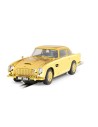 James Bond Aston Martin 'Goldfinger'€62.00 €69.00
 Mosler MT900R Salvatore Noviello 11th Anniversary EVO3€63.57 €73.57
 Formula 90-97 Blanco/Azul/Amarillo 1990 Nº6 morro bajo€76.30 €79.90
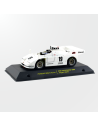 Porsche 908/3 Turbo White Edition Jürgen Barth€29.50 €36.00
 Advance Audi S1 WRC Sonax€30.00
 -
 Rodador con transformador€40.00
 Punta Hex. 0.9 mm€3.40
 -
 Circuito Open Rally Set€188.43
 Muelle para mandos€2.00


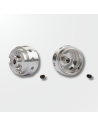
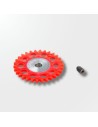
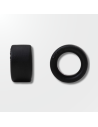





10-tooth brass pinion ø5.5mm for 2mm shaft

€2.95
Tax included
Brass pinion with 10 teeth and an outer diameter of 5.5 mm, designed for 2 mm shafts. Manufactured by Scaleauto (ref. SC-1093A55), it is equivalent to the SI-PI10 and fits perfectly in transmission setups that demand accuracy and reliability.
Brass Pinion 10 Teeth Scaleauto SC-1093A55: Precise Transmission for Your Slot Setup
The SC-1093A55 is the 10-tooth brass pinion from Scaleauto designed for 2 mm axles, with an outer diameter of 5.5 mm. A small yet critical transmission component: its correct sizing depends on the engagement with the crown gear, the efficiency of the transmission, and ultimately, the car's behaviour on the track.
Features and Specifications
- Number of Teeth: 10
- Outer Diameter: ø 5.5 mm
- Axle Diameter: 2 mm
- Material: brass
- Scaleauto Reference: SC-1093A55
- Equivalence: SI-PI10
Brass is the reference material for competition slot pinions: it offers clean machining, low wear in contact with the crown gear, and a mass that contributes to smooth transmission. Compared to plastic pinions, brass withstands the heat generated during long sessions better and maintains tooth geometry with greater fidelity.
Function and Performance
The pinion is the link between the motor and the crown gear: it receives the rotation from the motor shaft and transmits it to the crown gear, which drives the rear axle. With 10 teeth and a diameter of 5.5 mm, this pinion is in the mid-short range of gear ratios. Combined with crowns of a higher tooth count, it allows for reductions that favour torque on tracks with many curves or in cars that require traction from low speeds.
The choice of the number of teeth on the pinion —along with that of the crown— defines the final gear ratio of the car. Adjusting this ratio is one of the most accessible and effective setups to adapt the car to each layout.
Compatibility and Installation
Designed for motor axles of 2 mm, the most common diameter in 1/32 and 1/24 scale slot motors. Its equivalence with the SI-PI10 facilitates direct replacement in setups where that reference is already used.
For installation, it is recommended to:
- Check the alignment between pinion and crown gear before finalising the fit.
- Verify the lateral play: neither too tight (excessive friction) nor too loose (loss of efficiency and premature wear).
- Use a drop of suitable anaerobic adhesive for metals if permanent fixation to the axle is required, or a tightening screw if the pinion has one.
Common Mistakes
The most common mistake when working with brass pinions is forcing the fit onto the axle without first checking that the motor shaft diameter is exactly 2 mm. A slightly larger shaft can deform the pinion hole and compromise the transmission. Similarly, misalignment between pinion and crown gear generates noise, vibration, and accelerated wear on both parts.
Frequently Asked Questions
Which crowns is this pinion compatible with?
As a standard module pinion for slot, it is compatible with crowns of the same module. The equivalence with the SI-PI10 indicates compatibility with the usual crowns of the Slot.it and Scaleauto systems. Always check the module of the crown you are already using on your car to ensure correct engagement.
Is it suitable for Sidewinder, Inline, and Anglewinder setups?
Yes. The pinion itself is not conditioned by the motor layout. It works in Sidewinder configurations (motor parallel to the rear axle), Inline (motor in line, perpendicular to the rear axle), and Anglewinder (motor at an angle), as long as the motor shaft is 2 mm.
What is the difference between a brass pinion and a plastic one?
Brass offers greater wear resistance, better heat tolerance, and more precise tooth machining. For competitive use or long sessions, brass is the preferred option. Plastic may be sufficient for casual recreational use.
How does the number of teeth on the pinion affect the car's behaviour?
A pinion with fewer teeth combined with a large crown gives a longer gear ratio (more torque, less top speed). Increasing the pinion teeth shortens the ratio, raising the top speed but reducing torque. With 10 teeth, it is a common starting point for technical tracks with many curves.
Do I need any special tools to install this pinion?
A pinion puller and a caliper to verify the axle diameter are the basic tools. For a clean installation without damaging the pinion, avoid striking directly on it: use a mounting tool or gently push from the end of the axle.
The Scaleauto SC-1093A55 is a 10-tooth brass pinion gear with a 5.5 mm outer diameter, designed for 2 mm motor axles. A direct equivalent to the SI-PI10, it is a reliable transmission component for 1/32 and 1/24 scale slot cars, suitable for Sidewinder, Inline and Anglewinder motor configurations. Ideal for club racers and hobbyists looking to fine-tune gear ratios for different track layouts.
SC-1093A55
10 Items
No reviews
Comments (0)
No customer reviews for the moment.
Tap to zoom
