
Shopping Cart
-
-
 James Bond Aston Martin 'Goldfinger'€62.00 €69.00
 Mosler MT900R Salvatore Noviello 11th Anniversary EVO3€63.57 €73.57
 Formula 90-97 Blanco/Azul/Amarillo 1990 Nº6 morro bajo€76.30 €79.90
 Porsche 908/3 Turbo White Edition Jürgen Barth€29.50 €36.00
 Advance Audi S1 WRC Sonax€30.00
 -
 Rodador con transformador€40.00
 Punta Hex. 0.9 mm€3.40
 -
 Circuito Open Rally Set€188.43
 Muelle para mandos€2.00






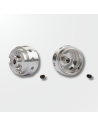
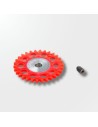





10-tooth Ergal pinion. ø6.0mm for 2mm axle

€4.70
Tax included
10-tooth pinion made of Ergal, with a diameter of 6.0 mm and designed for 2 mm axles. A key component in the transmission of your slot car when looking to reduce rotating mass and gain responsiveness in acceleration.
The Scaleauto Ergal Pinion: Less Weight, More Response in Transmission
The SC-1093E60 pinion from Scaleauto is a 10-tooth transmission component made from Ergal, a high-strength, low-density aluminium alloy highly valued in the preparation of competitive slot cars. With a diameter of 6.0 mm and a bore for a 2 mm axle, it fits directly into the most common precision slot mounts.
Main Features
- Material: Ergal (high-strength aluminium alloy)
- Number of Teeth: 10
- Outer Diameter: ø 6.0 mm
- Axle Diameter: 2 mm
- Reference: SC-1093E60
- Brand: Scaleauto
Why Choose Ergal Over Other Materials
In slot car preparation, every gram in the transmission components impacts performance. Ergal offers a very favourable strength-to-weight ratio: stiffer than plastic and significantly lighter than brass or steel. The result is lower rotational inertia, translating to a more responsive acceleration and cleaner braking when releasing the trigger on the controller.
For those competing in club categories or fine-tuning their setups, the difference between a standard plastic pinion and one made of Ergal can be clearly perceived in chicane curves and standing starts.
Function and Performance in Transmission
The pinion is the gear attached to the motor shaft that transmits motion to the crown gear. The gear ratio — that is, the quotient of the number of teeth on the pinion and the crown — determines the combination of top speed and available torque. With 10 teeth, this pinion allows for well-balanced transmission configurations, common in both long straight tracks and technical circuits.
The diameter of ø 6.0 mm ensures the appropriate centre distance for proper meshing with compatible crowns, maintaining the minimum necessary play for a quiet and efficient transmission.
Installation and Preparation
Installing this pinion on a 2 mm axle is straightforward, but it is important to consider a few points to ensure optimal operation:
- Check the alignment of the pinion with the crown before permanently securing it. Lateral misalignment causes premature wear and noise.
- Apply a minimal amount of specific slot gear lubricant to the flanks of the teeth. Excess grease attracts dirt and can hinder performance.
- Check the play between pinion and crown: there should be a slight clearance — enough for the assembly to rotate without tightness but without noticeable lateral play.
- If secured with a set screw, ensure it sits on the flat part of the axle (if it has one) to prevent the pinion from slipping under load.
Common Mistakes When Working with Ergal Pinions
Ergal is durable, but not indestructible. Over-tightening the set screw can deform the axle housing over time. Similarly, forcing the fit with a slightly oversized axle can damage the part. We recommend always checking the actual diameter of the axle with a micrometer before installation.
Ideal For...
- Preparers looking to reduce rotational mass in the transmission.
- Club competitors fine-tuning the gear ratio according to the layout.
- Setups in slot cars with a 2 mm rear axle and space for a ø 6.0 mm pinion.
- Replacement of plastic or brass pinions in advanced preparation projects.
Frequently Asked Questions
Which crowns is this pinion compatible with?
Compatibility depends on the tooth module. It is essential that the pinion and crown share the same module for proper meshing. Check the specifications of your crown before combining them, or ask us if you have questions about the appropriate pair.
What is the difference between an Ergal pinion and a brass one?
The main differentiating factor is weight. Ergal is significantly lighter than brass, reducing the rotational inertia of the transmission assembly. Brass offers greater surface hardness and may last longer under very intensive use, but Ergal excels in dynamic response.
Can I use this pinion in Sidewinder and Inline configurations?
Yes. The pinion itself is compatible with both motor configurations, provided the motor axle is 2 mm and the outer diameter of 6.0 mm fits the centre distance of your chassis. The Sidewinder configuration places the motor parallel to the rear axle, while in Inline the motor is in line with the car; in both cases, the pinion serves the same transmission function.
How many teeth does it have and how does that affect speed?
This pinion has 10 teeth. The more teeth the pinion has in relation to the crown, the higher the top speed but lower the starting torque. With 10 teeth, it operates in a mid-low range that typically favours acceleration and torque, always depending on the number of teeth of the crown it is paired with.
Does it need any adhesive or set screw to secure it?
It depends on the design of the pinion. If it has a lateral set screw, that is the recommended method. If not, anaerobic low-strength adhesive specific for modelling or slot can be used. Check the manufacturer's instructions or consult your usual preparer.
Scaleauto pinion 10 teeth Ergal alloy, 6.0 mm outer diameter, designed for 2 mm axles. Reference SC-1093E60. Lightweight aluminium pinion gear for slot car transmission setups, ideal for club racing and performance builds. Compatible with standard 2 mm motor axles in Sidewinder and Inline configurations. Low rotational inertia for faster throttle response on the track.
SC-1093E60
4 Items
No reviews
Comments (0)
No customer reviews for the moment.
Tap to zoom
