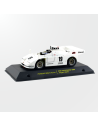
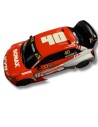
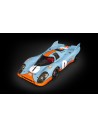
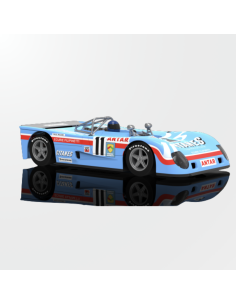
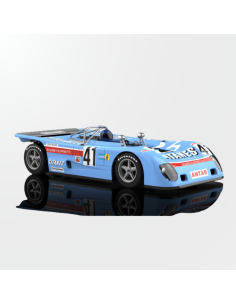
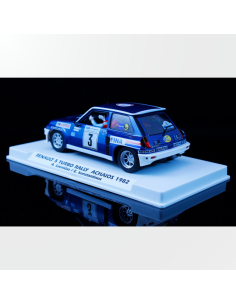
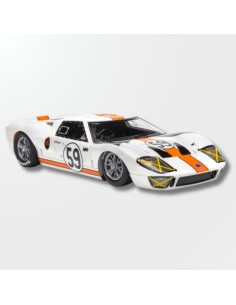
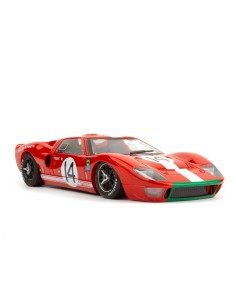
There are races that are not just won: they are survived. Twenty-four hours of asphalt, rain, darkness, and mechanics pushed to the limit. Le Mans, Spa-Francorchamps, Daytona, Sebring, Nürburgring… Names that any motorsport enthusiast recognises instantly, and that between the 1960s and 1980s perhaps experienced their most epic and dangerous era. It was the age of the Porsche 917, the Ferrari 312 PB, the Gulf Mirage, the Lancia Stratos, and the Porsche 956, to name just a few of the protagonists that today are part of the great history of endurance motorsport.
Classic endurance in slot scale is much more than racing in miniature. It is about reproducing on the track that tension between speed and reliability that defined entire decades of real competition. A car that endures is not necessarily the fastest in qualifying: it is the one that finishes. And that philosophy —prepare, fine-tune, care for— has its direct reflection in how this hobby is experienced when the protagonist is a prototype from the 1960s or a Group C beast from the 1980s.
At Ministry of Hobby, we have been selecting classic endurance models with criteria for years: level of detail, fidelity to the historical livery, track behaviour, and compatibility with the most common track systems. You will not find an endless list of references here without order or reason. You will find the cars worth having, whether you want them for racing or for display.
If you are passionate about those hours of racing at dawn, the colours of sponsors that no longer exist, and the sounds of engines that modern regulations would never allow, you are exactly where you need to be.
What is Classic Endurance and why does it hold a special place in slot?
Endurance —or endurance racing— is a discipline of motorsport where the goal is not just top speed, but the combination of speed, reliability, and strategy over several hours of racing. The most legendary events last between six and twenty-four hours, demanding a level of management from the car and team that sprint races simply do not require.
The period covered by Classic Endurance —roughly from 1960 to 1989— is considered by many to be the most romantic and at the same time the most brutal of this discipline. It is an era that begins with the duels between Ferrari and Aston Martin, passes through the war between Ford and Ferrari in the mid-60s, experiences the aerodynamic revolution of the late 70s, and culminates with the Group C monsters that in the 80s pushed engineering to limits that frightened the regulations themselves.
In the world of slot, this category holds special importance for several reasons. First, because the silhouettes of those cars —with their aerodynamic shapes, vivid colours, and liveries loaded with history— are extraordinarily attractive to both collectors and drivers. Second, because brands like Slot.it, NSR, Avant Slot, or Scaleauto have dedicated a significant part of their catalogues to these machines, with a level of detail and engineering that does justice to the originals. And third, because many slot competitions —both in local circuits and in federated championships— have specific classes for classic prototypes, giving these cars an active life on track, not just in the display case.
How to correctly choose a Classic Endurance car
Before diving into purchasing, it is important to have a clear answer to a basic question: what is this car primarily for? The answer determines almost everything else.
For collection and display
If your main goal is historical fidelity and level of detail, pay particular attention to the quality of the bodywork, the finish of the livery, and additional details: mirrors, headlights, spoilers, drivers, panel separations. Brands like Slot.it or Avant Slot offer references with an outstanding level of finish. Avant Slot is also one of the few brands that industrially works with resin bodies, allowing for finishes and geometries that injected plastic does not always achieve.
For racing on track
If the destination is the track, the equation becomes a bit more complicated. You need to ensure that the car is compatible with your track system. The two main systems on the market are the universal track —where Scalextric and Ninco fit— and the sport track —for which Scaleauto and Slot.it are designed. Mixing systems without prior information can lead to driving issues or even cause the car not to run correctly. If you have doubts about compatibility, consult us before purchasing.
The integrated electronics also matter: some models include original LED lighting, which adds spectacular realism in night or long-duration races. And, of course, the motor and its mounting configuration: in classic prototypes, the three main arrangements —sidewinder, inline, and anglewinder— coexist, each with its own behaviour profile.
For serious competition
If you are looking for a car to compete in regulated championships, always check the rules of the series you are participating in. Many classes of classic endurance have restrictions on motors, tyres, guides, and minimum weight. Having specific manufacturer spare parts —chassis, braids, guides, crowns— is essential to fine-tune the car between sessions.
Types and main differences within Classic Endurance
Within this period of almost three decades, the cars that starred in endurance are of very different natures. Knowing them helps to choose wisely and understand what you are driving.
1960s Prototypes
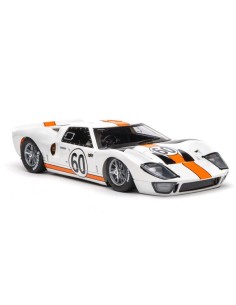
They are the purest cars in terms of silhouette. The Ferrari 250 GTO, Ford GT40, Porsche 906 and 910, or Lola T70 are machines with relatively compact shapes, with aerodynamics still rudimentary compared to what would come later. In slot, they tend to have a higher centre of gravity, which requires a more careful setup to prevent the car from behaving erratically in fast corners.
Transitional Prototypes (1970s)
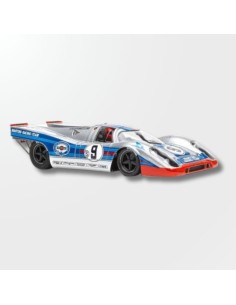
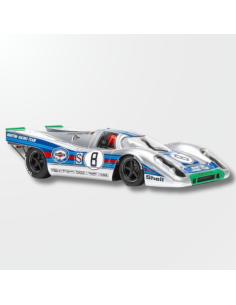
The 70s are the decade of experimentation. The Porsche 917, with its long tail for Le Mans or its short configuration for Spa, is the emblem of an era that sought top speed almost obsessively. The first ground effects also appear, and the silhouettes become lower and more aggressive. In slot, these cars usually have better grip than those from the 60s, with bodies that favour aerodynamic grip even at scale.
Group 6 and early Group C (late 70s – early 80s)
This includes references like the Porsche 936, Renault Alpine A442, or Mirage GR8. These are transitional cars between the classic era and the Group C revolution, with shapes that already anticipate what is to come. In slot, they stand out for their level of detail and the iconic liveries they display: Gulf, Martini, Elf, Gitanes… colours that have directly entered the popular culture of motorsport.
Group C (1980s)
Group C is the category that closes this golden age. The Porsche 956 and its successor the 962, the Lancia LC2, the Jaguar XJR, the Sauber-Mercedes C9… are ground effect machines, with regulated consumption and speeds that approached the impossible on track. In slot, they are some of the most popular cars precisely because their aerodynamics help keep them glued to the track, making them more predictable and, paradoxically, more accessible for mid-level drivers.
Technical aspects we should know
Classic endurance in slot is not a plug-and-play category. There are some technical concepts that are worth mastering to get the real benefit from these cars.
Motorisation and behaviour
The motor configuration largely determines how the car behaves on track. A motor in a sidewinder arrangement —transverse to the rear axle— offers a good balance between traction and response. An inline motor —longitudinal, in line with the car— lowers the centre of gravity and improves stability in corners, something that can make a notable difference in long Group C prototypes. The anglewinder —motor angled relative to the axle— is an intermediate solution that seeks the best of both worlds and is common in prepared competition cars.
Guide and braids
The guide is the element that keeps the car on the track and collects the current. In classic prototypes with long bodies, the position of the guide relative to the front axle is critical: a poorly positioned guide can cause the car to go off track in sharp corners or lose electrical contact in elevation changes. The braids —the contacts that transmit current from the track to the car's electronics— must be kept clean and under the right pressure to ensure uninterrupted driving.
Tyres and wheels
The profile and compound of the tyre directly affect grip and wear. Group C prototypes at scale usually mount lower profile tyres than cars from the 60s, which changes corner behaviour. For competitive use, it is common to work with soft rubber tyres that adapt better to the track, although they wear out faster and require periodic replacement.
Practical tips for use, maintenance, and preparation
A well-maintained classic endurance car can last for decades in perfect condition, whether it resides in a display case or runs regularly on track.
- Cleaning braids: after each running session, clean the braids with a cotton swab and a specific electrical contact cleaner. The build-up of graphite and dirt is the main cause of current interruptions.
- Lubrication of the drivetrain: apply a small amount of specific slot lubricant to the axles, gears, and bearings. Never excessively: leftover lubricant can contaminate the tyres and ruin grip.
- Guide inspection: periodically check that the guide rotates freely and does not have excessive play. A stiff or worn guide compromises both driving and electrical contact.
- Storage: if the car is going to be idle for a long time, store it in a dry place, away from direct sunlight, and preferably in its original box or a closed display case. Old liveries —especially those with transfers or decals— are sensitive to humidity and temperature changes.
- Body balancing: in long-bodied prototypes, weight distribution is more critical than in touring cars. If the car tends to oversteer, adding ballast to the front can significantly improve behaviour.
Common mistakes we should avoid
Over the years, we have seen the same mistakes repeated with this type of car. Knowing them in advance saves disappointments.
- Buying without checking track compatibility: not all classic endurance cars work well on all systems. Before purchasing, confirm whether the model is designed for universal track —compatible with Scalextric and Ninco— or for sport track —compatible with Scaleauto and Slot.it—. Mixing systems without checking beforehand can lead to driving or electrical contact issues.
- Ignoring the initial run-in: new cars need a smooth run-in for the tyres to settle, the gears to mesh, and the braids to make optimal contact. Going full throttle from the first minute can cause premature wear.
- Using generic lubricants: household lubricants or multi-purpose oils are not formulated for the tolerances of a slot car. Always use specific products.
- Neglecting braids in collection cars: even if the car is not running, the braids can oxidise over time. An annual inspection is more than sufficient to keep them in good condition.
- Forcing the guide in tight corners: long prototypes have a limited turning radius. In very tight corners, forcing the steering can bend or break the guide. Check that your track layout is compatible with the car's geometry.
Recommendations for beginners and advanced users
If you are starting
The most important thing at the beginning is not to complicate things. Choose a car from a recognised manufacturer —Slot.it and Scalextric have very accessible references within classic endurance— and ensure that it is compatible with your track. Group C cars from the 80s are usually easier to drive than 60s prototypes because their aerodynamics help keep them stable. Start with the factory setup, run them well, and learn how they respond before modifying anything.
If you have doubts about which model fits best with your circuit and your level, tell us what track you have and we will help you find the right reference.
If you already have experience
Classic endurance offers a huge margin for preparation. Working on the guide geometry, experimenting with different tyre compounds, adjusting ballast, or changing the gear ratio —crown and pinion— are variables that can make the difference between winning and retiring in a long race. Brands like NSR, Slot.it, and Scaleauto have very complete spare parts catalogues so you can fine-tune every detail without relying on generic solutions.
For users also looking for collector value, limited editions and historical liveries from brands like Avant Slot are an opportunity worth following closely: when they sell out, they do not return.
| Era |
Iconic Examples |
Typical Body |
Track Difficulty |
Collector Interest |
| 1960s |
Ford GT40, Porsche 906, Ferrari 330 P4 |
Plastic / Resin |
Medium-high |
Very high |
| 1970s |
Porsche 917, Mirage GR8, Alfa T33 |
Plastic / Resin |
Medium |
High |
| Transitional 70-80 |
Porsche 936, Renault Alpine A442 |
Plastic |
Medium |
High |
| Group C (1980s) |
Porsche 956/962, Jaguar XJR, Sauber C9 |
Plastic |
Medium-low |
Very high |
Frequently Asked Questions about Classic Endurance
What is the difference between a Group C prototype and one from the 60s on track?
Group C cars have much more developed aerodynamics than those from the 60s, making them more stable at high speeds and easier to control in fast corners. 60s prototypes are livelier and require more precise driving.
Are these cars compatible with any track?
Not necessarily. You must check if the model is designed for universal track —compatible with Scalextric and Ninco— or for sport track —compatible with Scaleauto and Slot.it—. Mixing systems without checking beforehand can lead to driving or electrical contact issues.
Can I use a collection car for competition?
In principle, yes, although it depends on the series regulations. Some championships allow unmodified production cars; others require setup adjustments that may affect the original finish. If the goal is to compete, it is advisable to have one unit for track and another for display.
Which brands have the best classic endurance catalogue?
Slot.it is probably the brand with the widest and most up-to-date catalogue of classic prototypes. NSR, Avant Slot, and Scaleauto also have notable references. Scalextric has produced some iconic models, although its active catalogue in this segment is more limited.
What does it mean for a car to have a resin body?
Resin allows for geometries and levels of detail that injected plastic cannot always reproduce. Resin bodies are more fragile against impacts but offer superior finishes. Avant Slot is one of the few brands that produces resins industrially with consistent quality guarantees.
What is the most common motor arrangement in classic prototypes?
It depends on the manufacturer and the model. The sidewinder is the most widespread due to its versatility. The inline is common in competition-oriented cars because it lowers the centre of gravity. The anglewinder appears in more advanced preparations. Many production cars already incorporate an optimised arrangement for their specific body.
How often should I clean the braids?
After each running session is ideal. If the car is on display, an inspection every three to four months is sufficient to prevent oxidation of the contacts.
Do classic endurance cars have resale value?
Limited editions and historical liveries from brands like Slot.it or Avant Slot can reach significantly higher prices than the original RRP in the second-hand market, especially when presented in their box and in perfect condition. Keeping track of the active catalogue is important if you are looking for collection with potential value.
Is it difficult to find spare parts for these cars?
For the main brands —NSR, Slot.it, Avant Slot, Scaleauto— specific spare parts are usually available: chassis, guides, braids, crowns, pinions, tyres, and wheels. This is one of the reasons why it is worth choosing brands with a consolidated spare parts catalogue.
What track do I need to enjoy these cars?
Long Group C prototypes appreciate circuits with generous radius corners. Very technical layouts with tight chicanes can be problematic for long-battle cars. A medium-sized circuit with varied corners is the ideal environment to get the real benefit from them.
Can I add LED lighting to a car that does not come with it as standard?
Yes, although it requires some skill with soldering and basic knowledge of electronics. There are specific kits for slot that simplify installation. In classic models with prominent headlights, lighting adds notable realism, especially in simulated night race sessions.
What liveries are the most sought after in classic endurance?
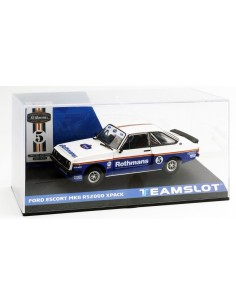
The Gulf liveries —the sky blue and orange of the Ford GT40 or the Porsche 917— are probably the most recognised and sought after. Martini, Rothmans, and Elf colours, associated with historic victories at Le Mans and in the World Endurance Championship, are also in high demand.