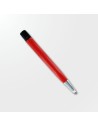
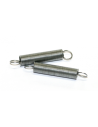
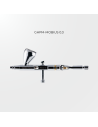
If you have made it this far, you probably already know that in the world of radio control, there are few things more frustrating than trying to adjust a differential with the wrong tool, or losing a ridiculously small screw because you don't have the right screwdriver on hand. RC tools are not a luxury: they are the difference between a productive afternoon in the workshop and an hour wasted cursing a nut. At Ministry of Hobby, we gather the tools that are actually used, the ones that end up worn out from so much work, not the ones that gather dust in a drawer.
Radio control —whether in cars, trucks, buggies, crawlers, or any other discipline— requires a constant level of maintenance. Models take hits, accumulate dirt, suffer wear on moving parts, and need periodic adjustments to perform as they should. Without the right tools, that maintenance becomes an odyssey. With them, it is part of the pleasure of the hobby.
Whether you are assembling a kit from scratch, preparing your model for a track session, changing tyres, or adjusting the suspension geometry, each operation requires precision. And precision starts with having the right tools at hand. Here you will find everything from hex keys and precision screwdrivers to specific pliers, body tools, camber and toe gauges, and everything needed to make bench work efficient and, why not, also enjoyable.
What RC tools are and why they make a difference
RC tools are precision tools designed —or carefully selected— to work with the screws, axles, joints, and components specific to radio-controlled models. We are not talking about DIY tools adapted to fit: we are talking about specific tooling for hex heads from 1.5 to 4 mm, for fine metric screws, for working in tight spaces without damaging plastic or aluminium parts.
The difference between a generic hex key and a good ball-end key specific for RC is noticeable from the first use: better grip, a tip that does not slip, an ergonomic handle that allows you to apply just the right torque without overdoing it. Over-torquing a shock absorber or a suspension cup can cost a pricey part and hours of work. The right tool prevents such mistakes.
Moreover, many of these tools are designed for very specific tasks: the spring tensioner that facilitates the assembly of shock absorbers, the wheel alignment tool, the ball joint puller, the mounting support that holds the chassis while you work. Each one solves a real problem that any enthusiast has experienced at some point.
How to choose the right RC tools
The first criterion is compatibility with your model. Before buying, it is advisable to check what screw sizes your kit uses —most manufacturers indicate this in the manual— and ensure that the keys and screwdrivers you acquire cover those measurements. The most common sizes in 1/10 models are 1.5, 2, 2.5, and 3 mm hex, but there are models that use different metrics or Phillips/JIS heads.
The second criterion is the quality of the steel. Low-quality tips round off quickly and end up damaging screws, which are sometimes difficult to obtain. Look for tools with hardened or treated steel, even if it means paying a little more. In the long run, it always pays off.
The third criterion is ergonomics. A tool that does not fit well in the hand, that slips, or that tires you out after a few minutes of use is a tool you will end up putting aside. Rubber or non-slip material handles make a real difference when you have been working for a while.
Finally, consider whether you need individual tools or if you are more interested in a complete set. For beginners, a well-thought-out set covers most cases without having to buy piece by piece. For advanced users, it is usually better to complete the workshop with specific higher-quality tools for the operations they perform most frequently.
Main types and differences
Hex keys and precision screwdrivers
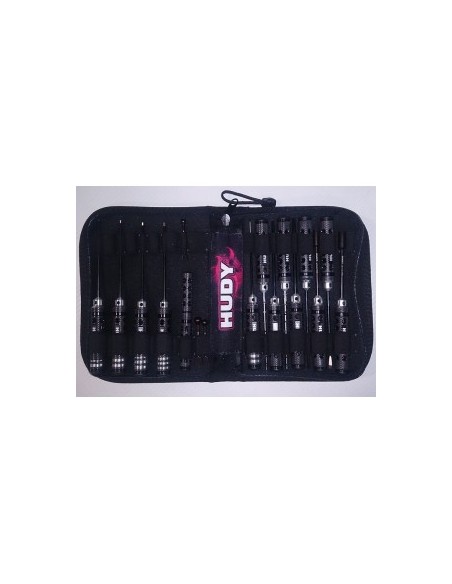
They are the core of the RC workshop. Ball-end hex keys (Allen type) allow you to work at an angle, which is very useful when access to the screw is limited. Precision screwdrivers —with Phillips, flat, or Torx heads depending on the model— are essential for the body and some electronic components.
Pliers and cutters
Fine-tip or long-nose pliers facilitate the installation of retaining clips, springs, and connectors. Flush cutters are essential for cutting zip ties and excess plastic without leaving burrs. There are specific models for RC with proportions suitable for the size of common components.
Body tools
Lexan scissors and cutters, marking punches, and specific riveters for polycarbonate bodies are tools that any RC enthusiast on the track will eventually need. Cutting and preparing a body well is an art in itself.
Suspension and geometry tools
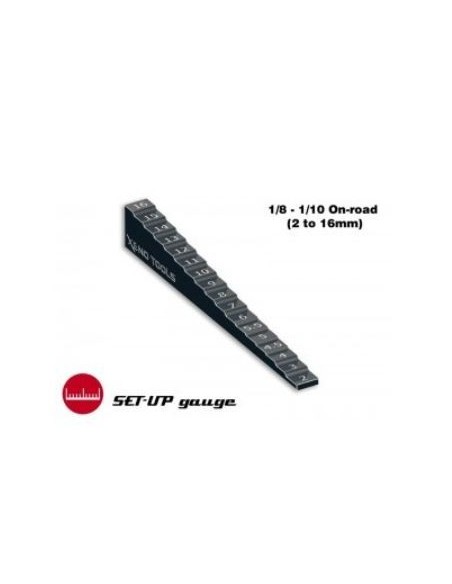
Camber, toe, and ride height gauges allow you to adjust the model's setup with precision. For those who practice competitive RC, these adjustments are as important as the components themselves. A well-geometrized car behaves completely differently from a neglected one.
Mounting and support tools
Work supports, spring tensioners for shock absorbers, ball joint pullers, and bearing mounting tools save time and protect parts during assembly. These are tools that are especially valued when you have been in the hobby for a while.
Technical aspects we should know
In RC, most screws are fine metric thread (M2, M2.5, M3, M4), and it is important not to confuse them with coarse thread screws or those measured in inches used by some models from North American brands. Using the wrong size tool is the most common cause of rounded screws and, ultimately, unusable parts.
Tightening torques also matter. In aluminium components, over-tightening can irreversibly damage the thread. In plastic components, the risk is even greater. Some advanced enthusiasts use torque wrenches adapted to the RC world for the most critical tightenings, although in most cases, experience and feel are sufficient if working with the right tools.
Another relevant technical aspect is the use of lubricants during assembly. Certain application tools —such as precision syringes or fine-tip applicators— are part of the workshop tooling even if they are not "tools" in the strict sense. They facilitate the correct application of greases, oils, and Loctite without dirtying adjacent components.
Finally, for those working with RC electronics —receivers, speed controllers, servos— it is advisable to have soldering tools and multimeters. Soldering connectors and checking continuity are common operations in any reasonably equipped workshop.
Practical tips for using and maintaining tools
Precision tools appreciate basic care. Keeping them organized —whether in cases, wall panels, or compartmentalized boxes— prevents tips from being damaged by impacts and makes it easier to quickly find what you are looking for. It may seem obvious, but losing five minutes looking for a 2 mm key is something that happens more often than it seems.
The tips of hex keys wear out with use. When you notice that a tip starts to slip on screws, it is time to replace it before rounding off a screw and turning a simple task into a bigger problem. The cost of a new key is always less than that of a damaged part.
For pliers and cutters, a drop of oil on the joint from time to time keeps them fluid and precise. And for geometry tools, it is advisable to check calibration periodically, especially if they have taken a hit.
Finally, organize the workshop with workflow in mind: the most used tools within reach; specific tools accessible but out of the immediate work area. An organized workshop is one where you work better and make fewer mistakes.
Common mistakes to avoid
- Using the wrong size tools. The most common and costly mistake. A 2.5 mm key on a 3 mm screw slips, rounds the head, and can render the part useless.
- Buying the cheapest set without criteria. Low-cost sets often include many keys that are never used, and the most used ones are made of mediocre steel. Better to invest in a few tools of real quality.
- Applying too much force. In RC, more force is rarely the solution. If a screw does not go in or come out easily, there is usually another problem: dirty thread, aged Loctite, poorly centered tool.
- Neglecting storage. Precision tips get damaged if stored loose in a drawer where everything bumps against everything. A proper case or holder significantly extends the life of the tools.
- Not having pullers or specific mounting tools. Trying to remove a ball joint forcefully with regular pliers is a sure path to a broken part. Specific tools exist for a reason.
- Ignoring the maintenance of the tools themselves. A worn key or a rusty plier performs worse and can damage the model's parts. Checking the condition of the tooling from time to time is part of the ritual of a good enthusiast.
Recommendations for beginners and advanced users
If you are starting in RC
The first thing is to get a basic set of hex keys that covers the most common sizes (1.5 to 4 mm), a couple of precision screwdrivers (Phillips and flat), and fine-tip pliers with a cutter. With that, you can assemble and maintain most beginner models without problems. As you get to know your model and its needs, you will naturally complete the workshop.
Don't obsess from the beginning with having everything: an excess of tools that you don't know how to use yet creates confusion. Learn to use the basics well, and then you can start adding more.
If you already have experience
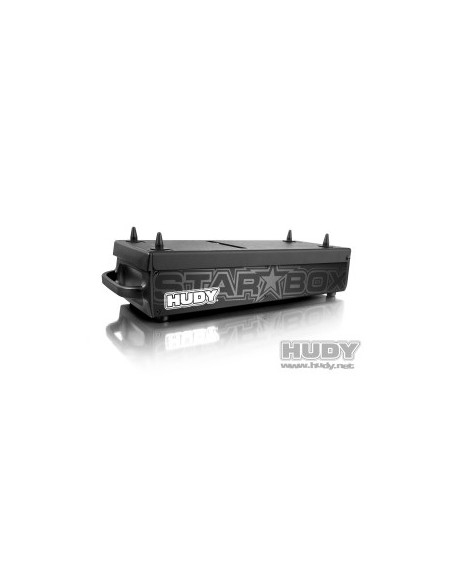
At this level, you probably already know which operations you perform most frequently and where you have struggled the most. Invest in higher-quality tools for those specific operations: a good socket wrench for wheel nuts, a reliable geometry gauge if you compete, shock absorber mounting tools if you open them frequently. It is also worth considering a work support or a small bench press if you assemble complete kits.
For those who compete, the track workshop deserves special attention: a compact and well-organized toolbox with everything essential for quick interventions between heats can make a difference in the outcome of a day.
| Type of tool |
Main use |
Recommended profile |
| Hex keys (set) |
Allen screws in chassis, suspension, and transmission |
All levels |
| Precision screwdrivers |
Body, electronics, and Phillips/flat screws |
All levels |
| Fine-tip pliers |
Clips, springs, connectors, and small joints |
All levels |
| Lexan cutters |
Preparation of polycarbonate bodies |
RC on track / competition |
| Geometry gauge |
Adjustment of camber, toe, and ride height |
Intermediate / advanced |
| Ball joint puller |
Safe disassembly of ball joints and suspension joints |
Intermediate / advanced |
| Spring tensioner |
Assembly and disassembly of shock absorbers |
Intermediate / advanced |
| Work/support stand |
Holding the chassis during assembly |
Advanced / competition |
Frequently asked questions about RC tools
What sizes of hex key do I need to start?
The most common sizes in 1/10 RC models are 1.5 mm, 2 mm, 2.5 mm, and 3 mm. Some models also use 4 mm for wheel nuts. Check your kit's manual to confirm the specific sizes.
Is it better to buy a complete set or to buy individual keys?
To start, a well-chosen set is more practical and economical. As you progress in the hobby, it makes more sense to complete with higher-quality tools for the tasks you perform most frequently.
Why are my model screws rounding off?
It is almost always due to using the wrong size key or low-quality steel. Make sure the key fits perfectly in the head before applying force, and check that the tip is not worn.
Do DIY tools work for RC?
For some specific jobs, yes, but in general, they are not adapted to fine metrics or the size of RC components. Specific tools make the work much easier and better protect the parts.
Do I need a geometry gauge if I don't compete?
It is not essential, but if you notice that your model does not behave as you would expect or pulls to one side, a basic gauge can help you identify alignment problems. For recreational use, many enthusiasts incorporate it later on.
What is the spring tensioner for?
To compress the shock absorber spring while mounting or dismounting the top cap, without having to improvise with screwdrivers or pliers. It prevents punctures, flying parts, and unnecessary frustrations.
What tools should I take to a competition day?
The essentials: a set of hex keys, screwdrivers, pliers, cutter, wheel wrench, and any specific tool you regularly use to adjust your model. Many competitors bring a compact toolbox with all of this prepared in advance.
Are ball joint pullers really necessary?
When you have to remove a ball joint that has been mounted for a while, yes. Trying to do it without the proper puller usually ends up damaging the ball joint, deforming the part that houses it, or both. It is a low-cost tool with a very high return.
Do the same tools work for electric and combustion models?
For the most part, yes, especially for screws and suspension. Combustion models add some specific needs such as tools for the engine, carburetor adjustment, or spark plug wrenches, which are not necessary for electric models.
How often should I check the condition of my tools?
Every time you finish a workshop session is a good time for a quick check. Pay special attention to the tips of hex keys, which wear out first with intensive use.
What should I look for in good fine-tip pliers for RC?
A sufficiently narrow tip to access tight spaces, smooth articulation, good tempering in the jaws, and length proportionate to the size of RC components. Micro or watchmaker formats usually work very well.
Are there specific tools for working with lexan bodies?
Yes: lexan scissors with curved blades, flush cutters, marking punches for cutting lines, and for ventilation holes, specific punchers or drill bits. Using household scissors on lexan usually yields irregular results and can crack the material.