Few things disrupt the flow of a good slot session or an afternoon of modelling more than running out of power at the most inconvenient moment. A battery failing mid-race, a controller losing response, or a lap counter shutting down are avoidable setbacks if we choose the power supply wisely from the start. At Ministry of Hobby, we gather the batteries and cells that enthusiasts truly need: from the most common for slot controllers to those specific for electronic accessories, LED lighting, or workshop and modelling devices.
The slot and modelling market uses a surprisingly wide variety of battery formats and technologies. Not all applications require the same: capacity, discharge rate, physical format, and internal chemistry directly affect performance and longevity. Understanding these differences is not just for engineers; with a clear grasp of basic concepts, any enthusiast can make informed choices and avoid unnecessary expenses.
In this section, you will find conventional alkaline batteries, rechargeable batteries of various chemistries, and the formats most demanded by users of circuits, analogue and digital controllers, lighting systems, and workshop tools. If you have doubts about which type fits best with your equipment, keep reading: below we break down everything you need to know to make the right choice.
What are batteries in the context of slot and modelling and why is it important to choose wisely
In the hobby world, the term "battery" encompasses both single-use cells (alkaline, lithium…) and rechargeable batteries (NiMH, Li-Ion…). Although in everyday language the two concepts are sometimes mixed, the distinction is important because it directly affects cost, autonomy, and the type of device in which we use them.
Analogue slot controllers—both those included in Scalextric kits and competition controllers from specialised brands—typically operate with AA or AAA batteries. A controller with low-quality alkaline batteries can become imprecise or lose response on the trigger when the charge drops below 50%, something that an experienced enthusiast will notice immediately. Switching to lithium batteries or high-capacity NiMH rechargeables makes a real difference in driving consistency.
Digital systems—Scalextric Digital, Carrera Digital, wireless controllers—often require batteries with a stable discharge curve. A cheap alkaline battery that drops voltage quickly can cause disconnections or erratic behaviour that, at first glance, seem like circuit failures when in reality the problem lies with the power supply.
In static modelling, battery-powered airbrushes, LED work lamps, or small workshop rotors also depend on suitable batteries. Choosing poorly here not only shortens the device's lifespan but can also generate voltage spikes that damage sensitive components.
How to correctly choose batteries for your equipment
Before purchasing, it is advisable to answer three basic questions:
- What device are you going to power? Slot controller, lap counter, lighting system, workshop tool… Each has different voltage and format requirements.
- How often do you use that device? An enthusiast who races once or twice a month can get by with quality alkaline batteries. Someone who trains several times a week or competes in championships quickly recoups the investment in rechargeables.
- What level of performance do you require? For casual use, standard alkaline is usually sufficient. For competition or intensive use, high-capacity NiMH or lithium rechargeables are the most reliable option.
Format is another key factor. AA batteries are the most common in slot controllers and accessories; AAA appear in more compact controllers and some measuring devices; button formats (CR2032, LR44…) are common in lap counters, workshop clocks, and small electronic modules.
Also pay attention to the capacity expressed in milliamp-hours (mAh): the higher the mAh, the more usage time between charges or changes. However, a very high capacity in an alkaline battery does not always compensate if the discharge curve is very steep. NiMH rechargeables maintain a more stable voltage throughout most of their lifespan, resulting in more predictable performance.
Main types and differences
Alkaline batteries
They are the most widespread option due to their availability and price. They work well for sporadic use and in low-consumption devices. Their main limitation is the progressive voltage drop: as they discharge, the device's performance may be affected. They are single-use, generating waste; remember to always take them to a certified collection point.
Lithium batteries (non-rechargeable)
They offer higher energy density and a much flatter discharge curve than alkaline. They withstand extreme temperatures better and last significantly longer. They are more expensive per unit, but for competition controllers or intensive use devices, they more than compensate. Their most common format in slot and modelling is AA and AAA.
NiMH rechargeable batteries
The de facto standard for regular enthusiasts. With a good charger, a set of NiMH with 2,000 mAh or more can be charged hundreds of times. The cost per cycle of use is much lower than that of alkaline batteries. However, it is advisable to use a smart charger that detects the optimal charge point and prevents overcharging, which degrades the cells over time.
Rechargeable lithium batteries (Li-Ion / LiPo)
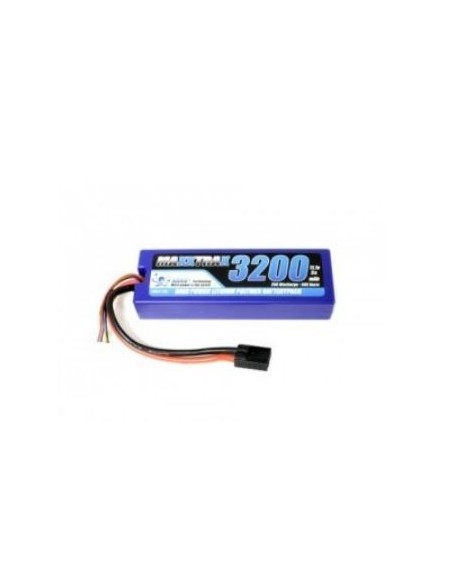
Less common in conventional slot controllers, but very present in power tools, rechargeable lamps, and some advanced accessories. They offer high energy density and low self-discharge. They require specific chargers and careful handling to avoid overheating.
Button cells and special formats
CR2032, CR2025, LR44, AG13… They are essential in portable lap counters, timing modules, small remote controls, and various electronic accessories. It is advisable to always have a spare as they are difficult to find in general stores at the right price and quality.
Technical aspects we should know
Beyond format and chemistry, there are some technical parameters that are worth understanding to avoid surprises:
- Nominal voltage: AA alkaline or NiMH batteries are 1.5 V and 1.2 V respectively. That difference of 0.3 V may seem small, but in circuits designed for 1.5 V, it can influence behaviour. Slot controllers are generally designed to work with both, but it is advisable to verify this.
- Capacity (mAh): Determines how much energy the battery stores. For slot controllers, values between 2,000 and 2,800 mAh in NiMH are more than sufficient for long sessions.
- Self-discharge rate: Conventional NiMH batteries self-discharge over time even if not used. Low self-discharge NiMH (LSD technology, commercially known as "ready to use") retain up to 80% of their charge after a year of storage. Highly recommended if you are not a daily user.
- Number of cycles: Quality rechargeables withstand between 500 and 1,000 complete charge cycles. A good charger with conditioning function can significantly extend this number.
- Operating temperature: Lithium batteries tolerate cold and heat better than alkaline. Relevant if you store materials in the garage or compete in unconditioned venues.
Practical usage and maintenance tips
The performance of a battery depends not only on its quality but also on how we treat it:
- Always use batteries of the same type and, if possible, from the same brand and age within the same device. Mixing new batteries with used ones accelerates the deterioration of the new ones and can cause leaks.
- If you are going to store a controller or accessory for several weeks, remove the batteries. Alkalines can leak over time and damage the metal contacts of the battery holder, a damage that is difficult to repair.
- For NiMH rechargeables, avoid basic "wall" chargers that simply apply direct current without control. A smart charger with delta-V detection (voltage drop when charging is complete) prolongs the life of the cells and ensures a real full charge.
- If the contacts of the battery holder show rust or whitish residues (a sign of alkaline leakage), clean them with a cotton swab moistened in vinegar or with a specific contact cleaner before inserting new batteries.
- Store rechargeable batteries with a partial charge (between 40% and 60%) if they are going to be idle for several months. Storing them completely discharged irreversibly damages lithium cells.
Common mistakes to avoid
Over the years in the industry, we have seen the same mistakes repeated. We summarise them so you don't fall into them:
- Buying the cheapest battery without considering the chemistry. A generic alkaline may cost less, but its rapid discharge curve and tendency to leak can be costly in the long run, especially in competition controllers.
- Confusing capacity with quality. A high mAh number in an alkaline battery does not guarantee sustained performance. Chemistry and brand matter as much or more than the figure.
- Using NiMH rechargeables with generic uncontrolled chargers. The result is overcharging that reduces the actual capacity of the cells after a few cycles.
- Forgetting spare button cells. The lap counter or lighting module always runs out of battery at the most inconvenient moment. Having a couple of CR2032 or LR44 in reserve is a session insurance.
- Leaving alkaline batteries inside stored devices for months. This is the number one cause of corroded battery holders and ruined controllers.
- Not recycling properly. Batteries contain heavy metals and chemical components that should not go in general waste. All major retailers have a collection point.
Recommendations for beginners and advanced users
If you are just starting
For a first approach, good alkaline batteries from a recognised brand (not low-cost) are sufficient for the controllers in your starter kit. There is no need to invest immediately in rechargeables if you do not yet know how often you will use the circuit. However, always remove them from the controller when you finish the session and keep a couple of spares in the circuit box.
When you start to notice that the batteries "last little" or that the controller loses response, it is time to switch to NiMH with a basic but smart charger. You will notice the difference from the first session.
For the regular or competitive user
If you race several times a week or participate in championships, high-capacity NiMH rechargeables (2,500 mAh or more) with a quality charger are the most cost-effective investment you can make in terms of power supply. Also invest in non-rechargeable lithium batteries to always have an emergency set: they last for years stored without losing significant charge.
For the more demanding electronic accessories—timing systems, complex lighting, workshop tools—check the specific requirements of the manufacturer before choosing. At Ministry of Hobby, we can guide you if you have specific doubts about compatibilities.
| Type |
Common format |
Voltage |
Rechargeable |
Best use |
| Alkaline |
AA, AAA, button |
1.5 V |
No |
Sporadic use, low consumption |
| Lithium (non-rechargeable) |
AA, AAA, button |
1.5 V / 3 V |
No |
Competition, long storage, cold/heat |
| Standard NiMH |
AA, AAA |
1.2 V |
Yes |
Regular use, cost-cycle ratio |
| Low self-discharge NiMH (LSD) |
AA, AAA |
1.2 V |
Yes |
Intermittent use, always ready |
| Li-Ion / LiPo |
Proprietary formats |
3.6–3.7 V |
Yes |
Tools, lamps, advanced accessories |
Frequently asked questions about batteries
What type of battery does the Scalextric controller need?
Most controllers in the Scalextric system use AA batteries. You can use conventional alkalines or, even better, rechargeable NiMH of 2,000 mAh or more. Non-rechargeable lithium batteries also work well and last much longer than alkalines under intensive use.
Do 1.2 V NiMH batteries work the same as 1.5 V alkalines in controllers?
In practice, yes. Slot controllers are designed to work with both voltages. The difference of 0.3 V does not affect operation under normal conditions, and the flatter discharge curve of NiMH usually provides a more consistent response throughout the session.
How long do rechargeable NiMH batteries last?
It depends on the quality of the cells and the charger. With a smart charger and batteries from a reputable brand, you can expect between 500 and 1,000 complete charge-discharge cycles. Well managed, a set of four batteries can last several years.
What happens if I mix new and used batteries in the controller?
The battery with less capacity will limit the set and discharge faster than the others. This can force the other batteries to try to recharge the weaker one, generating heat, shortening the life of all, and in the worst case, causing leaks. Always use batteries of the same charge state.
What battery does the lap counter use?
It depends on the model. The most common portable lap counters use button cells CR2032 or LR44. Check your device's manual to confirm the exact format.
Can I use rechargeable batteries in a LED lighting system for the circuit?
Generally yes, as long as the voltage is appropriate. For systems that operate at 3 V (two AA batteries in series), the 1.2 V NiMH each (2.4 V total) may provide slightly lower brightness. If the system accepts direct power supply via cable, it is preferable to use a stabilised power supply.
Are non-rechargeable lithium batteries compatible with all controllers?
Yes, in AA and AAA formats. Their nominal voltage is the same as that of alkalines (1.5 V). The difference lies in the higher energy density, better discharge curve, and resistance to extreme temperatures. They do not require any special adaptation.
How do I know if a rechargeable battery has degraded and is no longer usable?
The clearest symptoms are: full charge in an unusually short time, very reduced autonomy compared to when it was new, and excessive heating during charging. A good charger with capacity analysis function will give you an objective reading. If the actual capacity falls below 60-70% of the nominal, it is time to replace it.
Where can I recycle used batteries?
In Spain, establishments with a sales area exceeding certain square metres are required to have a battery collection point. Supermarkets, hardware stores, and electronics shops usually have one. Never throw them in general waste.
What charger do you recommend for NiMH?
Look for a charger with automatic end-of-charge detection (delta-V or dT/dt), independent channel charging, and, if possible, discharge and conditioning function. Brands like Powerex, Ansmann, or La Crosse are common references among the most demanding enthusiasts. Avoid simple transformer chargers without any electronic control.
Are batteries affected by summer heat if I store them in the car?
Yes, especially alkaline and non-rechargeable lithium batteries. Temperatures above 40-50 °C accelerate self-discharge and can cause leaks or deformation in alkalines. Li-Ion and LiPo are particularly sensitive to heat. Always store batteries in a cool, dry place away from direct light.
Does it make sense to buy a rechargeable battery kit if I only use the circuit at Christmas?
Probably not. For such sporadic use, quality alkaline batteries or non-rechargeable lithium batteries are more practical. Low self-discharge rechargeables (LSD) would be the only reasonable exception, as they remain charged for months and would be ready to use at any time.