LiPo batteries have changed the way slot racing, remote control, and electronic modelling enthusiasts power their projects. Lightweight, with high energy density and capable of delivering sustained current even in the most demanding situations, they have become the benchmark for those seeking real performance over conventional NiMH or NiCd solutions.
If you have been in the slot or RC world for a while, you know that the power supply is not a minor detail: it directly influences the motor response, the stability of the electronics, and the autonomy of your sessions. A well-chosen LiPo makes the difference between a setup that works and one that truly performs. Conversely, a poorly chosen — or mismanaged — one can be a source of problems.
In this section, you will find LiPo batteries in various formats, voltages, and capacities, designed for both competitive applications and electronic modelling projects, RC cars, and any setup that requires compact and efficient power. Below, we explain everything you need to know to make the right choice.
What is a LiPo battery and why is it so important
LiPo is short for lithium polymer. It is a type of rechargeable battery that uses a semi-solid or gel-like electrolyte, allowing it to be manufactured in very flat and lightweight formats, which is impossible to achieve with nickel chemistry.
Each LiPo cell has a nominal voltage of 3.7 V and a maximum charge voltage of 4.2 V. When you see a battery labelled 1S, 2S, 3S… you are seeing how many cells it has in series: a 2S will have 7.4 V nominal (8.4 V at full charge), a 3S will reach 11.1 V nominal, and so on.
Beyond voltage, there are two parameters that define the performance of a LiPo in demanding applications:
- Capacity (mAh): how much energy it stores. Higher capacity means greater autonomy, but also greater weight and volume.
- Discharge rate (C): the maximum speed at which it can deliver current without degrading. A 1,000 mAh battery with a 30C rate can provide up to 30 A continuously. In competitive slot racing or high-speed RC applications, this parameter is critical.
Understanding these two values before purchasing is essential to avoid overloading your electronics or running out of power when you need it most.
How to correctly choose a LiPo
Choosing the wrong LiPo battery is one of the most common mistakes among those starting in the world of electronics applied to hobbies. Here are the criteria you should evaluate before making a decision:
Voltage and number of cells
The first step is to know the voltage range that your receiver, speed controller, or electronics can handle. If your system operates at 7.4 V, you need a 2S. If it supports 11.1 V, you need a 3S. Never connect a battery with a higher voltage than your equipment can handle: you could irreversibly damage the components.
Capacity according to use
For short sessions or where weight is critical (such as competitive slot cars), low-capacity, high-discharge-rate LiPos are usually used. For applications requiring greater autonomy, such as RC crawlers or diorama projects with prolonged lighting, a higher capacity is preferable even if the pack is slightly heavier.
Discharge rate C
In competitive slot motors or electronics that demand high current peaks, an insufficient C rate causes voltage drops, excessive heating, and premature battery degradation. As a general rule, it is better to slightly overshoot the C rate than to fall short.
Physical dimensions
In slot and RC, the available space in the chassis or body is limited. Measure the space carefully before purchasing: width, length, and height. An extra millimetre can ruin the setup.
Connector
Ensure that the LiPo connector is compatible with your speed controller or receiver, or that you have the appropriate adapters. The most common connectors in the hobby are JST, XT30, XT60, and Deans (T-plug).
Main types and differences
Within the LiPo universe, there is a notable variety of formats and configurations. Here are the most relevant types for our sector:
LiPo 1S (3.7 V)
The smallest and lightest. Widely used in micro-RC, small drones, and lighting or light electronics projects in modelling. Some indoor competitive slot setups also use them in specific configurations.
LiPo 2S (7.4 V)
The most versatile format in the slot and scale RC hobby. Sufficient voltage for most small brushless motors and many slot electronics systems. A good balance between power, weight, and price.
LiPo 3S (11.1 V)
For higher power applications: speed RC cars, demanding traction systems, or projects requiring more torque. Not suitable for electronics designed for 2S without prior verification.
High C rate LiPo (racing)
Specifically designed for competition, with discharge rates of 50C, 75C, or even higher. They prioritise peak current delivery over capacity. They are preferred in pure speed slot categories where every tenth of a second counts.
Low profile LiPo (flat)
Flat format particularly useful when vertical space in the chassis is minimal. Highly sought after in slot projects with closed bodies or in diorama setups where electronics need to be concealed.
Technical aspects we need to know
LiPos are batteries that require a minimum of technical knowledge to use safely and efficiently. They are not dangerous if managed properly, but they do require more attention than an alkaline battery or a NiMH battery.
Correct charging
Always use a specific LiPo charger with a balancing function. Balancing ensures that all cells in the pack are charged to the same voltage, which extends the battery's life and prevents imbalances that can lead to serious problems. Never charge a LiPo with a generic incompatible charger.
Minimum discharge voltage
A LiPo should not be discharged below 3.0 V per cell (some manufacturers recommend not going below 3.3 V to preserve cycles). If you excessively discharge it, you will permanently damage the battery and, in the worst case, it will become unstable. Modern speed controllers usually have low voltage cut-off (LVC) protection; ensure it is active and correctly configured.
Operating temperature
LiPos perform best in a moderate ambient temperature range. Extreme cold reduces their effective capacity. Excessive heat, especially during charging, accelerates degradation and is one of the most significant risk factors. Always charge in a ventilated area and never leave a LiPo charging unattended.
Storage
If you are not going to use the battery for more than a few days, charge or discharge it to the storage voltage: approximately 3.8 V per cell. Most modern chargers have a specific "storage" function that does this automatically. Storing a fully charged or fully discharged LiPo for weeks significantly shortens its lifespan.
Practical usage and maintenance tips
With proper handling, a good LiPo can last hundreds of cycles without losing noticeable performance. Here are our tips to get the most out of it:
- Visual inspection before each use: check that the LiPo is not puffed. If you notice that the pack has increased in volume, it is a clear sign of internal degradation: remove it from service.
- Do not overcharge or over-discharge: always respect the upper and lower voltage limits. A few extra minutes of session do not justify reducing the battery's lifespan.
- Avoid strong impacts: LiPos are sensitive to physical shocks. A slot car that repeatedly flies off can damage the pack if it is not well protected.
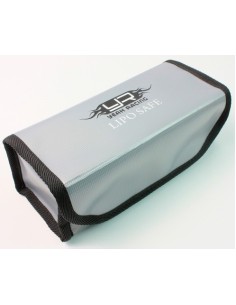
- Store in a fireproof bag (LiPo safe bag): especially recommended during charging and storage. It is a simple and economical safety measure.
- Charge at 1C as a general rule: charging at 1C (i.e., in one hour for a 1,000 mAh battery, charge at 1 A) is the most conservative option and best preserves cycle life.
Common mistakes we should avoid
Many problems with LiPos can be prevented by knowing in advance the most common mistakes:
- Using a non-specific charger for LiPo: this is the most dangerous mistake. Although some NiMH chargers look similar, their charging logic is completely different and can damage or ignite the battery.
- Not verifying voltage compatibility: connecting a 3S to a system designed for 2S can destroy the speed controller or receiver in seconds.
- Ignoring puffing: a puffed LiPo is not simply "old", it is potentially unsafe. Many enthusiasts continue to use them to avoid spending on a new one. It is not worth it.
- Storing at 100% charge for weeks: if you know you will not touch the project for a while, bring the battery to storage voltage.
- Buying based on price without checking the C rate: a cheap LiPo with an insufficient C rate for your motor will heat up, degrade quickly, and not deliver the expected performance.
- Not balancing the cells regularly: over time, the cells in a pack can become unbalanced. Periodically using the balance function of the charger is the best way to keep the pack in good condition.
Recommendations for beginners and advanced users
If you are just starting
Start with a 2S battery of medium capacity (between 500 and 1,000 mAh) and a moderate C rate (20-30C). This is the most versatile range and best covers most entry-level slot and RC applications. Also invest in a good charger with a balance function and, if possible, a fireproof bag. With these three pieces, you will have a solid and safe foundation.
Do not obsess over the highest C rate on the market if you are starting out. A well-chosen 30C is more than sufficient for most beginner setups and will allow you to understand how LiPo chemistry behaves before moving on to more demanding packs.
If you already have experience
In slot racing, the search for the ideal pack usually involves adjusting the capacity to the minimum necessary for the duration of the heat, maximising the C rate and minimising weight. A gram less in the battery is a gram less in the car, and that has a real impact on times.
For high-demand RC projects, consider high C rate packs with XT60 or similar connectors to minimise resistance in the power line. And if you handle multiple packs, label them with the date of first charge and the number of cycles: this will help you identify when it is time to retire them.
| Configuration |
Nominal Voltage |
Typical Use |
User Profile |
| 1S (1 cell) |
3.7 V |
Micro-RC, lighting, light electronics |
Beginner / small projects |
| 2S (2 cells) |
7.4 V |
Slot racing, scale RC, general electronics |
All levels |
| 3S (3 cells) |
11.1 V |
Speed RC, powerful brushless motors |
Intermediate / advanced |
| High C rate (50C+) |
Variable |
Pure competition, high current peaks |
Advanced / competition |
| Low profile (flat) |
Variable |
Chassis with limited space, dioramas |
All levels |
Frequently asked questions about LiPo batteries
Can I use any charger to charge a LiPo?
No. You must exclusively use a charger compatible with LiPo chemistry and, preferably, with a balancing function. Using an incompatible charger can damage the battery or create risky situations.
What does the C rate mean in a LiPo?
It is the continuous discharge capacity relative to the nominal capacity. A 1,000 mAh battery with a 30C rate can deliver up to 30 A continuously (1,000 mAh × 30 = 30,000 mA = 30 A).
What should I do if my LiPo appears puffed?
Remove it from service immediately. Do not charge or use it. A puffed LiPo has suffered internal degradation and may be unsafe. Dispose of it following local electronic waste regulations.
How many charge cycles can a LiPo withstand?
It depends on the quality of the pack and how it is used, but a well-maintained LiPo can exceed 200-300 cycles without significant capacity loss. Improper storage and over-discharging are the main accelerators of aging.
At what voltage should I store a LiPo if I am not going to use it for a week?
The ideal is to store it at storage voltage: approximately 3.8 V per cell. Most modern chargers have a "storage" function that automatically brings the battery to that level.
Is a 2S LiPo compatible with all RC speed controllers?
Not necessarily. You should verify the voltage range accepted by your speed controller before connecting any battery. Check the manufacturer's manual or the product's technical specifications.
Is it dangerous to use LiPo at home?
With proper handling, LiPos are perfectly safe for home use. Risks arise when they are charged with inadequate equipment, stored in poor condition, or physically damaged. By following the good practices described, the risk is minimal.
What is the difference between LiPo and LiIon?
Both use lithium chemistry, but the electrolyte is different: LiPos use a semi-solid polymer that allows for flatter and lighter formats. LiIons are usually presented in cylindrical format and are more common in consumer electronics (laptops, tools). For the hobby, LiPos dominate due to their weight/power ratio and format flexibility.
Can I connect two LiPos in parallel to increase capacity?
Yes, it is possible, but only if both batteries have the same voltage, the same capacity, and are at the same charge level at the time of connection. Connecting unbalanced packs in parallel can generate dangerous equalisation currents.
What is the most common connector in the hobby?
It depends on the application and power. For low power (micro-RC, lighting), the JST connector is very common. For higher current applications, XT30, XT60, and Deans (T-plug) connectors are the most widespread in the RC and competitive slot hobby.