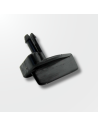
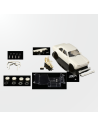
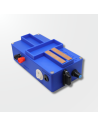
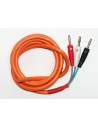
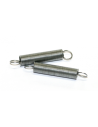
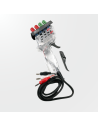
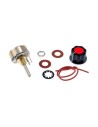
When we have been in the slot world for a while, there is a component that often goes unnoticed until we start to feel that something is off on the track: the controller. It is the element that translates the movement of your finger on the trigger to the actual speed of the car, and when it is not well chosen —or simply not suitable for your circuit or your style— the driving experience suffers. It doesn't matter if you are in a timed competition session or just enjoying some time at home: the controller makes the difference between smooth handling and frustrating driving.
In this category, you will find controllers for the main circuit systems available on the market: from the most basic ones designed for beginners to more precise options aimed at competition or enthusiasts seeking maximum control. Before adding one to your cart, it is advisable to understand what it is exactly, how it works, what types exist, and what to look for to avoid making a mistake.
Whether you have just set up your first circuit or have been fine-tuning every detail of your track and cars for years, this content is designed to help you make an informed decision. There is no single correct answer: the best controller is the one that fits your system, your level, and the way you enjoy the hobby.
What is a controller and why does it matter in slot racing
The controller —also known as a rheostat or speed controller— is the electronic component of the trigger that regulates the amount of electrical energy that reaches the car's motor through the rails and braids. In simple terms: it is the mechanism that allows you to accelerate and brake progressively.
In the most basic slot systems, the controller is a variable resistor: when you pull the trigger, the resistance decreases and the voltage reaching the motor increases. In more advanced systems, such as digital controllers or electronic processors, control is achieved through pulse width modulation (PWM) signals, allowing for a much finer and linear response.
Its importance is greater than it seems. A controller with little progression turns every corner into an unnecessary challenge: either the car does not respond until you pull the trigger quite hard, or it jerks suddenly, causing it to be thrown off the track. A good controller, on the other hand, gives you that feeling of total control that makes driving flow naturally.
Moreover, the controller directly influences the lifespan of the motor. A sudden and poorly controlled power delivery subjects the motor to intensity peaks that accelerate its wear over time. With a well-adjusted controller, the motor receives energy more smoothly, and performance is maintained for longer.
How to correctly choose a controller
The choice of a controller depends on several factors that should be analysed before purchasing. Not all controllers work the same in all systems, and there are combinations that can cause problems if basic compatibilities are not taken into account.
Compatibility with the track system
The first criterion is always compatibility. Universal rail circuits —such as those from Scalextric or Ninco— and sport rail circuits —such as those from Scaleauto or Slot.it— do not always share the same electrical requirements or the same type of connection for the trigger. Before buying a controller, confirm that it is compatible with your specific system.
Resistance in ohms
In rheostat-type controllers, the maximum resistance (measured in ohms) determines how much you can brake the car at rest and the smoothness of the progression. A value that is too low can cause the car to start too abruptly; a value that is too high can make the car barely move until the trigger is pulled very hard. The usual range for home use is between 30 and 60 ohms, although in competition, tighter ranges are used according to regulations.
Trigger type and ergonomics
The trigger is the part you physically interact with, so its travel, tension, and shape directly influence your comfort and the precision you can achieve. There are controllers with long triggers for very fine modulation, and others with short travel for quicker reactions. The choice is very personal, but if you are going to spend hours on the track, ergonomics is not a minor detail.
Home use vs. competition
For home use with friends or family, a standard controller of reasonable quality works perfectly. If you participate in championships or seek maximum performance, it is worth investing in a more precise controller, with independent brake adjustment and a well-developed progression. In competition, every tenth of a second counts, and the controller is part of the driver's control system.
Main types and differences
Not all controllers work the same. Knowing the differences between the main types helps you understand what you are buying and what to expect from each one.
Resistor controllers (rheostats)
They are the most traditional and the most common in home analogue circuits. They work by reducing or increasing the resistance to the flow of electrical current. They are robust, easy to maintain, and simple to repair. However, part of the energy is dissipated as heat, which in long sessions can cause the controller to overheat if not properly sized.
Electronic controllers (PWM)
Controllers with pulse width modulation (PWM) regulate speed by sending current pulses to the motor instead of reducing voltage. The result is a much more linear and efficient response, with less energy loss as heat. They are the preferred option in competition and in high-performance analogue systems. They require some familiarisation, but offer clearly superior control.
Integrated controllers in digital triggers
In digital systems, the controller is part of the trigger itself and communicates with the circuit's control centre. Speed regulation is done through digital signals, allowing for additional functions such as lane changing, controlled braking, or collision management. They are the most complete solution but are tied to the specific digital system you use.
Controllers with brake adjustment
Many controllers, both analogue and electronic, incorporate an independent brake adjustment: an additional control that determines how much resistance the motor receives when releasing the trigger. A well-regulated brake allows the car to brake in a controlled manner before corners without needing to use the power trigger. It is a highly valued function in competition and also useful for enthusiasts seeking a more technical driving experience.
Technical aspects we should know
Diving a little into the technical realm is worthwhile, especially if we want to get the most out of the controller or if we are thinking of preparing our trigger for competition.
Amperage and heat dissipation
Each controller has a maximum current capacity it can handle. If we use high-power motors or race for very long sessions, we must ensure that the controller can handle the amperage without overheating. Competition controllers are usually designed to withstand higher intensity continuously.
The importance of the brake
The brake adjustment is one of the most underestimated aspects by beginners. Excessive braking causes the car to stop abruptly when the trigger is released, making it very difficult to drive through fast corners. Insufficient braking causes the car to continue rolling due to inertia and be hard to control. Finding the right point for each track and each car is part of the tuning work.
Electrical compatibility with the motor
Not all controllers work the same with all motors. Very low internal resistance motors (high competition ones) can behave erratically with certain rheostat controllers. If you are preparing a car with a competition motor, check the compatibility of the controller with that type of motor beforehand.
Cable length and quality
A low-quality or excessively long cable between the trigger and the track connector can introduce signal losses or voltage drops that affect the car's response. For home use, this is usually not a problem, but in competition, even this detail is taken care of.
Practical tips for use and maintenance
A well-maintained controller lasts many years. There are some simple habits that make a difference.
- Store the trigger with the trigger loose. Keeping the trigger pressed during storage can deform the spring or strain the internal mechanism over time.
- Clean the contacts periodically. Dust and oxidation on the connector contacts can cause signal losses or irregular responses. A contact cleaner applied moderately is sufficient.
- Check the cable regularly. Repeated bends near the connector or the trigger handle are the most vulnerable point. If you see that the cable starts to show visible wear, replace it before it causes problems during a session.
- Adjust the brake for each circuit. There is no universal adjustment. A brake that works well on a fast circuit with wide corners may be excessive on a technical layout with many chicanes. Spend a few minutes adjusting it each time you change tracks.
- Do not force the trigger. If the trigger feels stiff or rigid, do not force it. The spring may need adjustment or there may be dirt in the mechanism. Opening the trigger and checking the interior usually resolves the problem without needing to replace parts.
Common mistakes we should avoid
There are some mistakes that are constantly repeated, especially among those who are new to the hobby or make the leap to competition without prior experience.
Buying the controller without checking compatibility
This is the most common mistake. Not all controllers are universal. Some are designed exclusively for a specific track system or for a specific type of connector. Always check compatibility before purchasing.
Ignoring the brake adjustment
Many users use the controller as it comes from the factory without touching the brake. Sometimes that works, but in many cases, the factory adjustment is not optimal for your circuit or your cars. Experimenting with the brake is simple, and the results are immediately noticeable.
Using a low-quality controller with competition motors
A controller that works perfectly with a mid-range car may behave erratically with a high competition motor. If you are preparing your car with high-performance components, ensure that the controller is up to the task.
Not checking the cable before each important session
In competition, a faulty cable can ruin a heat. A simple habit like visually checking the cable before starting prevents unnecessary scares.
Confusing the controller with the power supply
The controller regulates how energy reaches the car, but it does not generate the energy. If the car is slow even when the trigger is fully pulled, the problem may lie in the circuit's power supply, not in the controller. Always rule out the power supply before blaming the trigger.
Recommendations for beginners and advanced users
If you are starting
For those who are new, the most important thing is to choose a controller compatible with the track system you already have or are going to buy. There is no need to start with the most sophisticated model: a good quality analogue controller, with brake adjustment and a comfortable trigger, is more than enough to learn to drive and enjoy the hobby without frustrations. Spend time finding the brake adjustment that feels most natural to you; that alone greatly improves the experience.
If you have doubts about compatibility, ask before buying. It is much easier to orient yourself with the reference of your circuit in hand than to return a controller that does not fit.
If you already have experience
Users with experience in the hobby usually look for two things in a controller: very fine progression at startup and precise brake adjustment. PWM electronic controllers consistently offer these features and are the natural choice for those who have already surpassed the limits of a conventional rheostat.
In the context of competition, many experienced drivers adjust the controller based on the circuit of the day: more brake on technical layouts, less on fast ones. If you participate in championships, check your series regulations regarding permitted controllers, as some competitions restrict the use of electronic controllers to level the playing field.
It is also worth exploring controllers with fine adjustment of the response curve, which allow you to customize not only the brake but also the acceleration progression in different sections of the trigger's travel. They are a powerful tool when you know exactly what you are looking for.
| Type of controller |
Technology |
User profile |
Brake adjustment |
Use in competition |
| Basic rheostat |
Variable resistance |
Beginner / home use |
Basic or no adjustment |
Limited |
| Advanced rheostat |
Variable resistance |
Intermediate |
Adjustable |
Yes (according to regulations) |
| Electronic PWM |
Current pulse |
Advanced / competition |
Fine adjustment |
Yes |
| Integrated digital |
Digital signal |
Digital systems |
According to system |
According to regulations |
Frequently asked questions about controllers
Does an analogue controller work on a digital circuit?
Generally, no. Digital systems require triggers compatible with the corresponding digital central. Using an analogue controller on a digital circuit may not work correctly or even damage some components. Always check compatibility before mixing systems.
What resistance in ohms do I need for my circuit?
It depends on the track system and the motors of your cars. For standard home use with mid-range cars, the usual range is between 30 and 60 ohms. For competition or high-power motors, it is best to consult the manufacturer's specifications or seek specific guidance.
Does the controller affect the car's maximum speed?
It should not limit the maximum speed if the trigger reaches the stop correctly. If the car does not reach its maximum speed with the trigger fully pulled, there may be a problem with losses in the controller, cable, or contacts.
Can I use the same controller for different circuits?
If the circuits are of the same system (for example, both universal rail), yes. If they are from different systems, check the compatibility of the connector and electrical requirements before using it.
How do I know if my controller is broken?
The most common symptoms are: the car does not respond to the trigger, the response is irregular or erratic, the trigger overheats excessively, or there is a loss of signal. Before ruling out the controller, try cleaning the contacts and checking the cable.
Is brake adjustment important if I only race at home?
Yes, even if you do not compete. A good brake adjustment makes driving much more natural and enjoyable, especially in corners. There is no need to fine-tune it to the millimetre, but spending a few minutes finding a comfortable point significantly improves the experience.
Can I repair a controller myself?
Rheostat controllers are relatively simple internally, and many faults (springs, contacts, cables) can be resolved with basic electronics knowledge. Electronic controllers are more complex; if the fault is on the board, it is usually more practical to replace it.
What is engine braking and how does it differ from the controller brake?
Engine braking is the resistance the motor offers when turning without receiving current. The controller brake adds an additional electrical load to intensify that braking effect. Both act together, but the controller adjustment is what you control from the trigger.
Is it worth spending more on a competition controller if I only race at home?
It depends on how demanding you are with your driving. For relaxed home use, a mid-range controller is more than sufficient. If you seek maximum control and enjoy the technical aspect of the hobby, a competition controller offers a progression and adjustment that is clearly noticeable, even if you do not compete.
Do controllers have a warranty?
Yes, like any electronic product. At Ministry of Hobby, we manage incidents directly so you don't have to waste time with complicated procedures.
What is the difference between a long trigger and a short one?
The long trigger allows for finer modulation because the physical travel is greater: small finger movements generate gradual changes in speed. The short trigger offers quicker responses but less margin for precision. Competition drivers usually have a marked preference for one or the other depending on their driving style.
Can I use a Scalextric controller on a Carrera circuit?
Not necessarily. Although both are analogue systems, the connectors and electrical specifications may differ. Always check compatibility before mixing components from different manufacturers such as Scalextric, Carrera, Ninco, or Scaleauto.