
Shopping Cart
-

-
 James Bond Aston Martin 'Goldfinger'€62.00 €69.00
 Mosler MT900R Salvatore Noviello 11th Anniversary EVO3€63.57 €73.57
 Formula 90-97 Blanco/Azul/Amarillo 1990 Nº6 morro bajo€76.30 €79.90
 Porsche 908/3 Turbo White Edition Jürgen Barth€29.50 €36.00
 Advance Audi S1 WRC Sonax€30.00
 -
 Rodador con transformador€40.00
 Punta Hex. 0.9 mm€3.40
 -
 Circuito Open Rally Set€188.43
 Muelle para mandos€2.00









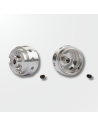
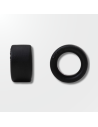

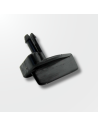








Eccentric bearings 0.1mm 2pcs

In Stock
€6.46
Tax included
NSR 0.1 mm eccentric bearings in a pack of 2 pieces for fine-tuning the rear axle position with millimetric precision. A small adjustment that can make a real difference on the track.
Precision of a tenth of a millimetre for those who leave nothing to chance
The eccentric bearings from NSR are one of those components that distinguish an amateur setup from a truly refined one. With an eccentricity of 0.1 mm, they allow for slight displacement of the rear axle from its central position, a resource widely used in competition to adjust chassis height, load on the rear tyres, and the overall behaviour of the car in corners.
Function and performance
When we install eccentric bearings instead of the standard ones, we gain the ability to adjust the geometry of the rear end without needing to modify the chassis. By rotating the bearing in its housing, we can vary the position of the axle and, consequently, parameters such as:
- The ride height of the car over the track, which directly affects the centre of gravity.
- The pressure of the rear tyres against the rail, with a direct impact on traction.
- The balance between grip and agility in chicanes and tight corners.
The 0.1 mm eccentricity is the most subtle in the NSR catalogue, ideal for fine adjustments when the base setup is already correct and we are only looking for that final tuning detail.
Compatibility and installation
These bearings are designed for the standard housings of NSR chassis. Installation is straightforward: they are inserted into their housing and rotated until the desired position is found. It is common to test on track with different orientations and measure lap times to identify the optimal configuration for each circuit.
NSR offers eccentric bearings in various eccentricity values —0.1 mm, 0.2 mm and higher— allowing for a very controlled adjustment progression depending on the level of modification needed.
Preparation and common mistakes
- Do not mix eccentricities on the same axle: always mount the same value in both rear axle housings to maintain symmetry.
- Note the orientation of each bearing when you find a winning configuration; it is easy to lose it when disassembling the car.
- Check the lateral play of the axle after installation: a poorly seated bearing can introduce unwanted play.
- If you are looking for a more pronounced effect, switch to the 0.2 mm model instead of accumulating adjustments with the 0.1 mm ones.
Ideal for…
Drivers competing in club championships who want to maximise the tuning of their NSR cars without resorting to irreversible modifications to the chassis. It is also an interesting option for those learning to prepare and wanting to understand how each small geometric adjustment affects on-track behaviour.
Frequently asked questions
What is the difference between a standard bearing and an eccentric one?
A standard bearing positions the axle exactly in the centre of the housing. An eccentric one displaces that centre by a fixed amount —in this case 0.1 mm— allowing for variation in the geometry of the rear end simply by rotating the bearing in its housing.
Which NSR chassis are these bearings compatible with?
They are designed for the standard housings of NSR chassis. Before installation, it is advisable to confirm the diameter of the housing of your specific chassis by consulting the technical data sheet from NSR or comparing it with the original bearings of the model.
How many units are included in the pack?
The NSR4847-01 pack includes 2 eccentric bearings of 0.1 mm.
When is it advisable to use 0.1 mm and when to switch to greater eccentricity?
The 0.1 mm eccentricity is for subtle adjustments when the base of the car is already well configured. If you need to modify the height or load on the tyres more significantly, NSR offers bearings of 0.2 mm or higher that provide a wider adjustment margin.
Can they be used in the front position?
Technically yes, if the front housing of the chassis has the same diameter. However, the most common and impactful use is on the rear axle, where the variation in load directly influences traction.
NSR eccentric bearings 0.1mm (ref. NSR4847-01), pack of 2 units — a precision slot car tuning component designed to fine-tune rear axle geometry on NSR chassis. These bearings allow minor positional adjustments that directly affect ride height, tyre load and cornering behaviour, making them a go-to choice for club racing preparation and competitive 1/32 scale slot car setups.
NSR4847-01
4 Items
No reviews
Comments (0)
No customer reviews for the moment.
Tap to zoom
