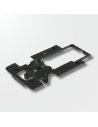
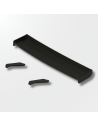
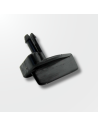
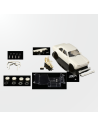
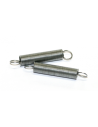
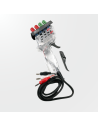
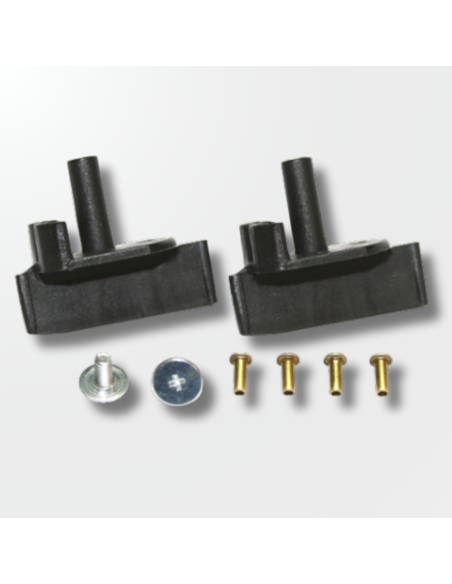
When we talk about performance in slot racing, attention often falls on the motor, transmission, or tyres. However, there are three elements that absolutely condition everything else: the guide, the cable, and the braids. Without a good guide, the car will leave the slot prematurely. Without a flexible and properly sized cable, power is lost or the guide cannot self-centre correctly. And without braids in good condition, electricity does not reach the motor cleanly. This triangle forms the steering and power supply system of the car, and taking care of it is the foundation of any serious preparation.
Whether you have just assembled your first car in kit form or have been fine-tuning for competition for years, at some point you will have noticed that a simple change of braid or guide can transform the behaviour of the model. It’s not magic: it’s physics. At Ministry of Hobby, we have components from NSR, Slot.it, Avant Slot, and Scaleauto in our catalogue, brands that take the precision of every millimetre seriously. In this section, you will find the spare parts that truly make a difference.
If you are looking for replacement guides, copper, tin, or silver braids, or silicone cables to rewire your car, you are in the right place. Below, we explain how each component works, what to look for before buying, and how to get the most out of them.
What are guides, cables, and braids and why are they so important
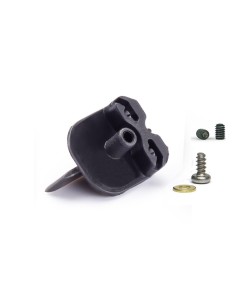
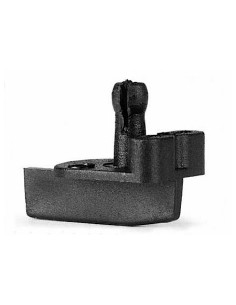
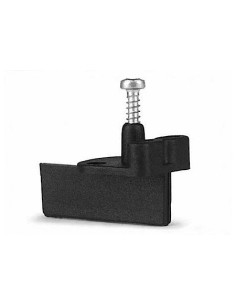
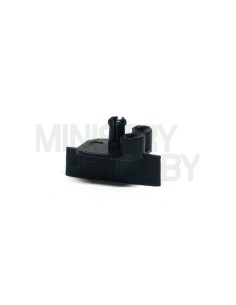
The guide —also called guide or comb in some contexts, although we prefer the correct term— is the piece that is inserted into the track rail. Its function is twofold: to keep the car within the slot and to allow the braids to touch the conductive rails. It works under constant mechanical stress: tight corners, changes in elevation, sudden braking. Therefore, its geometry, depth, and the quality of the plastic or material it is made from have a direct impact on the stability of the car.
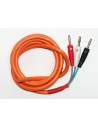
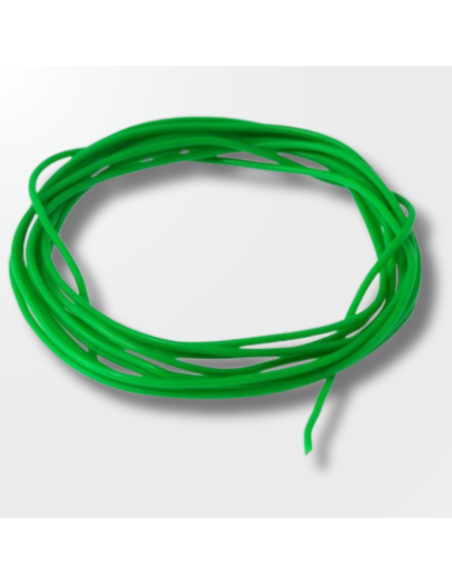
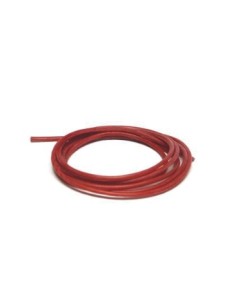
The cable acts as a bridge between the braids and the motor. In a well-prepared slot car, high-flexibility silicone cables are used precisely because the guide needs to move freely to self-centre in each corner. A rigid or poorly routed cable creates mechanical resistance, limits that movement, and can cause off-track incidents during direction changes. Additionally, a low-quality cable introduces electrical losses that the driver notices as a lack of response or irregular power delivery.
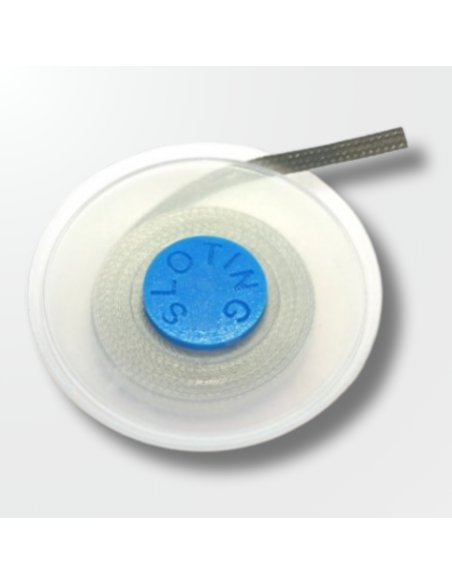
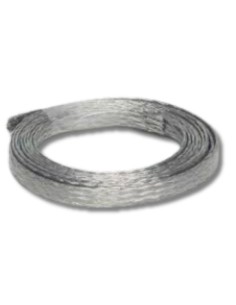
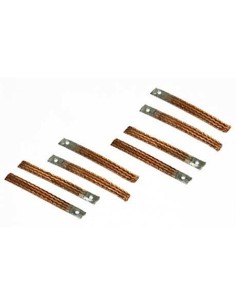
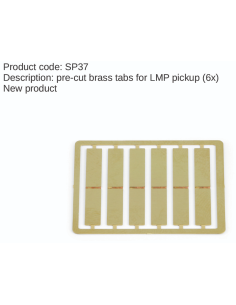
The braids are the direct contact between the car and the track. They are those metal strips that protrude from beneath the guide and brush against the conductive rails. Their condition determines whether electricity flows continuously and cleanly. A worn, dirty, or poorly adjusted braid causes power cuts, sparks, and erratic motor behaviour.
How to correctly choose guides, cables, and braids
The first question you should ask yourself is: what rail system does your track use? Not all rails are the same. The universal rail is the one used by Scalextric and Ninco, with a standard width found in plastic tracks for domestic and amateur use. The sport rail is the one found in Scaleauto and Slot.it tracks, common in clubs and competitions. The depth and width of the guide must be compatible with the rail where you will be racing, so before buying a replacement, make sure it matches your system.
The second variable is the type of track: plastic or wood. Wooden tracks, common in club circuits, require slightly stiffer braids to maintain constant contact over a surface that may have irregularities. Domestic plastic tracks, on the other hand, are more regular and allow for softer and more flexible braids that create less friction.
As for the cable, diameter matters. For competition cars with powerful motors, a larger gauge cable is recommended to reduce electrical resistance. For beginner cars or restricted categories, standard cable is more than sufficient. The key in all cases is that it is silicone: conventional PVC hardens with heat and creates the guide movement issues mentioned earlier.
Main types and differences
Guides: with screw or clip
Guides are fixed to the chassis in two ways: by screw (more common in competition cars, allowing for precise depth adjustment) or by clip (quick mounting and dismounting, practical for everyday use). Within each system, there are variations in the depth of the tongue that enters the rail: deeper provides greater security on track but can penalise in fast transitions; shallower reduces mechanical resistance but requires greater skill or a well-maintained track.
Braids: copper, tin, and silver
The material of the braids affects both conductivity and durability:
- Copper: good conductivity, reasonable price, medium wear. The most common option for general use and training.
- Tin: greater resistance to oxidation than pure copper, stable performance in long sessions. Widely used in medium-high level competition.
- Silver: maximum electrical conductivity, minimal signal loss. Reserved for high-performance configurations and club circuits where every millisecond counts.
The thickness and hardness of the braid also vary by manufacturer. NSR, Slot.it, and Scaleauto offer references with different profiles adapted to their own chassis and guides, although many are interchangeable between brands if you respect the dimensions of the guide slot.
Cables: gauge and length
In the slot spare parts market, you will find silicone cables in various gauges (expressed in AWG or mm²). A larger gauge means lower electrical resistance and greater current capacity. Length also matters: a cable that is too long creates loops that interfere with the movement of the guide or get caught in moving parts of the chassis.
Technical aspects we need to know
The guide not only keeps the car on the rail: it also acts as a pivot for passive steering. In slot racing, there is no steering wheel; the car follows the rail and the guide absorbs lateral forces in corners. Therefore, the play between the guide and the chassis is critical: too much play makes the car imprecise, too little makes it rigid and prone to jumping in elevation changes.
The braids work under contact pressure. If they are bent too far upwards, they lose contact with the rail; if they are too flat, they generate excess friction and wear out quickly. The optimal point varies depending on the weight of the car and the track, and finding it is part of the tuning process. A good practice is to check the shape of the braids after each prolonged training session.
The routing of the cable within the chassis also deserves attention. In sidewinder setups (motor parallel to the rear axle), the cable has a shorter and more direct path. In inline setups (motor in line with the car), the path can be longer and requires more care to avoid creating tension on the guide. In anglewinder setups, the angle of the motor affects the available space, and sometimes the cable must be bent with more precision.
Practical tips for use, maintenance, and preparation
Cleaning the braids is the simplest and most overlooked maintenance task. With use, graphite and track dust accumulate on them and increase electrical resistance. Simply wipe them with a cotton swab and a bit of contact cleaner to restore conductivity. In long club sessions, it is common to do this between heats.
Check the condition of the braids before each important race. A crushed braid or one with loose strands can cost you a fast lap at the most inconvenient moment. Change the braids preventively: do not wait for them to fail, especially in competition.
When installing a new cable, always leave a small arc of slack between the attachment point on the chassis and the guide. This margin allows the guide to rotate freely. If the cable is taut in a straight line, as soon as the guide tries to turn, it will encounter resistance.
To adjust the pressure of the braids on the rail, gently bend the tongue of the guide downwards with a fine-tipped tool. Do this gradually and test the result on the track before forcing it further. A fine adjustment at this point can visibly reduce lap times.
Common mistakes we should avoid
- Mixing systems without checking: installing a guide designed for sport rail on a universal rail track (Scalextric or Ninco) can result in a car that does not run smoothly or that easily deslots. Always check compatibility before buying.
- Ignoring the condition of the braids: many erratic behaviour problems attributed to the motor or chassis originate from dirty or deformed braids. This is the first thing to check in case of any electrical anomaly.
- Using rigid cable: conventional PVC cable may seem like a saving, but in the medium term, it limits the movement of the guide and generates power losses. Silicone cable is not a luxury: it is the correct option.
- Tightening the guide screw too much: if the screw is excessively tightened, the guide loses lateral movement freedom. It should be firm but with enough margin to pivot.
- Not cutting the cable to size: leaving excess cable inside the chassis is a source of mechanical problems. Take the time to measure and cut to the exact length.
- Bending the braids abruptly: doing so harshly can break the internal strands without being visible to the naked eye. Always work with smooth and gradual movements.
Recommendations for beginners and advanced users
If you are starting out
If you have just entered the world of slot racing and have a car in kit form, it is most likely that it already includes a standard guide and braids. Before changing anything, learn to recognise when a braid is dirty or deformed and practice cleaning and adjusting it. This basic knowledge will save you many headaches. When you do buy a replacement, choose the same reference that the car manufacturer uses: this is the safest way to ensure compatibility.
If you already have experience
If you have been competing for a while, you know that fine-tuning the guide and braid system can make the difference between the podium and the middle of the pack. Experiment with different braid materials depending on the track you race on: what works on a plastic track is not always optimal on wood. Adjust the pressure of the braids and the play of the guide according to the conditions of the day. And always have spares in your toolkit: a broken braid in a club race can cost you the result if you don’t have a replacement.
| Braid Material |
Conductivity |
Durability |
Recommended Use |
| Copper |
High |
Medium |
Training and general use |
| Tin |
High |
High |
Medium-high level competition |
| Silver |
Very high |
Medium-high |
High-performance competition |
Frequently asked questions
How often should I change the braids?
It depends on usage and the track. In intense club sessions, it may be necessary to check them after each heat and change them every few hours of running. In casual home use, they last much longer. The clearest indicator is the loss of conductivity or visible deformation of the strands.
Can I use braids from an NSR car on a Slot.it?
In many cases yes, as long as the dimensions fit in the guide slot. But it is most advisable to use the specific references from each manufacturer to ensure the correct fit.
What is the difference between universal rail and sport rail?
The universal rail is the one used by Scalextric and Ninco; the sport rail is the one from Scaleauto and Slot.it. They have different widths and depths, so guides designed for one may not work well on the other. Always check compatibility before buying.
Why does my car jerk even though the motor works well?
The most common reason is that the braids are dirty or have lost proper contact with the rail. Clean them first and adjust their pressure. If the problem persists, check the cable: it may have a broken strand internally.
Is it necessary to solder the cable or can it go unsoldered?
In competition cars, soldering ensures the firmest connection with the least electrical resistance. For home use or training, some clip systems work well, but soldering is always the most reliable option in the long term.
Does the guide affect cornering behaviour?
Directly. A guide with the correct depth and play allows the car to trace smoothly and recover before going off track. A guide that is too shallow increases the risk of deslotting in fast corners.
What cable should I use for a very powerful motor?
For high-power motors, it is advisable to increase the gauge of the cable (lower AWG value or higher mm²) to reduce electrical resistance and avoid power losses. Check the manufacturer's recommendations for the motor as a starting point.
Can I clean the braids with any product?
The safest option is to use a specific electrical contact cleaner. Avoid products with aggressive solvents that may attack the plastic of the guide or leave conductive residues in areas where they should not be.
What happens if the guide has too much play in the chassis?
The car becomes imprecise and tends to move laterally more than necessary, which can cause the braids to lose contact with the rail in straight sections or during elevation changes. If the play is excessive, it is time to change the guide.
Are clip guides less reliable than screw guides?
Not necessarily. Clip guides are very practical for frequent mounting and dismounting. Screw guides offer greater precision in depth adjustment and are preferred in competition where every millimetre counts. For regular club or training use, clip guides are a comfortable and effective solution.