When you start to delve into the world of slot racing, the cars and the track take centre stage. It's logical: they are what you see, what you touch, what excites you. But there is a set of components that makes it possible, that marks the difference between a frustrating session and a perfect racing afternoon. We are talking about electronics: controllers, power supplies, timing systems, decoders, LED modules, and everything that regulates, measures, and controls what happens on the circuit.
Slot electronics have evolved enormously. What used to be limited to a basic transformer and a variable resistance trigger now encompasses digital systems with computer-managed lane control, wireless controllers with adjustable braking and acceleration, lap counters with real-time displays, and precision adjustable power supplies. Whether you have an analogue circuit in your living room or compete on a club track with a digital system, the options are vast, and you need to know how to choose.
At Ministry of Hobby, we work with enthusiasts of all levels. We know that for someone starting out, electronics can seem like the most technical and opaque aspect of this hobby. And we also know that for an experienced driver, a poorly calibrated controller or a power supply with voltage drops are real problems that affect performance. That’s why we have taken special care to select products that meet specific needs, with trusted brands and the necessary advice to help you make the right decision.
In this category, you will find everything you need to power, control, measure, and customise your circuit. Below, we explain what each component is, how it works, and what you should consider before purchasing.
What is slot electronics and why does it matter so much
In slot racing, electronics serve several essential functions: supplying power to the circuit, controlling the speed of the cars, managing the races, and adding extra functionalities such as lighting or timing. Without proper electronics, the best car in the world does not respond well, and the driving experience suffers.
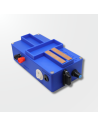
The power supply is the heart of the system. It converts the alternating current from the mains into stable direct current that the circuit needs. A poor-quality power supply causes voltage drops when the cars accelerate, resulting in erratic response and, in competition, a clear disadvantage. Adjustable power supplies allow you to set the voltage according to the type of circuit, the scale, and the skill level of the drivers.
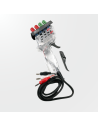
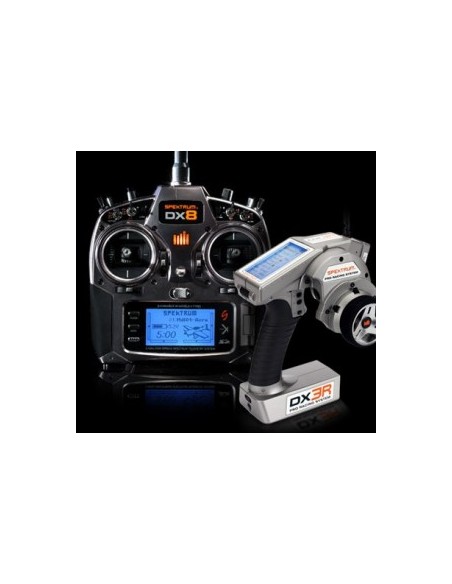
The controllers are the interface between the driver and the car. A good controller accurately transmits the driver’s intention: progressive acceleration, controlled braking, immediate response. They come in analogue, with variable resistance, and digital, with programmable sensitivity, braking, and maximum voltage adjustments.
The lap counter or timing system adds a real competitive dimension. Knowing the exact time of each lap, comparing it with your best time or that of your rivals, turns a practice session into a real race. There are simple systems with passing sensors and displays, and advanced systems connected to race management software.
Finally, LED and lighting modules allow you to animate the circuit, customise cars with functional headlights, or create light effects on the track. They are an accessory that adds immersion and realism.
How to choose the right electronics for your circuit
Before purchasing any electronic component, there are three key questions you should ask yourself:
- Is your circuit analogue or digital? Not all controllers or power supplies are compatible with both systems. Digital circuits (such as Scalextric Digital or Carrera Digital) require decoders in the cars and a specific control unit. In an analogue system, the electronics are more straightforward but equally important in terms of quality.
- How many drivers will use the circuit? Each driver needs their controller and power lane. An undersized power supply for four cars running in parallel will cause voltage issues. Ensure that the total power of the supply meets the maximum demand.
- What is your level of experience and what is your goal? For a home circuit with occasional use, a mid-range power supply and quality analogue controllers are more than sufficient. For club or championship competition, it is worth investing in digital controllers with adjustable parameters and a precision power supply.
It is also important to consider the scale. Cars in 1/32 and 1/24 scales have different power requirements, and some competition motors demand a more stable and powerful supply. Always check the manufacturer's specifications before choosing the power supply.
Main types and differences of slot electronics
Power supplies
There are several types: classic transformers with basic regulation, laboratory linear power supplies, and modern switched power supplies. For home and semi-professional slot racing, adjustable linear power supplies offer the best balance between voltage stability and price. Laboratory power supplies allow for precise adjustment of volts and amps, which is very useful in test benches for tuners.
Analogue controllers
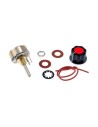
They operate via a variable resistor: when the trigger is pressed, the resistance decreases, and the current reaching the car increases. They are the most commonly used in home circuits and analogue competition. The difference between an economical controller and a high-end one lies in the trigger's progression, ergonomics, durability of the rheostat, and the ability to adjust braking.
Digital and programmable controllers
In digital systems, the controller sends coded signals that the car's decoder interprets. Many allow you to program the acceleration profile, maximum braking level, and trigger sensitivity. They are invaluable tools in competition, where tenths of a second make a difference.
Lap counters and timing systems
From simple optical sensors with LED displays to systems connected via USB to race management software with real-time rankings, lap records, and virtual fuel management. For home use, standalone models are more than sufficient. For clubs and championships, connected systems offer a much more complete experience.
LED and lighting modules
They allow for the installation of functional headlights on cars, illuminating pits, creating traffic light effects, or animating the circuit environment. They require slight modifications to the car, but the result is very striking and adds realism to the overall setup.
Technical aspects we need to know
Understanding some basic concepts avoids wrong purchases and operational issues:
- Voltage (V): Most analogue slot circuits operate between 12 V and 18 V. A higher voltage results in greater speed, but also in increased wear on the motor and components. For beginners, it is recommended to start around 12-14 V and gradually increase.
- Amperage (A): Determines the available power. For a single car, 2-3 A is sufficient; for four cars in competition, a 10-15 A power supply ensures that there are no voltage drops when all accelerate simultaneously.
- Controller resistance (Ω): In analogue controllers, the ohmic value of the rheostat must be compatible with the car's motor. A value that is too low can burn out the motor; too high can make it slow and erratic.
- Digital compatibility: The digital systems of Scalextric, Carrera, and others are not interchangeable with each other. Decoders, controllers, and control units are specific to each ecosystem. Always confirm compatibility before mixing components from different manufacturers.
Practical tips for use, maintenance, and setup
Slot electronics require little maintenance, but basic habits can extend the life of the components and improve performance:
- Always disconnect the power supply when you are not using the circuit. Leaving controllers and transformers connected without load for hours unnecessarily wears them out.
- Periodically check the connection cables from the controllers to the circuit. Loose connectors or frayed cables are common causes of power cuts and erratic response.
- Clean the contacts of the controllers with an appropriate product. Oxidation on the terminals reduces conductivity and worsens trigger progression.
- In adjustable power supplies, note the optimal voltage for each combination of car and track. This saves time and avoids starting from scratch in each session.
- If you use LED modules, ensure that the installed resistor is correct for your circuit's voltage. An LED without the appropriate resistor burns out in seconds.
- In timing systems, calibrate the passing sensor before each competition session. A misaligned sensor gives incorrect readings or misses laps.
Common mistakes to avoid
With slot electronics, the same mistakes are often repeated, especially among beginners:
- Buying a power supply based on price without considering power: A cheap power supply with insufficient amperage causes constant voltage drops and frustrates the experience. It is better to invest a bit more in a stable power supply from the start.
- Using a controller that is not compatible with the system: An analogue controller in a pure digital circuit does not work properly. Always confirm compatibility with your system before purchasing.
- Ignoring polarity when connecting: Connecting the power supply backwards can damage motors and electronic components of the car. Always check that the positive and negative are in the correct place.
- Mixing voltages without knowing: Increasing the voltage beyond the motor's specifications to gain speed is a common practice that drastically shortens the motor's life. Each motor has an optimal operating range.
- Neglecting the circuit wiring: A poorly wired track generates voltage losses in the sections farthest from the main connection. For large circuits, a multi-point power supply greatly improves consistency.
Recommendations for beginners and advanced users
If you are starting out
The most important thing is not to complicate things. A mid-range adjustable power supply, a couple of progressive analogue controllers, and, if you want to add some fun, a basic lap counter are all you need to enjoy from day one. There is no need to invest in digital systems until the circuit and the level of involvement justify it. Ask us if you have questions about which power supply is right for your track and cars: it is the most important decision and the one that most affects the overall experience.
If you already have experience
The leap to programmable digital controllers marks a before and after in competition. Being able to adjust the acceleration curve, maximum braking, and trigger sensitivity to your driving style and each circuit is a real advantage. A laboratory power supply with precise control of volts and amps is also a very useful tool if you prepare cars and need to conduct reliable comparative tests. And if you organise races in a club, a good timing system connected to management software completely transforms the competitive experience.
| Component |
Recommended Use |
User Profile |
| Basic adjustable power supply (up to 5 A) |
Home circuit, 1-2 drivers |
Beginner / Hobbyist |
| High power adjustable power supply (10-15 A) |
Club circuit, 4+ drivers |
Advanced / Competition |
| Quality analogue controller |
Analogue system, general use |
All levels |
| Programmable digital controller |
Digital system, competition |
Advanced / Competition |
| Standalone lap counter |
Home use, informal sessions |
Beginner / Hobbyist |
| Timing system with software |
Club, championship, race management |
Advanced / Club |
| LED / lighting modules |
Customisation, ambience |
All levels |
Frequently Asked Questions
What is the most common voltage for a home slot circuit?
Most home circuits work well between 12 V and 14 V. For competition cars with more demanding motors, you can increase to 16-18 V, but always within the motor's specifications.
Can I use any power supply for my circuit?
No. You need a direct current power supply with the appropriate voltage and amperage for your track and the number of cars. Generic power supplies or those for other uses may not provide the necessary stability and could jeopardise the components.
Do analogue controllers work on digital circuits?
In fully digital circuits, controllers must be compatible with the corresponding digital system. Some digital tracks allow an analogue mode with conventional controllers, but this is not common. Always check your system's specifications.
What is the difference between a controller with braking and one without?
A controller with braking allows the driver to actively reduce speed by releasing the trigger, applying resistance to the motor. Without braking, the car simply stops receiving current and decelerates by inertia. In competition, having adjustable braking greatly improves control in corners.
How many amperes does my power supply need if I will have four cars on the track?
It depends on the motors, but as a general reference, with four competition cars accelerating simultaneously, it is advisable to have at least 10-12 A available. It is better to have a surplus than to fall short.
Is a lap counter necessary to enjoy slot racing?
It is not essential, but it makes a significant difference in terms of engagement and fun. Knowing your lap times and comparing sessions turns practice into something much more motivating, even when alone.
Can I install LEDs in any slot car?
In most cases, yes, although it requires some skill with a soldering iron and basic electronics knowledge. It is important to calculate the necessary resistor for your circuit's voltage and respect the available space in the body.
Are timing systems compatible with any track?
It depends on the model. Systems with external optical or magnetic sensors are compatible with most tracks, as they are installed on the finish straight without modifying the track. Systems integrated into specific tracks are usually exclusive to that brand.
Is a laboratory power supply better than a specific power supply for slot racing?
Laboratory power supplies offer greater precision in voltage and amperage adjustments, making them very useful for tuners and technicians. For regular driving use, a well-sized specific power supply for slot racing is perfectly valid and easier to use.
What should I do if my controller loses progression or feels "stiff"?
This usually indicates wear or dirt in the rheostat. Some controllers allow for cleaning or replacing the rheostat; others, especially low-end ones, are not repairable. This is one of the arguments for investing in a quality controller from the start.
Is the Scalextric digital system compatible with Carrera's?
No. Each manufacturer has its own digital ecosystem. Controllers, decoders, and control units are not interchangeable between brands. If you have questions about compatibility before investing in digital, consult us.
Can I use the electronics from my old circuit with a new track of a different brand?
In analogue circuits, the power supply and controllers are generally interchangeable as long as the voltage and amperage are suitable. In digital systems, compatibility is much more restrictive. Always check before assuming everything is compatible.