If your RC vehicle has lost punch, if you want to make a performance leap or simply need to replace the motor that has fallen short for what you demand, you are in the right place. RC motors are the heart of any car, motorcycle, truck, or remote-controlled boat: they determine acceleration, top speed, response to controls, and, to a large extent, the enjoyment behind the wheel. Choosing wisely is not trivial, and it is not just about looking at how many KV a brushless has or how many cc a combustion engine displaces: you need to consider the chassis, the associated electronics, the speed controller, the power supply, and, of course, the intended use.
In the RC world, there is a clear separation between two major families: electric motors and combustion engines. Each has its own philosophy, maintenance requirements, and user profile. Electric motors have gained significant ground in recent years thanks to brushless technology, which has made speeds and torques previously reserved for competition accessible to any enthusiast. Combustion engines, on the other hand, still have a legion of loyal followers who enjoy the sound, the smell of methanol, and the living mechanics of a two-stroke or four-stroke engine.
Whether you are a competitive driver looking for every tenth on the track or an enthusiast wanting to improve your buggy or touring car without too much hassle, here you will find RC motors with the technical level and selection of references you need. Below we explain everything you need to know to make the right choice.
What is an RC motor and why does it matter so much
An RC motor is the component that transforms energy —electric or chemical, depending on the type— into rotational motion, which is then transferred to the wheels through the drivetrain. It seems simple, but within that definition, there are enormous differences in performance, durability, and driving sensations.
In a remote-controlled vehicle, the motor does not work alone: it works in conjunction with the speed controller (ESC in electric) or with the carburettor and clutch (in combustion). A poor combination between motor and electronics can ruin the potential of both components. Therefore, when we talk about improving or replacing the motor, we are actually talking about rethinking part of the vehicle's propulsion system.
The impact of the motor is felt everywhere: in the trigger response when exiting a corner, in the maximum speed on the straight, in the heat generated during long sessions, and in the battery life in electric vehicles. A well-chosen and well-installed motor completely transforms the driving experience, whether on asphalt track, dirt, water, or any other environment.
How to correctly choose an RC motor
Before buying an RC motor, several basic questions must be answered. Skipping this step is the source of most purchasing errors.
- Electric or combustion? Electric motors are cleaner, quieter, and easier to maintain. Combustion engines require more mechanical dedication but offer a more visceral experience and virtually unlimited autonomy with an extra tank.
- What scale and type of vehicle? A motor for a 1/10 competition car on asphalt is not the same as for a 1/8 monster truck on dirt or for a racing boat. The power, physical size, and torque required are very different.
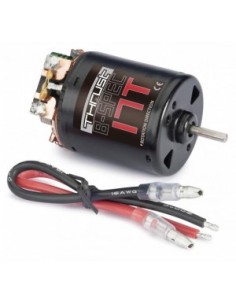
- Brushed or brushless? In electric motors, brushless motors have almost completely replaced brushed motors in performance applications. They are more efficient, last longer, and offer more power per weight. Brushed motors still make sense in beginner vehicles or in competition categories that require them by regulation.
- How many KV do I need? The KV rating indicates the revolutions per volt without load. A high KV = more speed, less torque. A low KV = more torque, better traction from a standstill. For short track asphalt cars, a lower KV is usually preferable than for a straight-liner or speed vehicle.
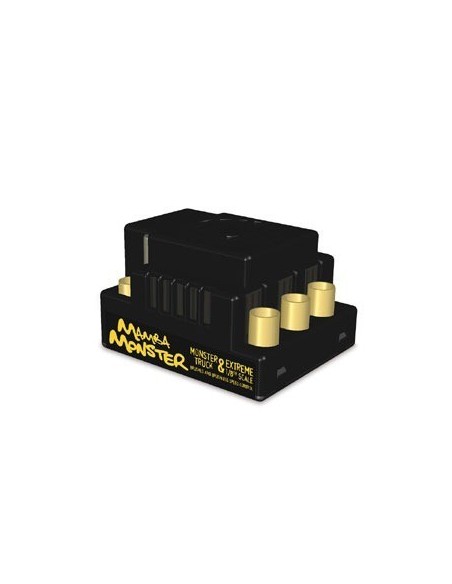
- Compatibility with the ESC and battery. Before changing the motor, check that your speed controller supports the type and characteristics of the new motor. A brushless motor needs a specific ESC for brushless. And the battery must be able to deliver the amperage that the system will demand.
- Physical size and mounting. Check that the motor fits in the motor mount of your chassis and that the shaft has the correct diameter for the pinion you use.
Main types and differences
Brushed electric motors
They use physical brushes to transmit current to the rotor. They are simpler, cheaper, and easier to find, but generate more friction, heat up faster, and require periodic maintenance of the brushes. Very common in beginner vehicles and in some regulated competition categories.
Brushless electric motors
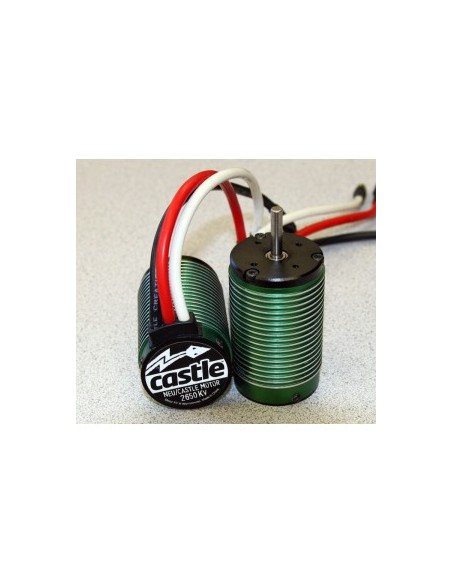
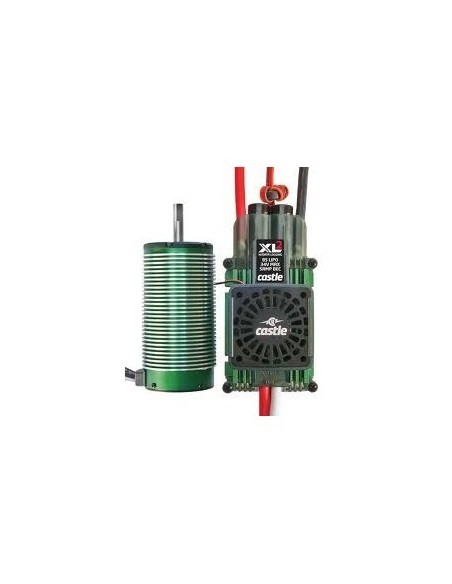
They have no brushes: the commutation is managed electronically by the ESC. They are more efficient, more durable, and offer a much more linear and powerful response. They have become the de facto standard in medium and high-performance RC cars, trucks, and boats. Within brushless motors, there are sensored motors (with rotor position sensor, better low-speed response, ideal for track) and sensorless motors (simpler, more common in off-road and bashing).
Two-stroke combustion engines
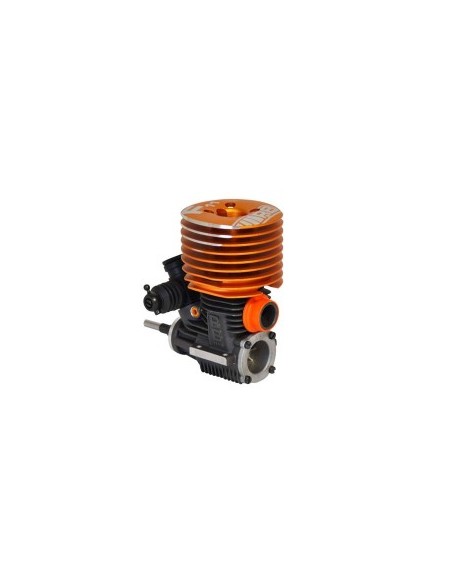
Widely used in 1/10 and 1/8 dirt track cars and competition buggies. They are lightweight, powerful for their displacement, and have relatively simple mechanics. They run on a mixture of methanol, oil, and additives. The carburettor and mixture adjustment are key to getting the most out of them.
Four-stroke combustion engines
More common in RC boats and some trucks. They offer more torque at low revs and a somewhat more efficient consumption than two-strokes, but they are bulkier and mechanically more complex.
Gasoline engines
Present in large scale RC vehicles (1/5, 1/4). They run on gasoline mixed with two-stroke oil and offer long runtimes and very high power. Their maintenance is closer to real mechanics than to conventional hobby maintenance.
Technical aspects we need to know
KV, torque, and power in electric motors
The KV rating is the starting point, but it is not everything. The actual power also depends on the number of winding turns: fewer turns mean more power and speed, but more heat generated and greater demand on the battery. In competition, regulations often limit the number of turns or the maximum KV to equalise vehicles.
Torque is what determines acceleration from a standstill and traction in difficult conditions. In off-road or bashing applications, a motor with good torque often performs better than a high KV motor that falls short on traction.
Heat and cooling
Heat is the main enemy of electric motors. A motor that continuously operates above its optimal temperature range degrades the winding and magnets. It is important to properly size the motor for the intended use and, in demanding applications, to add heat sinks or active cooling fans.
Mixture adjustment and timing in combustion
In combustion engines, adjusting the carburettor —high and low needle— is essential to achieve the correct performance and to preserve the engine. A mixture that is too lean destroys the engine in a short time; too rich causes power loss and produces residues. The ignition timing also directly influences performance and engine life.
Bearings and preventive maintenance
In both electric and combustion motors, bearings are wear parts. A faulty bearing generates vibration, power loss, and can damage other parts of the motor. Checking them periodically and replacing them at the right time is one of the most cost-effective maintenance actions you can take.
Practical tips for use, maintenance, and preparation
- Break-in for new combustion engines: never start a new engine and take it directly to maximum RPM. The correct break-in —several mixtures with the needle slightly enriched and without forcing the RPM— greatly extends the engine's lifespan.
- Operating temperature in electrics: after each session, touch the motor with the back of your hand. If it burns, something is not properly sized or the pinion/crown gear does not have the correct ratio. Adjust the gearing or consider a motor with a lower KV.
- Cleaning brushless motors: after sessions on dirt or in wet conditions, blow out the motor with compressed air to remove particles. Dirt accumulated in the winding reduces efficiency and can cause short circuits.
- Lubrication in combustion: always use the oil recommended by the manufacturer in the mixture. Do not skimp on fuel quality: the difference between good methanol and low-quality methanol is noticeable in both performance and engine longevity.
- Pinion-crown gear ratio: properly adjusting the gear ratio is as important as choosing the right motor. A ratio that is too short will strain the motor on fast tracks; too long will choke it on technical layouts. Experiment in small steps and monitor temperature.
- Storage of electric motors: if you are going to store the motor for a while, clean it and store it in a dry place. In the case of brushed motors, remove the brushes to prevent them from marking the commutator.
Common mistakes we should avoid
- Buying for power without checking compatibility: a brutally powerful motor in a chassis not prepared to absorb it is a recipe for breaking parts. The coherence of the system always comes before the numbers on paper.
- Mixing a brushless motor with a brushed ESC: a basic mistake but one that continues to happen. The speed controller and the motor must be of the same type. Connecting a brushless to a brushed ESC will damage both components.
- Ignoring heat in electrics: many users allow the motor to reach very high temperatures without taking measures. An infrared thermometer is inexpensive and can save you a motor.
- Not breaking in combustion engines: the rush to push the motor to the limit from the first mixture is the most common and the most expensive mistake. Break-in is not optional.
- Using pinions with excessive play: a pinion that does not fit properly on the shaft generates vibrations, noise, and premature wear of the motor and crown gear. Always check the fit when mounting.
- Not checking the direction of rotation: in electric motors, the direction of rotation can be reversed by swapping two phase wires (in brushless) or the power wires (in brushed). But in combustion engines, the direction of rotation is fixed, and you must ensure it matches the design of the clutch and transmission.
Recommendations for beginners and advanced users
If you are starting
The most sensible thing is not to change the original motor of your vehicle until you have accumulated enough experience with it. The stock motor is usually well balanced for the included chassis and electronics. When the time comes to make the leap, start with motors from reputable brands, with good documentation and support, and do not jump directly to the highest KV available. Learn first to adjust the gear ratio and to read the operating temperature: that is worth more than any premature upgrade.
In combustion, if this is your first nitro engine, opt for models with a good reputation for reliability and easy carburettor adjustment. The initial break-in is a ritual you must respect.
If you already have experience
The world of RC motors offers a huge margin for preparation. From rewinding brushed motors for competition to selecting high-efficiency sensored brushless motors for asphalt track, there is plenty of room for optimisation. Always work systematically: change one parameter at a time (motor, pinion, ESC programming) to know exactly what is improving the behaviour. Keep track of temperatures and lap times to have objective data.
In competition, make sure to thoroughly understand the regulations of your category before investing in a motor: many categories limit the type, KV, or number of turns. A motor that does not comply with the regulations is useless in a race, no matter how good it looks on paper.
| Motor Type |
Common Use |
Maintenance |
User Profile |
| Brushed Electric |
Beginner, light bashing, regulated categories |
Low-medium (brushes) |
Beginner / specific categories |
| Brushless Electric |
Track, off-road, bashing, competition |
Low |
Intermediate / advanced |
| 2T Combustion (nitro) |
Buggy, touring, dirt track, competition |
High (carburettor, break-in, cooling) |
Enthusiast with mechanical experience |
| 4T Combustion |
RC boats, large scale trucks |
High |
Specialists, large scale collectors |
| Gasoline |
1/5, 1/4 vehicles, large scale |
Very high |
Advanced, open environments |
Frequently asked questions about RC motors
What is the difference between a sensored and sensorless brushless motor?
The sensored motor incorporates Hall effect sensors that communicate the exact position of the rotor to the ESC at all times. This allows for a smoother and more precise response at low revs, making it ideal for track cars where low-speed corner exit is critical. The sensorless motor is simpler and more robust, and works well in off-road and bashing where fine control at low speed is less important.
Can I put a brushless motor in a car that came with a brushed motor?
In most cases, yes, but you will also need a compatible brushless ESC. It is not enough to just change the motor: the entire propulsion system must be coherent. Also check that the motor mount and shaft can accommodate the new motor.
What KV should I choose for my 1/10 track car?
It depends on the regulations of the category and the type of track. For touring on asphalt in standard categories, values between 3,000 and 4,500 KV are common with 2S batteries. With 3S, the recommended KVs decrease. Check your club's regulations and ask what most drivers in your category use before deciding.
How often should I maintain a combustion engine?
At a minimum, check the carburettor needle adjustment at each session and clean the air filter. Every few sessions, check the bearings and the condition of the connecting rod-crankshaft. Once a year, or when you notice a loss of power, a deeper adjustment or replacement of wear parts may be necessary.
Is it normal for the motor to get hot during the session?
Yes, it is normal for it to reach operating temperature. What is not normal is for it to burn when touched after a few minutes of use. In electrics, between 50 and 70 °C at the end of a session is usually considered acceptable; above 90 °C, you need to investigate the cause (incorrect gearing, KV too high for the gear ratio, poorly programmed ESC).
What is the number of turns in a brushless motor?
The number of turns refers to the number of winding turns on each pole of the stator. Fewer turns mean more power and maximum speed, but more heat and greater demand on the battery. More turns mean more torque and greater efficiency at lower speeds. It is a complementary parameter to KV for characterising the motor.
Do RC car motors work for boats or drones?
Not necessarily. Although brushless technology is common, motors for boats are usually designed to work in wet environments and with different rotational regimes. Motors for drones (multirotors) have very specific KV and response characteristics that are not directly interchangeable with car motors. Always use motors designed for the specific application.
What happens if I use low-quality fuel in a nitro engine?
Low-quality fuel may contain impurities that damage the carburettor, sleeve, and piston. The incorrect percentage of nitro directly affects performance and operating temperature. Always use fuel from reputable brands and with the percentage of nitromethane recommended by the engine manufacturer.
Can I repair a burnt brushless motor?
It depends on the damage. If the magnets or winding have burned out, in most cases it is not economically viable to repair it at the hobbyist level. Some high-end motors allow for bearing replacement and sometimes rotor replacement, but winding requires specialised equipment. Assess the cost before attempting it.
How important are the pinion and crown gear in motor performance?
Very much. The gear ratio determines whether the motor operates in its optimal range or is overstrained. A pinion that is too large for the track will cause the motor to overheat; too small will prevent it from reaching its maximum power. Adjusting the ratio is one of the most effective and cost-effective tuning tools available.
Does it make sense to buy a second-hand motor?
It can make sense if you know what you are buying. In brushless motors, bearings and winding have a long life if used correctly. The problem is that you cannot always know how the motor has been treated. If the price is significantly lower than new and the seller is trustworthy, it can be a good option. In combustion motors, caution should be greater: internal wear is difficult to assess without disassembling the motor.